
-
Article
Brief
Meeting Notes
Presentation
Poster
Report
Toolkit
Video
Webinar
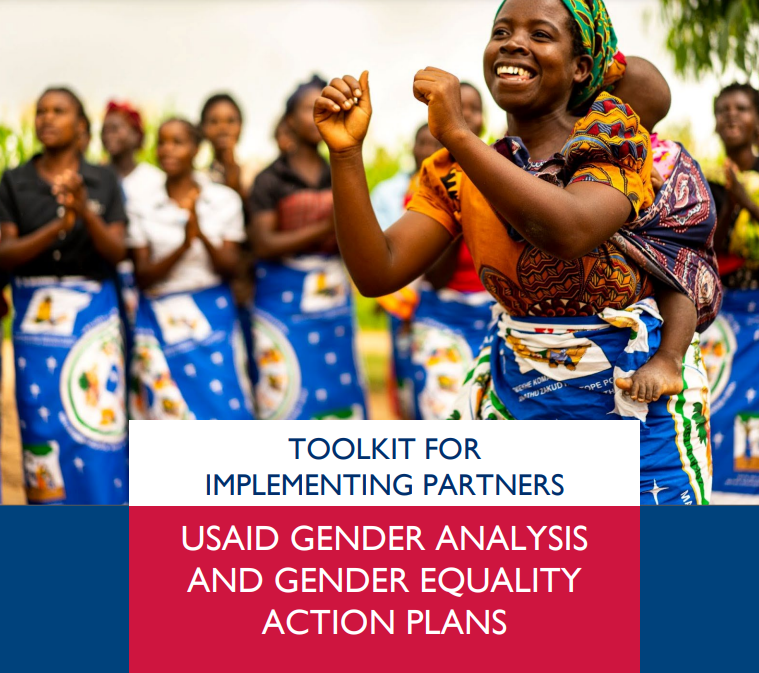
Toolkit for Implementing Partners USAID Gender Analysis and Gender Equality Action Plans
The toolkit is designed for IP staff, particularly gender advisors and focal points, staff members, and project leadership responsible for planning, managing, and/or conducting a gender analysis process and developing a GAP. It offers advice for IPs with varying degrees of gender expertise, especially those with limited experience. The toolkit outlines five steps for planning and managing a gender analysis process, including the development of a GAP based on relevant findings and feasible recommendations.
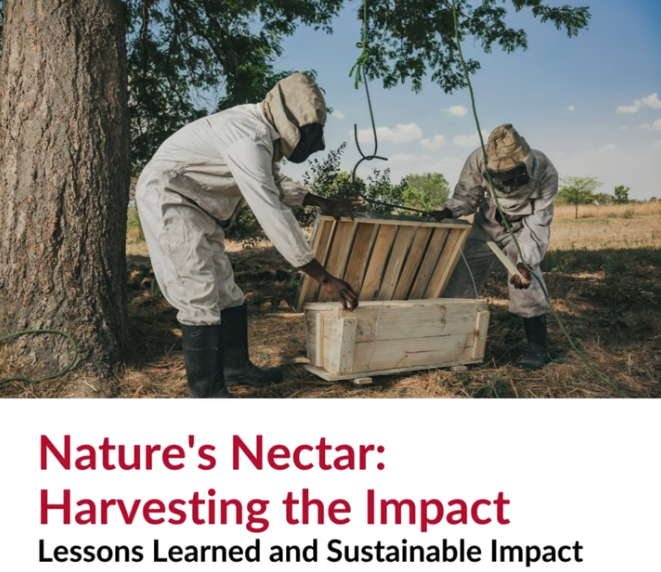
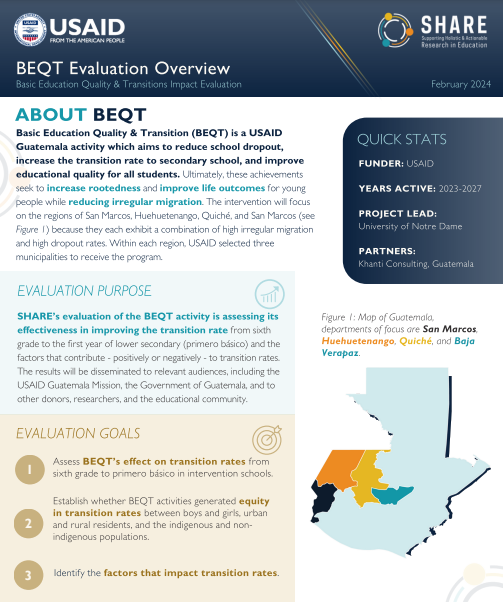
BEQT Evaluation Overview: Basic Education Quality & Transitions Impact Evaluation
Basic Education Quality & Transition (BEQT) is a USAID Guatemala activity which aims to reduce school dropout, increase the transition rate to secondary school, and improve educational quality for all students. Ultimately, these achievements seek to increase rootedness and improve life outcomes for young people while reducing irregular migration. The intervention will focus on the regions of San Marcos, Huehuetenango, Quiché, and San Marcos because they each exhibit a combination of high irregular migration and high dropout rates. Within each region, USAID selected three municipalities to receive the program.
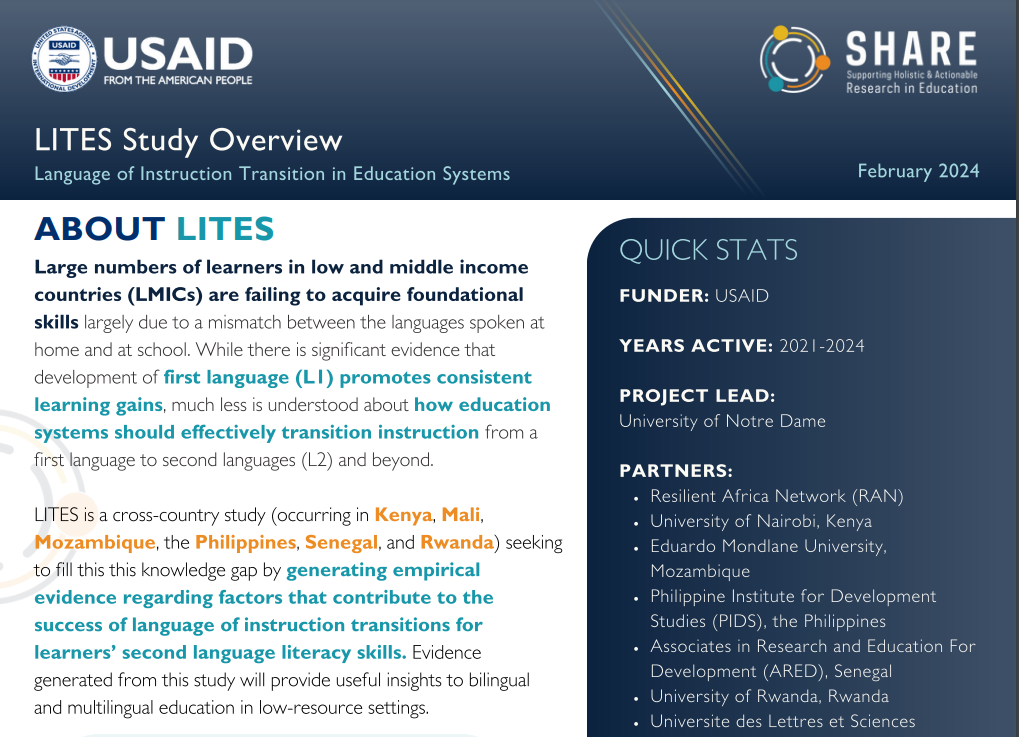
LITES Study Overview: Language of Instruction Transition in Education Systems
LITES is a cross-country study (occurring in Kenya, Mali, Mozambique, the Philippines, Senegal, and Rwanda) seeking to fill this this knowledge gap by generating empirical evidence regarding factors that contribute to the success of language of instruction transitions for learners’ second language literacy skills. Evidence generated from this study will provide useful insights to bilingual and multilingual education in low-resource settings.
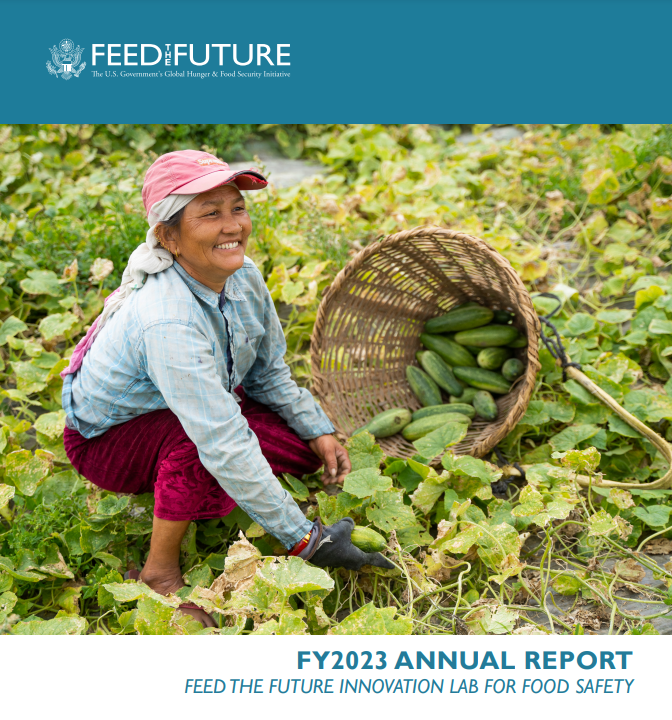
FY2023 Annual Report Feed the Future Innovation Lab for Food Safety
In FY2023, the Feed the Future Innovation Lab for Food Safety (FSIL) subaward projects in Bangladesh, Cambodia, Kenya, Nepal, Nigeria, and Senegal made significant progress in data collection to better understand microbial food safety challenges in each focus country, analyze the roles and opportunities for women in food safety and in different food value chains, and identify appropriate food safety interventions. All projects entered their final year of activities (year three for long-term subawards in Bangladesh, Cambodia, Kenya, and Senegal and year two for short-term subawards in Nepal and Nigeria) and many have started to analyze data and disseminate results. In FY2023, FSIL subaward projects published nine peer-reviewed journal articles, gave seven conference presentations, and hosted workshops and training sessions for producers, extension agents, government stakeholders, and the private sector.
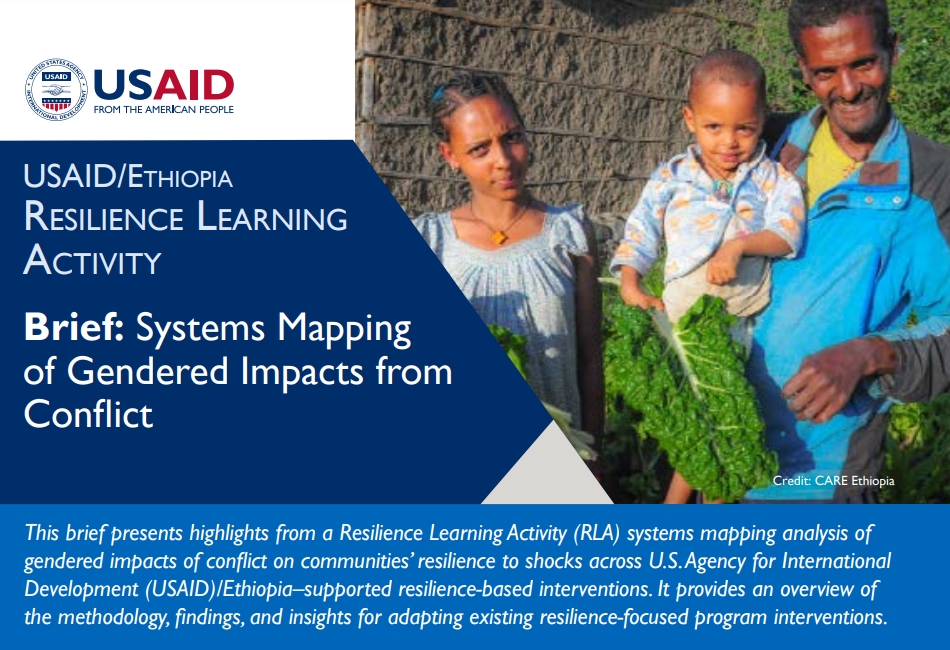
Systems Mapping of Gendered Impacts from Conflict (Ethiopia)
This brief presents highlights from a Resilience Learning Activity (RLA) systems mapping analysis of gendered impacts of conflict on communities’ resilience to shocks across U.S. Agency for International Development (USAID)/Ethiopia–supported resilience-based interventions. It provides an overview of the methodology, findings, and insights for adapting existing resilience-focused program interventions.
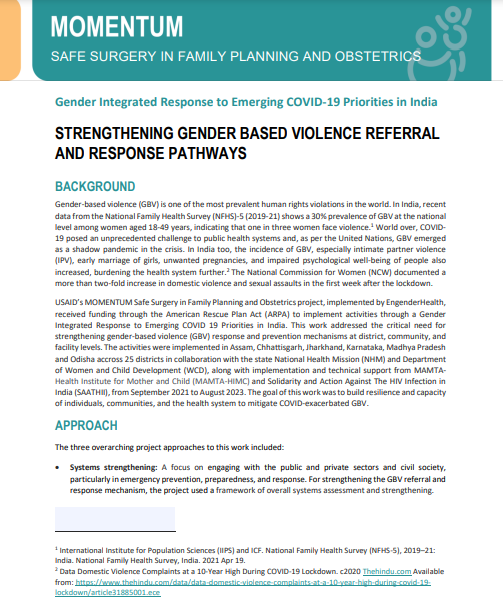
Gender Integrated Response to Emerging COVID-19 Priorities in India
This work addressed the critical need for strengthening gender-based violence (GBV) response and prevention mechanisms at district, community, and facility levels.
Ukraine Gender Snapshot: Findings from the reSCORE 2023
reSCORE Ukraine, which is a joint initiative funded by the USAID and UNDP, and implemented by SeeD, continues to serve as an annual assessment tool of societal resilience and recovery that informs the policies and programming of national, regional, and international partners. Like its predecessor, the Ukraine SCORE 2018 to 2021, it aims to identify pathways and respond to complex needs, geared at strengthening individual and collective coping mechanisms, and fostering a democratic, just, inclusive, and cohesive Ukraine.
Feed the Future Climate Resilient Cereals Innovation Lab (CRCIL)
The MEL Plan is designed based on the CRCIL’s goals, and expected outputs, outcomes, and impacts, taking into consideration the corresponding MEL activities required to assess progress in its achievements. It establishes a sustainable system for ensuring the quality and validity of data by employing rigorous procedures towards the adaptive management necessary to quantify the progress and impact of proposed activities and measure program contributions to the overall program goal. The MEL Plan Collaborating, Learning, and Adapting (CLA) approach, based on the United States Agency for International Development’s (USAID) CLA approach, and CRCIL’s Theory of Change (TOC) will guide the refinement of activity design as needed, based on new evidence, continual learning, and complexity-aware monitoring and innovative evaluation activities.
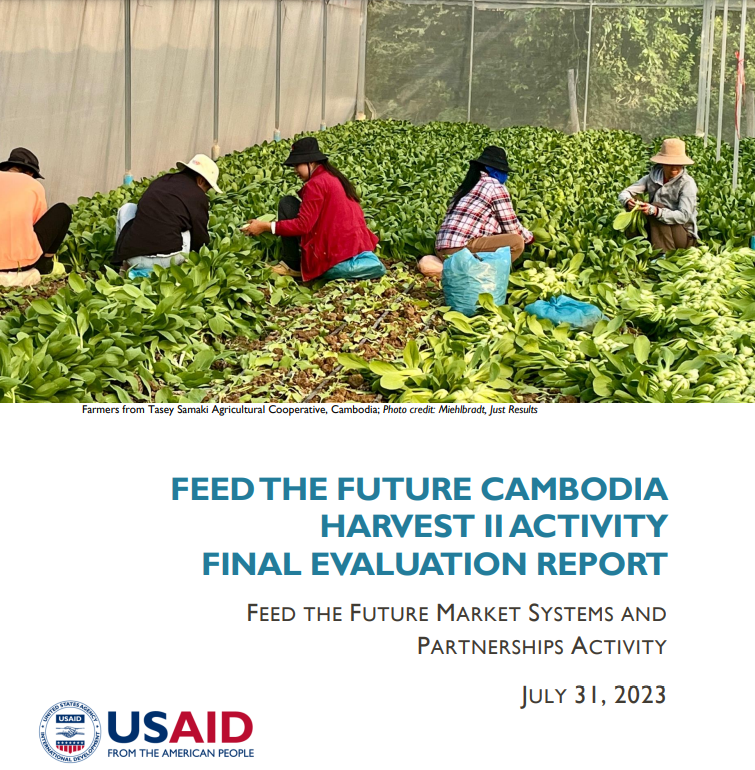
Feed the Future Cambodia Harvest II Activity Final Evaluation Report
This report presents the findings from the final evaluation of the Feed the Future Cambodia Harvest II activity (Harvest II) funded by the United States Agency for International Development (USAID) and operating from 2017-2022. The approach taken by Harvest II represented a shift in emphasis from previous USAID-funded activities that offered support to agricultural production, moving intentionally towards a demand-driven, market systems development approach. The evaluation team was asked to assess the extent and nature of system change that resulted from the activity, and how farms and firms benefited. The team also assessed whether and how the project contributed to resilience, climate change mitigation, and environmental stewardship.
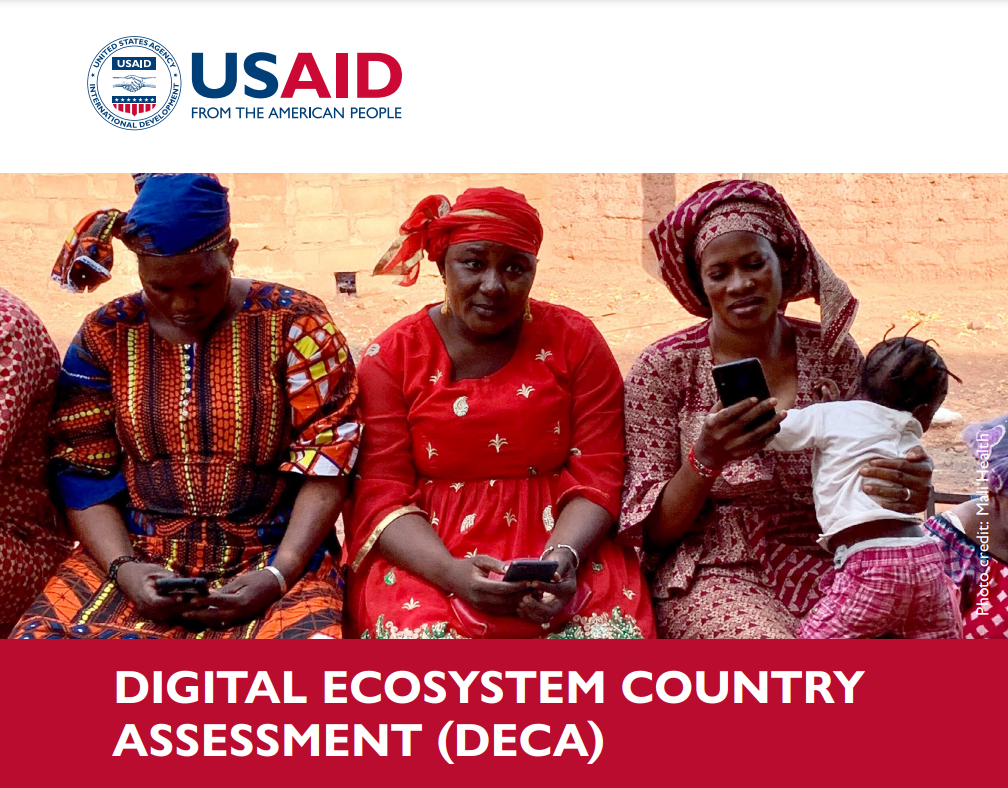
Digital Ecosystem Country Assessment (DECA): Mali 2023
The U.S. Agency for International Development’s (USAID’s) Digital Strategy was launched in April 2020 to achieve and sustain open, secure, and inclusive digital ecosystems that contribute to broad-based, measurable development and humanitarian assistance outcomes through the responsible use of digital technology.
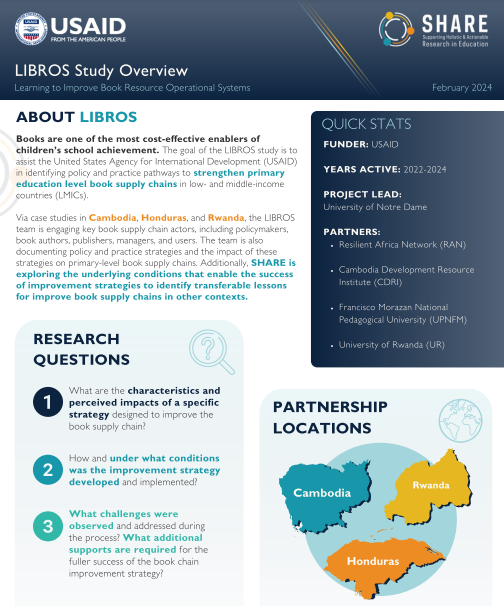
LIBROS Study Overview Learning to Improve Book Resource Operational Systems
Via case studies in Cambodia, Honduras, and Rwanda, the LIBROS team is engaging key book supply chain actors, including policymakers, book authors, publishers, managers, and users. The team is also documenting policy and practice strategies and the impact of these strategies on primary-level book supply chains.
FY2022 Annual Report Feed the Future Innovation Lab for Food Safety
As travel and institutional pandemic restrictions eased globally, the Feed the Future Innovation Lab for Food Safety (FSIL) accelerated research activities in all focus countries. FSIL's four long-term research subawards in Bangladesh, Cambodia, Kenya, and Senegal entered their second year of implementation. These projects were in the data collection stage of their project cycles for most of FY2022.
Women’s Empowerment in Beyond Production Impact Assessment
To understand the degree to which AgDiv contributed to those changes and how meaningful the changes were, the AWE team used Feed the Future’s Gender Integration Framework and select measurement guidance from the Project-Level Women’s Empowerment in Agriculture Index for Market Inclusion (PRO-WEAI+MI) survey tool. AWE grouped findings by the WEAI’s five domains: decisionmaking, access to control over resources, control over income, time use, and leadership and social capital.
USAID/Indonesia Urban Water, Sanitation and Hygiene (IUWASH PLUS) Final Performance Evaluation Report
This final performance evaluation report of the USAID Indonesia Urban Water, Sanitation and Hygiene Penyehatan Lingkungan Untuk Semua (IUWASH PLUS) answers evaluation questions relating to performance indices and drivers, non-revenue water and energy efficiency interventions, the human resources roadmap, spring vulnerability assessments, and alternative financing. The evaluation team carried out a mixed-methods design remotely because of COVID-19 restrictions, using interviews and an online mini-survey. The report concludes that IUWASH PLUS made important gains in many areas and will leave important tools available to the Government of Indonesia and local partners. The evaluation team also offers a set of recommendations for the remaining time IUWASH PLUS is active, and for future USAID interventions in this sector.
Lipid-Based Nutrient Supplements: Evidence and Program Guidance
This technical brief provides information for designing small- and medium-quantity lipid-based nutrient supplement (LNS-SQ and LNS-MQ) programs that promote improved nutritional status of women and young children in resource-limited settings. The following sections feature an overview of recent evidence, considerations for program design, and details of ways that LNS can complement or enhance a wide range of community health and development programs.
USAID Climate Ready Knowledge Products: Multi-Criteria Analysis Tool
The resultant tool has since been used to assist reviewers to score and prioritize against GCF Investment criteria based on GCF Investment Criteria.
Côte d’Ivoire Family Planning Private Health Sector Assessment (English & French)
The SHOPS Plus project, in collaboration with USAID/Côte d’Ivoire, conducted an assessment of the family planning market and provided targeted recommendations to empower stakeholders to sustainably engage the private sector and help Côte d’Ivoire achieve its Family Planning 2020 targets. This brief highlights key findings and recommendations from the full assessment report.
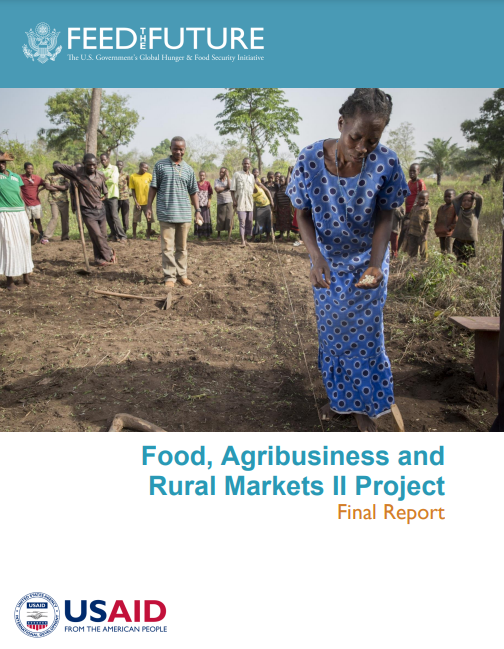
Food, Agribusiness and Rural Markets II Project
FARM II’s yield assessments showed that productivity yields of beneficiary farmers were 29 percent higher than those of non-beneficiary farmers. Greenbelt farmers also significantly exceeded African continent averages for all four assessed crops. The study suggested that the improved technologies and farming practices introduced by FARM II are taking hold among nonbeneficiary farmers in the region. Here, Betty Abou from Magwi County in Eastern Equatoria State packs maize to be taken to Juba for sale.
Task Sharing Tubal Ligation Services with Health Officers in Ethiopia
Voluntary long-acting reversible contraception (LARC) methods and permanent methods are important family planning options. However, in many developing countries, a shortage of trained health providers presents a barrier to accessing these methods. Task sharing LARC and permanent method services with mid-level clinical providers can increase family planning access and choice.