
-
Article
Brief
Meeting Notes
Presentation
Poster
Report
Toolkit
Video
Webinar
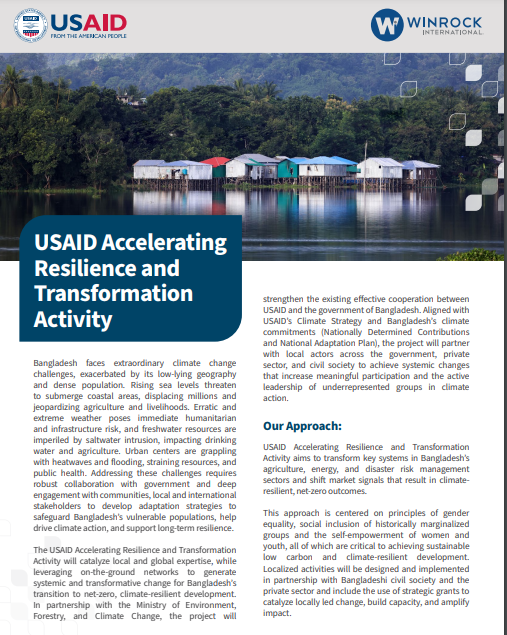
USAID Accelerating Resilience and Transformation Activity — Bangladesh
USAID Accelerating Resilience and Transformation Activity aims to transform key systems in Bangladesh’s agriculture, energy, and disaster risk management sectors and shift market signals that result in climate resilient, net-zero outcomes. This approach is centered on principles of gender equality, social inclusion of historically marginalized groups and the self-empowerment of women and youth, all of which are critical to achieving sustainable low carbon and climate-resilient development. Localized activities will be designed and implemented in partnership with Bangladeshi civil society and the private sector and include the use of strategic grants to catalyze locally led change, build capacity, and amplify impact.
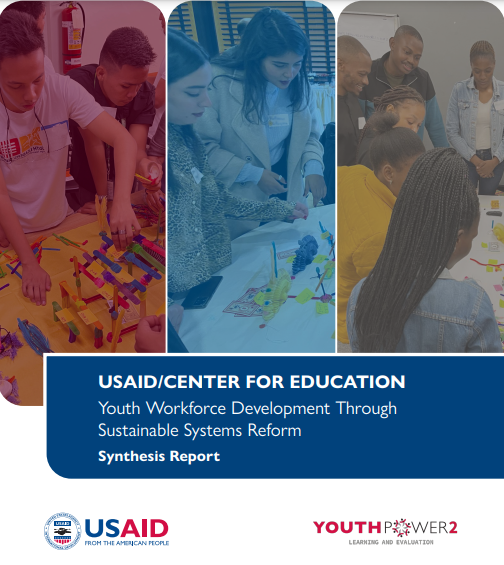
Youth Workforce Development Through Sustainable Systems Report
The United States Agency for International Development (USAID) seeks to increase its understanding of effective approaches for supporting improved, scaled, and sustainable youth workforce development (YWFD) outcomes in low- and middle-income countries (LMICs). USAID commissioned the Better Youth Workforce Development Outcomes Through Sustainable Systems Reform buy-in activity through its YouthPower2: Learning and Evaluation (YP2LE) Activity implemented by Making Cents International.
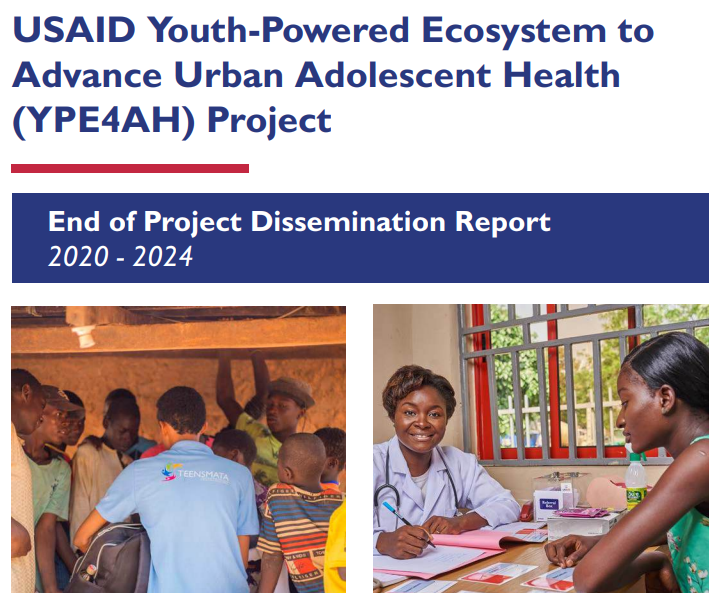
USAID Youth-Powered Ecosystem to Advance Urban Adolescent Health (YPE4AH) Project — End of Project Dissemination Report 2020 - 2024
In May 2020, the United States Agency for International Development (USAID)/Nigeria awarded the Youth-Powered Ecosystem to Advance Urban Adolescent Health (YPE4AH) Project to DAI Global LLC and its partners—Yellow Brick Road (YBR), Youth Empowerment and Development Initiative (YEDI), Women Friendly Initiative (WFI), and Grassroot Soccer (GRS). This five-year cooperative agreement, designed through a co-creation process, empowers young Nigerians with the skills, social capital, and resources necessary to realize their potential. The primary goal of the project is to improve the health and well-being of urban, underprivileged, out-of-school, and unmarried/ married adolescents aged 15–19 living in urban slums in Lagos and Kano States by increasing the uptake and sustained use of voluntary family planning (FP) services, using a holistic, human capital approach.
Ukrainian Youth Opinion Survey, Wave 3
The survey was conducted on behalf of the International Republican Institute’s Center for Insights in Survey Research (CISR) within the scope of the Ukraine National Identity through Youth (UNITY) program in collaboration with the International Research and Exchanges Board (IREX). The field work was conducted by Info Sapiens.
With Youth, For Youth – Positive Youth Development and Youth Actively Create Opportunities Activity
To reflect on where the Activity stands and where it aims to go related to PYD, the team conducted a Collaboration, Learning, and Adaptation (CLA) reflection, detailed in this document. The review aims to share how the team integrated PYD elements into the planning and implementation of activities, and the results of PYD integration.
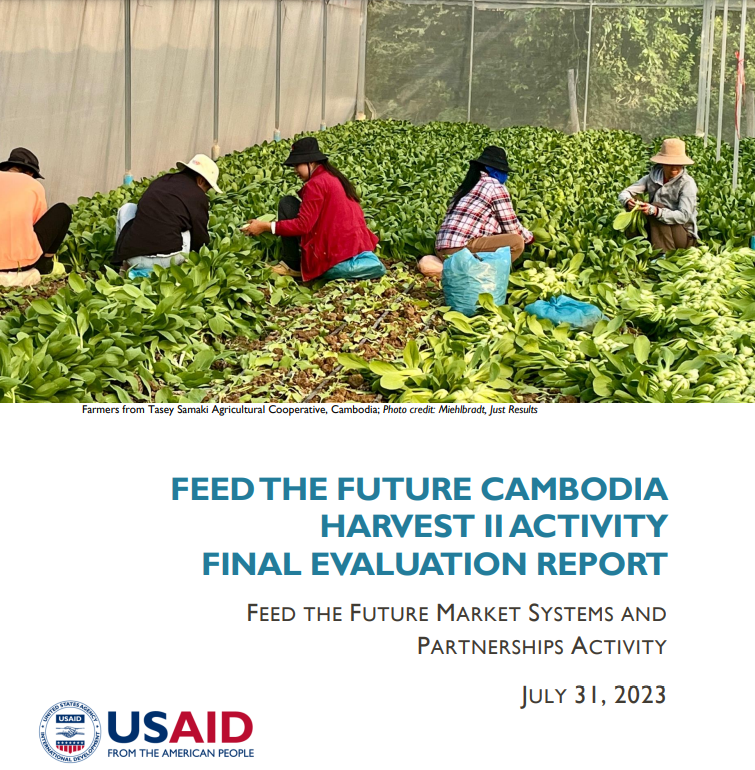
Feed the Future Cambodia Harvest II Activity Final Evaluation Report
This report presents the findings from the final evaluation of the Feed the Future Cambodia Harvest II activity (Harvest II) funded by the United States Agency for International Development (USAID) and operating from 2017-2022. The approach taken by Harvest II represented a shift in emphasis from previous USAID-funded activities that offered support to agricultural production, moving intentionally towards a demand-driven, market systems development approach. The evaluation team was asked to assess the extent and nature of system change that resulted from the activity, and how farms and firms benefited. The team also assessed whether and how the project contributed to resilience, climate change mitigation, and environmental stewardship.
Skills for Youth Project
The project installed Cisco networking training equipment at all the partner institutions and trained 132 IT teachers (113 men, 19 women) as Cisco academy instructors to cascade the ICT skills training to students. The Cisco academies established through SYP enrolled 4533 students, of which 3592 completed their training during the life of the project.