
-
Article
Brief
Meeting Notes
Presentation
Poster
Report
Toolkit
Video
Webinar
Water, Sanitation, and Hygiene Social Media Links They Forgot to Delete
While the Global Waters website was removed, no one deleted the related social media accounts. Check them out before they go away!
Climate Change Social Media Links They Forgot to Delete
While the Climatelinks website was removed, no one deleted the related social media accounts. Check them out before they go away!
Agriculture Social Media Links They Forgot to Delete
While the Agrilinks website was removed, no one deleted the related social media accounts. Check them out before they go away!
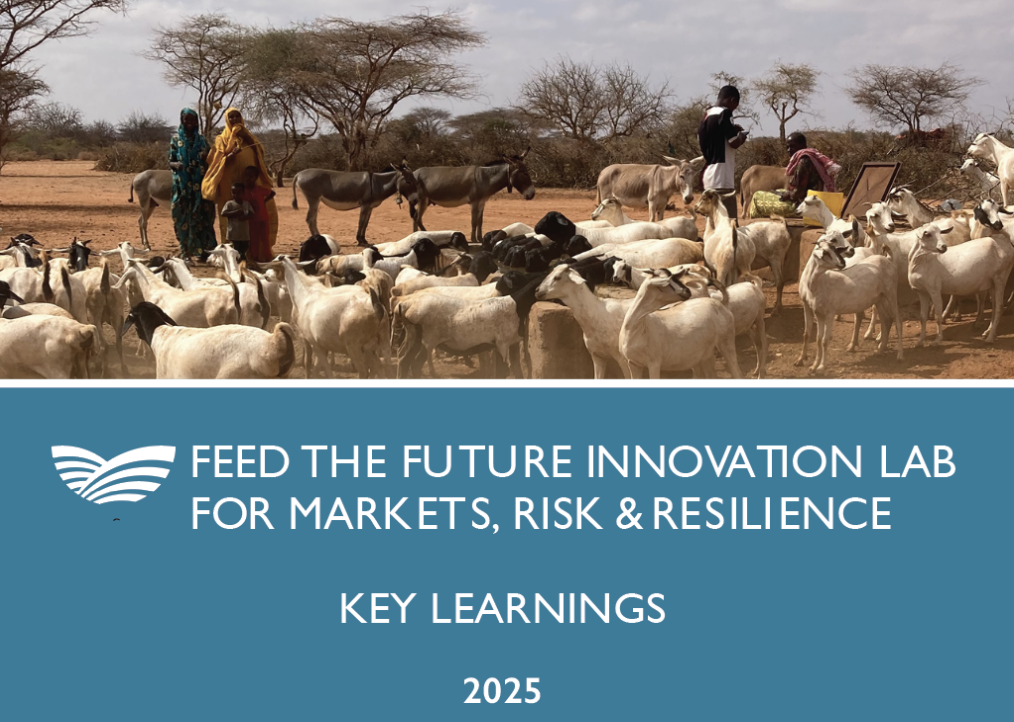
Feed the Future Innovation Lab for Markets, Risks, and Resilience — Key Learnings
This report describes the Feed the Future Innovation Lab for Markets, Risk & Resilience (MRR)’s contributions to (economic) knowledge surrounding small-scale agricultural households in developing countries. MRR research has deepened knowledge around entrenched development challenges and promising innovations for risk management and uptake of productivity-enhancing agricultural technologies.
Adherence to Standards for MNH Service Delivery at Public and Private Facilities
This analysis, conducted under the Data for Impact (D4I) award, leverages Service Provision Assessment (SPA) data from 2012–2022 to evaluate the adherence of MNH service providers to WHO process standards. The study examines differences between public and private facilities, including for-profit and not-for-profit (NFP) facilities, and tracks changes over time in selected countries.
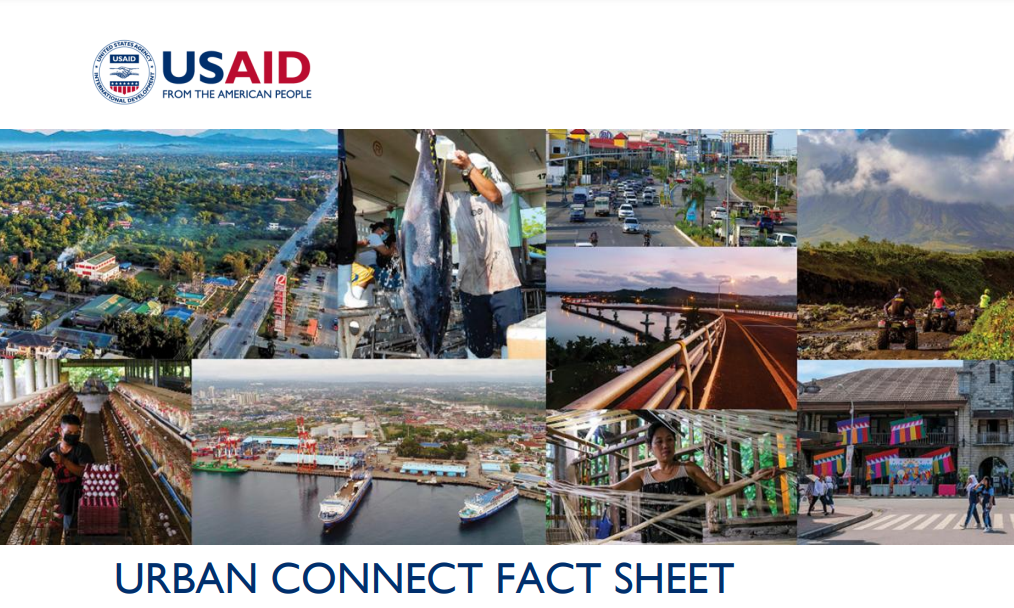
Urban Connect Factsheet — Philippines
USAID’s five-year (2023-2028), $11 million Urban Connect activity promotes resilient economic growth across nine USAID Cities Development Initiative (CDI) partner cities and surrounding localities1 by promoting economic development and supporting improved public service delivery. CDI’s purpose is to advance the development of cities outside Metro Manila as resilient engines of growth that are environmentally sustainable. USAID provides a range of technical assistance, drawing from resources in economic growth, health, energy, environment, governance, and education.
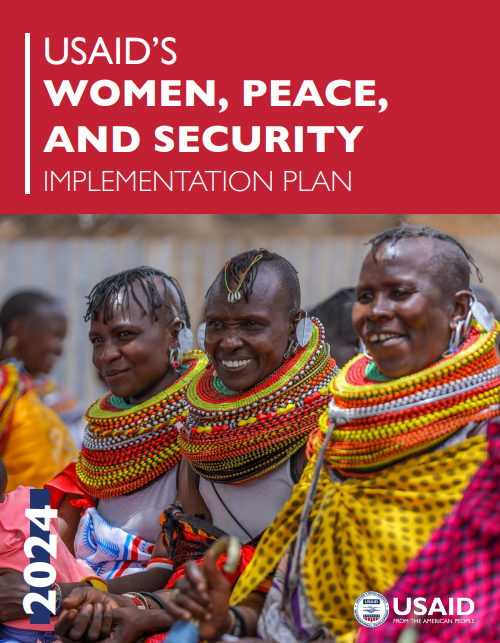
USAID's Women, Peace, and Security Implementation Plan 2024
As outlined in the Women, Peace, and Security Act of 2017, women and girls are disproportionately impacted by conflict. The status of women and the stability of nations are inextricably linked - higher levels of gender equality make countries more prosperous, secure, and democratic;3 and peace agreements are 35% more likely to last 15 years or more when women meaningfully participate4 in peace processes. Thus, the WPS Agenda is critical to USAID’s development efforts.
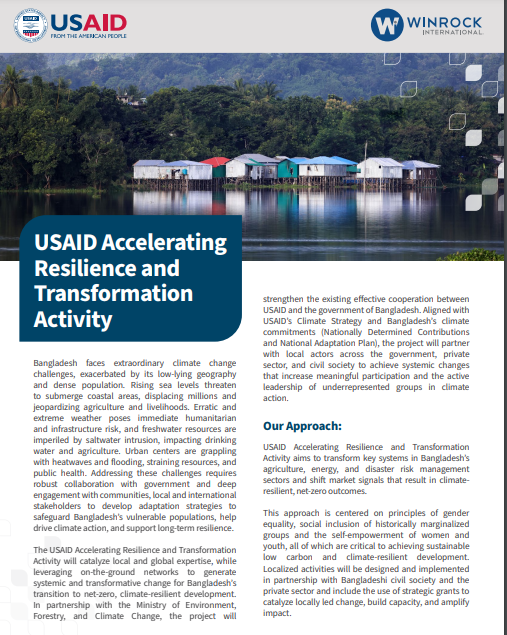
USAID Accelerating Resilience and Transformation Activity — Bangladesh
USAID Accelerating Resilience and Transformation Activity aims to transform key systems in Bangladesh’s agriculture, energy, and disaster risk management sectors and shift market signals that result in climate resilient, net-zero outcomes. This approach is centered on principles of gender equality, social inclusion of historically marginalized groups and the self-empowerment of women and youth, all of which are critical to achieving sustainable low carbon and climate-resilient development. Localized activities will be designed and implemented in partnership with Bangladeshi civil society and the private sector and include the use of strategic grants to catalyze locally led change, build capacity, and amplify impact.
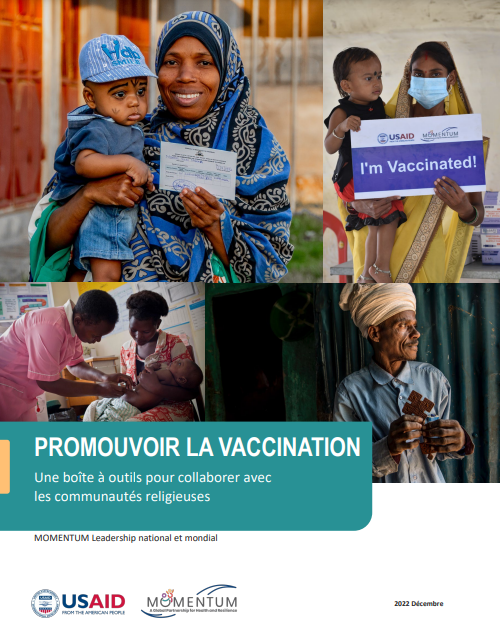
Promoting Vaccination: A Toolkit for Collaborating with Faith Communities (English, French, & Hindi)
This toolkit is designed to equip faith actors and related stakeholders—such as Ministries of Health, medical and scientific bodies, and non-profit organizations that partner with or work alongside faith actors—with the information and tools needed to raise awareness, reduce misinformation, and address barriers that prevent faith communities, in particular, from engaging in vaccination.
Climate Change Country Profiles 2023-2024
Snapshots of USAID goals, projects and outcomes around the globe
President’s Malaria Initiative: 2024 Country Fact Sheets
The President’s Malaria Initiative (PMI) is credited with helping to save 11.7 million lives and prevent 2.1 billion malaria cases since 2000. Indeed, since 2006, in countries where PMI works, global efforts have supported a 29% decrease in malaria case rates and a 48% decline in deaths. The introduction of two malaria vaccines in 2021 and 2023 has increased optimism in the potential to further strengthen global malaria control.
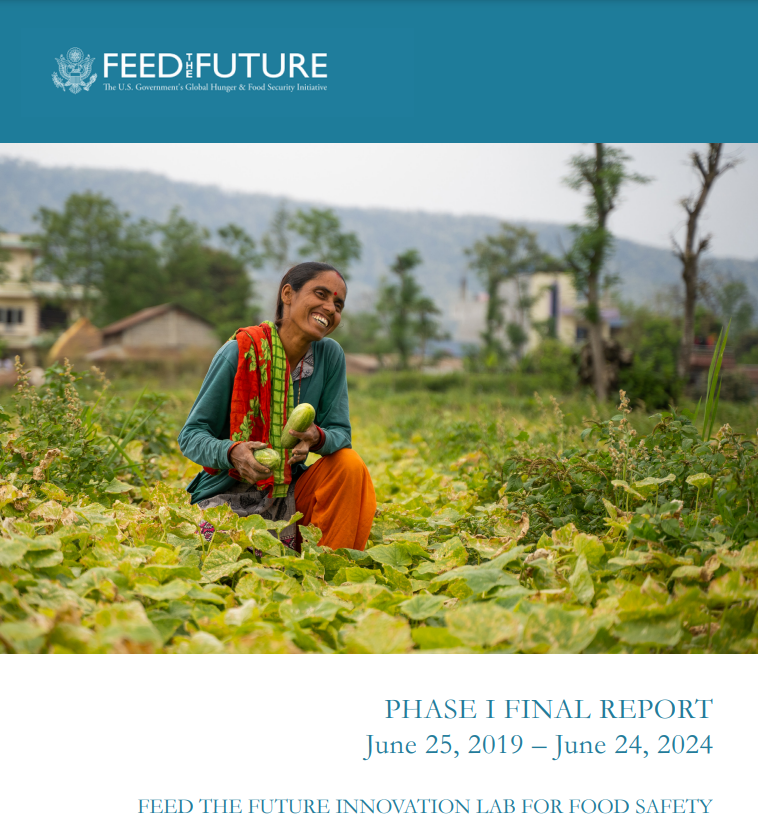
Phase I Final Report June 25, 2019 – June 24, 2024: Feed the Future Innovation Lab for Food Safety
This report presents progress over the first five-year phase of the Feed the Future Innovation Lab for Food Safety (June 25, 2019 – June 24, 2024). The Food Safety Innovation Lab (FSIL), managed by Purdue and Cornell Universities, has leveraged global food safety expertise in locally-led projects that address the root causes of foodborne illness. Phase I FSIL projects were designed to create systemic change to strengthen household and community nutrition, food security, and economic opportunity by identifying food safety knowledge gaps, supporting data-driven food safety practices and policies, and strengthening local food safety capacity.
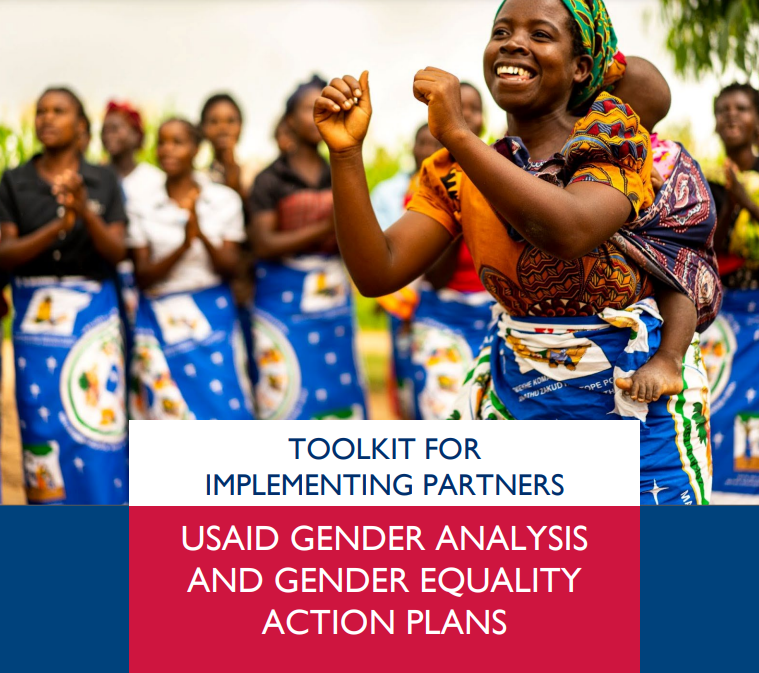
Toolkit for Implementing Partners USAID Gender Analysis and Gender Equality Action Plans
The toolkit is designed for IP staff, particularly gender advisors and focal points, staff members, and project leadership responsible for planning, managing, and/or conducting a gender analysis process and developing a GAP. It offers advice for IPs with varying degrees of gender expertise, especially those with limited experience. The toolkit outlines five steps for planning and managing a gender analysis process, including the development of a GAP based on relevant findings and feasible recommendations.

Safe Childbirth Checklist Landscape Analysis
Globally, almost 135 million births occurred in 2023 (United Nations Population Division, 2024), and around 285,000 women* die each year due to pregnancy or childbirth-related causes (World Health Organization [WHO], 2024b). According to the WHO, the most frequent causes of maternal mortality are postpartum hemorrhage, infection after childbirth, and high blood pressure during pregnancy.
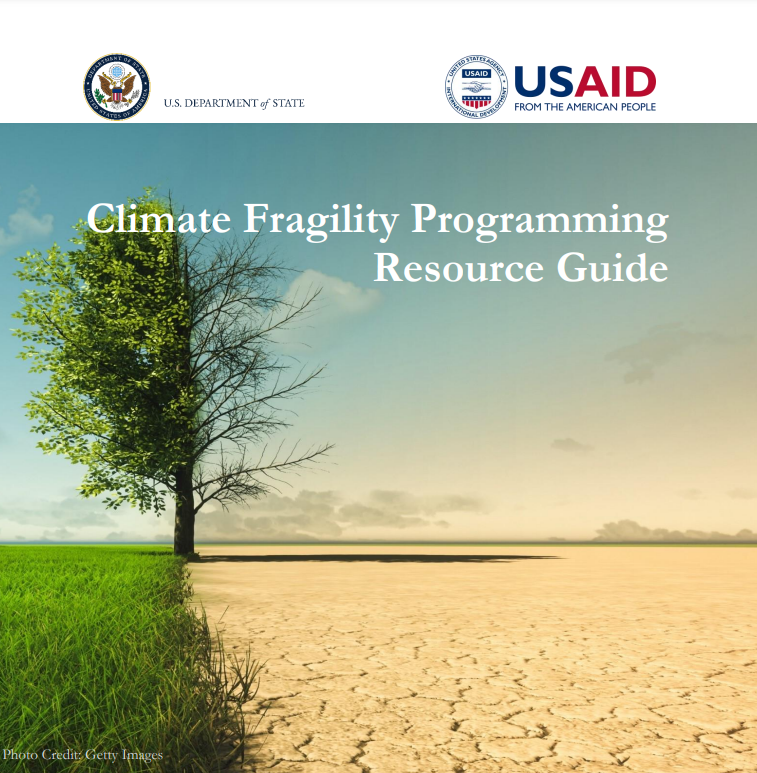
Climate Fragility Programming Resource Guide
The purpose of this resource guide is to support those working on conflict prevention and stabilization to 1) have a better understanding of the risks climate change poses to their work; 2) be equipped with the tools and approaches to best integrate climate change into existing or future programming; and 3) ultimately ensure that their conflict prevention and stabilization work has positive and sustainable outcomes.
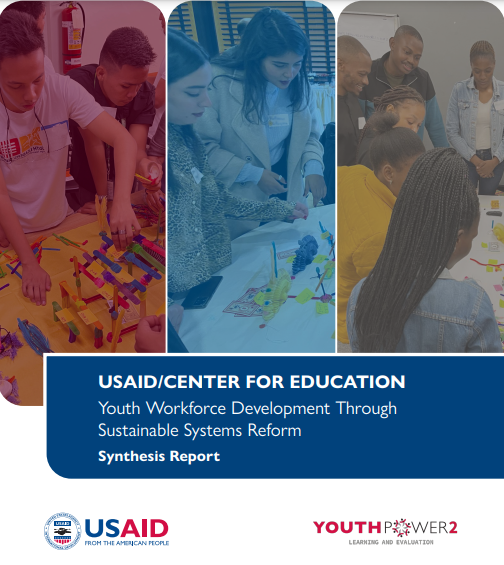
Youth Workforce Development Through Sustainable Systems Report
The United States Agency for International Development (USAID) seeks to increase its understanding of effective approaches for supporting improved, scaled, and sustainable youth workforce development (YWFD) outcomes in low- and middle-income countries (LMICs). USAID commissioned the Better Youth Workforce Development Outcomes Through Sustainable Systems Reform buy-in activity through its YouthPower2: Learning and Evaluation (YP2LE) Activity implemented by Making Cents International.
Agency Priority Goal | Action Plan | FY 24 – Q3: Resilience and Food Security
Facilitate inclusive, resilient growth in the agriculture and food system to sustainably reduce poverty, food insecurity, and malnutrition. By September 30, 2025, annual sales by assisted farms and firms in the agriculture and food system will exceed the previous three year average by 10 percent.
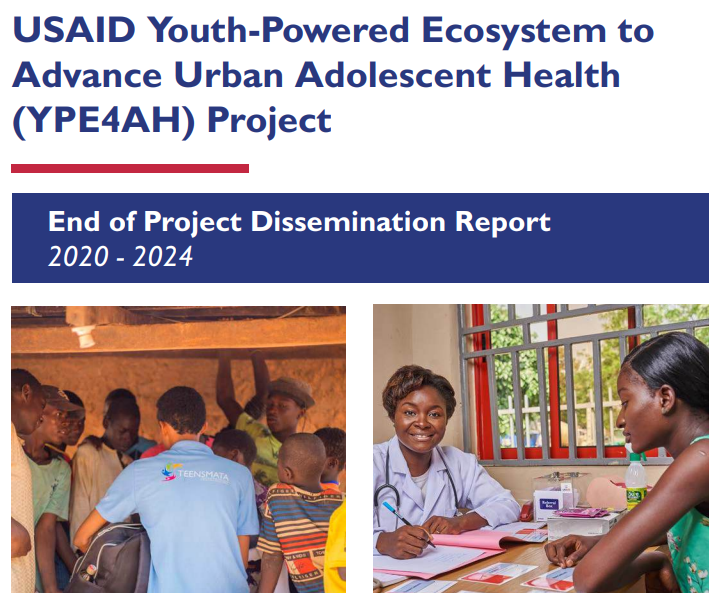
USAID Youth-Powered Ecosystem to Advance Urban Adolescent Health (YPE4AH) Project — End of Project Dissemination Report 2020 - 2024
In May 2020, the United States Agency for International Development (USAID)/Nigeria awarded the Youth-Powered Ecosystem to Advance Urban Adolescent Health (YPE4AH) Project to DAI Global LLC and its partners—Yellow Brick Road (YBR), Youth Empowerment and Development Initiative (YEDI), Women Friendly Initiative (WFI), and Grassroot Soccer (GRS). This five-year cooperative agreement, designed through a co-creation process, empowers young Nigerians with the skills, social capital, and resources necessary to realize their potential. The primary goal of the project is to improve the health and well-being of urban, underprivileged, out-of-school, and unmarried/ married adolescents aged 15–19 living in urban slums in Lagos and Kano States by increasing the uptake and sustained use of voluntary family planning (FP) services, using a holistic, human capital approach.
Do the Impacts of MSD Activities Sustain and Scale After Close?
As part of a series of ex-post studies conducted 3+ years after implementation ended, USAID is building the evidence base for sustainability, scale, and impact on target populations from use of the market systems development (MSD) approach.
Ukrainian Youth Opinion Survey, Wave 3
The survey was conducted on behalf of the International Republican Institute’s Center for Insights in Survey Research (CISR) within the scope of the Ukraine National Identity through Youth (UNITY) program in collaboration with the International Research and Exchanges Board (IREX). The field work was conducted by Info Sapiens.