
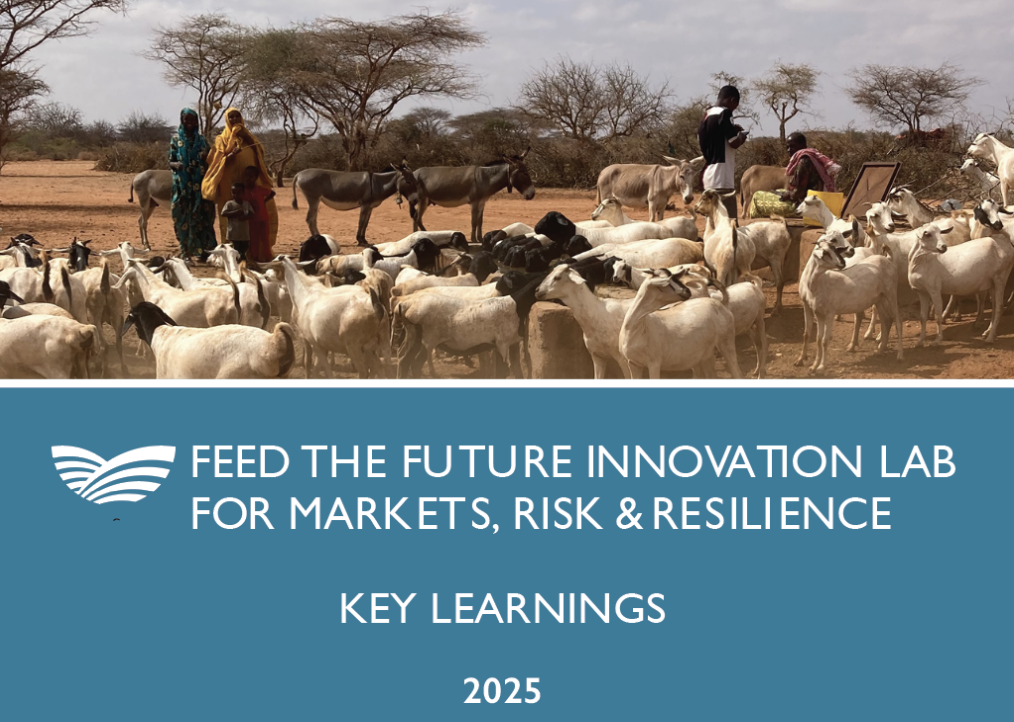
This report describes the Feed the Future Innovation Lab for Markets, Risk & Resilience (MRR)’s contributions to (economic) knowledge surrounding small-scale agricultural households in developing countries. MRR research has deepened knowledge around entrenched development challenges and promising innovations for risk management and uptake of productivity-enhancing agricultural technologies.
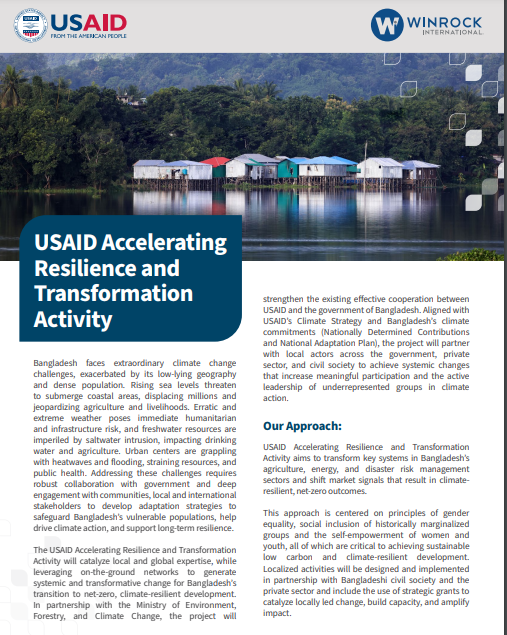
USAID Accelerating Resilience and Transformation Activity aims to transform key systems in Bangladesh’s agriculture, energy, and disaster risk management sectors and shift market signals that result in climate resilient, net-zero outcomes. This approach is centered on principles of gender equality, social inclusion of historically marginalized groups and the self-empowerment of women and youth, all of which are critical to achieving sustainable low carbon and climate-resilient development. Localized activities will be designed and implemented in partnership with Bangladeshi civil society and the private sector and include the use of strategic grants to catalyze locally led change, build capacity, and amplify impact.
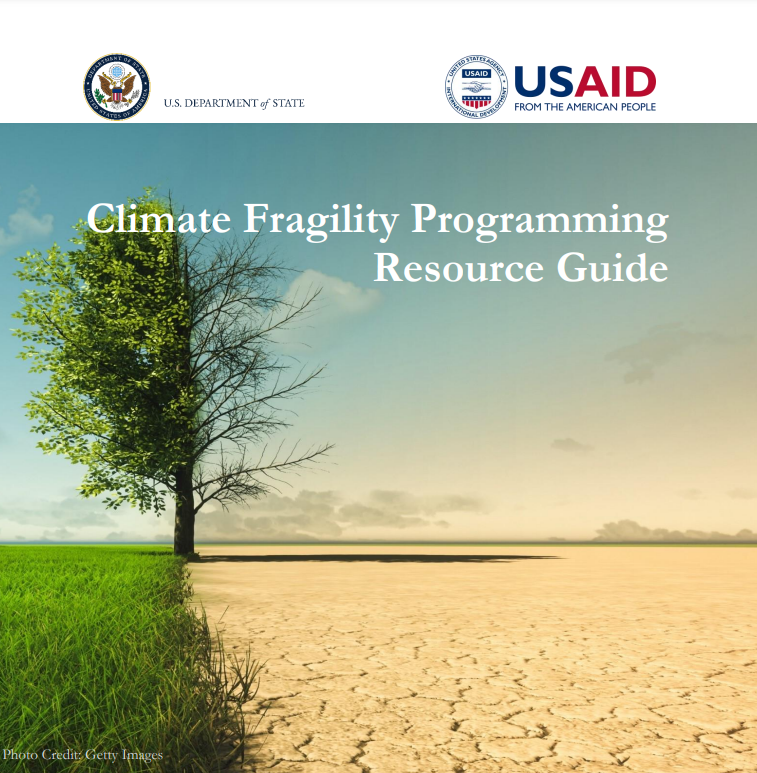
The purpose of this resource guide is to support those working on conflict prevention and stabilization to 1) have a better understanding of the risks climate change poses to their work; 2) be equipped with the tools and approaches to best integrate climate change into existing or future programming; and 3) ultimately ensure that their conflict prevention and stabilization work has positive and sustainable outcomes.
Facilitate inclusive, resilient growth in the agriculture and food system to sustainably reduce poverty, food insecurity, and malnutrition. By September 30, 2025, annual sales by assisted farms and firms in the agriculture and food system will exceed the previous three year average by 10 percent.
Today there is no alignment among investors, governments, donors, and other stakeholders on how to quantify the benefits of A&R investments. This is holding back much-needed private-sector investment and limiting progress on the implementation of national climate plans. Today there is no alignment among investors, governments, donors, and other stakeholders on how to quantify the benefits of A&R investments. This is holding back much-needed private-sector investment and limiting progress on the implementation of national climate plans.
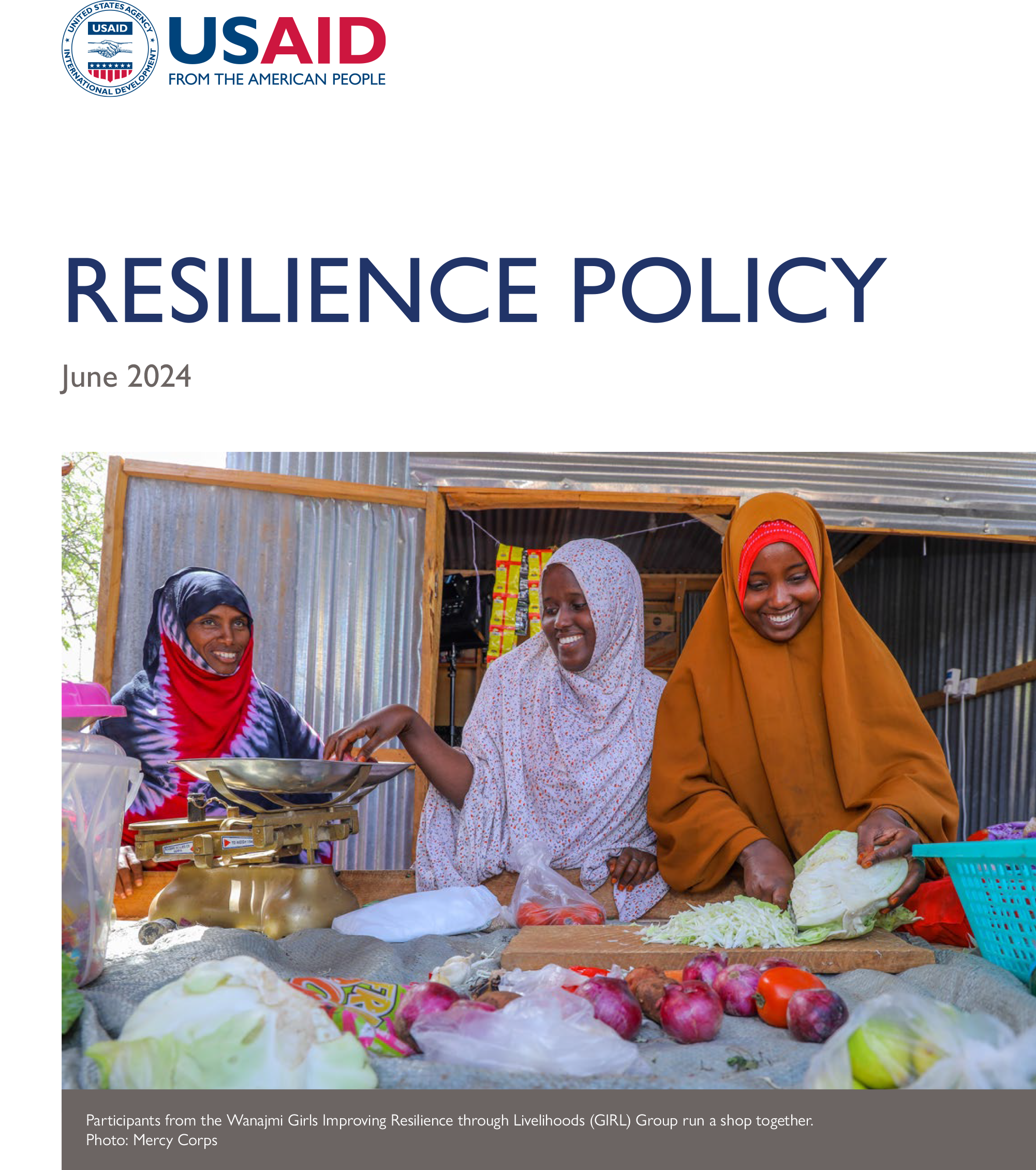
As an update to USAID’s inaugural resilience policy (2012), this policy reiterates the goal of reducing humanitarian need in areas of recurrent crisis while also reinforcing resilience as an Agency priority across all USAID programming.
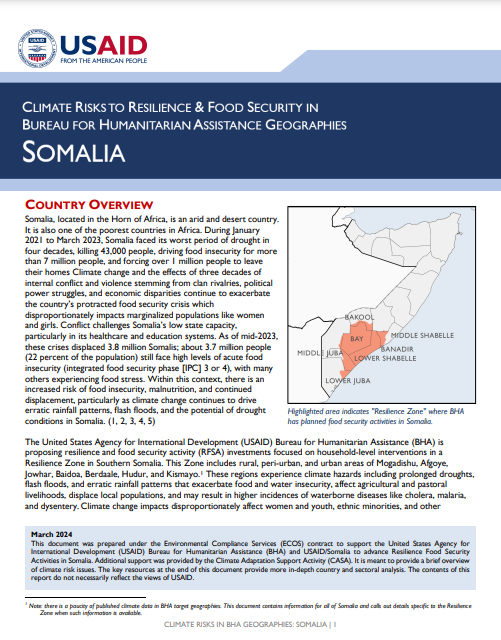
The United States Agency for International Development (USAID) Bureau for Humanitarian Assistance (BHA) is proposing resilience and food security activity (RFSA) investments focused on household-level interventions in a Resilience Zone in Southern Somalia.
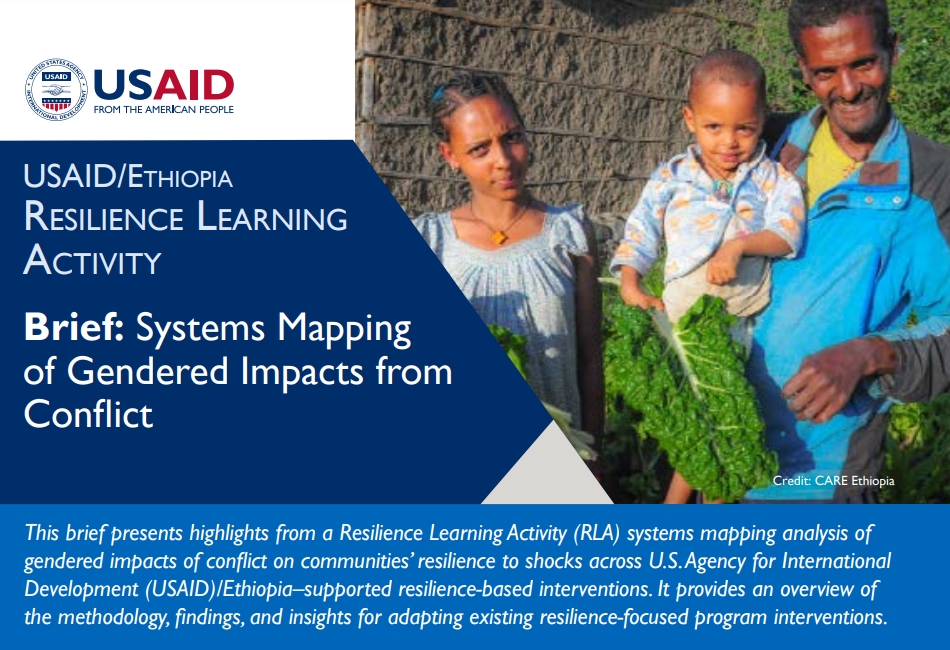
This brief presents highlights from a Resilience Learning Activity (RLA) systems mapping analysis of gendered impacts of conflict on communities’ resilience to shocks across U.S. Agency for International Development (USAID)/Ethiopia–supported resilience-based interventions. It provides an overview of the methodology, findings, and insights for adapting existing resilience-focused program interventions.
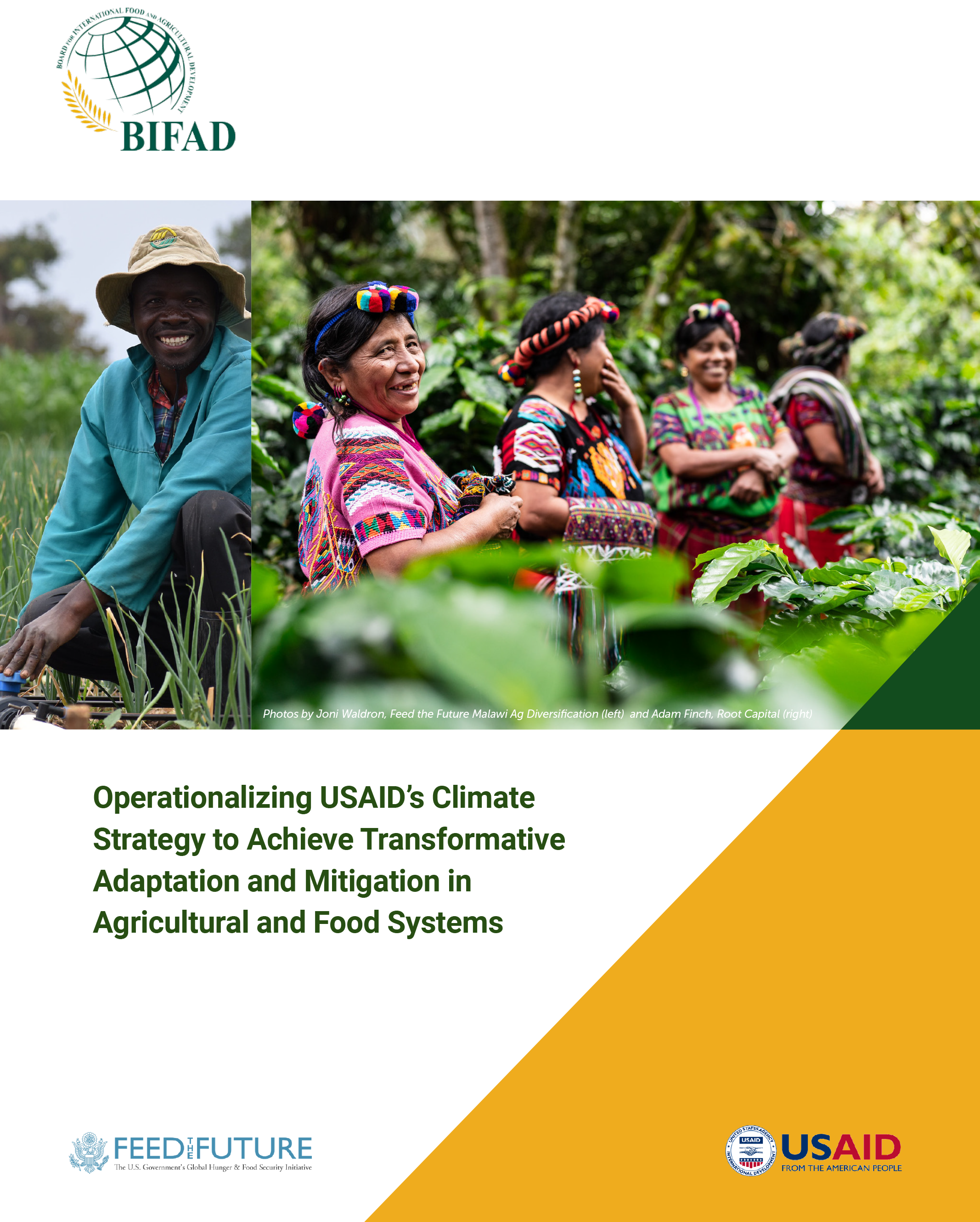
The U.S. Agency for International Development’s (USAID’s) 2023–2030 Climate Strategy (Climate Strategy) provides a bold and ambitious vision to reduce global greenhouse gas emissions and build resilience to climate change.
As the world’s premier development agency, USAID has a unique role to play in the growing field of geospatial visualization and analysis—as a thought leader and convener, as an enabler of locally led development, and as a champion for innovative development solutions. This Strategy will help USAID fully embody this role and serve as a stronger partner to the people who can benefit most from these technologies. Working together with the geospatial and international development and humanitarian communities, by leveraging the best of our respective assets and strengths, we can help societies become more resilient and capable of leading their own development journeys.
The MEL Plan is designed based on the CRCIL’s goals, and expected outputs, outcomes, and impacts, taking into consideration the corresponding MEL activities required to assess progress in its achievements. It establishes a sustainable system for ensuring the quality and validity of data by employing rigorous procedures towards the adaptive management necessary to quantify the progress and impact of proposed activities and measure program contributions to the overall program goal. The MEL Plan Collaborating, Learning, and Adapting (CLA) approach, based on the United States Agency for International Development’s (USAID) CLA approach, and CRCIL’s Theory of Change (TOC) will guide the refinement of activity design as needed, based on new evidence, continual learning, and complexity-aware monitoring and innovative evaluation activities.
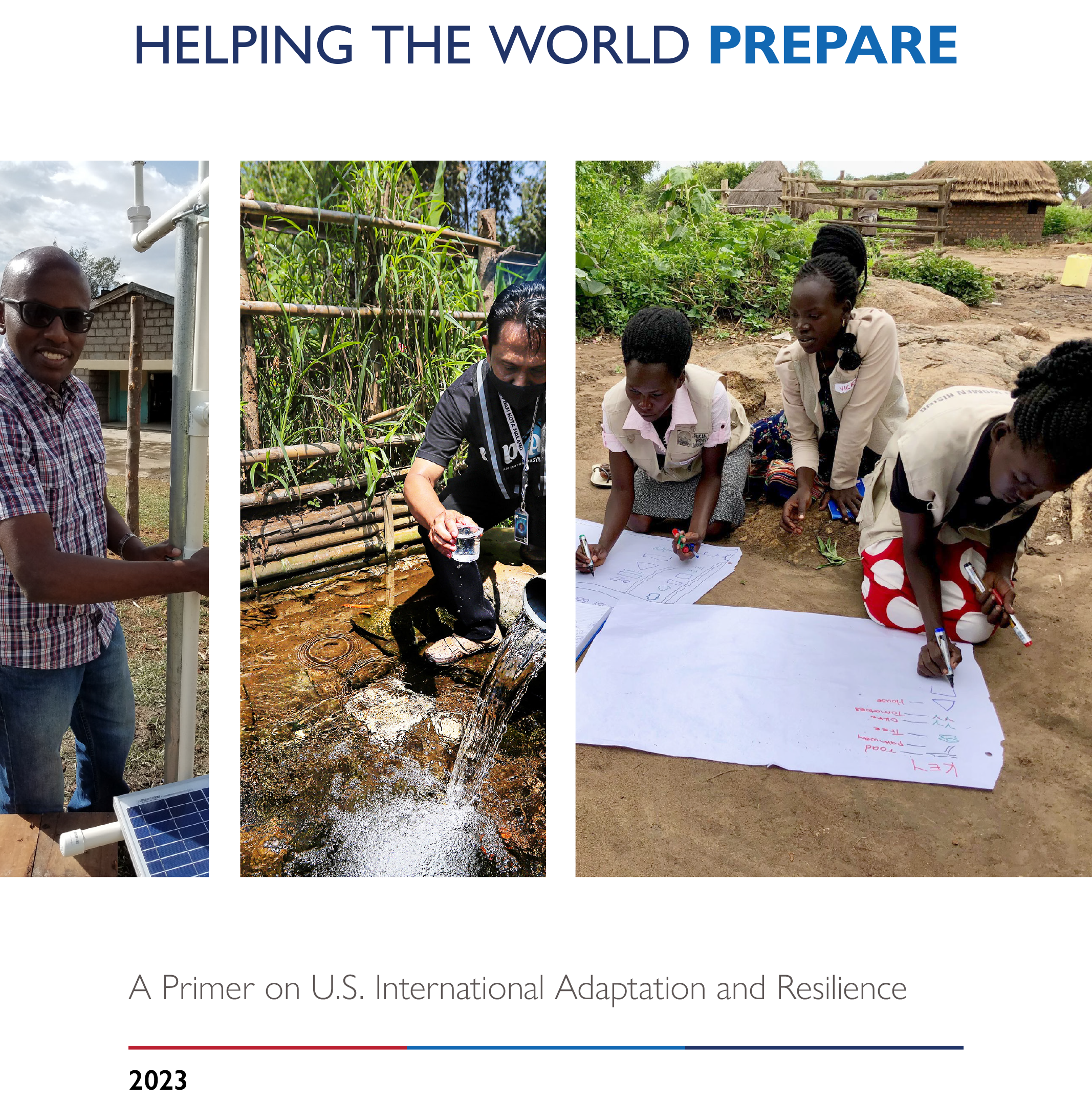
The climate crisis is existential, and the impacts of climate change that are being felt around the world threaten to undermine development gains, exacerbate geopolitical tensions, accelerate the food security crisis, and result in greater instability and humanitarian need.
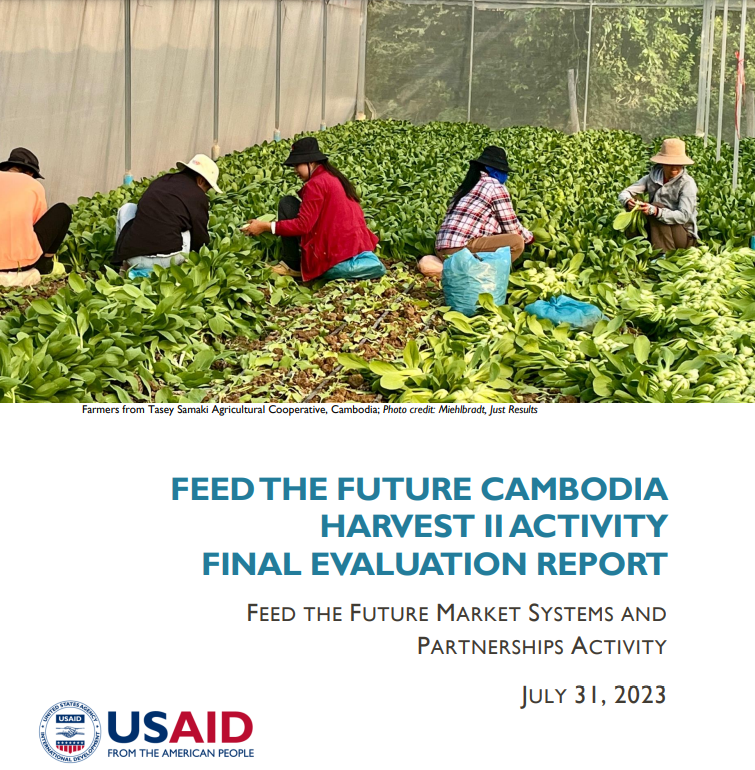
This report presents the findings from the final evaluation of the Feed the Future Cambodia Harvest II activity (Harvest II) funded by the United States Agency for International Development (USAID) and operating from 2017-2022. The approach taken by Harvest II represented a shift in emphasis from previous USAID-funded activities that offered support to agricultural production, moving intentionally towards a demand-driven, market systems development approach. The evaluation team was asked to assess the extent and nature of system change that resulted from the activity, and how farms and firms benefited. The team also assessed whether and how the project contributed to resilience, climate change mitigation, and environmental stewardship.
USAID Climate Ready is focused on achieving its Strategic Objective of capacity of PICs increased to adapt to negative impacts of climate change.
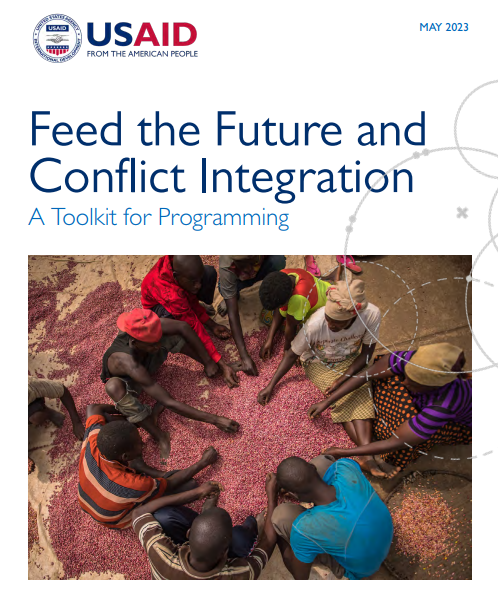
This toolkit is a groundbreaking effort to ensure all investments under the United States Government’s Global Food Security Strategy integrate conflict. The better we understand the connections between conflict and food systems, the better we can meet the goals of the Feed the Future Initiative while also contributing to a more peaceful world. Fragility, conflict, and violence (FCV) can easily undermine progress under Feed the Future, but there are steps we can take to mitigate these dynamics and capitalize on opportunities for peace throughout our programming.
USAID can improve development outcomes by strengthening urban resilience. Through this approach USAID can guard against risks and help capture and safeguard the benefits of urbanization, especially for the most vulnerable. Concepts from this technical guidance can be applied to focused sector programming as well as integrated programming across sectors.
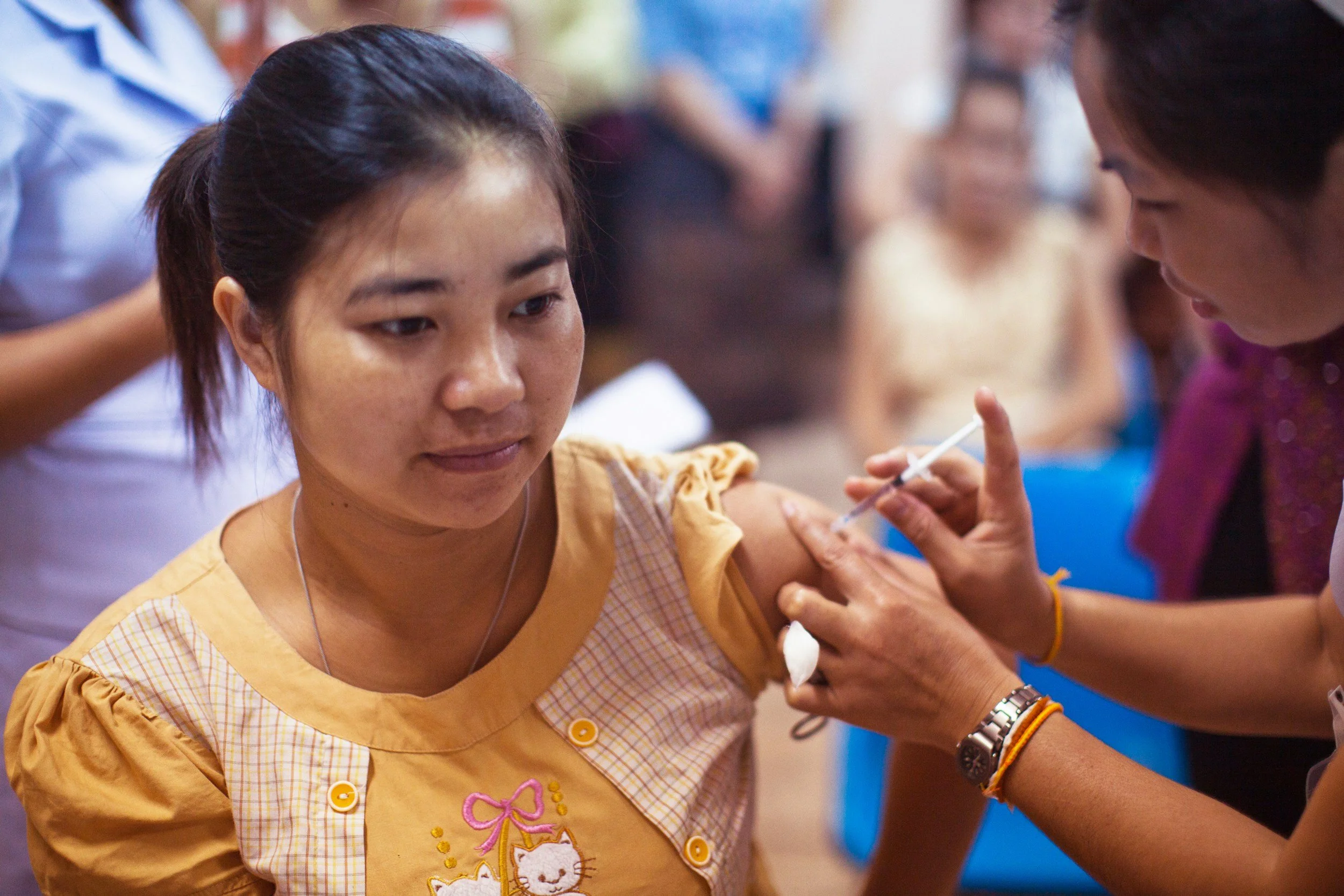
This strategy describes USAID’s renewed commitment to research and development (R&D) and use of new, innovative health products and technologies; the implementation and scale-up of real world, evidence-based research and learning to improve health outcomes globally; and the strengthening of both local health research and development capacity and global research and development partnerships.
The U.S. Agency for International Development (USAID) submits this report, pursuant to Section 7019(e) of Division K of P.L. 117-328, the Department of State, Foreign Operations, and Related Programs Appropriations Act, 2023, which incorporates by reference the requirements of House Report H. Report 117-401 on strengthening disaster resilience in the Caribbean region:
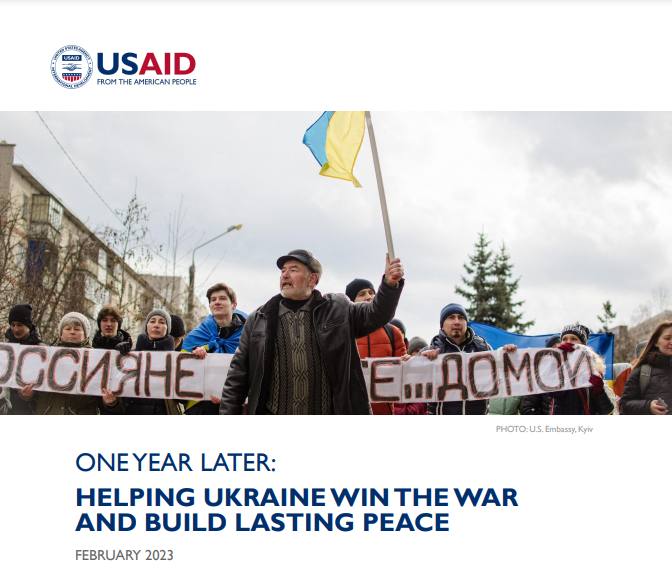
To help meet Ukraine’s wartime needs and lay the foundation for a successful recovery, USAID has provided $13 billion in direct budget support, helping the Government of Ukraine (GoU) fund basic public services like healthcare, education, and emergency response; $1.4 billion in humanitarian assistance to save lives and meet the urgent needs of the Ukrainian people; and over $800 million in development assistance to bolster Ukraine’s energy grid, governance institutions, agriculture, small businesses, and civil society in wartime, while also remaining focused on what will be needed for recovery and reconstruction.
This brief makes the case that to stimulate systemic change, economic development programs can and should focus on facilitating stronger learning processes within local actors (e.g., firms, other organizations, government, and civil society) and systems (e.g., sectors, local economy).
By conserving coral reefs and mangroves, improving forest management, and driving innovative technologies, USAID’s conservation activities reduce greenhouse gas emissions and increase carbon storage.
In 2022 we made considerable progress on our 29 awarded projects across 12 countries. These projects include impact evaluations of active development programs as well as research that tests new approaches for strengthening food security and resilience. These include a new project that builds a technical definition and measure of resilience in the context of poverty traps and the true complexities facing rural households. These also include two seed grants that have been awarded full funding, one in Ethiopia and one in Ghana, both of which are testing innovations in agricultural index insurance. We reported results from two projects providing insights on how livelihood-building programs for women can generate resilience to hardships that include drought and the COVID-19 pandemic.
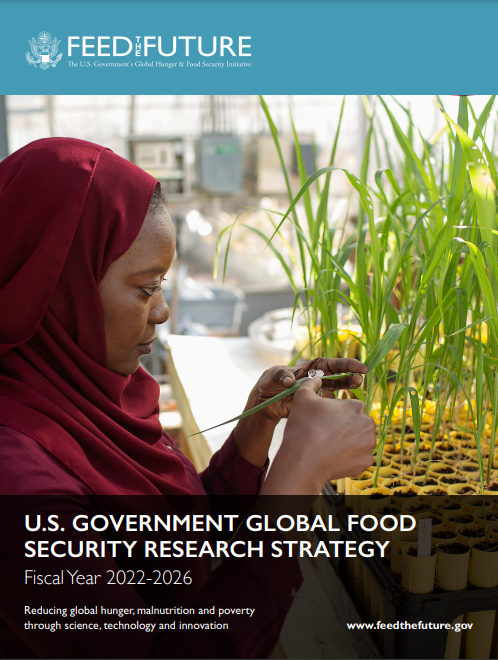
This Global Food Security Research Strategy outlines the U.S. Government’s science-based, convergent, demand-led, and inclusive approach to addressing food-security challenges.
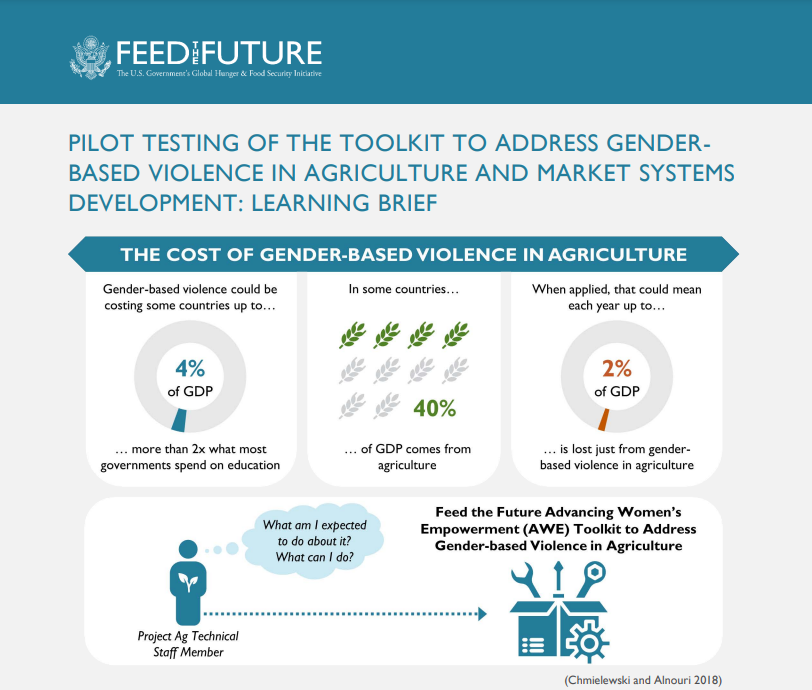
There are both strong moral and ethical reasons and a compelling business case for addressing GBV in the private sector, which are strongly interlinked: GBV not only negatively affects the health and well-being of those who experience it, it also reduces agricultural productivity, workplace and worker productivity, and workforce readiness, as well as market competitiveness, stability, and resilience.
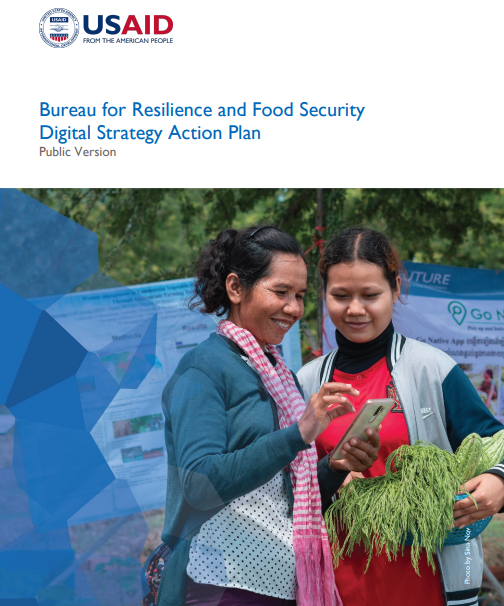
To work toward this vision, RFS aims to use digital technologies effectively to create more inclusive, efficient, prosperous, healthy, and connected agriculture, food, and water systems today — and more climate-smart and resilient agriculture, food, and water systems for tomorrow that sustainably support the health, well-being, and livelihoods of our target populations.

With this new Climate Readiness Plan (CRP), USAID is revitalizing its approach to climate change adaptation, resilience, and risk mitigation across the Agency’s programs and operations and is also committing to ambitious mitigation targets and new adaptation actions in alignment with Biden-Harris Administration priorities, multilateral climate objectives, and the newest climate science.
The Feed the Future Innovation Lab for Markets, Risk & Resilience at UC Davis has the increasing importance of resilience at all levels, from systems to individual families, at the very center of its research program. Launched in July in 2019 by USAID, the lab builds upon a foundation of field studies and theoretical work to help families and communities build resilience to perennial threats like drought but also against unforeseen shocks like the COVID-19 pandemic. We are also testing how resilience itself can generate additional returns through a well-established phenomenon we call Resilience+.
Any partnership between a company, NGO or research institution can be fraught with misalignment of stated objectives, appetite for risk, and short- versus long-term thinking.