-
Community Health
Emergency Preparedness
Family Planning
Financing
Gender Based Violence
HIV/AIDS
Humanitarian
Maternal, Newborn and Child Health
Mobile Health
Monitoring and Evaluation
Nutrition
Private Public Partnerships
Research
Sexual and Reproductive Health
Social Behavior Change
Supply Chain
Vaccinations/Immunization
This analysis, conducted under the Data for Impact (D4I) award, leverages Service Provision Assessment (SPA) data from 2012–2022 to evaluate the adherence of MNH service providers to WHO process standards. The study examines differences between public and private facilities, including for-profit and not-for-profit (NFP) facilities, and tracks changes over time in selected countries.
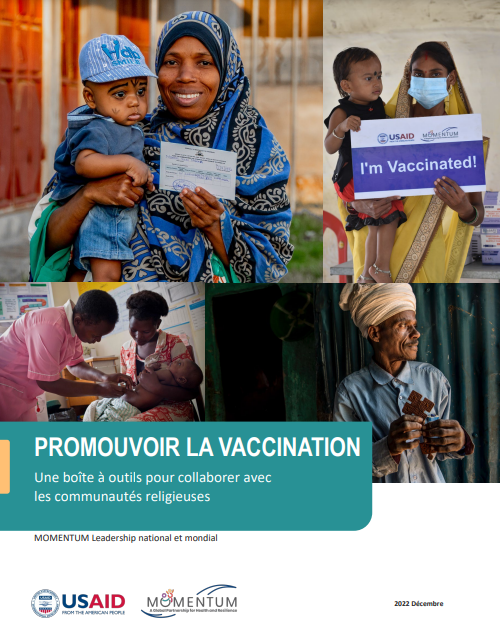
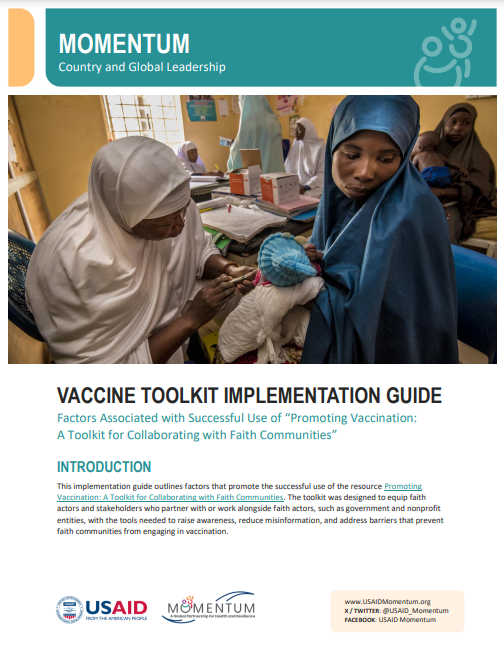
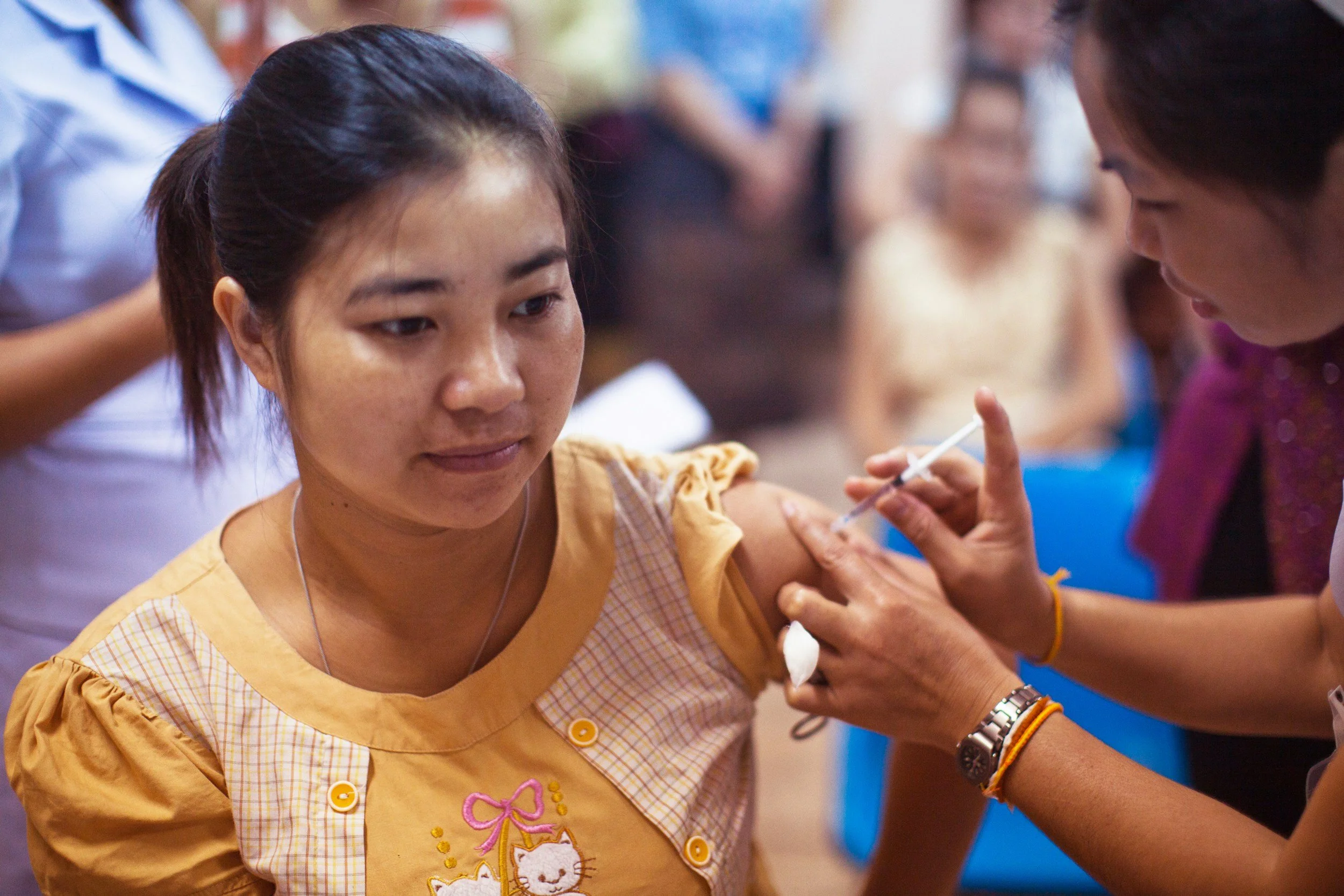
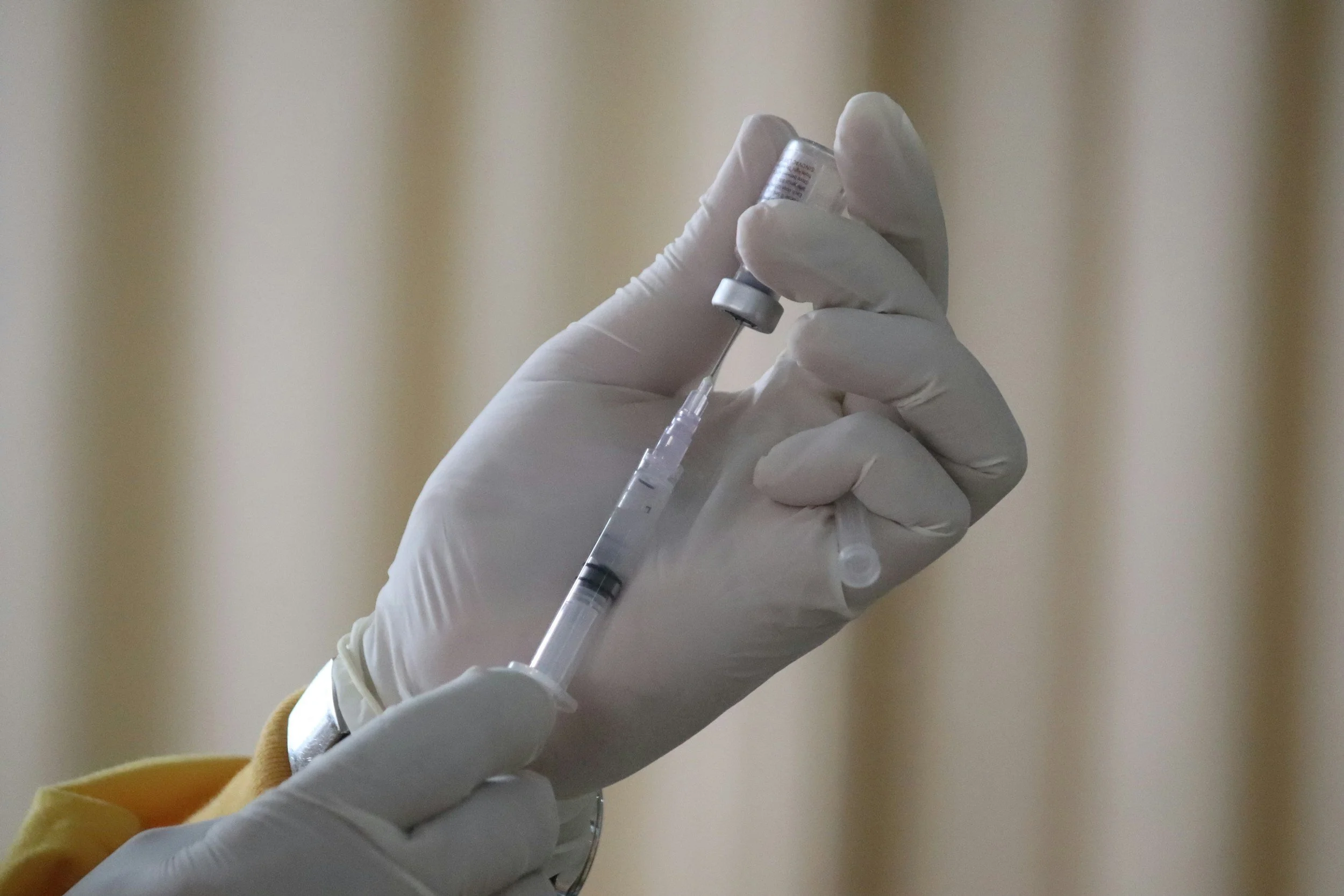
This toolkit is designed to equip faith actors and related stakeholders—such as Ministries of Health, medical and scientific bodies, and non-profit organizations that partner with or work alongside faith actors—with the information and tools needed to raise awareness, reduce misinformation, and address barriers that prevent faith communities, in particular, from engaging in vaccination.
The vaccine promotion toolkit was developed as a part of the U.S. Agency for International Development’s MOMENTUM Country and Global Leadership project, which includes an initiative to identify and address concerns among religious leaders and faith-based communities around vaccination.
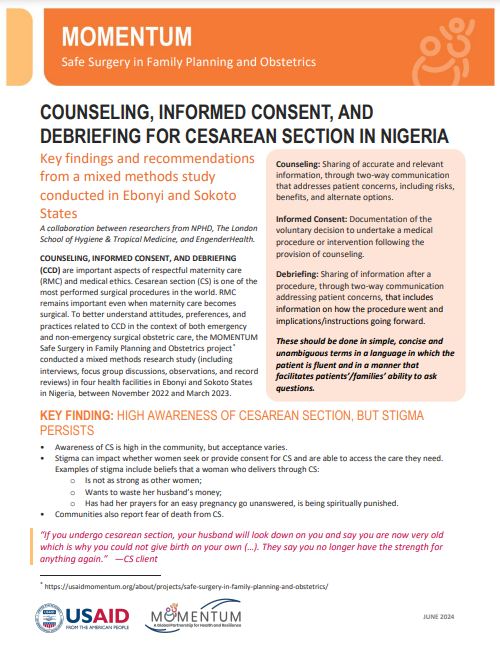
COUNSELING, INFORMED CONSENT, AND DEBRIEFING (CCD) are important aspects of respectful maternity care (RMC) and medical ethics. Cesarean section (CS) is one of the most performed surgical procedures in the world. RMC remains important even when maternity care becomes surgical.
Given the high prevalence of mental health conditions in the perinatal period—pregnancy up to two years after birth—global attention to mental health is essential. Communities must work together to support prevention, early detection, and treatment of mental health conditions during pregnancy and postpartum, when the risk of mental disorders is highest.
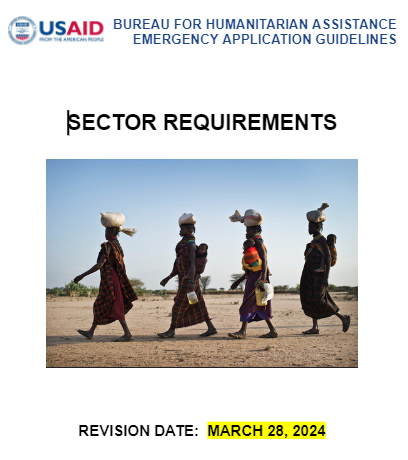
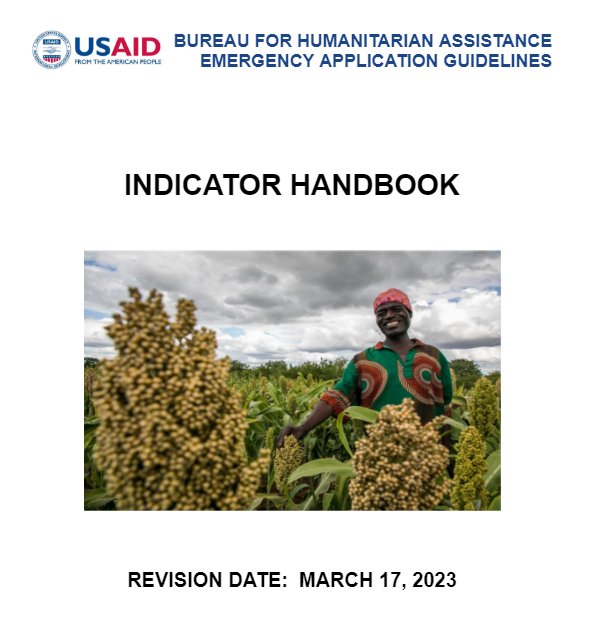
BHA’s Emergency Application Guidelines (EAG) are three core documents, with supplemental guidance and resources provided on the EAG webpage (BHA EAG Page), which is linked at the bottom of every page of this document.
This work addressed the critical need for strengthening gender-based violence (GBV) response and prevention mechanisms at district, community, and facility levels.
FP Market Description is diagnosis of constraints for effective private sector market participation.
The Indicator Handbook provides the performance indicator reference sheets (PIRS) for BHA emergency indicators. The Handbook provides guidance on applicability criteria for each BHA emergency indicator, and guidance on what you must include in custom indicator PIRSs.
This document is an additional resource to Section 12.13. Supply Chain Requirements listed in BHA Emergency Application Guidelines.
“These steps will help us build a more inclusive Agency, one that is more diverse and willing to engage with new partners, more equitable in its impact, and more responsive to local voices. USAID’s legacy as the world’s leading bilateral development institution has always been an asset to the American people and a means for securing stability, security, and prosperity, both at home and abroad. This Joint Strategic Plan acknowledges and draws strength from this heritage to take on the challenges of today and prepare for those that will come tomorrow.”
This brief provides USAID missions and implementing partners with an overview of the challenges around the private health sector accessing finance, definitions of blended and innovative financing, information on the US International Development Finance Corporation, illustrative examples of innovative financing, and case studies on health from multiple regions.
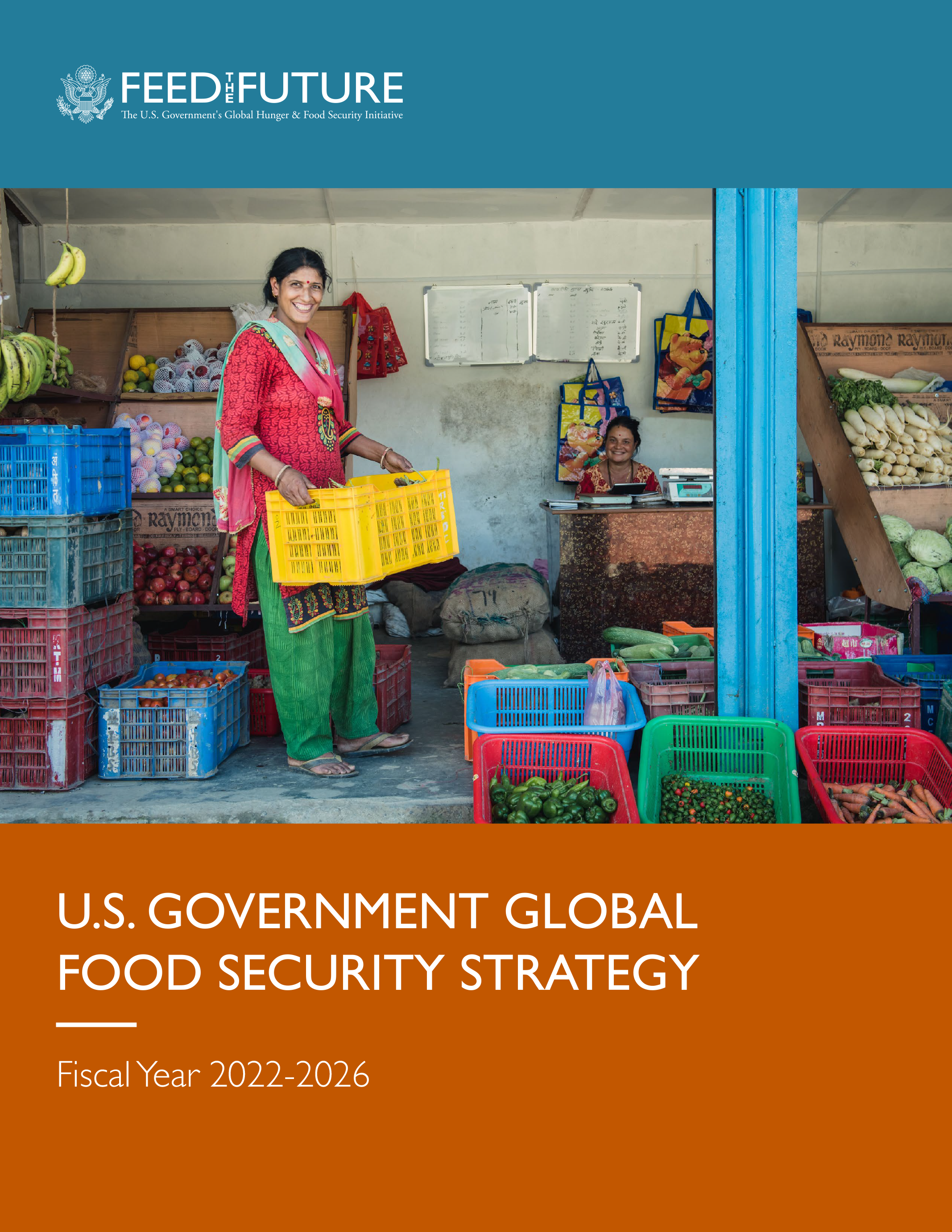
The updated Global Food Security Strategy is our roadmap to that better future. It charts an ambitious course to reduce global poverty, hunger, and malnutrition in the face of COVID-19, climate change, growing conflict, and rising inequality through Feed the Future, the U.S. government’s (USG) global hunger and food-security initiative. It brings America’s full strength to bear on these challenges by drawing on the expertise of agencies across the U.S. government. Through this strategy, we aim to contribute toward a 20% reduction in poverty and stunting in the areas where we work between 2022-2026 by partnering with foreign governments, the private sector, and our colleagues across the interagency.
During emergencies, backloading multiple months of medicines and other public health commodities as close to patients as possible can minimize supply chain disruption and maintain patient access.
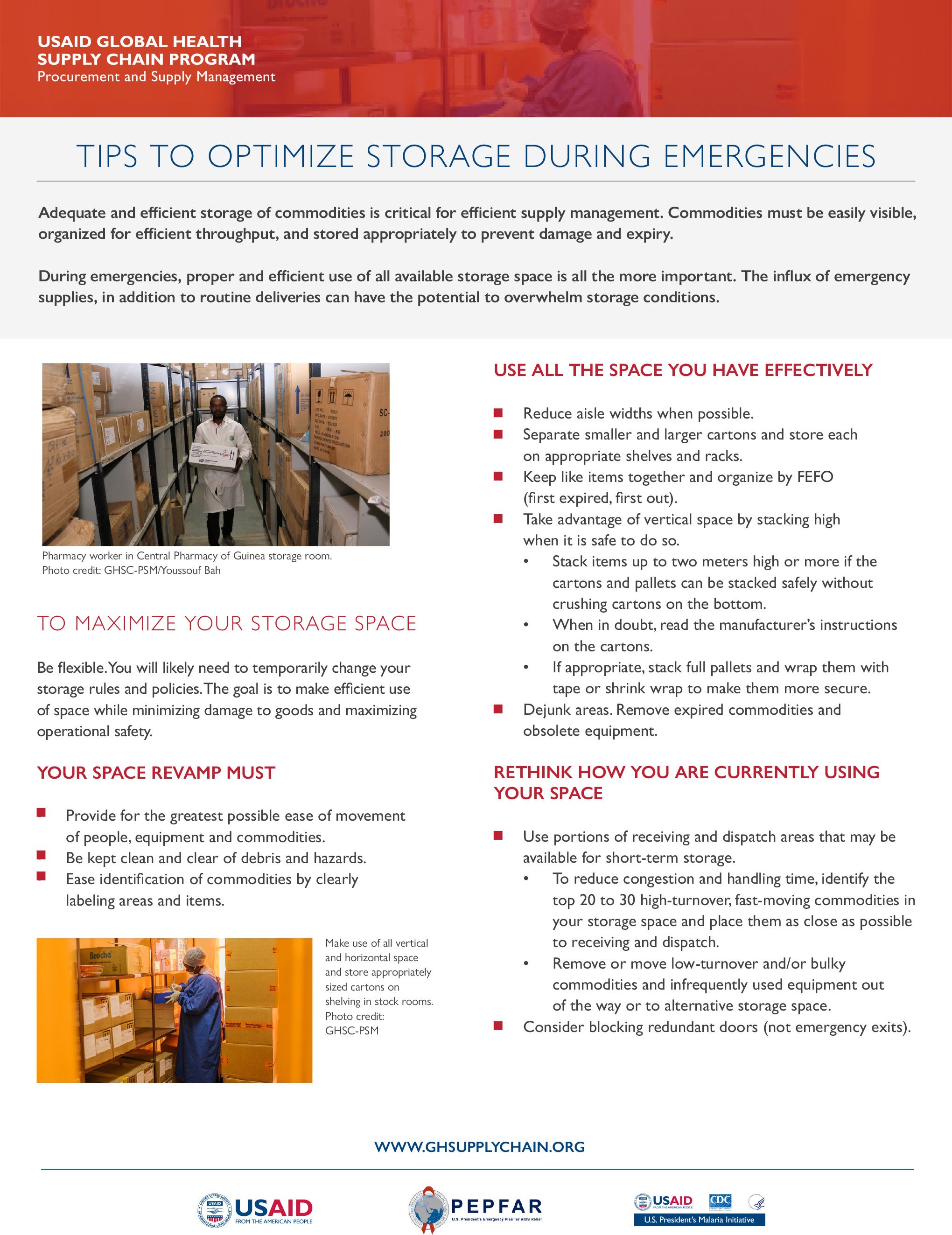
Adequate and efficient storage of commodities is critical for efficient supply management. Commodities must be easily visible, organized for efficient throughput, and stored appropriately to prevent damage and expiry.
To help ensure continuity of supply for all public health commodities while also supporting COVID-19 response, review this series of questions – by functional area – that highlight factors to consider.
Kenya and Ethiopia have robust programs. The CGPP-GHSA project works in six counties in Kenya and in 85 counties across five regions in Ethiopia. The CGPP project outperforms the strictly public sector polio alert system.
The USAID Health Care Improvement (HCI) Project developed the CHW AIM Toolkit in 2011 to help organizations assess community health program functionality and improve program performance. As with the original AIM tool, this updated version is intended to capacitate the processes of programmatic design, planning, assessment, and improvement, for stakeholders ranging from local NGOs, to national policymakers and planners, to global stakeholders.
The SHOPS Plus project, in collaboration with USAID/Côte d’Ivoire, conducted an assessment of the family planning market and provided targeted recommendations to empower stakeholders to sustainably engage the private sector and help Côte d’Ivoire achieve its Family Planning 2020 targets. This brief highlights key findings and recommendations from the full assessment report.
The purpose of this guide is to help organizations involved in community programs to develop and use SWE. This innovative adult education tool can be used to actively engage community groups in discussion of issues of priority concern to them and/or to development programs and to catalyze discussion of those issues in the wider community.
To understand current health financing policies and mechanisms, as well as the current role of the private sector in the health systems of the Middle East, the USAID Middle East Regional Bureau commissioned the Sustaining Health Outcomes through the Private Sector (SHOPS) Plus and Health Finance and Governance (HFG) projects to conduct a review of health financing and the private health sector in the 11 low- and middle-income countries in the region, focusing on the years 2008 to 2017.
To provide sponsors, senior leadership, and interested partners with an introduction to emergency supply chain preparedness as it is covered in the Playbook.
This guide covers an action checklist for: Governance and Organization; Triggers; Financing; Data Visibility; Commodity Forecasting; Procurement and Sourcing; Stockpiling; Warehousing and Storage; and Transport and Waste Management.
SHOPS Plus is supporting USAID Tanzania’s goals and is helping to address the lack of access to finance by working to strengthen the ability of private health providers to access and use financing.
Telemed was founded in 2012. Mission: design and implement systems that allow clients who seek health care in Ethiopia to receive affordable, reliable and immediate healt
In April 2011, USAID Kenya invited SHOPS to conduct a Total Market Assessment of diarrhea management practices. The assessment focused on identifying opportunities available through the private health sector, to increase access to and use of the recommended diarrhea treatment (ORS and zinc) by caregivers of children under 5.