
-
Article
Brief
Meeting Notes
Presentation
Poster
Report
Toolkit
Video
Webinar
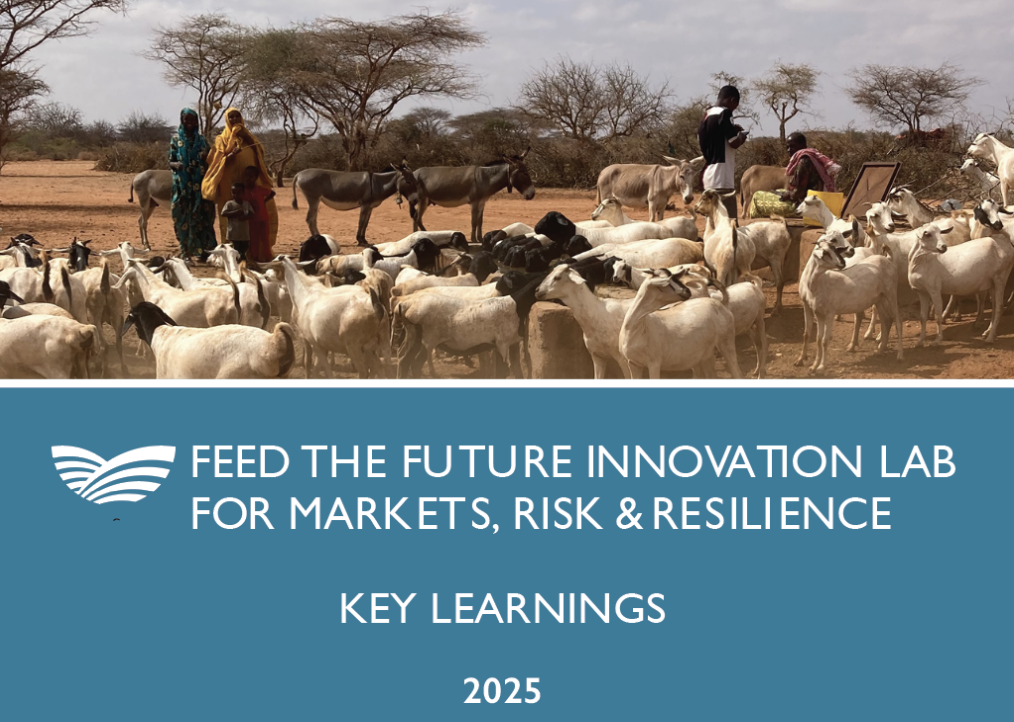
Feed the Future Innovation Lab for Markets, Risks, and Resilience — Key Learnings
This report describes the Feed the Future Innovation Lab for Markets, Risk & Resilience (MRR)’s contributions to (economic) knowledge surrounding small-scale agricultural households in developing countries. MRR research has deepened knowledge around entrenched development challenges and promising innovations for risk management and uptake of productivity-enhancing agricultural technologies.
Do the Impacts of MSD Activities Sustain and Scale After Close?
As part of a series of ex-post studies conducted 3+ years after implementation ended, USAID is building the evidence base for sustainability, scale, and impact on target populations from use of the market systems development (MSD) approach.
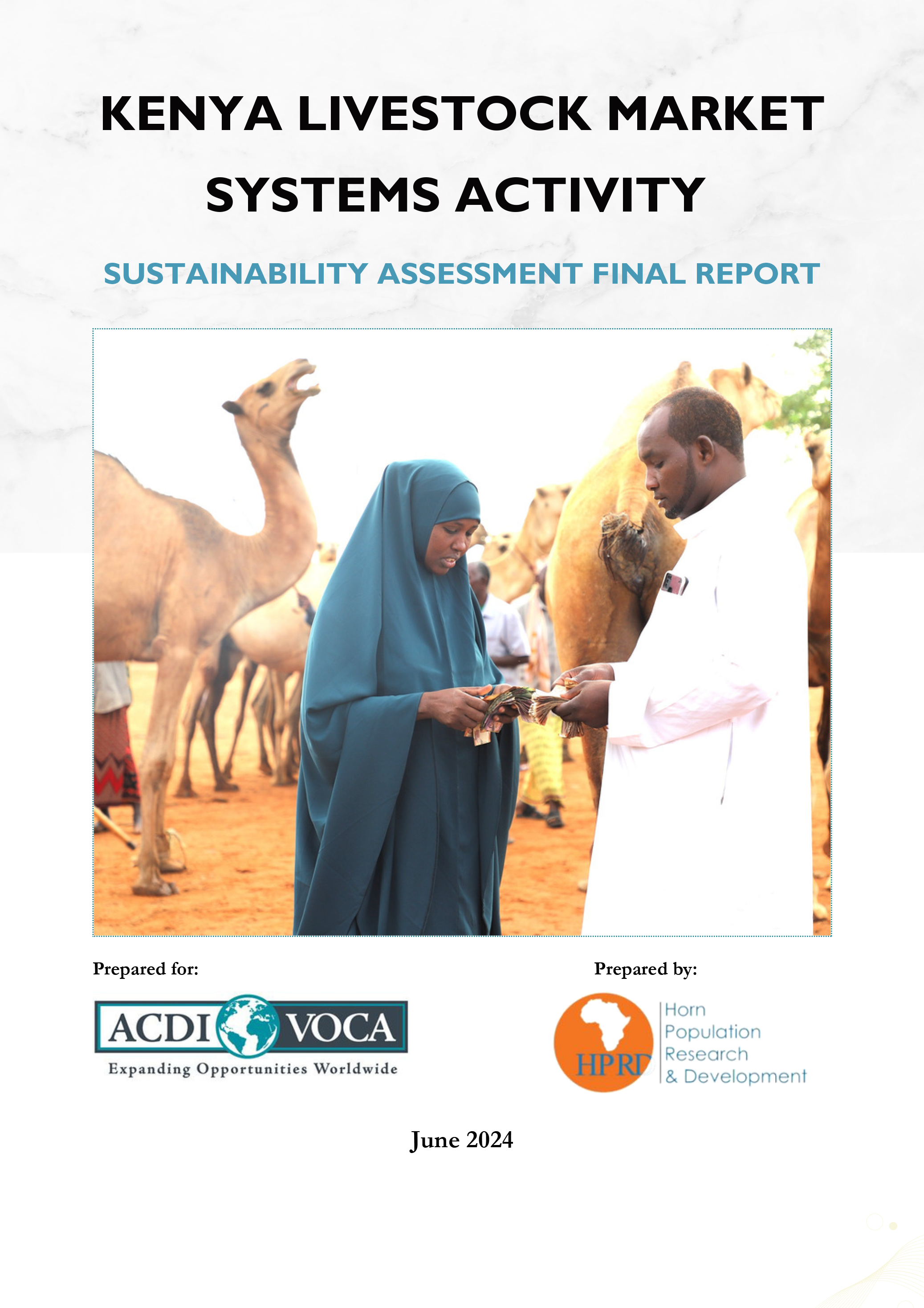
Kenya Livestock Market Systems Activity: Final Sustainability Assessment Report
The Feed the Future Kenya Livestock Market Systems Activity (USAID's LMS) is a USAID-funded initiative aimed at enhancing resilience against shocks and stresses in Northern Kenya.
Lasting Roots: ADVANCE II and the Outgrower Business Model in Ghana
This report addresses a well-recognized evidence gap1 on the longer-term impacts created by market driven programming; specifically, programming influenced by market systems development (MSD) principles.
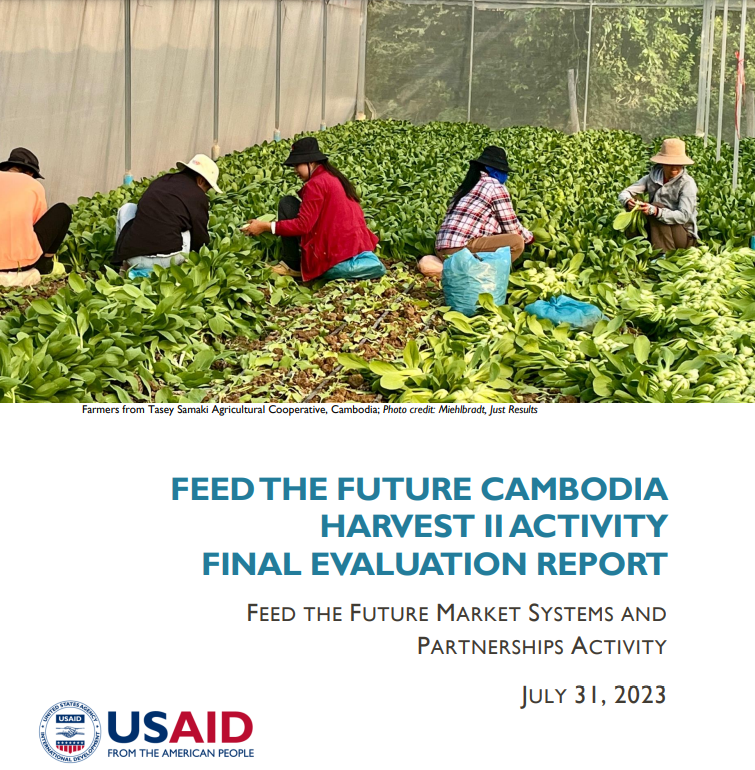
Feed the Future Cambodia Harvest II Activity Final Evaluation Report
This report presents the findings from the final evaluation of the Feed the Future Cambodia Harvest II activity (Harvest II) funded by the United States Agency for International Development (USAID) and operating from 2017-2022. The approach taken by Harvest II represented a shift in emphasis from previous USAID-funded activities that offered support to agricultural production, moving intentionally towards a demand-driven, market systems development approach. The evaluation team was asked to assess the extent and nature of system change that resulted from the activity, and how farms and firms benefited. The team also assessed whether and how the project contributed to resilience, climate change mitigation, and environmental stewardship.
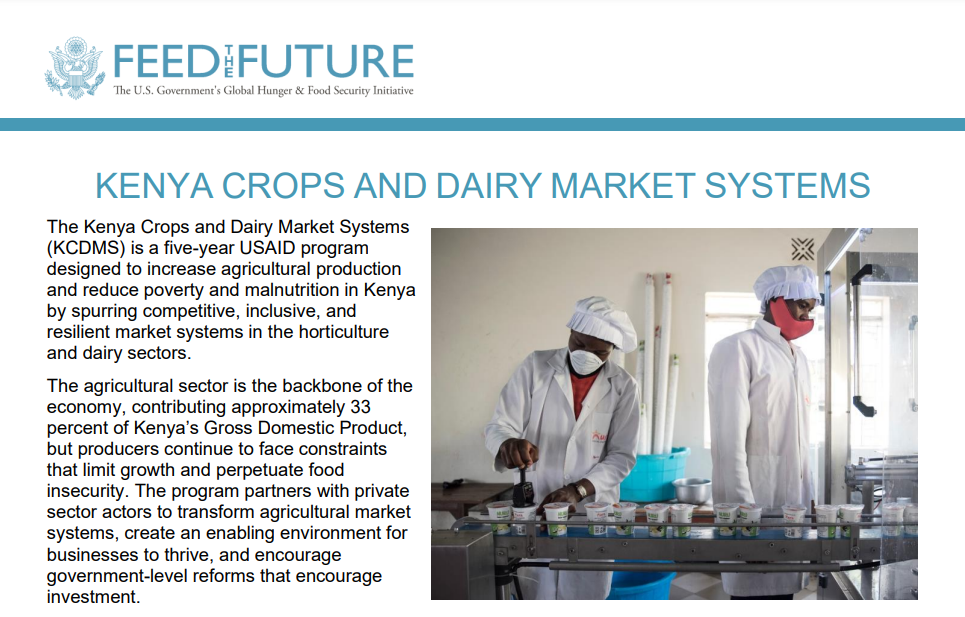
Kenya Crops and Dairy Market Systems
Through a private sector-driven approach, this program uses a variety of incentives, capacity building, and practices to stimulate market players to invest in productivity, financing, and business relationship enhancing improvements. KCDMS also leads interventions to improve nutritional outcomes and strengthen the capacity of county governments to facilitate agricultural sector growth. In turn, these efforts ensure that county and national level policy dialogue is grounded with business association needs and market intelligence, which facilitates a more inclusive business and investment enabling environment at all stages of target value chains. KCDMS also facilitates market linkages in domestic, regional, and international markets for more competitive value chains. During the COVID-19 pandemic, KCDMS redirected investments to ensure the functioning of local markets, working with agri-businesses to conduct outreach to smallholders through widespread radio messaging to foster continued production and increase access to inputs during the pandemic. In addition, the program worked with key business development services providers to assist farmer cooperatives on business development.
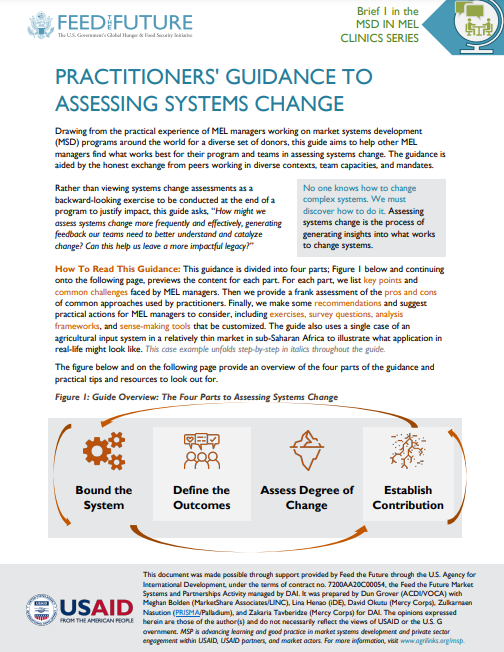
Practitioners’ Guidance to Assessing Systems Change
This guidance focuses on assessing systemic change as an ongoing action done in implementation, as part of a regular monitoring and evaluation system, and not just at the end of the program.
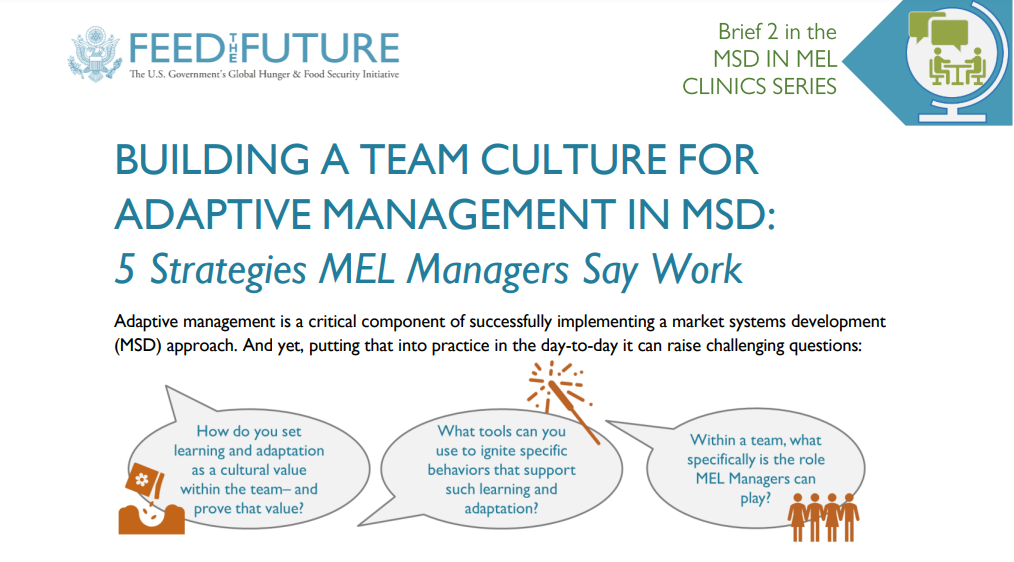
Building a Team Culture for Adaptive Management in MSD: 5 Strategies MEL Managers Say Work
Adaptive management is a critical component of successfully implementing a market systems development (MSD) approach. And yet, putting that into practice in the day-to-day it can raise challenging questions. To tackle these challenges, four senior Monitoring, Evaluation, and Learning (MEL) Managers came together to exchange experiences.
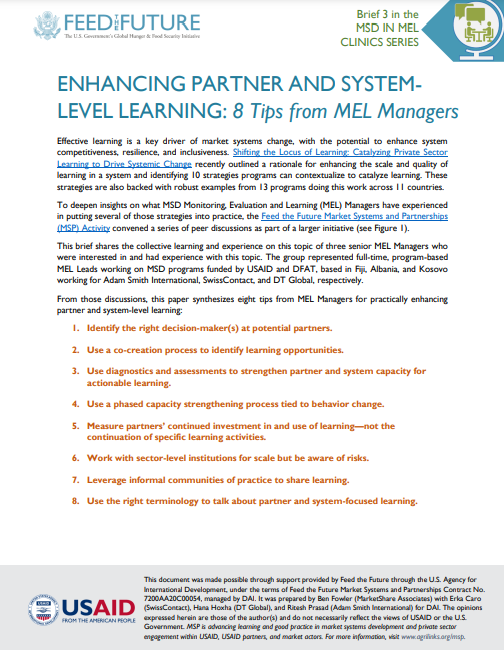
Enhancing Partner and Systems-Level Learning: 8 Tips from MEL Managers
This brief shares the collective learning and experience on this topic of three senior MEL Managers who were interested in and had experience with this topic. The group represented full-time, program-based MEL Leads working on MSD programs funded by USAID and DFAT, based in Fiji, Albania, and Kosovo working for Adam Smith International, SwissContact, and DT Global, respectively.
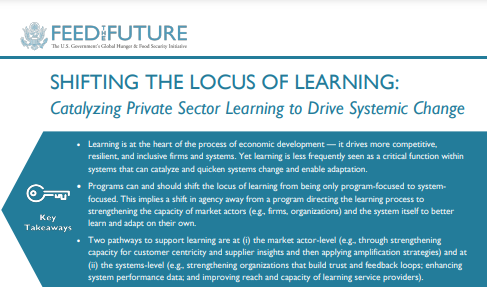
Shifting the Locus of Learning: Catalyzing Private Sector Learning to Drive Systemic Change
This brief makes the case that to stimulate systemic change, economic development programs can and should focus on facilitating stronger learning processes within local actors (e.g., firms, other organizations, government, and civil society) and systems (e.g., sectors, local economy).
Feed the Future Innovation Lab for Food Safety FY2023 Annual Report
In 2022 we made considerable progress on our 29 awarded projects across 12 countries. These projects include impact evaluations of active development programs as well as research that tests new approaches for strengthening food security and resilience. These include a new project that builds a technical definition and measure of resilience in the context of poverty traps and the true complexities facing rural households. These also include two seed grants that have been awarded full funding, one in Ethiopia and one in Ghana, both of which are testing innovations in agricultural index insurance. We reported results from two projects providing insights on how livelihood-building programs for women can generate resilience to hardships that include drought and the COVID-19 pandemic.
Pilot Testing of the Toolkit To Address Gender-Based Violence in Agriculture and Market Systems Development
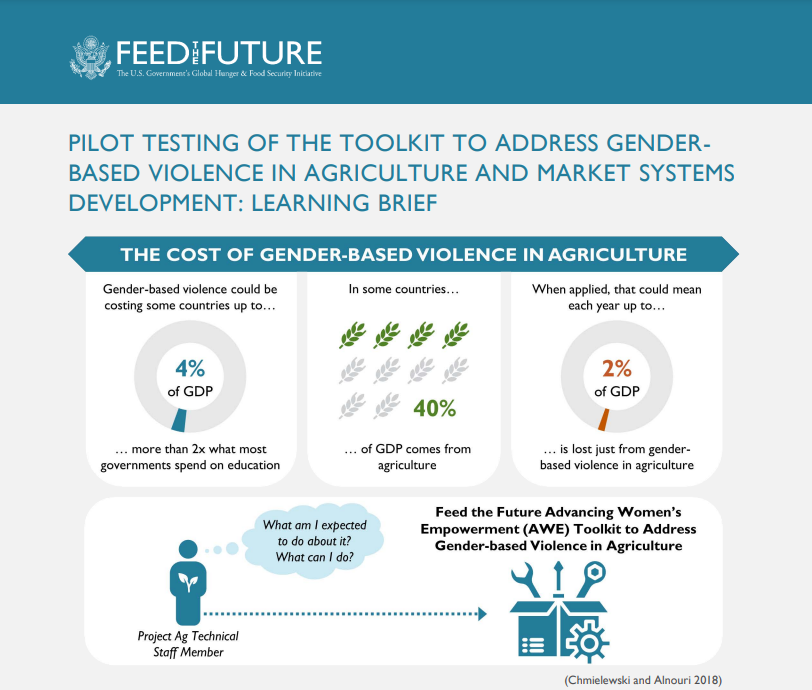
There are both strong moral and ethical reasons and a compelling business case for addressing GBV in the private sector, which are strongly interlinked: GBV not only negatively affects the health and well-being of those who experience it, it also reduces agricultural productivity, workplace and worker productivity, and workforce readiness, as well as market competitiveness, stability, and resilience.
Toolkit to Address Gender-Based Violence in Agriculture and Market Systems Development
The Toolkit to Address Gender-Based Violence in Agriculture and Market Systems Development seeks to prepare agriculture and MSD project staff to better identify and implement actions to address GBV where it arises in their projects.
Feed the Future Innovation Lab for Markets, Risk & Resilience 2020 Annual Report
The Feed the Future Innovation Lab for Markets, Risk & Resilience at UC Davis has the increasing importance of resilience at all levels, from systems to individual families, at the very center of its research program. Launched in July in 2019 by USAID, the lab builds upon a foundation of field studies and theoretical work to help families and communities build resilience to perennial threats like drought but also against unforeseen shocks like the COVID-19 pandemic. We are also testing how resilience itself can generate additional returns through a well-established phenomenon we call Resilience+.
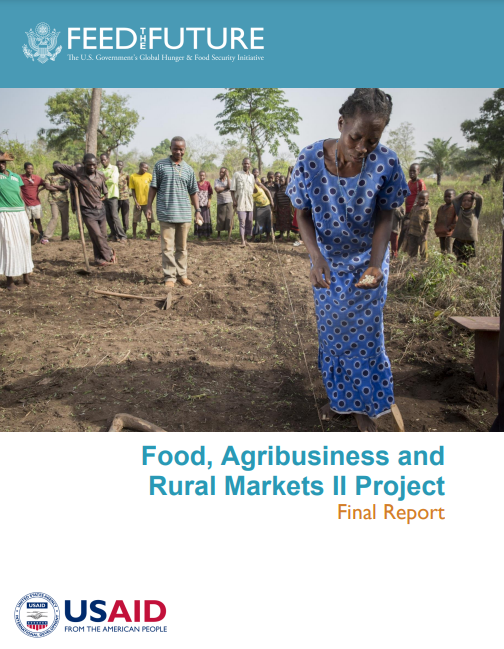
Food, Agribusiness and Rural Markets II Project
FARM II’s yield assessments showed that productivity yields of beneficiary farmers were 29 percent higher than those of non-beneficiary farmers. Greenbelt farmers also significantly exceeded African continent averages for all four assessed crops. The study suggested that the improved technologies and farming practices introduced by FARM II are taking hold among nonbeneficiary farmers in the region. Here, Betty Abou from Magwi County in Eastern Equatoria State packs maize to be taken to Juba for sale.