
-
Article
Brief
Meeting Notes
Presentation
Poster
Report
Toolkit
Video
Webinar
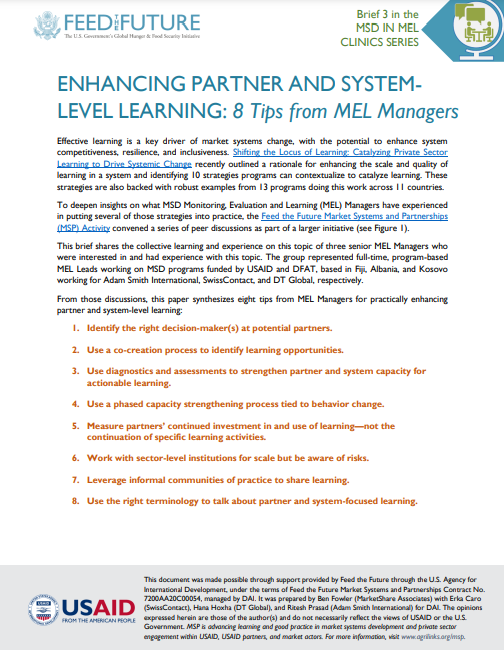
Enhancing Partner and Systems-Level Learning: 8 Tips from MEL Managers
This brief shares the collective learning and experience on this topic of three senior MEL Managers who were interested in and had experience with this topic. The group represented full-time, program-based MEL Leads working on MSD programs funded by USAID and DFAT, based in Fiji, Albania, and Kosovo working for Adam Smith International, SwissContact, and DT Global, respectively.
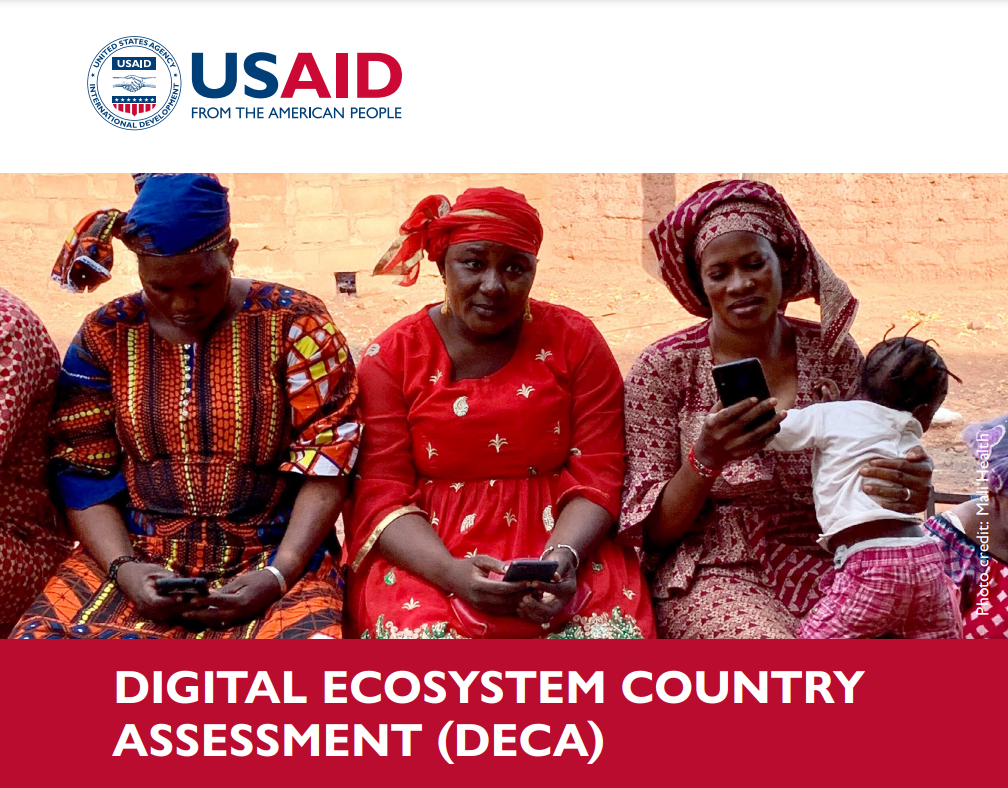
Digital Ecosystem Country Assessment (DECA): Mali 2023
The U.S. Agency for International Development’s (USAID’s) Digital Strategy was launched in April 2020 to achieve and sustain open, secure, and inclusive digital ecosystems that contribute to broad-based, measurable development and humanitarian assistance outcomes through the responsible use of digital technology.
Urban Resilience Technical Guidance
USAID can improve development outcomes by strengthening urban resilience. Through this approach USAID can guard against risks and help capture and safeguard the benefits of urbanization, especially for the most vulnerable. Concepts from this technical guidance can be applied to focused sector programming as well as integrated programming across sectors.
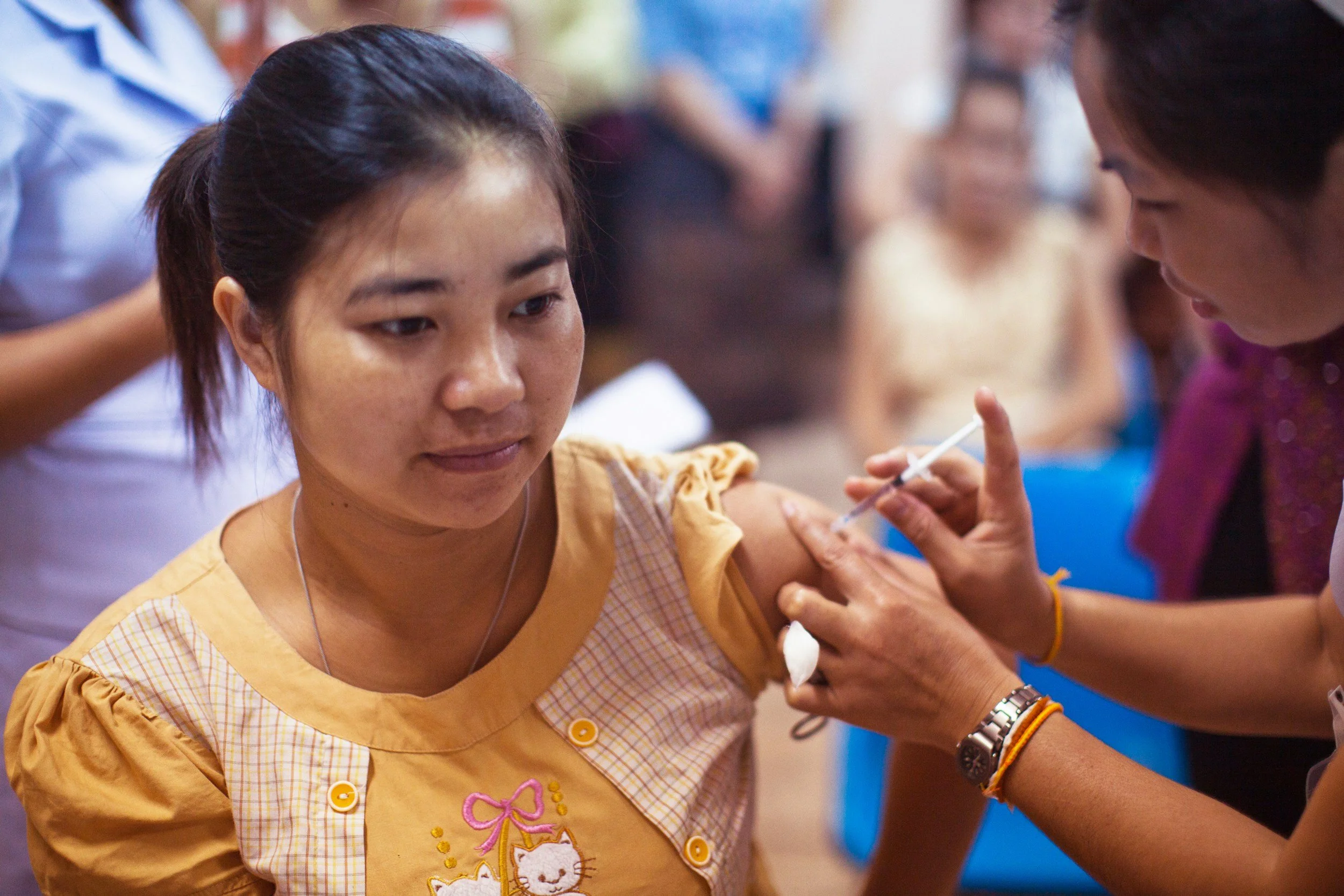
USAID Global Health Research and Development Strategy 2023-2028
This strategy describes USAID’s renewed commitment to research and development (R&D) and use of new, innovative health products and technologies; the implementation and scale-up of real world, evidence-based research and learning to improve health outcomes globally; and the strengthening of both local health research and development capacity and global research and development partnerships.
Report to Congress on Progress to Strengthen Disaster Resilience in the Caribbean Region
The U.S. Agency for International Development (USAID) submits this report, pursuant to Section 7019(e) of Division K of P.L. 117-328, the Department of State, Foreign Operations, and Related Programs Appropriations Act, 2023, which incorporates by reference the requirements of House Report H. Report 117-401 on strengthening disaster resilience in the Caribbean region:
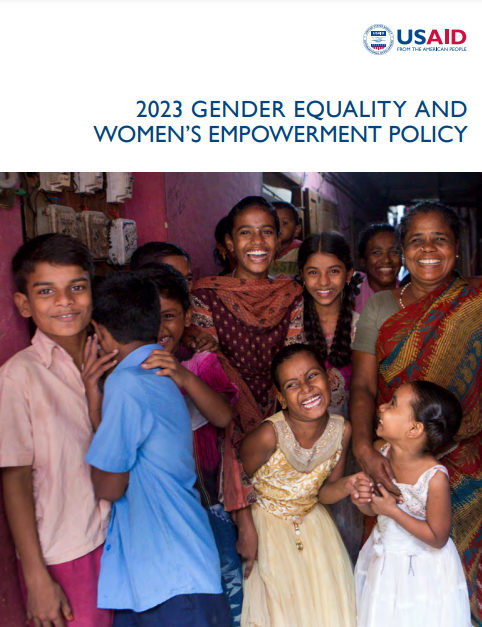
2023 Gender Equality and Women’s Empowerment Policy
This policy provides the vision for USAID’s work to advance gender equality and women’s empowerment around the world—establishing our strategic objectives and driving investments across our operations and programs in order to achieve these aims.
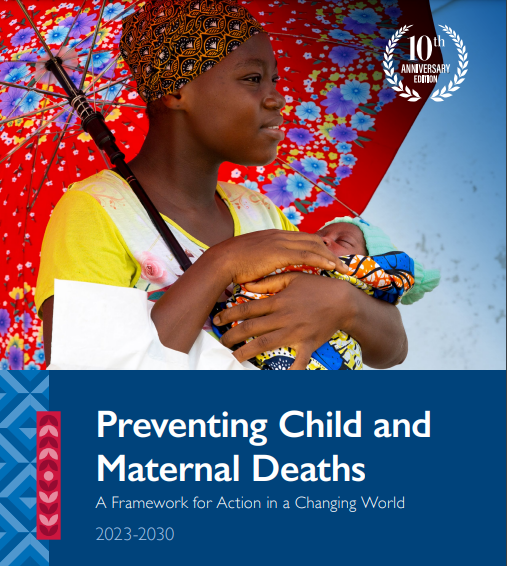
Preventing Child and Maternal Deaths: A Framework for Action in a Changing World 2023-2030
Over the next seven years, USAID will focus on shaping and supporting policies, practices, and country-led programs that improve the quality of care, promote equity, and improve coverage of lifesaving care to reach optimal levels across local communities and regions. USAID’s new strategic framework for preventing child and maternal deaths harnesses the learning and progress of the last decade in six strategic approaches that will yield programmatic improvements and, in turn, save lives.
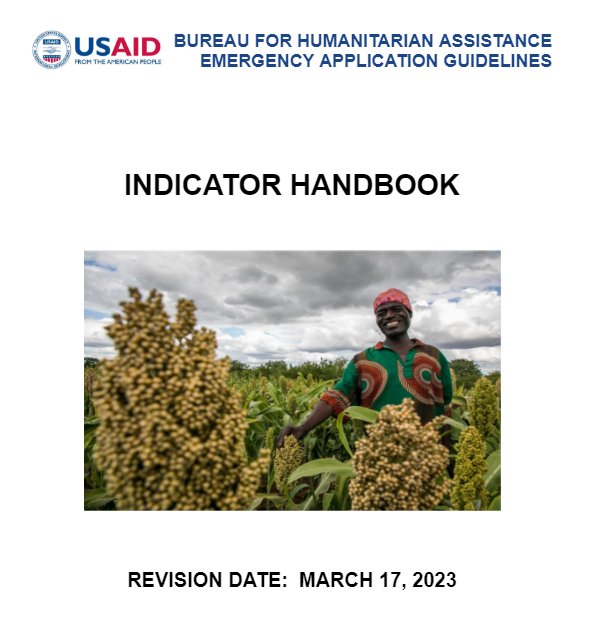
USAID/BHA Emergency Application Guidelines Indicator Handbook
The Indicator Handbook provides the performance indicator reference sheets (PIRS) for BHA emergency indicators. The Handbook provides guidance on applicability criteria for each BHA emergency indicator, and guidance on what you must include in custom indicator PIRSs.
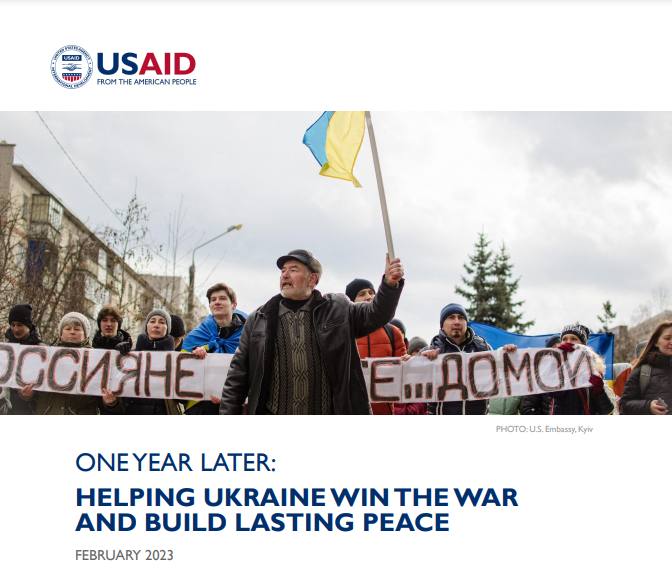
One Year Later: Helping Ukraine Win the War and Build Lasting Peace
To help meet Ukraine’s wartime needs and lay the foundation for a successful recovery, USAID has provided $13 billion in direct budget support, helping the Government of Ukraine (GoU) fund basic public services like healthcare, education, and emergency response; $1.4 billion in humanitarian assistance to save lives and meet the urgent needs of the Ukrainian people; and over $800 million in development assistance to bolster Ukraine’s energy grid, governance institutions, agriculture, small businesses, and civil society in wartime, while also remaining focused on what will be needed for recovery and reconstruction.
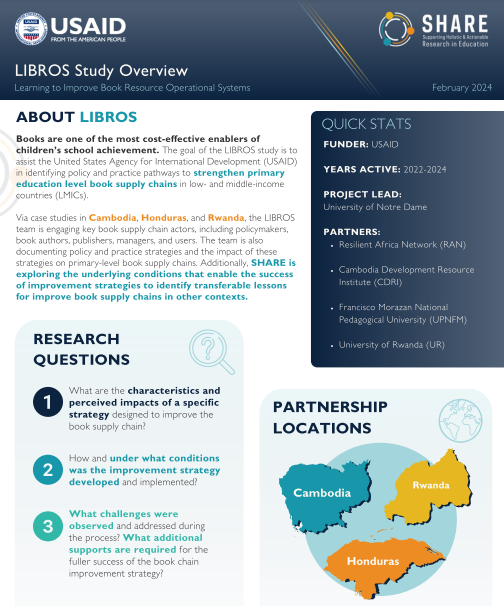
LIBROS Study Overview Learning to Improve Book Resource Operational Systems
Via case studies in Cambodia, Honduras, and Rwanda, the LIBROS team is engaging key book supply chain actors, including policymakers, book authors, publishers, managers, and users. The team is also documenting policy and practice strategies and the impact of these strategies on primary-level book supply chains.
Shifting the Locus of Learning: Catalyzing Private Sector Learning to Drive Systemic Change
This brief makes the case that to stimulate systemic change, economic development programs can and should focus on facilitating stronger learning processes within local actors (e.g., firms, other organizations, government, and civil society) and systems (e.g., sectors, local economy).
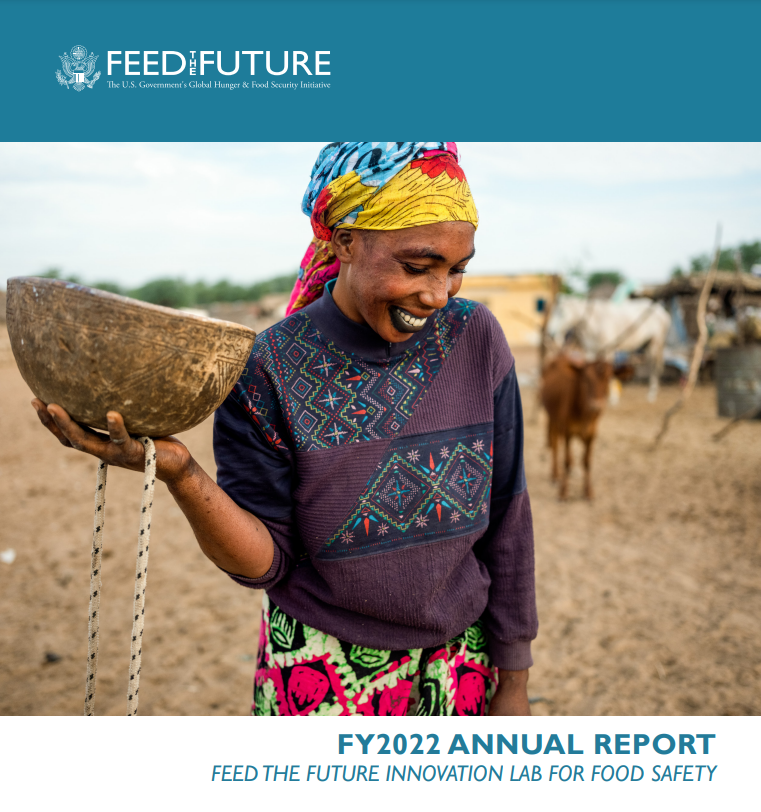
FY2022 Annual Report Feed the Future Innovation Lab for Food Safety
As travel and institutional pandemic restrictions eased globally, the Feed the Future Innovation Lab for Food Safety (FSIL) accelerated research activities in all focus countries. FSIL's four long-term research subawards in Bangladesh, Cambodia, Kenya, and Senegal entered their second year of implementation. These projects were in the data collection stage of their project cycles for most of FY2022.
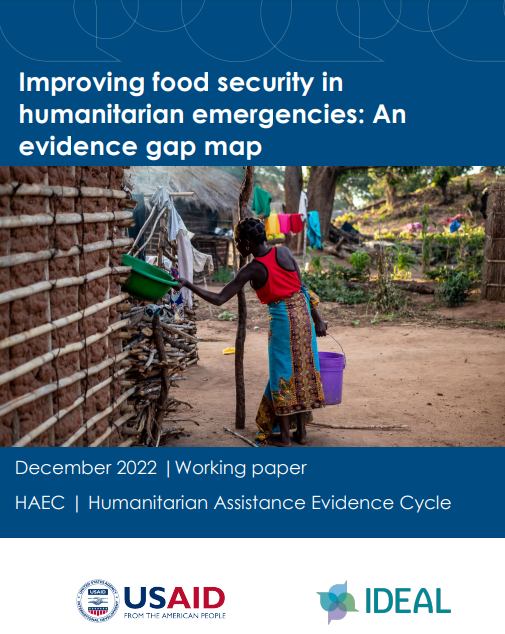
Improving Food Security in Humanitarian Emergencies: An evidence gap map
This report presents the findings of a systematic search to identify and map the evidence base of impact evaluations and systematic reviews of interventions that aim to improve food security during humanitarian crises.
Review of Disability Inclusive Education in USAID Asia Education Programming
This report presents findings from both a desk review (consisting of a review of activity documentation and surveys of USAID Missions and ongoing activities) of 26 basic education activities across 11 countries in Asia and three case studies conducted in Tajikistan, the Philippines, and Bangladesh. The primary objective of the case studies was to gain a better understanding of the collaboration on disability-inclusive education between USAID Missions, host governments, implementing partners, and other educational stakeholders within each country. Furthermore, the case studies provided an opportunity to explore how past basic education activities and education systems within each country have influenced the development and implementation of new basic education activities as they relate to disability inclusion.
USAID Report to Congress on Programs in Forestry and the Conservation of Biodiversity during Fiscal Year 2020: Results and Funding
By conserving coral reefs and mangroves, improving forest management, and driving innovative technologies, USAID’s conservation activities reduce greenhouse gas emissions and increase carbon storage.
Feed the Future Innovation Lab for Food Safety FY2023 Annual Report
In 2022 we made considerable progress on our 29 awarded projects across 12 countries. These projects include impact evaluations of active development programs as well as research that tests new approaches for strengthening food security and resilience. These include a new project that builds a technical definition and measure of resilience in the context of poverty traps and the true complexities facing rural households. These also include two seed grants that have been awarded full funding, one in Ethiopia and one in Ghana, both of which are testing innovations in agricultural index insurance. We reported results from two projects providing insights on how livelihood-building programs for women can generate resilience to hardships that include drought and the COVID-19 pandemic.
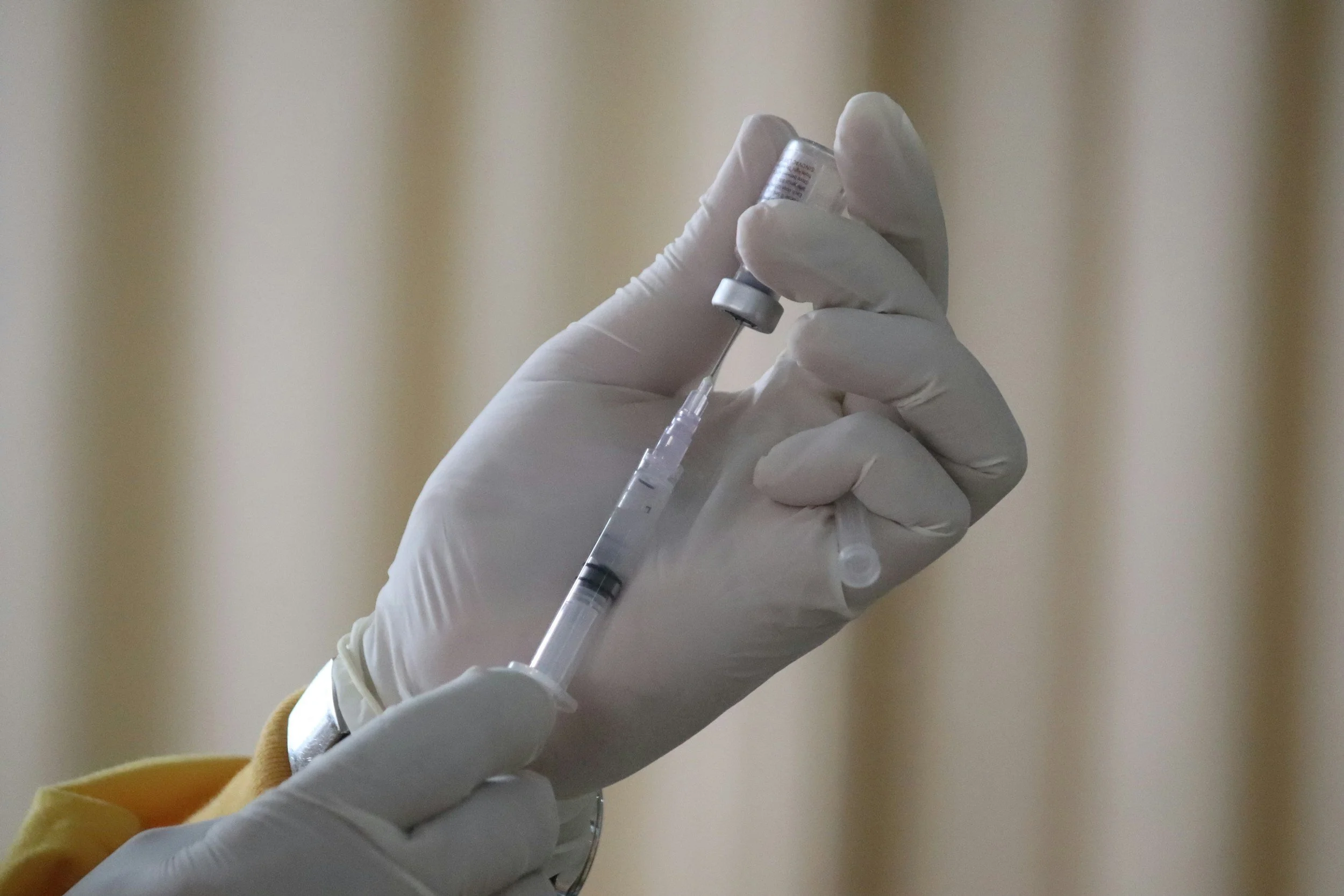
President’s Malaria Initiative: Country Malaria Operational Plans FY 2023
The President’s Malaria Initiative (PMI) is credited with helping to save 11.7 million lives and prevent 2.1 billion malaria cases since 2000. Indeed, since 2006, in countries where PMI works, global efforts have supported a 29% decrease in malaria case rates and a 48% decline in deaths. The introduction of a new malaria vaccine in 2021 has increased optimism in the potential to further strengthen global malaria control.
Women-Inclusive Return on Investment (WI-ROI) Framework
This paper introduces the Women-Inclusive Return on Investment (WI-ROI) Framework, which builds on an existing body of evidence and research around the business case for investing in women’s inclusion. Rather than serve as a how-to guide, the WI-ROI Framework reflects the industry outlook on women’s inclusion at the firm level.
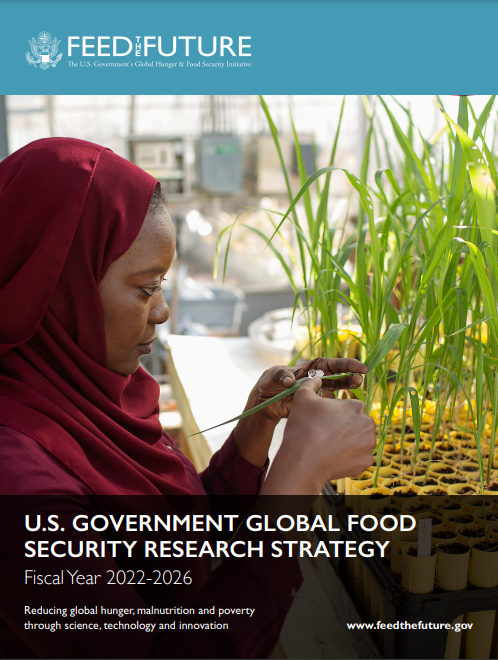
U.S. Government Global Food Security Research Strategy, FY22-26
This Global Food Security Research Strategy outlines the U.S. Government’s science-based, convergent, demand-led, and inclusive approach to addressing food-security challenges.
U.S. Government Global Water Strategy 2022-2027
The global water crisis continues to threaten United States (U.S.) national security and prosperity. Water insecurity endangers public health and food security and undermines economic growth. It also deepens inequalities and increases the likelihood of conflict and state failure.