
-
Article
Brief
Meeting Notes
Presentation
Poster
Report
Toolkit
Video
Webinar
Climate Change Country Profiles 2023-2024
Snapshots of USAID goals, projects and outcomes around the globe
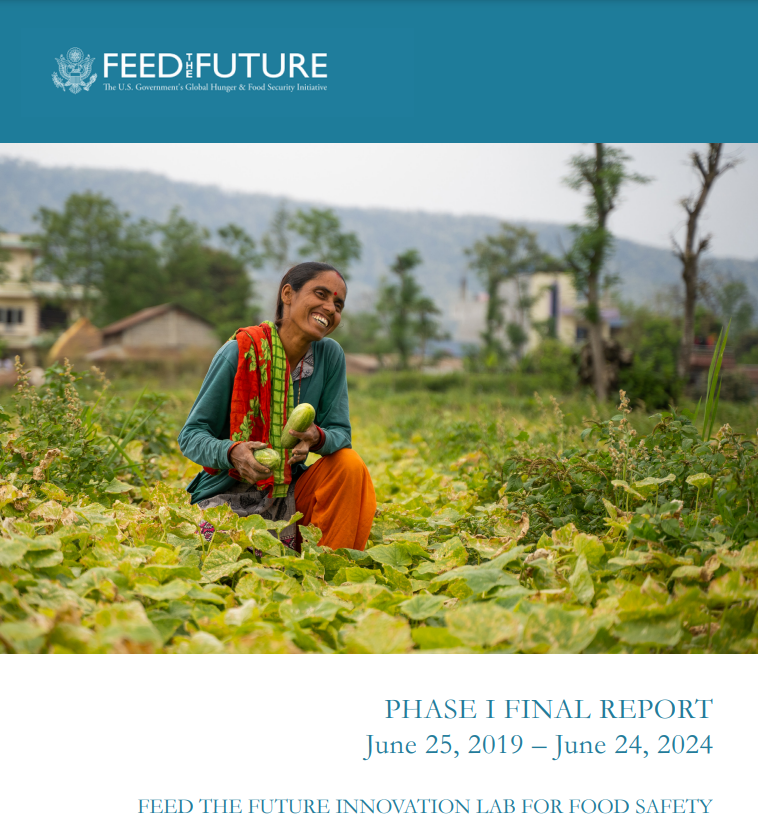
Phase I Final Report June 25, 2019 – June 24, 2024: Feed the Future Innovation Lab for Food Safety
This report presents progress over the first five-year phase of the Feed the Future Innovation Lab for Food Safety (June 25, 2019 – June 24, 2024). The Food Safety Innovation Lab (FSIL), managed by Purdue and Cornell Universities, has leveraged global food safety expertise in locally-led projects that address the root causes of foodborne illness. Phase I FSIL projects were designed to create systemic change to strengthen household and community nutrition, food security, and economic opportunity by identifying food safety knowledge gaps, supporting data-driven food safety practices and policies, and strengthening local food safety capacity.
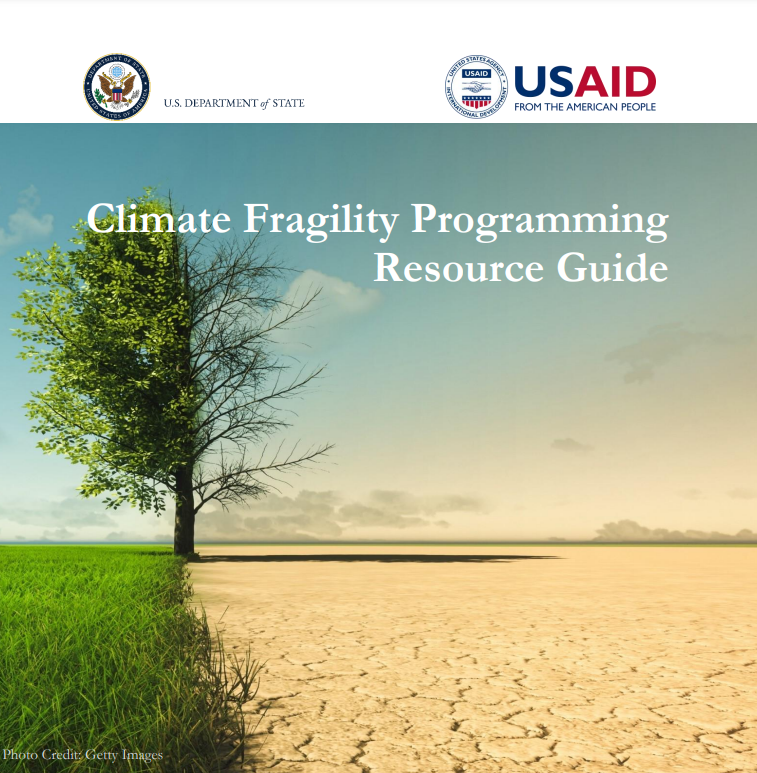
Climate Fragility Programming Resource Guide
The purpose of this resource guide is to support those working on conflict prevention and stabilization to 1) have a better understanding of the risks climate change poses to their work; 2) be equipped with the tools and approaches to best integrate climate change into existing or future programming; and 3) ultimately ensure that their conflict prevention and stabilization work has positive and sustainable outcomes.
Agency Priority Goal | Action Plan | FY 24 – Q3: Resilience and Food Security
Facilitate inclusive, resilient growth in the agriculture and food system to sustainably reduce poverty, food insecurity, and malnutrition. By September 30, 2025, annual sales by assisted farms and firms in the agriculture and food system will exceed the previous three year average by 10 percent.
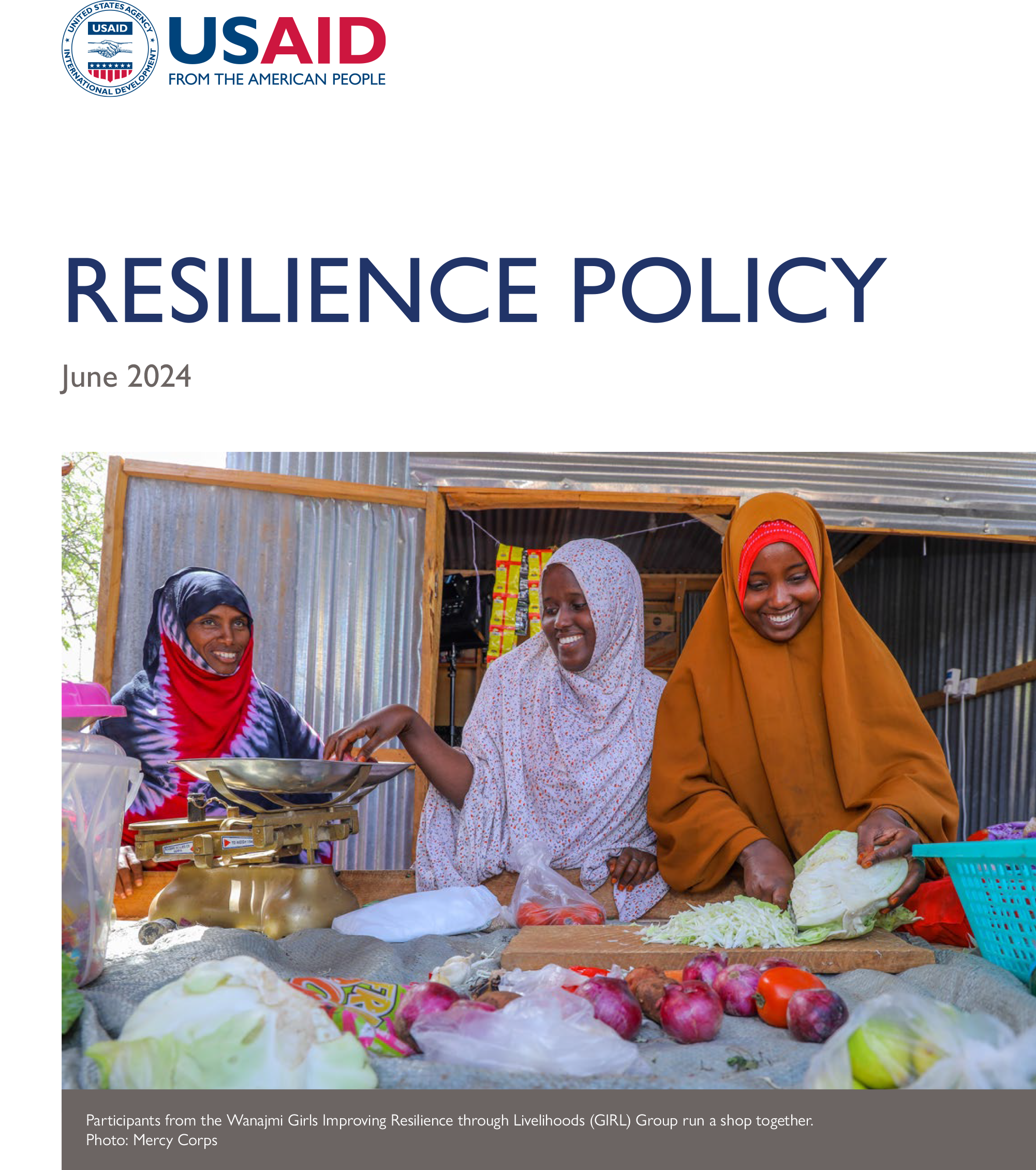
USAID Resilience Policy 2024
As an update to USAID’s inaugural resilience policy (2012), this policy reiterates the goal of reducing humanitarian need in areas of recurrent crisis while also reinforcing resilience as an Agency priority across all USAID programming.
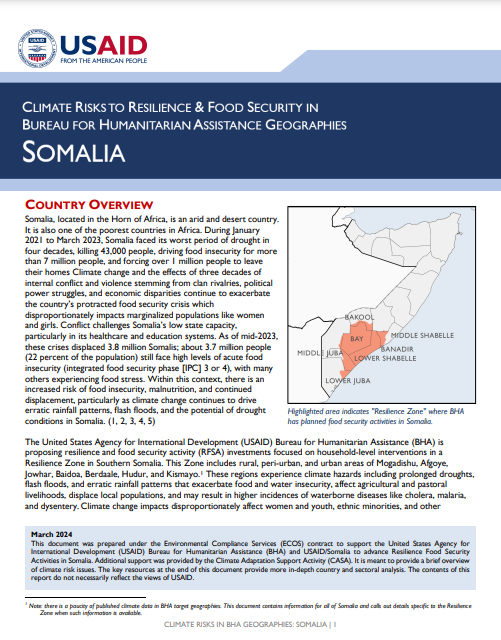
Climate risks to resilience and food security in Bureau for Humanitarian Assistance Geographies: Somalia
The United States Agency for International Development (USAID) Bureau for Humanitarian Assistance (BHA) is proposing resilience and food security activity (RFSA) investments focused on household-level interventions in a Resilience Zone in Southern Somalia.
Integrating Conflict Sensitivity into Food Security Programs
This brief assesses prevailing practices, successes, challenges, lessons learned, and recommendations around integrating conflict sensitivity into food security programs. Ultimately, conflict sensitivity is not only about managing and mitigating risk, but also about seeking opportunities to promote peace. In this respect, this learning brief can contribute to USAID’s calls for greater coherence in humanitarian, development, and peace programming by supporting aid actors to “champion conflict integration and opportunities for enabling or building peace where possible.”
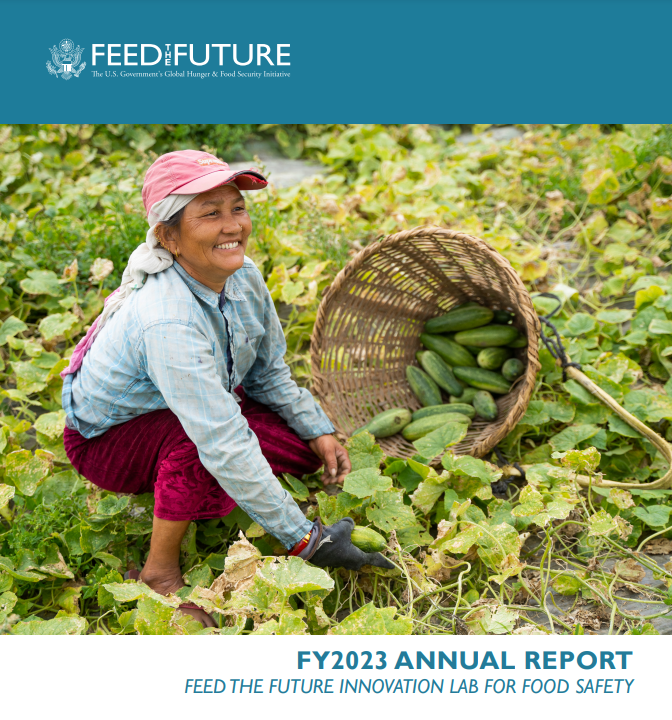
FY2023 Annual Report Feed the Future Innovation Lab for Food Safety
In FY2023, the Feed the Future Innovation Lab for Food Safety (FSIL) subaward projects in Bangladesh, Cambodia, Kenya, Nepal, Nigeria, and Senegal made significant progress in data collection to better understand microbial food safety challenges in each focus country, analyze the roles and opportunities for women in food safety and in different food value chains, and identify appropriate food safety interventions. All projects entered their final year of activities (year three for long-term subawards in Bangladesh, Cambodia, Kenya, and Senegal and year two for short-term subawards in Nepal and Nigeria) and many have started to analyze data and disseminate results. In FY2023, FSIL subaward projects published nine peer-reviewed journal articles, gave seven conference presentations, and hosted workshops and training sessions for producers, extension agents, government stakeholders, and the private sector.
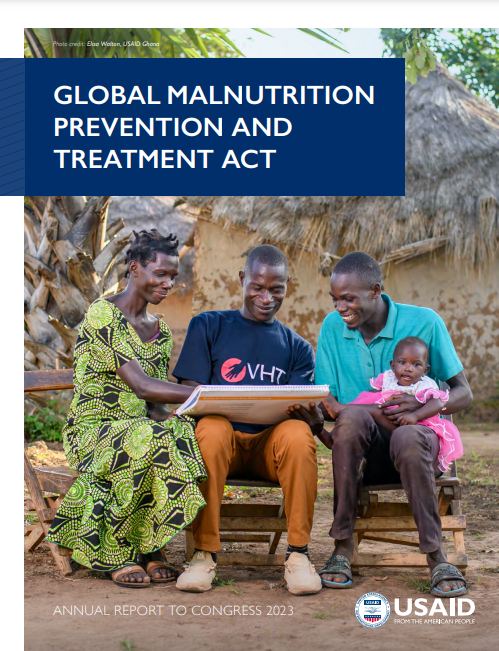
Global Malnutrition Prevention and Treatment Act - Annual Report to Congress 2023
The Global Malnutrition Prevention and Treatment Act (GMPTA) is a pivotal legislative initiative signed into law by President Biden in October 2022. This act charges the United States Agency for International Development (USAID) with combating malnutrition globally. The GMPTA solidifies USAID’s leadership role in nutrition and underscores its commitment to evidence-based interventions within both developmental and humanitarian contexts. By addressing the critical issue of malnutrition through targeted strategies, the GMPTA aims to improve health outcomes, promote economic advancement, and enhance overall human development across nations.
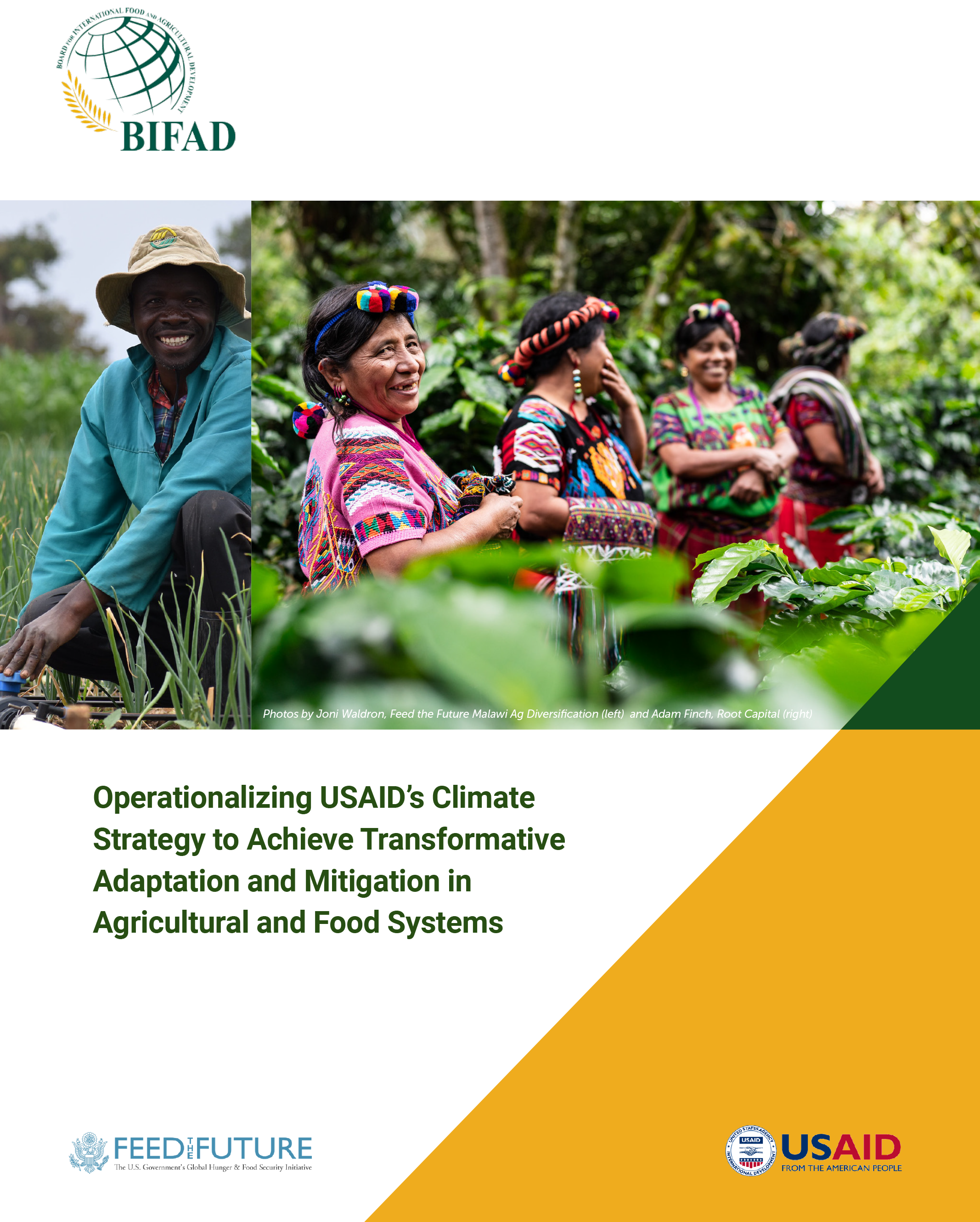
Operationalizing USAID’s Climate Strategy to Achieve Transformative Adaptation and Mitigation in Agricultural and Food Systems
The U.S. Agency for International Development’s (USAID’s) 2023–2030 Climate Strategy (Climate Strategy) provides a bold and ambitious vision to reduce global greenhouse gas emissions and build resilience to climate change.
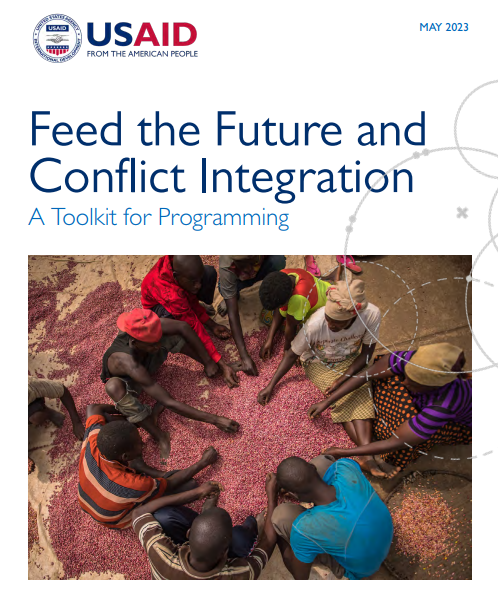
Feed the Future and Conflict Integration
This toolkit is a groundbreaking effort to ensure all investments under the United States Government’s Global Food Security Strategy integrate conflict. The better we understand the connections between conflict and food systems, the better we can meet the goals of the Feed the Future Initiative while also contributing to a more peaceful world. Fragility, conflict, and violence (FCV) can easily undermine progress under Feed the Future, but there are steps we can take to mitigate these dynamics and capitalize on opportunities for peace throughout our programming.
Urban Resilience Technical Guidance
USAID can improve development outcomes by strengthening urban resilience. Through this approach USAID can guard against risks and help capture and safeguard the benefits of urbanization, especially for the most vulnerable. Concepts from this technical guidance can be applied to focused sector programming as well as integrated programming across sectors.
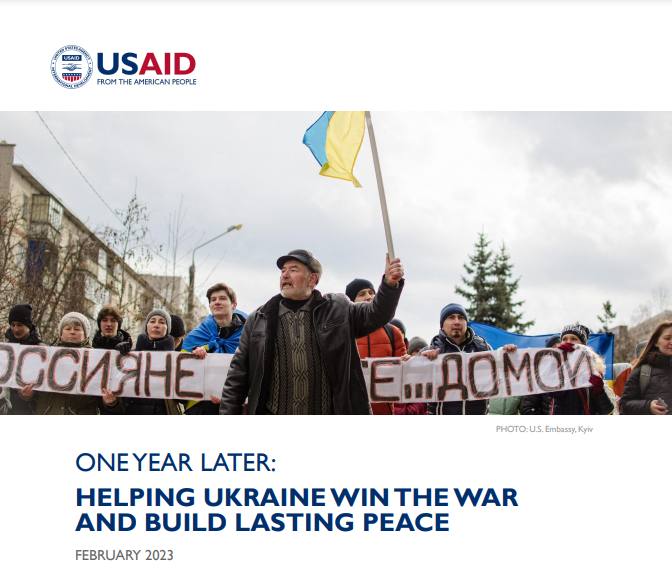
One Year Later: Helping Ukraine Win the War and Build Lasting Peace
To help meet Ukraine’s wartime needs and lay the foundation for a successful recovery, USAID has provided $13 billion in direct budget support, helping the Government of Ukraine (GoU) fund basic public services like healthcare, education, and emergency response; $1.4 billion in humanitarian assistance to save lives and meet the urgent needs of the Ukrainian people; and over $800 million in development assistance to bolster Ukraine’s energy grid, governance institutions, agriculture, small businesses, and civil society in wartime, while also remaining focused on what will be needed for recovery and reconstruction.
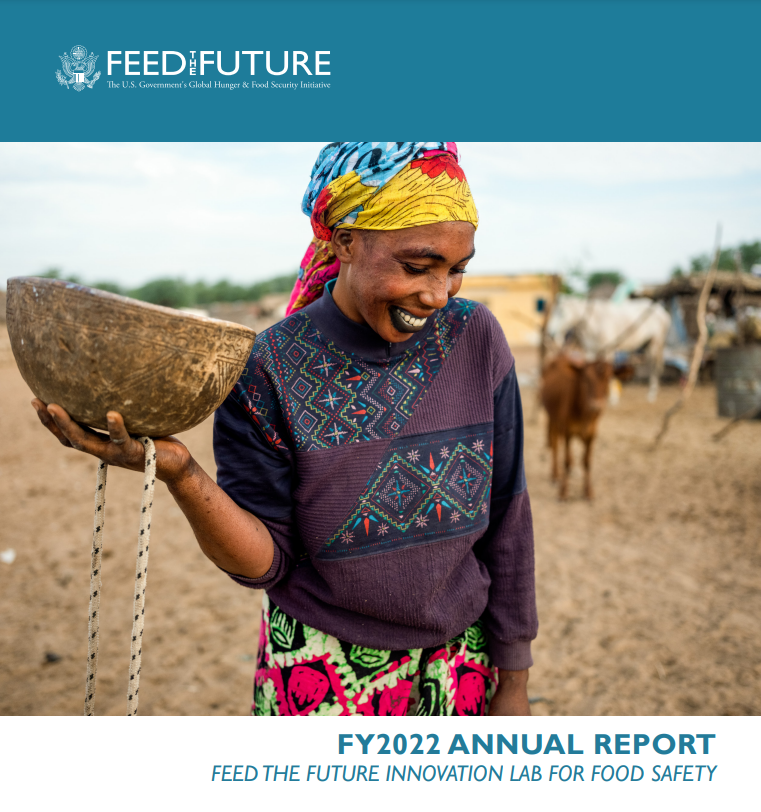
FY2022 Annual Report Feed the Future Innovation Lab for Food Safety
As travel and institutional pandemic restrictions eased globally, the Feed the Future Innovation Lab for Food Safety (FSIL) accelerated research activities in all focus countries. FSIL's four long-term research subawards in Bangladesh, Cambodia, Kenya, and Senegal entered their second year of implementation. These projects were in the data collection stage of their project cycles for most of FY2022.
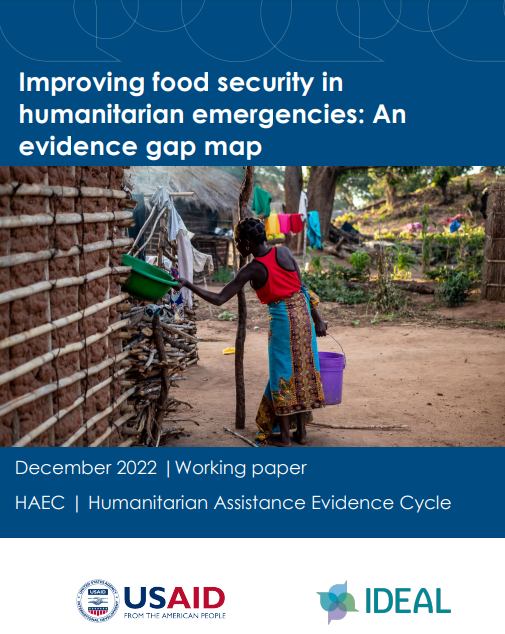
Improving Food Security in Humanitarian Emergencies: An evidence gap map
This report presents the findings of a systematic search to identify and map the evidence base of impact evaluations and systematic reviews of interventions that aim to improve food security during humanitarian crises.
Feed the Future Innovation Lab for Food Safety FY2023 Annual Report
In 2022 we made considerable progress on our 29 awarded projects across 12 countries. These projects include impact evaluations of active development programs as well as research that tests new approaches for strengthening food security and resilience. These include a new project that builds a technical definition and measure of resilience in the context of poverty traps and the true complexities facing rural households. These also include two seed grants that have been awarded full funding, one in Ethiopia and one in Ghana, both of which are testing innovations in agricultural index insurance. We reported results from two projects providing insights on how livelihood-building programs for women can generate resilience to hardships that include drought and the COVID-19 pandemic.
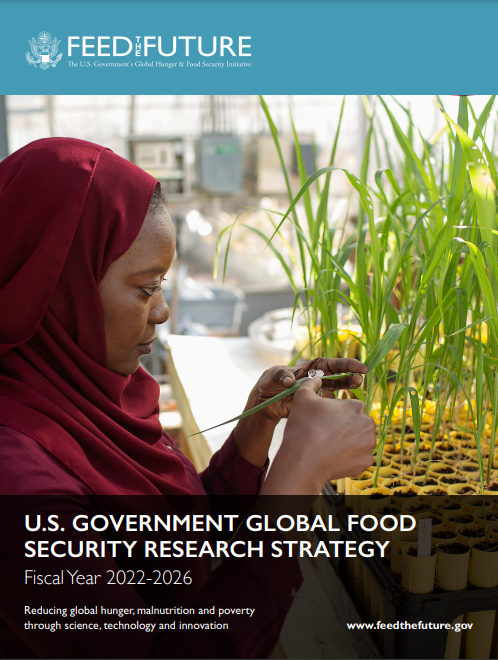
U.S. Government Global Food Security Research Strategy, FY22-26
This Global Food Security Research Strategy outlines the U.S. Government’s science-based, convergent, demand-led, and inclusive approach to addressing food-security challenges.
U.S. Government Global Water Strategy 2022-2027
The global water crisis continues to threaten United States (U.S.) national security and prosperity. Water insecurity endangers public health and food security and undermines economic growth. It also deepens inequalities and increases the likelihood of conflict and state failure.
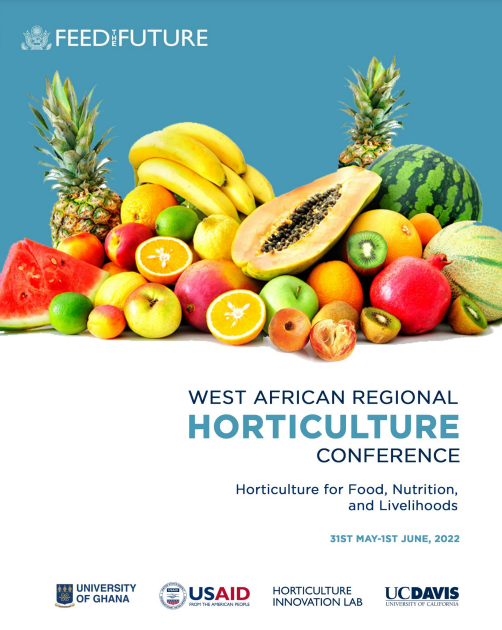
West African Regional Horticulture Conference: Horticulture for Food, Nutrition, and Livelihoods
The West Africa horticulture conference was organized together with local horticulture experts and other stakeholders to identify on-the-ground challenges and opportunities in the sector. This is to inform specific capacity development activities for stakeholders, including industry experts and leaders. This is also to encourage local engagement and ownership, influencing the sustainability of this work to continue beyond the Horticulture Innovation Lab’s involvement. Thus, contributing to inclusive economic growth and a more resilient system led by the regional experts.
U.S. Dept. of State and USAID Joint Strategy FY 2022 - 2026
“These steps will help us build a more inclusive Agency, one that is more diverse and willing to engage with new partners, more equitable in its impact, and more responsive to local voices. USAID’s legacy as the world’s leading bilateral development institution has always been an asset to the American people and a means for securing stability, security, and prosperity, both at home and abroad. This Joint Strategic Plan acknowledges and draws strength from this heritage to take on the challenges of today and prepare for those that will come tomorrow.”