
-
Article
Brief
Meeting Notes
Presentation
Poster
Report
Toolkit
Video
Webinar
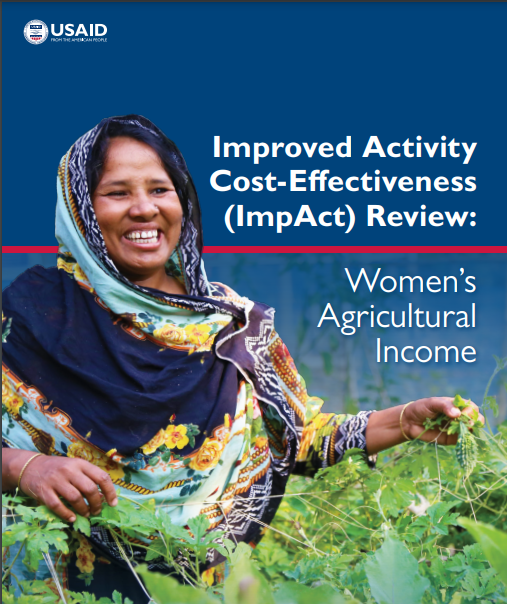
Improved Activity Cost-Effectiveness (ImpAct) Review: Women's Agricultural Income
This ImpAct Review was conducted to inform missions seeking to integrate gender into Feed the Future programs, and summarizes impact evidence on which interventions have the greatest impact on women’s agricultural income.
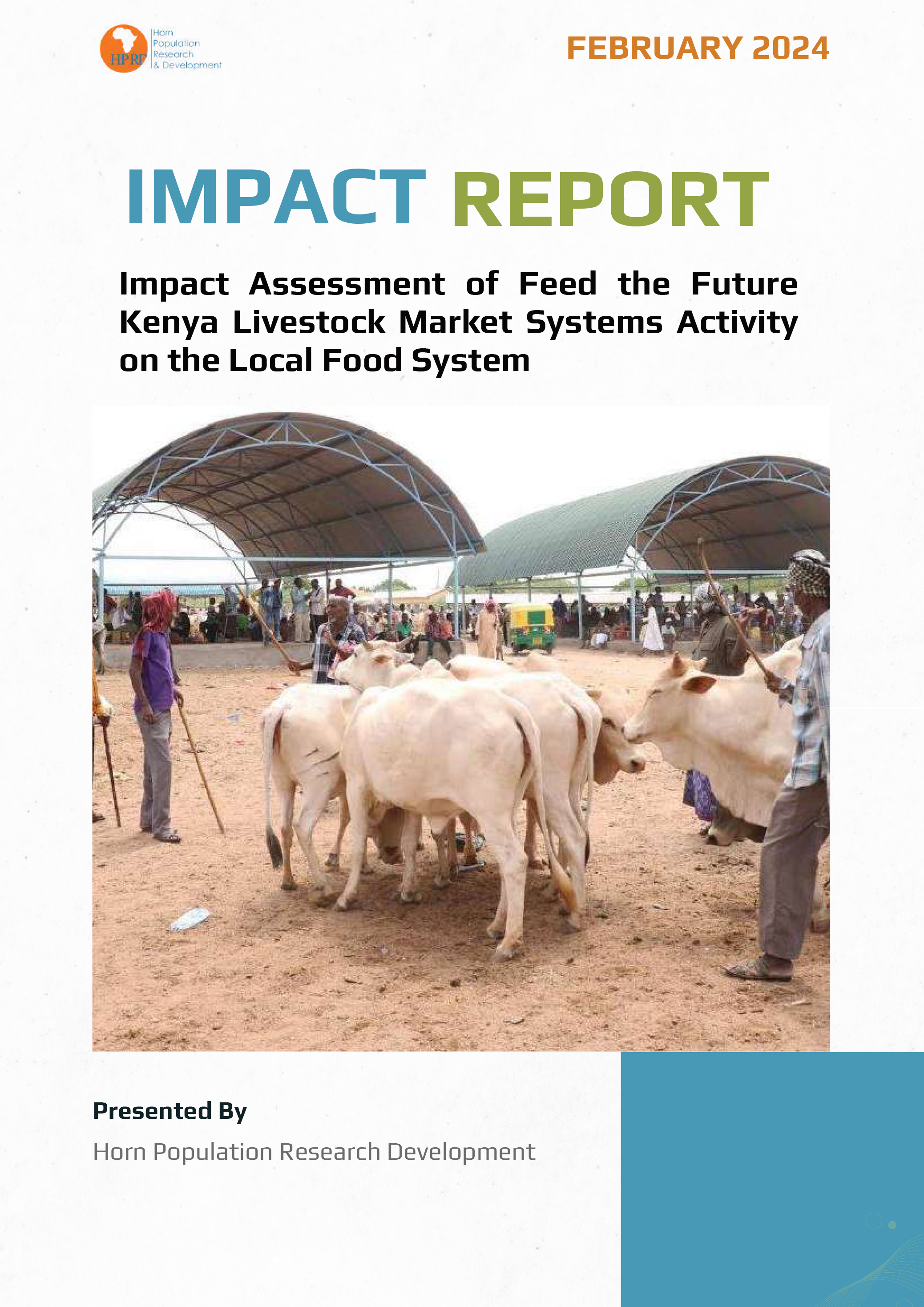
Impact Assessment of Feed the Future Kenya Livestock Market Systems Activity on the Local Food System
The Feed, the Future Kenya Livestock Market Systems Activity was a Five-year (2017-2022) Activity with Leader and Associate Awards funded by USAID and managed in a consortium of ACDI/VOCA, Mercy Corps, and their partners.
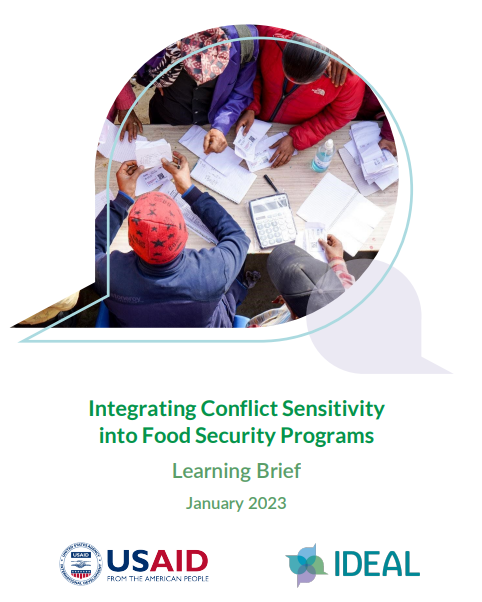
Integrating Conflict Sensitivity into Food Security Programs
This brief assesses prevailing practices, successes, challenges, lessons learned, and recommendations around integrating conflict sensitivity into food security programs. Ultimately, conflict sensitivity is not only about managing and mitigating risk, but also about seeking opportunities to promote peace. In this respect, this learning brief can contribute to USAID’s calls for greater coherence in humanitarian, development, and peace programming by supporting aid actors to “champion conflict integration and opportunities for enabling or building peace where possible.”
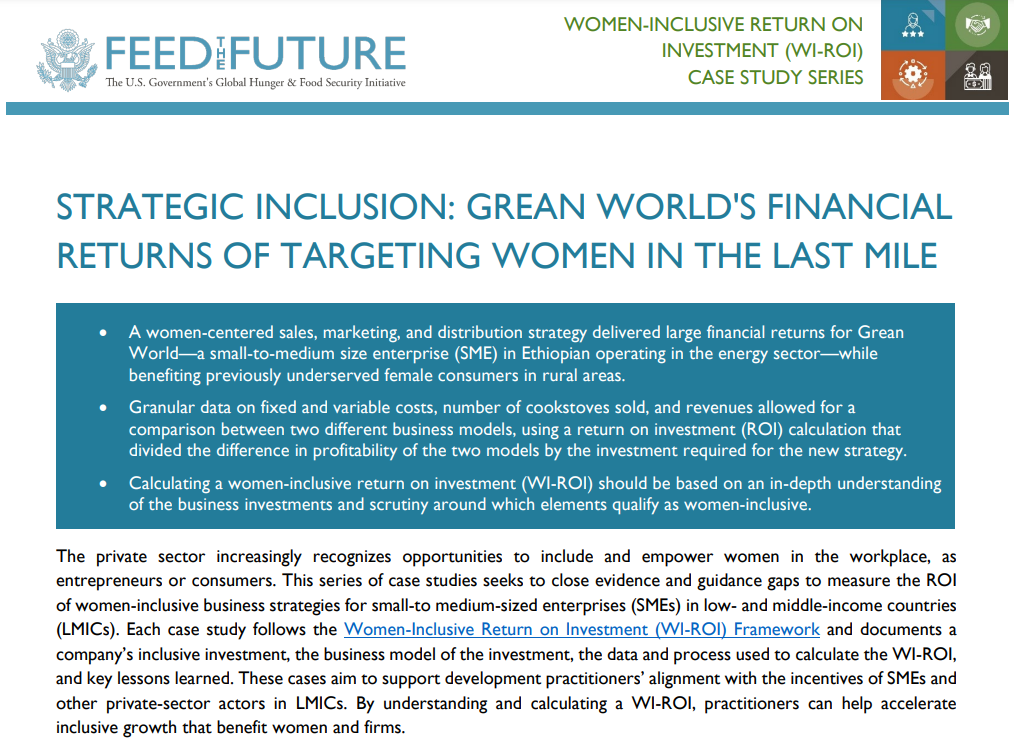
Strategic Inclusion: Grean World’s Financial Returns of Targeting Women in The Last Mile
This particular case study focuses on Grean World, an SME in Ethiopia. It examines how applying a women-centered approach to marketing and sales addresses the energy needs of female consumers in rural and remote areas in Ethiopia, while delivering financial returns for Grean World.
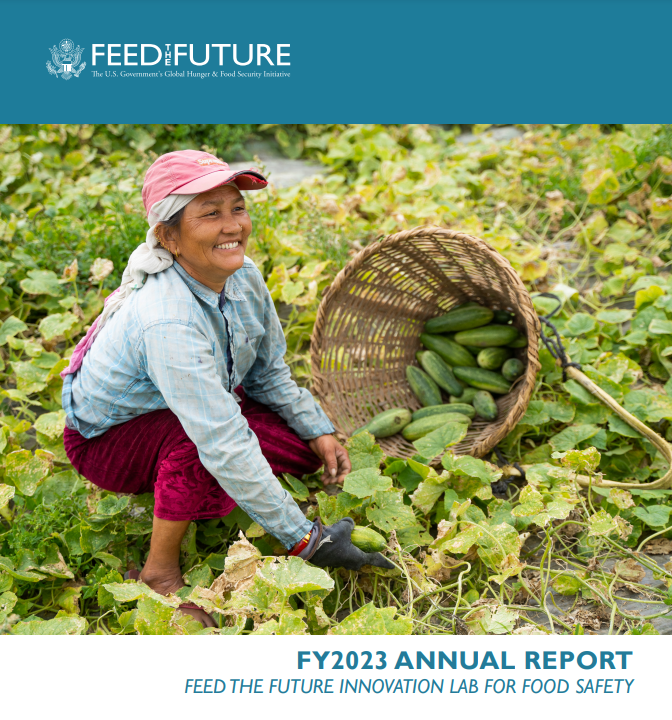
FY2023 Annual Report Feed the Future Innovation Lab for Food Safety
In FY2023, the Feed the Future Innovation Lab for Food Safety (FSIL) subaward projects in Bangladesh, Cambodia, Kenya, Nepal, Nigeria, and Senegal made significant progress in data collection to better understand microbial food safety challenges in each focus country, analyze the roles and opportunities for women in food safety and in different food value chains, and identify appropriate food safety interventions. All projects entered their final year of activities (year three for long-term subawards in Bangladesh, Cambodia, Kenya, and Senegal and year two for short-term subawards in Nepal and Nigeria) and many have started to analyze data and disseminate results. In FY2023, FSIL subaward projects published nine peer-reviewed journal articles, gave seven conference presentations, and hosted workshops and training sessions for producers, extension agents, government stakeholders, and the private sector.
Feed the Future Climate Resilient Cereals Innovation Lab (CRCIL)
The MEL Plan is designed based on the CRCIL’s goals, and expected outputs, outcomes, and impacts, taking into consideration the corresponding MEL activities required to assess progress in its achievements. It establishes a sustainable system for ensuring the quality and validity of data by employing rigorous procedures towards the adaptive management necessary to quantify the progress and impact of proposed activities and measure program contributions to the overall program goal. The MEL Plan Collaborating, Learning, and Adapting (CLA) approach, based on the United States Agency for International Development’s (USAID) CLA approach, and CRCIL’s Theory of Change (TOC) will guide the refinement of activity design as needed, based on new evidence, continual learning, and complexity-aware monitoring and innovative evaluation activities.
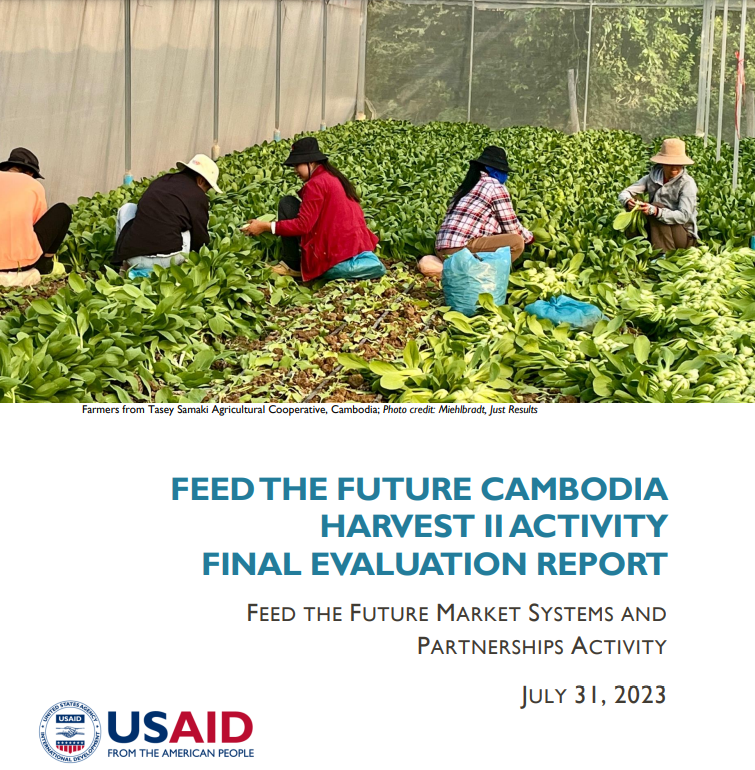
Feed the Future Cambodia Harvest II Activity Final Evaluation Report
This report presents the findings from the final evaluation of the Feed the Future Cambodia Harvest II activity (Harvest II) funded by the United States Agency for International Development (USAID) and operating from 2017-2022. The approach taken by Harvest II represented a shift in emphasis from previous USAID-funded activities that offered support to agricultural production, moving intentionally towards a demand-driven, market systems development approach. The evaluation team was asked to assess the extent and nature of system change that resulted from the activity, and how farms and firms benefited. The team also assessed whether and how the project contributed to resilience, climate change mitigation, and environmental stewardship.
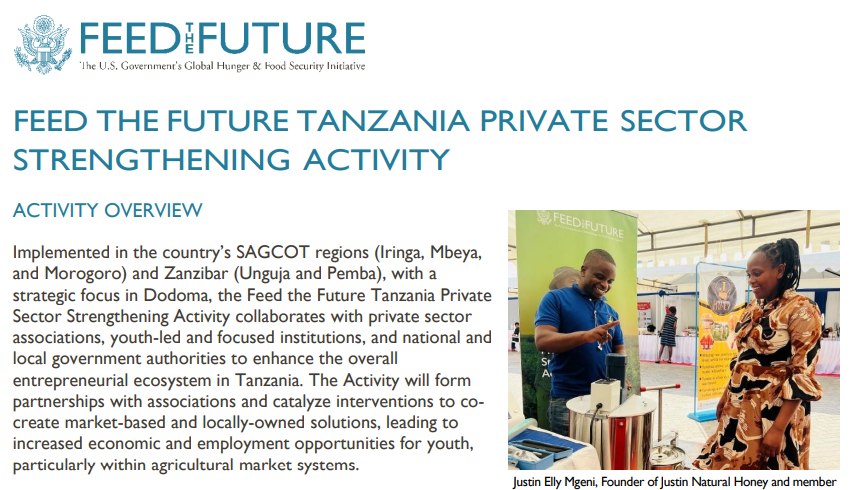
Feed the Future Tanzania Private Sector Strengthening Activity
The Activity will form partnerships with associations and catalyze interventions to cocreate market-based and locally-owned solutions, leading to increased economic and employment opportunities for youth, particularly within agricultural market systems.
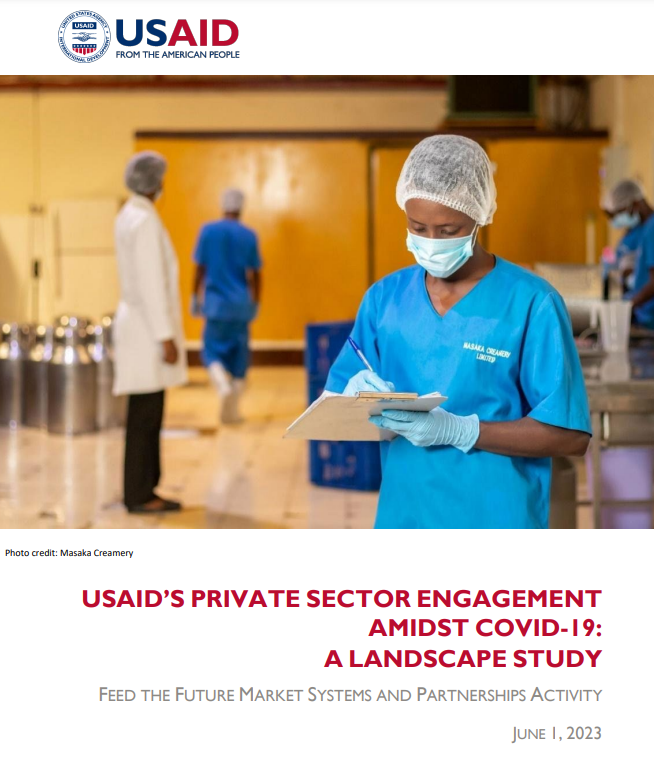
USAID’s Private Sector Engagement Amidst Covid-19: A Landscape Study
In order to better understand how USAID engaged with the private sector to improve firm resilience during the COVID-19 pandemic — and to what extent the agency was successful in doing so — USAID commissioned research through the Private Sector Engagement (PSE) Hub in collaboration with the Bureau of Policy, Planning and Learning’s Office of Learning, Evaluation and Research (PPL/LER), as part of a series of learning activities related to USAID’s COVID-19 Learning Agenda.
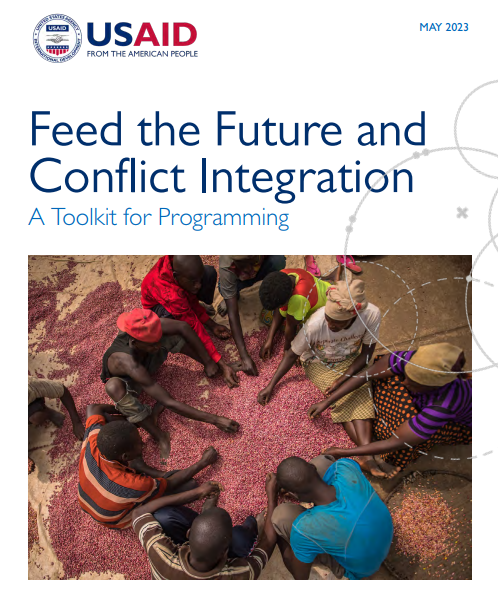
Feed the Future and Conflict Integration
This toolkit is a groundbreaking effort to ensure all investments under the United States Government’s Global Food Security Strategy integrate conflict. The better we understand the connections between conflict and food systems, the better we can meet the goals of the Feed the Future Initiative while also contributing to a more peaceful world. Fragility, conflict, and violence (FCV) can easily undermine progress under Feed the Future, but there are steps we can take to mitigate these dynamics and capitalize on opportunities for peace throughout our programming.
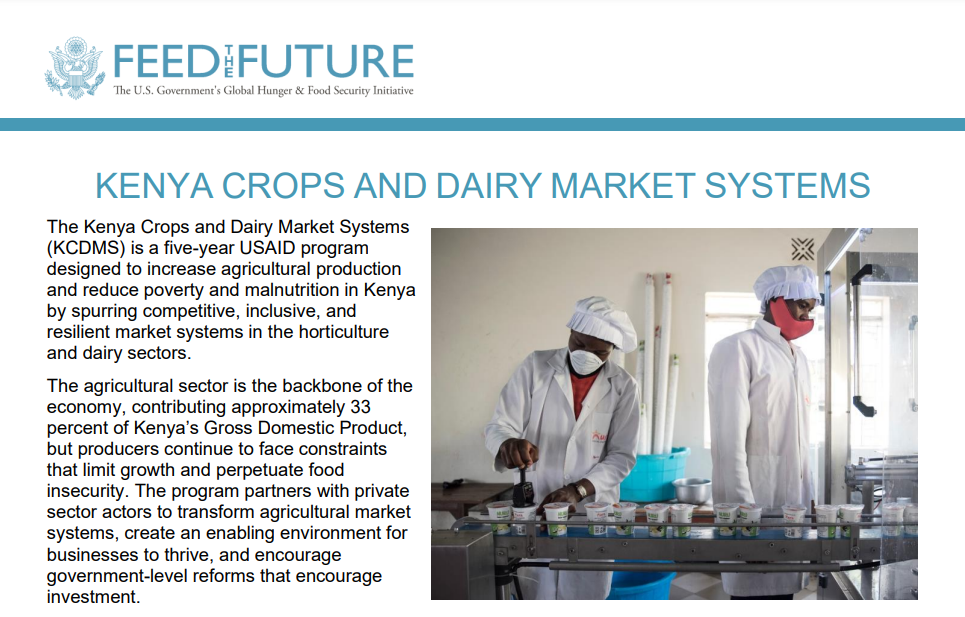
Kenya Crops and Dairy Market Systems
Through a private sector-driven approach, this program uses a variety of incentives, capacity building, and practices to stimulate market players to invest in productivity, financing, and business relationship enhancing improvements. KCDMS also leads interventions to improve nutritional outcomes and strengthen the capacity of county governments to facilitate agricultural sector growth. In turn, these efforts ensure that county and national level policy dialogue is grounded with business association needs and market intelligence, which facilitates a more inclusive business and investment enabling environment at all stages of target value chains. KCDMS also facilitates market linkages in domestic, regional, and international markets for more competitive value chains. During the COVID-19 pandemic, KCDMS redirected investments to ensure the functioning of local markets, working with agri-businesses to conduct outreach to smallholders through widespread radio messaging to foster continued production and increase access to inputs during the pandemic. In addition, the program worked with key business development services providers to assist farmer cooperatives on business development.
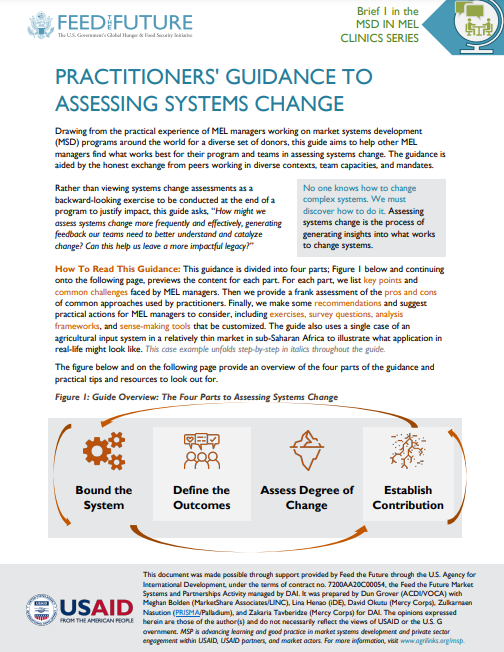
Practitioners’ Guidance to Assessing Systems Change
This guidance focuses on assessing systemic change as an ongoing action done in implementation, as part of a regular monitoring and evaluation system, and not just at the end of the program.
Building a Team Culture for Adaptive Management in MSD: 5 Strategies MEL Managers Say Work
Adaptive management is a critical component of successfully implementing a market systems development (MSD) approach. And yet, putting that into practice in the day-to-day it can raise challenging questions. To tackle these challenges, four senior Monitoring, Evaluation, and Learning (MEL) Managers came together to exchange experiences.
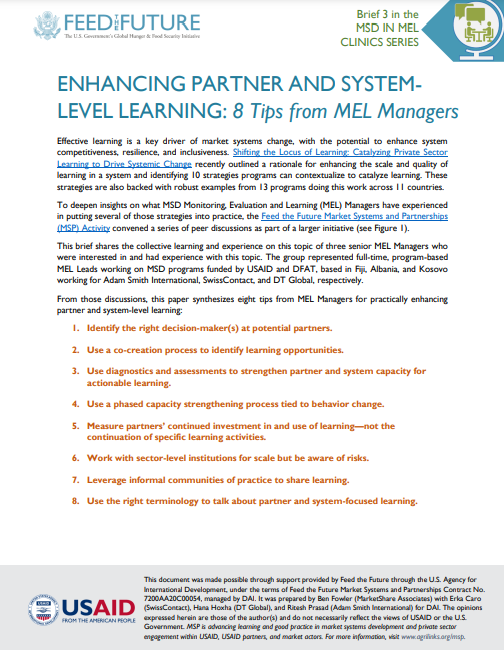
Enhancing Partner and Systems-Level Learning: 8 Tips from MEL Managers
This brief shares the collective learning and experience on this topic of three senior MEL Managers who were interested in and had experience with this topic. The group represented full-time, program-based MEL Leads working on MSD programs funded by USAID and DFAT, based in Fiji, Albania, and Kosovo working for Adam Smith International, SwissContact, and DT Global, respectively.
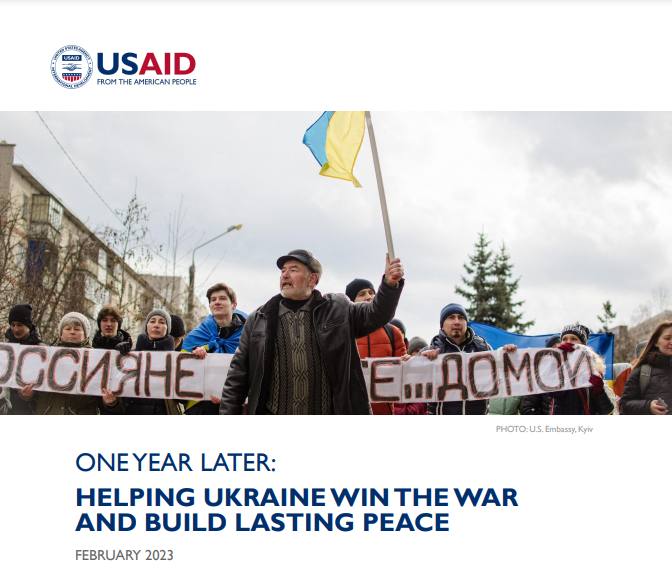
One Year Later: Helping Ukraine Win the War and Build Lasting Peace
To help meet Ukraine’s wartime needs and lay the foundation for a successful recovery, USAID has provided $13 billion in direct budget support, helping the Government of Ukraine (GoU) fund basic public services like healthcare, education, and emergency response; $1.4 billion in humanitarian assistance to save lives and meet the urgent needs of the Ukrainian people; and over $800 million in development assistance to bolster Ukraine’s energy grid, governance institutions, agriculture, small businesses, and civil society in wartime, while also remaining focused on what will be needed for recovery and reconstruction.
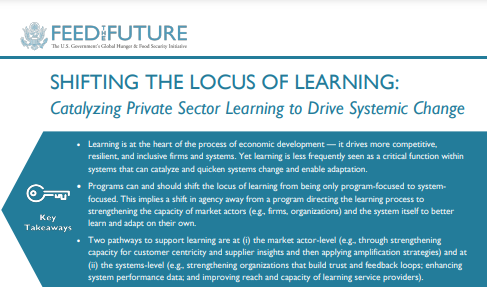
Shifting the Locus of Learning: Catalyzing Private Sector Learning to Drive Systemic Change
This brief makes the case that to stimulate systemic change, economic development programs can and should focus on facilitating stronger learning processes within local actors (e.g., firms, other organizations, government, and civil society) and systems (e.g., sectors, local economy).
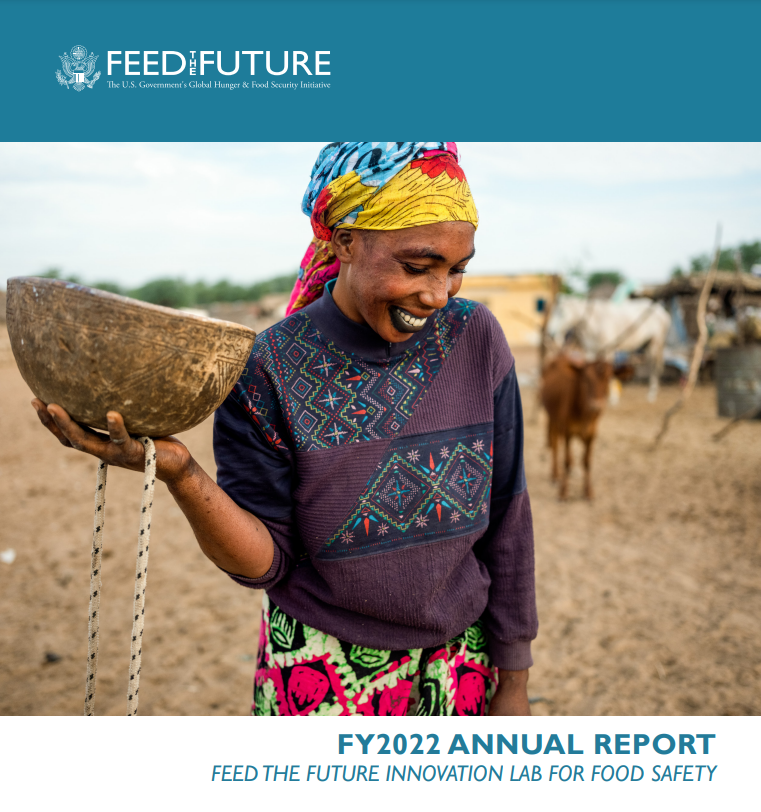
FY2022 Annual Report Feed the Future Innovation Lab for Food Safety
As travel and institutional pandemic restrictions eased globally, the Feed the Future Innovation Lab for Food Safety (FSIL) accelerated research activities in all focus countries. FSIL's four long-term research subawards in Bangladesh, Cambodia, Kenya, and Senegal entered their second year of implementation. These projects were in the data collection stage of their project cycles for most of FY2022.
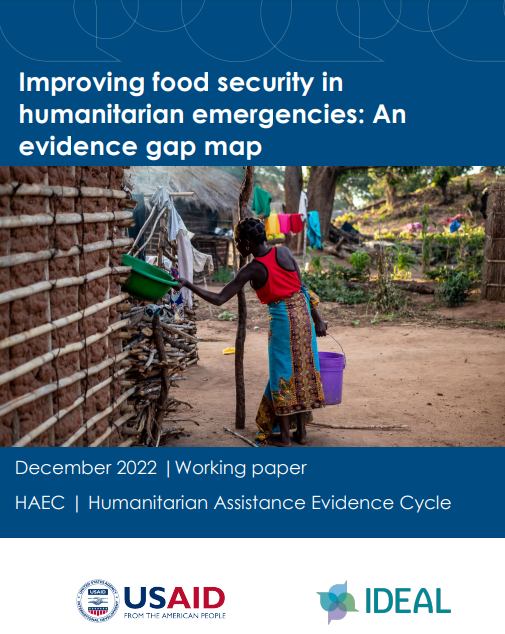
Improving Food Security in Humanitarian Emergencies: An evidence gap map
This report presents the findings of a systematic search to identify and map the evidence base of impact evaluations and systematic reviews of interventions that aim to improve food security during humanitarian crises.
Feed the Future Innovation Lab for Food Safety FY2023 Annual Report
In 2022 we made considerable progress on our 29 awarded projects across 12 countries. These projects include impact evaluations of active development programs as well as research that tests new approaches for strengthening food security and resilience. These include a new project that builds a technical definition and measure of resilience in the context of poverty traps and the true complexities facing rural households. These also include two seed grants that have been awarded full funding, one in Ethiopia and one in Ghana, both of which are testing innovations in agricultural index insurance. We reported results from two projects providing insights on how livelihood-building programs for women can generate resilience to hardships that include drought and the COVID-19 pandemic.