
-
Article
Brief
Meeting Notes
Presentation
Poster
Report
Toolkit
Video
Webinar
Women-Inclusive Return on Investment (WI-ROI) Framework
This paper introduces the Women-Inclusive Return on Investment (WI-ROI) Framework, which builds on an existing body of evidence and research around the business case for investing in women’s inclusion. Rather than serve as a how-to guide, the WI-ROI Framework reflects the industry outlook on women’s inclusion at the firm level.
U.S. Government Global Food Security Research Strategy, FY22-26
This Global Food Security Research Strategy outlines the U.S. Government’s science-based, convergent, demand-led, and inclusive approach to addressing food-security challenges.
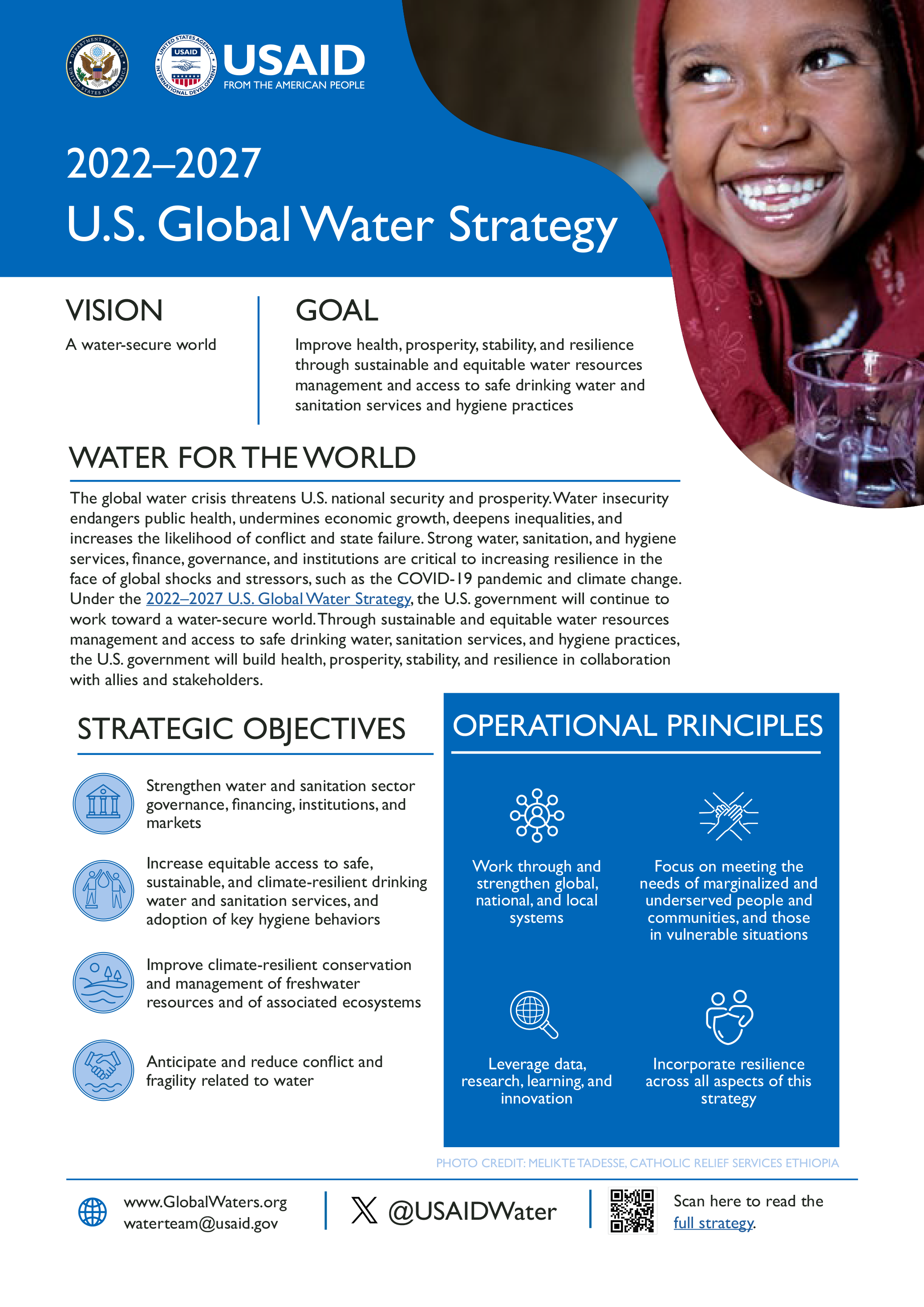
U.S. Government Global Water Strategy — Summary
The global water crisis continues to threaten United States (U.S.) national security and prosperity. Water insecurity endangers public health and food security and undermines economic growth.
U.S. Government Global Water Strategy
The global water crisis continues to threaten United States (U.S.) national security and prosperity. Water insecurity endangers public health and food security and undermines economic growth.
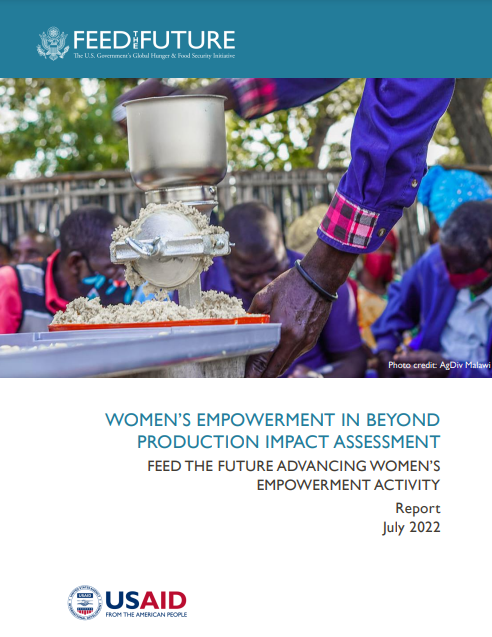
Women’s Empowerment in Beyond Production Impact Assessment
To understand the degree to which AgDiv contributed to those changes and how meaningful the changes were, the AWE team used Feed the Future’s Gender Integration Framework and select measurement guidance from the Project-Level Women’s Empowerment in Agriculture Index for Market Inclusion (PRO-WEAI+MI) survey tool. AWE grouped findings by the WEAI’s five domains: decisionmaking, access to control over resources, control over income, time use, and leadership and social capital.
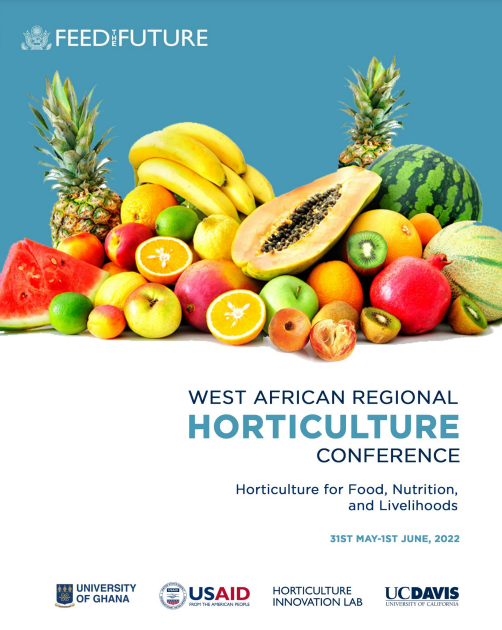
West African Regional Horticulture Conference: Horticulture for Food, Nutrition, and Livelihoods
The West Africa horticulture conference was organized together with local horticulture experts and other stakeholders to identify on-the-ground challenges and opportunities in the sector. This is to inform specific capacity development activities for stakeholders, including industry experts and leaders. This is also to encourage local engagement and ownership, influencing the sustainability of this work to continue beyond the Horticulture Innovation Lab’s involvement. Thus, contributing to inclusive economic growth and a more resilient system led by the regional experts.
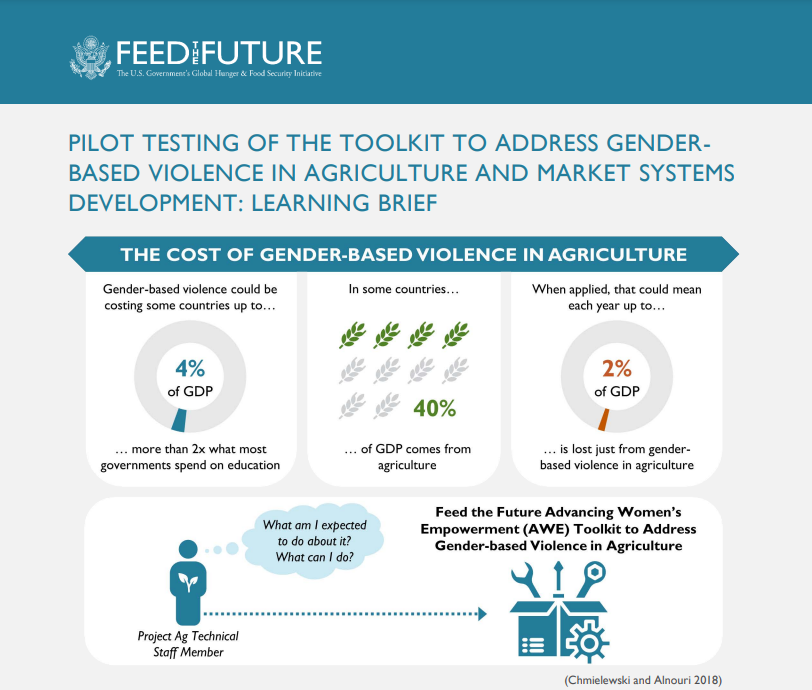
Pilot Testing of the Toolkit To Address Gender-Based Violence in Agriculture and Market Systems Development
There are both strong moral and ethical reasons and a compelling business case for addressing GBV in the private sector, which are strongly interlinked: GBV not only negatively affects the health and well-being of those who experience it, it also reduces agricultural productivity, workplace and worker productivity, and workforce readiness, as well as market competitiveness, stability, and resilience.
U.S. Dept. of State and USAID Joint Strategy FY 2022 - 2026
“These steps will help us build a more inclusive Agency, one that is more diverse and willing to engage with new partners, more equitable in its impact, and more responsive to local voices. USAID’s legacy as the world’s leading bilateral development institution has always been an asset to the American people and a means for securing stability, security, and prosperity, both at home and abroad. This Joint Strategic Plan acknowledges and draws strength from this heritage to take on the challenges of today and prepare for those that will come tomorrow.”
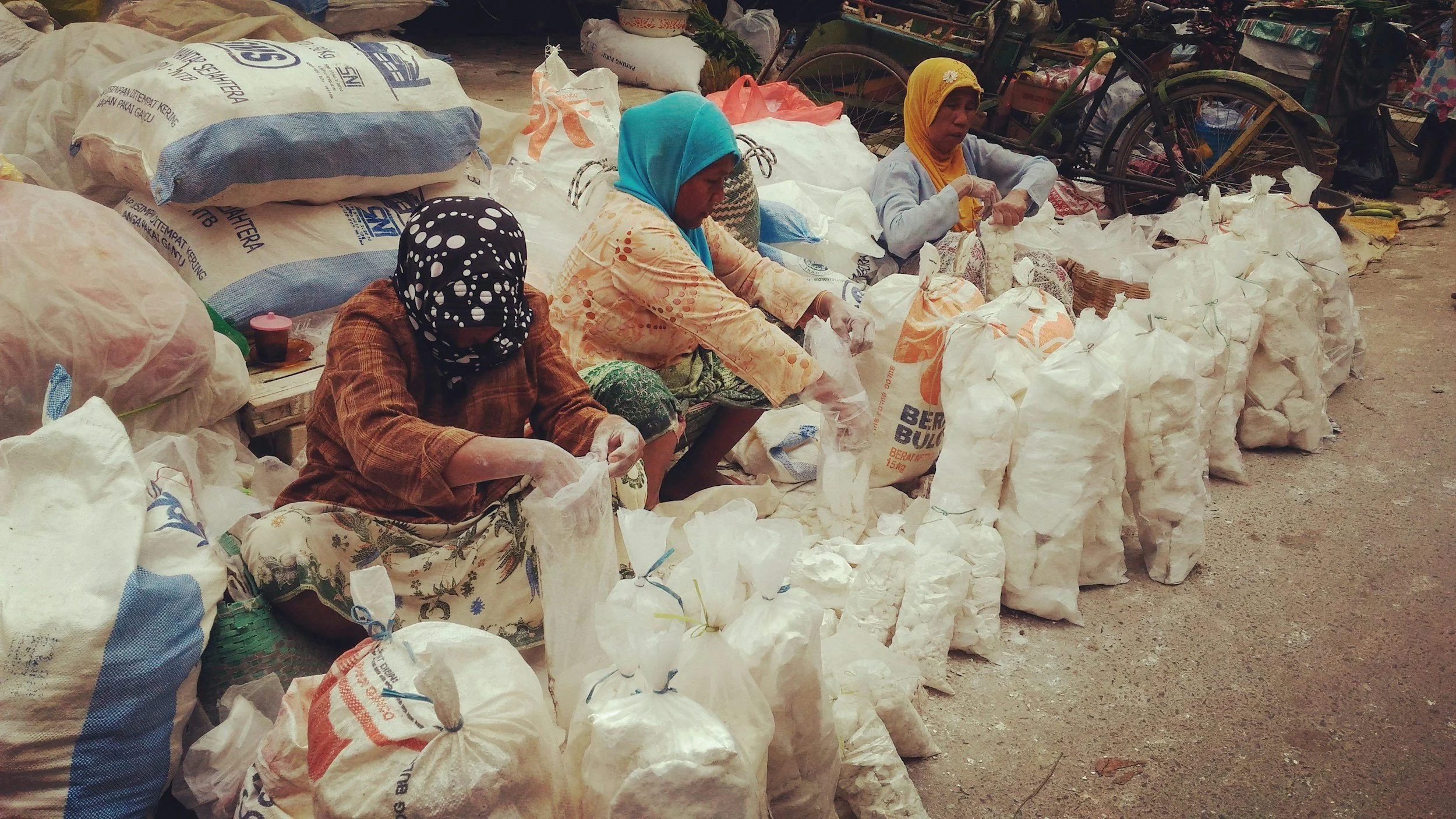
Feed the Future Inova Business Cases
The USAID Mozambique Feed the Future Agricultural Innovations Activity (FTF Inova) is a five-year (2017- 2022) project that takes a market systems development approach to agriculture-led economic growth in Mozambique. FTF Inova, implemented by DAI in partnership with MSA, developed the six business cases below to offer tangible proof that enterprises can profit from investing in addressing challenges experienced by smallholder farmers.
Toolkit to Address Gender-Based Violence in Agriculture and Market Systems Development
The Toolkit to Address Gender-Based Violence in Agriculture and Market Systems Development seeks to prepare agriculture and MSD project staff to better identify and implement actions to address GBV where it arises in their projects.
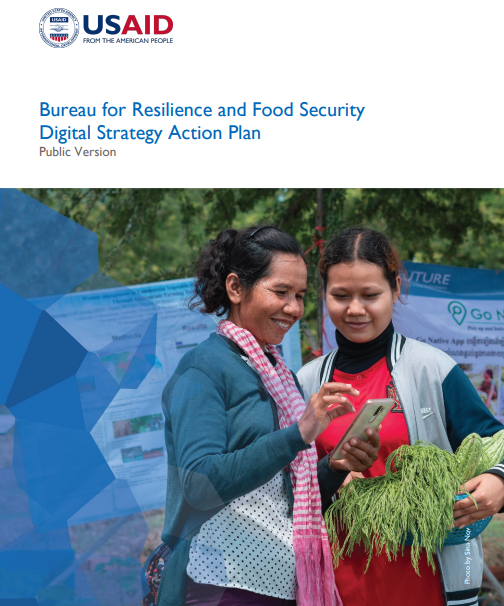
Bureau for Resilience and Food Security Digital Strategy Action Plan
To work toward this vision, RFS aims to use digital technologies effectively to create more inclusive, efficient, prosperous, healthy, and connected agriculture, food, and water systems today — and more climate-smart and resilient agriculture, food, and water systems for tomorrow that sustainably support the health, well-being, and livelihoods of our target populations.
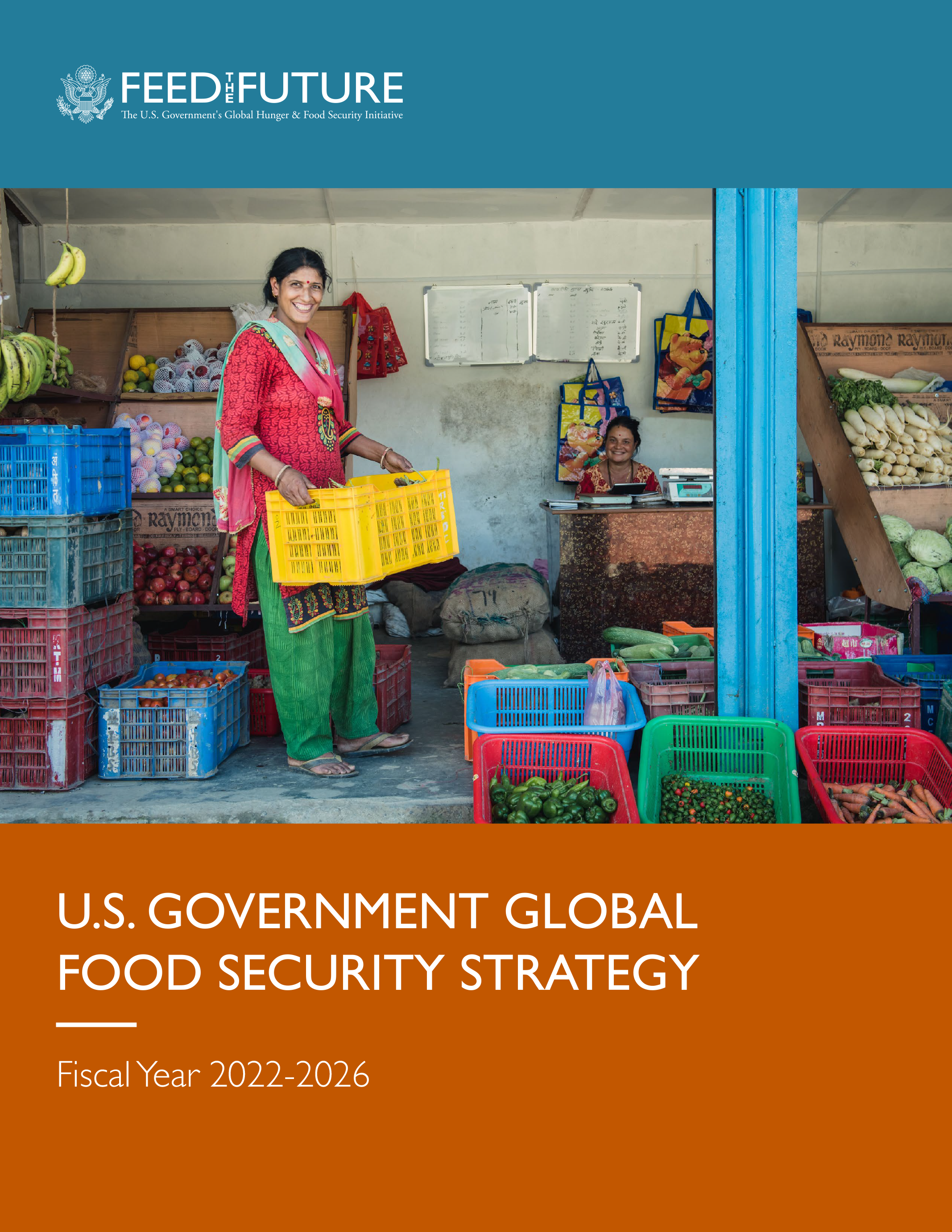
U.S. Government Global Food Security Strategy
The updated Global Food Security Strategy is our roadmap to that better future. It charts an ambitious course to reduce global poverty, hunger, and malnutrition in the face of COVID-19, climate change, growing conflict, and rising inequality through Feed the Future, the U.S. government’s (USG) global hunger and food-security initiative. It brings America’s full strength to bear on these challenges by drawing on the expertise of agencies across the U.S. government. Through this strategy, we aim to contribute toward a 20% reduction in poverty and stunting in the areas where we work between 2022-2026 by partnering with foreign governments, the private sector, and our colleagues across the interagency.
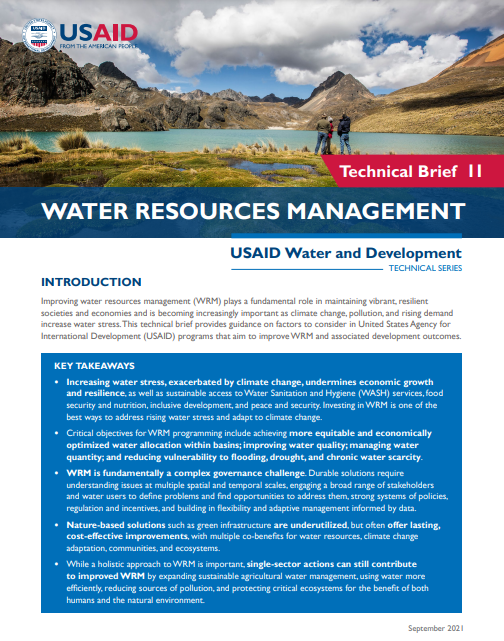
Water Resources Management: Technical Brief II
Improving water resources management (WRM) plays a fundamental role in maintaining vibrant, resilient societies and economies and is becoming increasingly important as climate change, pollution, and rising demand increase water stress.
The Return on Investment of Social Inclusion: An Evidence Gap Analysis from Developing Countries
This research focuses on gathering and mapping evidence on the firm level benefits of workplace diversity and inclusion in the developing country context and highlighting the evidence gap analysis for the return on investment (ROI) of social inclusion. This work is the foundation for building a business case and providing practical guidance on social inclusion strategies relevant to the private sector in developing countries.
How the Private Sector Measures Social Inclusion and its Return on Investment: A Framework to Inform Future Research
This brief documents how different private sector actors understand and measure social inclusion and its return on investment (ROI) as an initial step to frame further research on the business case for social inclusion in developing countries. This work will be the foundation for building a business case and providing practical guidance on social inclusion strategies relevant to the private sector in developing countries to maximize the ROI while furthering the development objective of social inclusion.
Feed the Future Innovation Lab for Markets, Risk & Resilience 2020 Annual Report
The Feed the Future Innovation Lab for Markets, Risk & Resilience at UC Davis has the increasing importance of resilience at all levels, from systems to individual families, at the very center of its research program. Launched in July in 2019 by USAID, the lab builds upon a foundation of field studies and theoretical work to help families and communities build resilience to perennial threats like drought but also against unforeseen shocks like the COVID-19 pandemic. We are also testing how resilience itself can generate additional returns through a well-established phenomenon we call Resilience+.
Key Lessons From Private Sector Engagement in the USAID Learning Community for Supply Chain Resilience
Any partnership between a company, NGO or research institution can be fraught with misalignment of stated objectives, appetite for risk, and short- versus long-term thinking.
How the United States Benefits from Agricultural and Food Security Investments in Developing Countries
U.S. foreign agricultural assistance investments bring substantial economic, health, and security benefits to the United States.
An Introduction to Assessing Climate Resilience in Smallholder Supply Chains
For companies sourcing from smallholders, evaluating resilience to climate change poses particular challenges. Smallholder sourcing entails working with many, diverse farmer communities around the globe, each with its own agricultural practices, cultural context, and risk exposure.
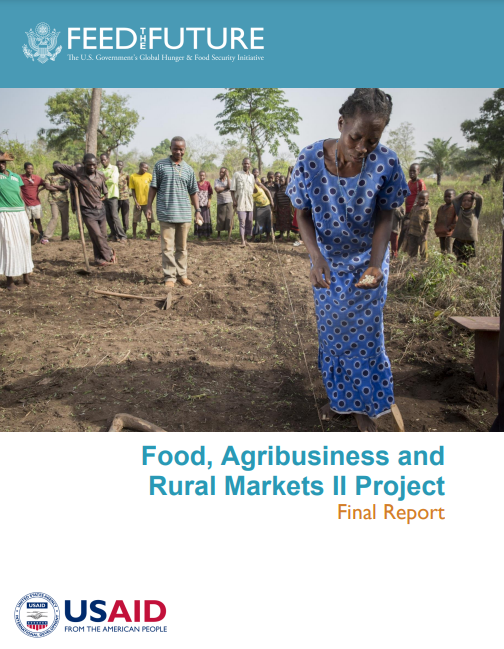
Food, Agribusiness and Rural Markets II Project
FARM II’s yield assessments showed that productivity yields of beneficiary farmers were 29 percent higher than those of non-beneficiary farmers. Greenbelt farmers also significantly exceeded African continent averages for all four assessed crops. The study suggested that the improved technologies and farming practices introduced by FARM II are taking hold among nonbeneficiary farmers in the region. Here, Betty Abou from Magwi County in Eastern Equatoria State packs maize to be taken to Juba for sale.