
-
Article
Brief
Meeting Notes
Presentation
Poster
Report
Toolkit
Video
Webinar
Regional trends in private and public provision of long- and short-acting contraceptive methods
What have been the trends in the use of modern contraceptives (LA/PM and short-acting methods) sourced from the private sector (for-profit or commercial) over the past 20 years?
Climate Change and Conflict in the Sahel: A Policy Brief on Findings From Niger and Burkina Faso
This document is part of a series of studies produced by the African and Latin American Resilience to Climate Change (ARCC) project that address adaptation to climate change in West Africa. Within the ARCC West Africa studies, this document falls in the subseries Climate Change and Conflict in West Africa. ARCC has also produced subseries on Climate Change and Water Resources in West Africa, Agricultural Adaptation to Climate Change in the Sahel, and Climate Change in Mali.
Climate Change and Conflict in West African Cities: A Policy Brief on Findings From Lagos, Nigeria and Accra, Ghana
To address the relative lack of research on climate-conflict linkages in large urban areas, USAID asked the Foundation for Environmental Security and Sustainability (FESS) to conduct a case study on two major West African cities – Lagos, Nigeria and Accra, Ghana. Field research was carried out for the case study in June and August 2013, and this policy brief presents the findings on the central questions addressed by that investigation: Are the effects of climate change likely to lead to chaotic and conflictive scenarios in West African cities? If so, under what circumstances and over what time frame; and are there preventive actions that governments and donors should take?
Evaluation of Dimpa Injectable Contraceptive Network in India
DMPA is at the threshold of being a widely accepted method
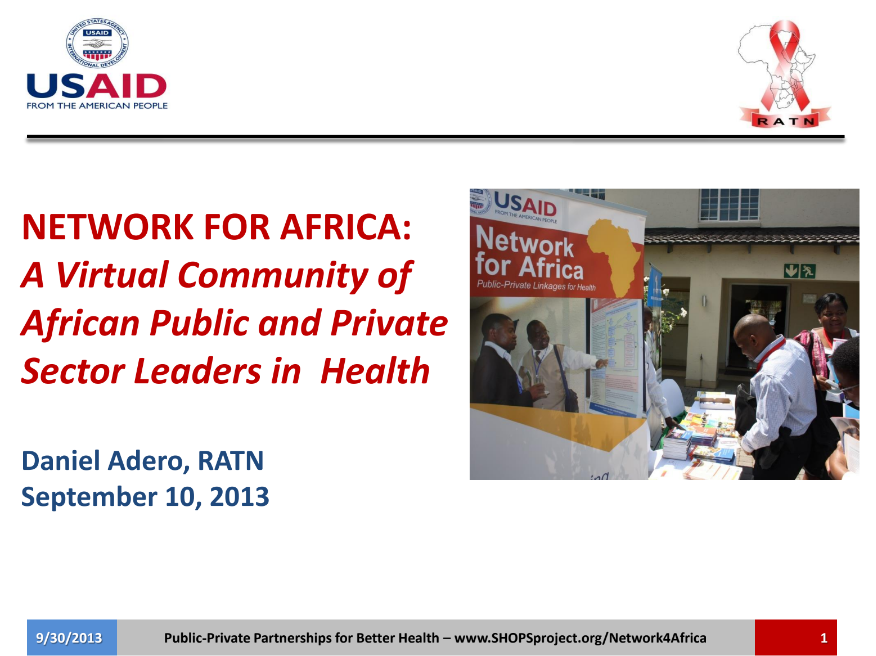
Network for Africa: A Virtual Community of African Public and Private Sector Leaders in Health
Vision for Network for Africa: Started in 2008 under the USAID funded PSP-One project - predecessor to the SHOPS project; Designed as a “virtual” Community of Practice targeting public and private leaders in health; Focuses on a wide range of topics on Public Private Partnerships in Sub-Saharan Africa health sectors

USAID Climate Change and Development Strategy: Adaptation Pillar Results Framework
Adaptation Pillar Results Framework
Understanding the Emerging Role of the Private Sector in Medical Education
Setting the context about the role of the private sector in health service delivery
Evaluating the Impact of Mobiles for Reproductive Health (m4RH)
PROGRESS project/FHI360 conducted extensive formative and operations research to develop m4RH
Total Market Initiatives for Reproductive Health
This primer documents the work of members of the Market Development Approaches Working Group of the Reproductive Health Supplies Coalition in defining and implementing total market initiatives (TMI).
Technology Recommendations MAMA Bangladesh
Aponjon’s innovative mobile health information service offers subscribers a choice of either interactive voice response (IVR) or short message service (SMS) formats, and Bangladesh customers overwhelmingly prefer audio over text message format.
Climate Change Adaptation at USAID
To strengthen development outcomes through direct climate change program investments and by integrating climate change throughout USAID programming, learning, policy dialogues, and internal operations.
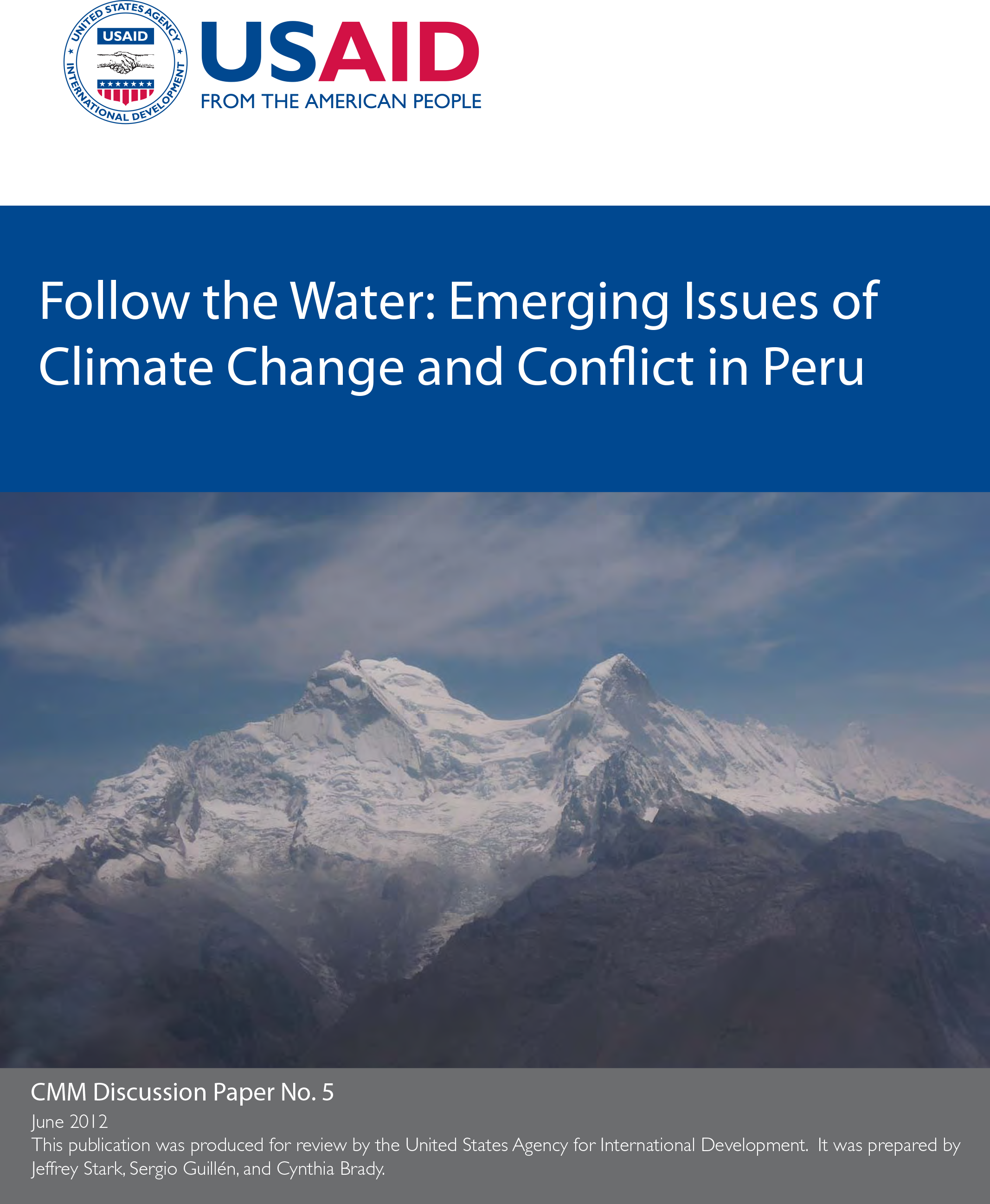
Follow the Water: Emerging Issues of Climate Change and Conflict in Peru
This study explores how the effects of climate change on water quantity, quality, and access may be factoring into aspects of localized instability, fragility, and conflict in Peru. To help guide the methodological approach, FESS developed a seven-phase framework—the Climate Change and Conflict Assessment Framework (CCCAF). The framework emphasizes one of the main conclusions of recent conflict analysis: conflict is always the result of the interactions of multiple political, economic, social, historical, and cultural factors, and these must be taken into account in any analysis. Moreover, the quality of governance and the resilience of political, economic, and social institutions all mediate the relationship between environmental change and conflict in important ways. The influence of climate change and climate-related policy and program responses on instability and conflict can only be understood within this web of relationships.
Diarrhea Management Knowledge,Attitudes and Practices amongCaregivers and Providers in Uganda
Caregivers’ level of awareness about causes of diarrhea is adequate but awareness of appropriate diarrhea treatments is poor. According to providers, caregivers demand specific treatments (primarily antibiotics) for their children. This in turn influences which treatments providers recommend.
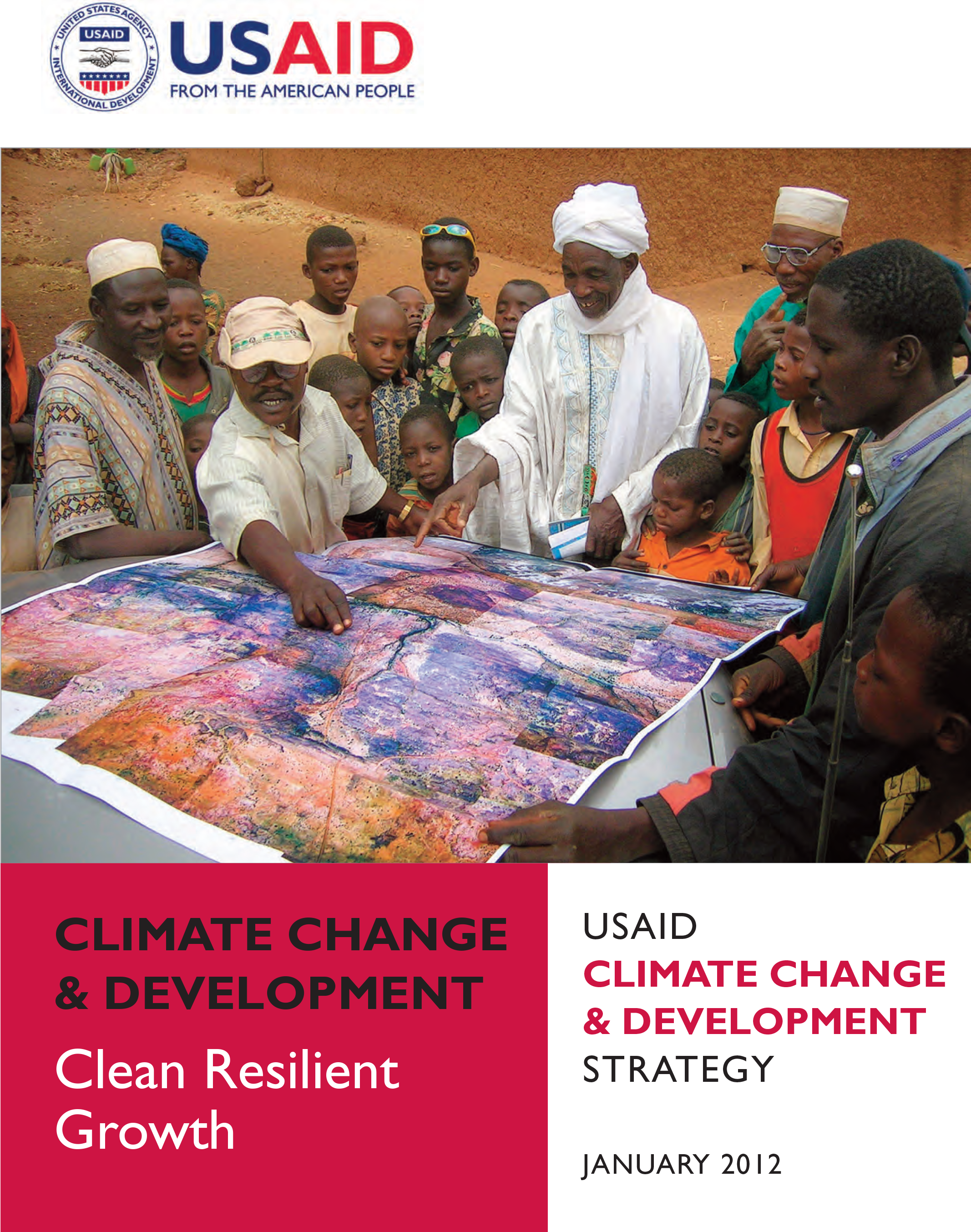
USAID Climate Change and Development Strategy 2012-2016
USAID’s work on climate change fits into a larger domestic and international policy context and is guided by Administration policy as developed in the President’s Global Development Policy, the Quadrennial Diplomacy and Development Review, USAID Forward, and the GCCI. Additionally, USAID’s Policy Framework 20112015 defines the following as one of seven Core Development Objectives for the Agency: Reduce Climate Change Impacts and Promote Low Emissions Growth. USAID has a long history of programming in sectors relevant to climate change and will draw lessons learned from this history to shape efforts under this strategy. The goal of USAID’s 2012-2015 Climate Change and Development Strategy is to enable countries to accelerate their transition to climate resilient low emission sustainable economic development.
Climate Threats, Fragility, and Conflict Risks
How do the set of countries that are most threatened for heightened climate risks relate to the set of fragile or conflict‐ affected states?
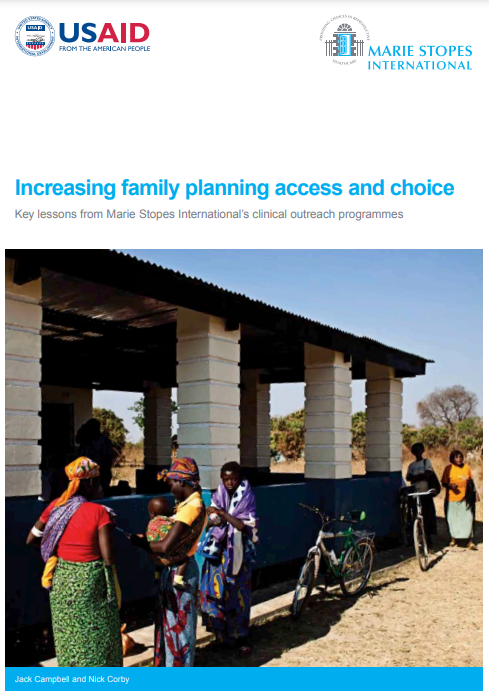
Increasing Family Planning Access and Choice
The key lessons in this paper will help service providers, programme managers and donors implement and/ or strengthen clinical outreach programmes for reproductive health and family planning services.
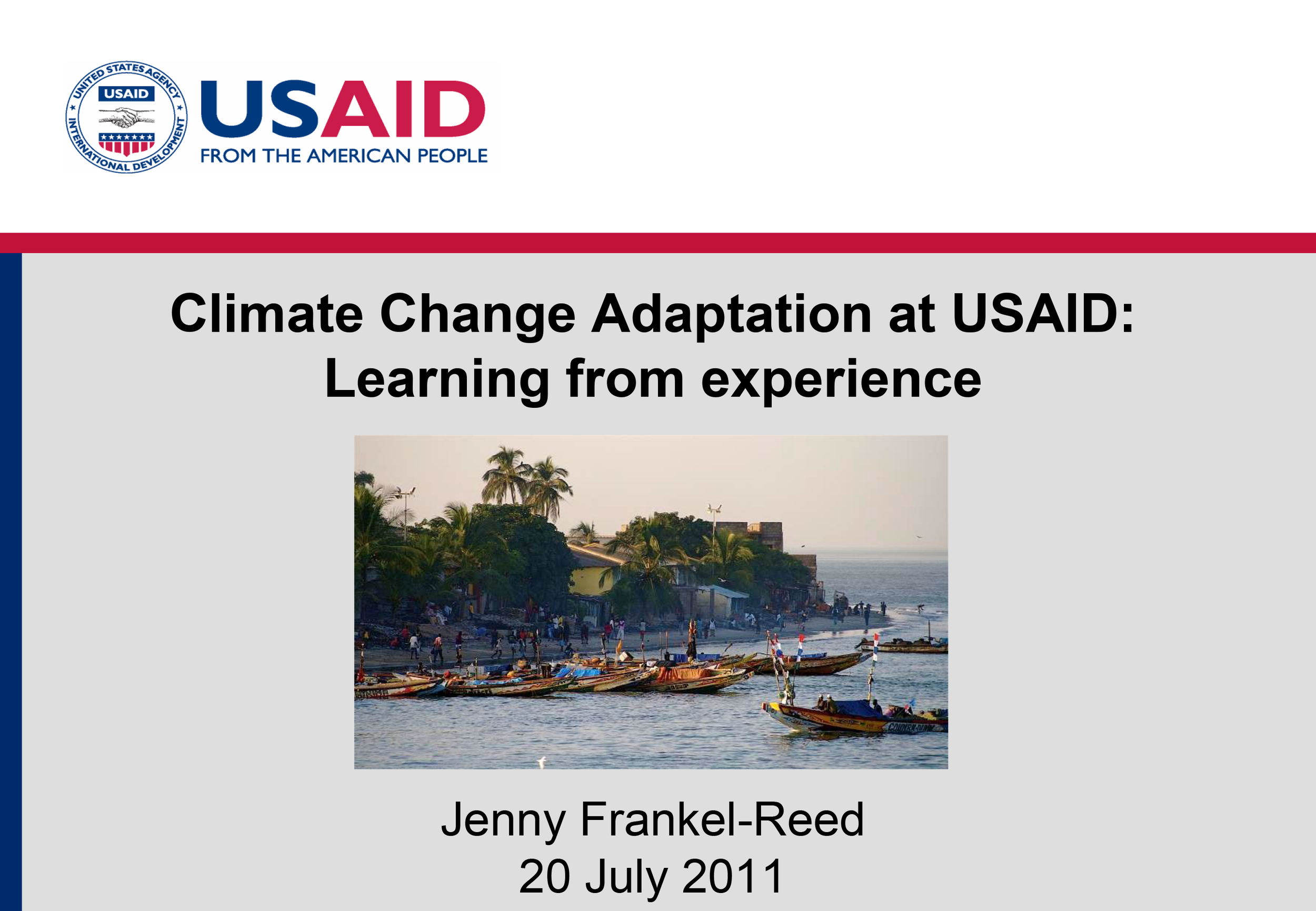
Climate Change Adaptation at USAID: Learning from Experience
USAID’s Global Climate Change Initiative assists countries as they develop in ways that reduce emissions while building resilience to climate change impacts.

Improving Quality of Women’s Health and Family Planning Services in Jordan’s Private Health Sector
Presentation reviews the goals of the project, 2005-2012