
-
Article
Brief
Meeting Notes
Presentation
Poster
Report
Toolkit
Video
Webinar
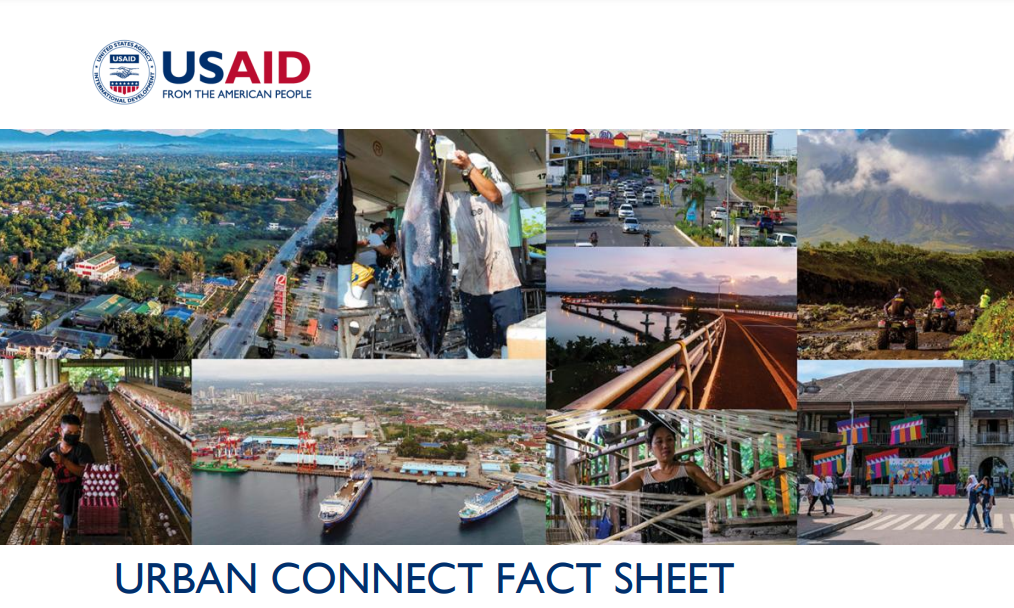
Urban Connect Factsheet — Philippines
USAID’s five-year (2023-2028), $11 million Urban Connect activity promotes resilient economic growth across nine USAID Cities Development Initiative (CDI) partner cities and surrounding localities1 by promoting economic development and supporting improved public service delivery. CDI’s purpose is to advance the development of cities outside Metro Manila as resilient engines of growth that are environmentally sustainable. USAID provides a range of technical assistance, drawing from resources in economic growth, health, energy, environment, governance, and education.
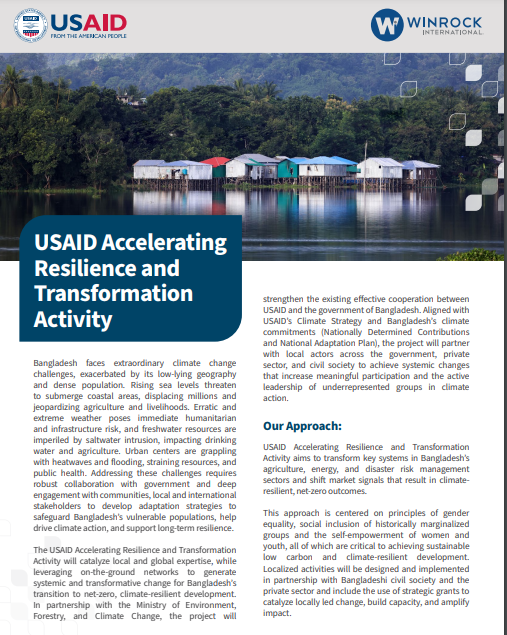
USAID Accelerating Resilience and Transformation Activity — Bangladesh
USAID Accelerating Resilience and Transformation Activity aims to transform key systems in Bangladesh’s agriculture, energy, and disaster risk management sectors and shift market signals that result in climate resilient, net-zero outcomes. This approach is centered on principles of gender equality, social inclusion of historically marginalized groups and the self-empowerment of women and youth, all of which are critical to achieving sustainable low carbon and climate-resilient development. Localized activities will be designed and implemented in partnership with Bangladeshi civil society and the private sector and include the use of strategic grants to catalyze locally led change, build capacity, and amplify impact.
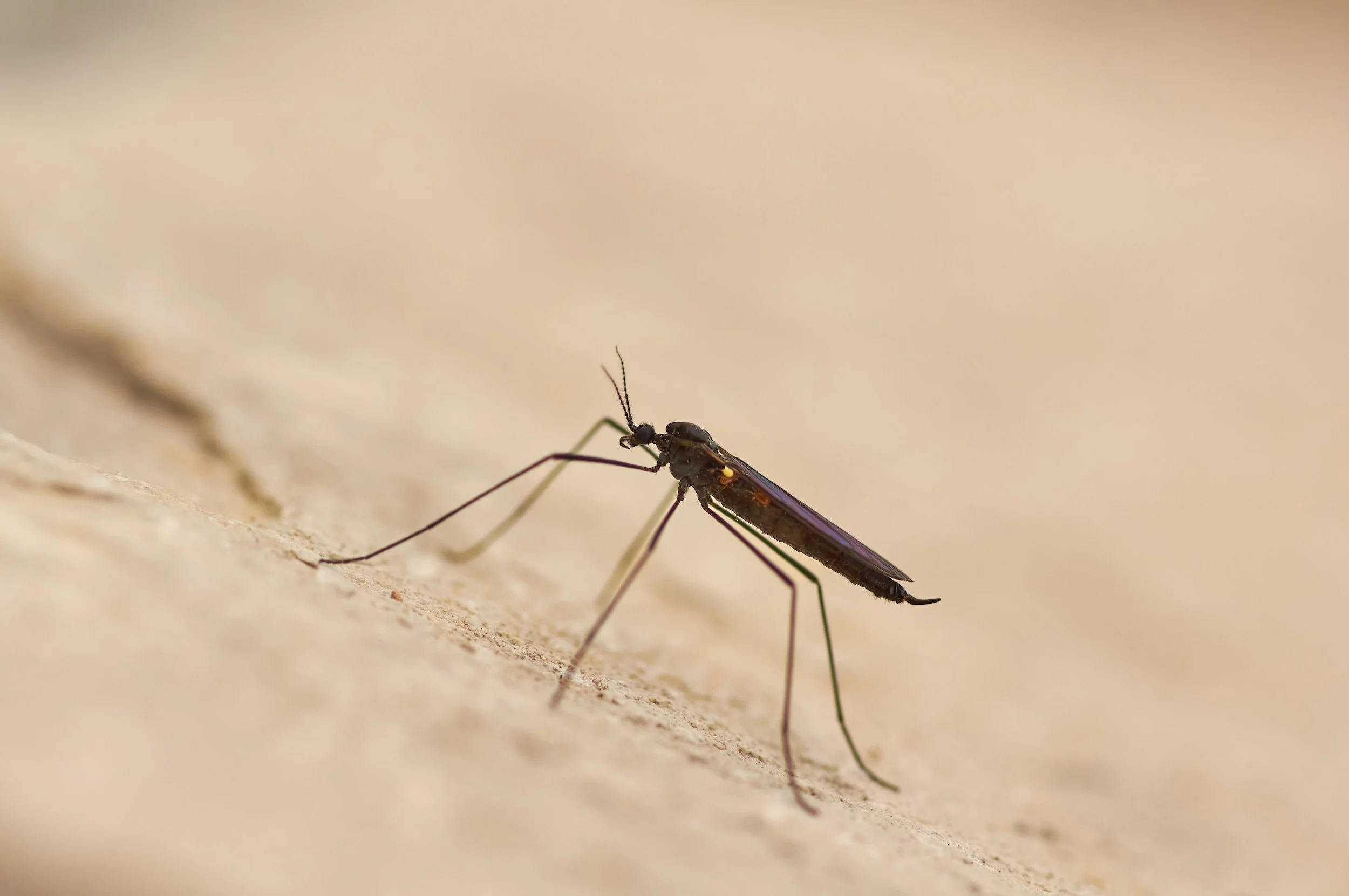
President’s Malaria Initiative: 2024 Country Fact Sheets
The President’s Malaria Initiative (PMI) is credited with helping to save 11.7 million lives and prevent 2.1 billion malaria cases since 2000. Indeed, since 2006, in countries where PMI works, global efforts have supported a 29% decrease in malaria case rates and a 48% decline in deaths. The introduction of two malaria vaccines in 2021 and 2023 has increased optimism in the potential to further strengthen global malaria control.
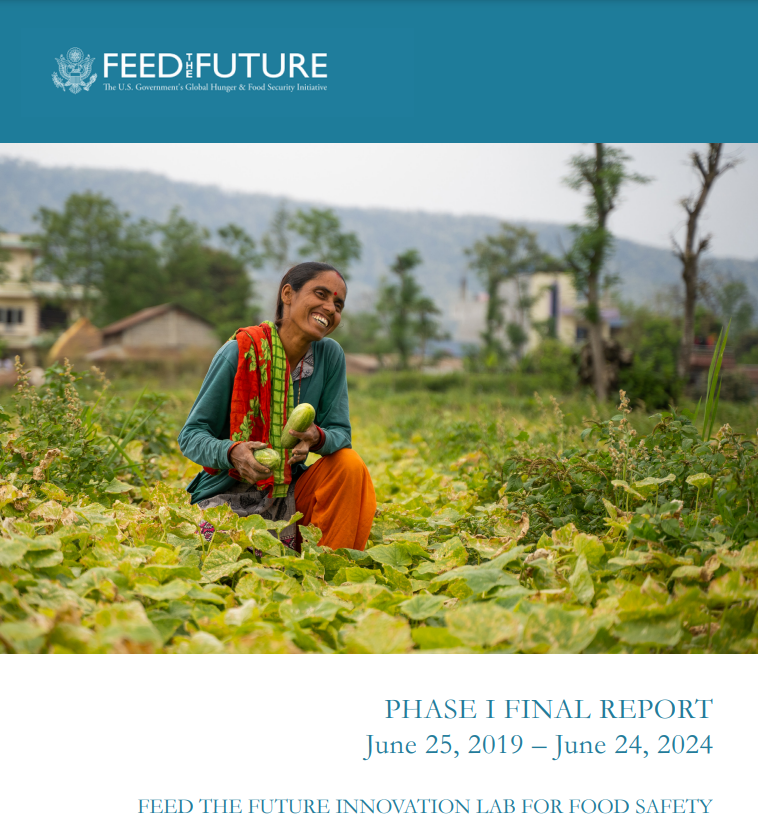
Phase I Final Report June 25, 2019 – June 24, 2024: Feed the Future Innovation Lab for Food Safety
This report presents progress over the first five-year phase of the Feed the Future Innovation Lab for Food Safety (June 25, 2019 – June 24, 2024). The Food Safety Innovation Lab (FSIL), managed by Purdue and Cornell Universities, has leveraged global food safety expertise in locally-led projects that address the root causes of foodborne illness. Phase I FSIL projects were designed to create systemic change to strengthen household and community nutrition, food security, and economic opportunity by identifying food safety knowledge gaps, supporting data-driven food safety practices and policies, and strengthening local food safety capacity.
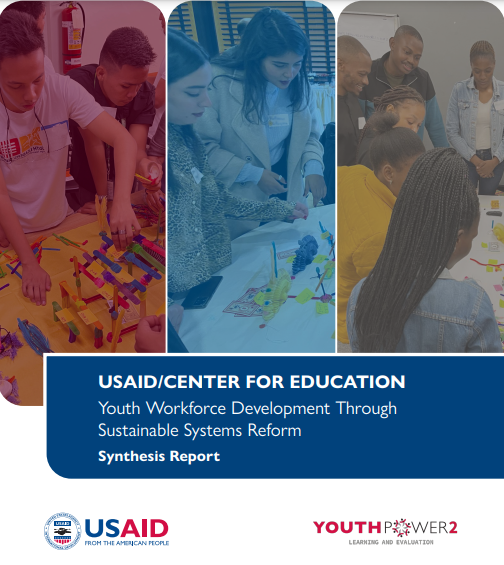
Youth Workforce Development Through Sustainable Systems Report
The United States Agency for International Development (USAID) seeks to increase its understanding of effective approaches for supporting improved, scaled, and sustainable youth workforce development (YWFD) outcomes in low- and middle-income countries (LMICs). USAID commissioned the Better Youth Workforce Development Outcomes Through Sustainable Systems Reform buy-in activity through its YouthPower2: Learning and Evaluation (YP2LE) Activity implemented by Making Cents International.
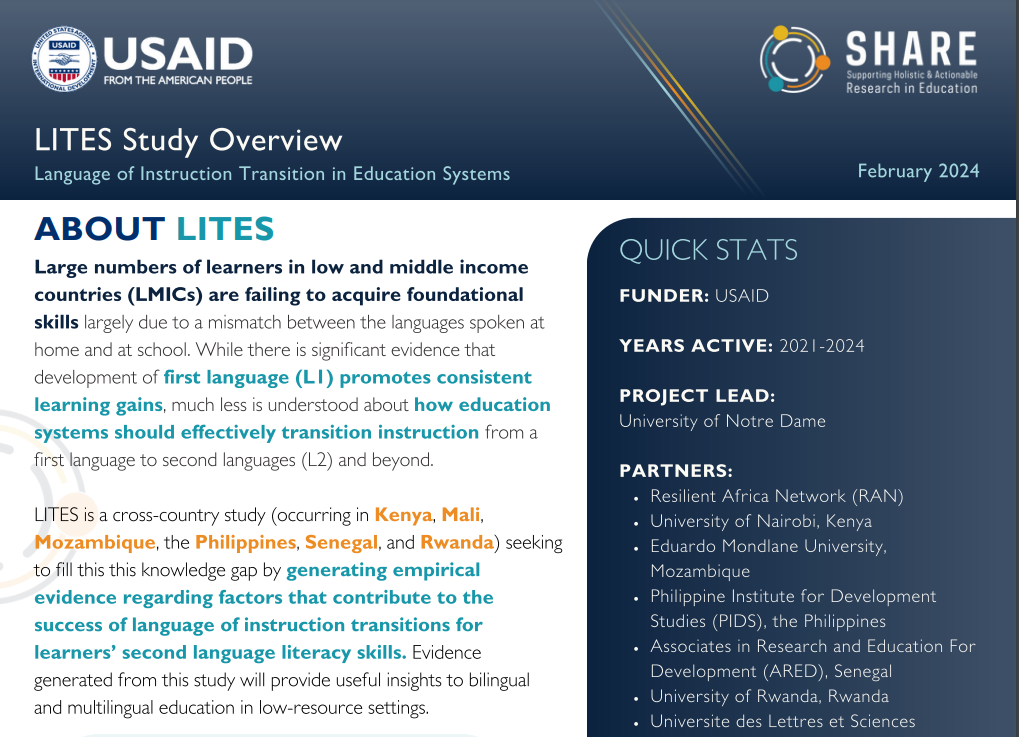
LITES Study Overview: Language of Instruction Transition in Education Systems
LITES is a cross-country study (occurring in Kenya, Mali, Mozambique, the Philippines, Senegal, and Rwanda) seeking to fill this this knowledge gap by generating empirical evidence regarding factors that contribute to the success of language of instruction transitions for learners’ second language literacy skills. Evidence generated from this study will provide useful insights to bilingual and multilingual education in low-resource settings.
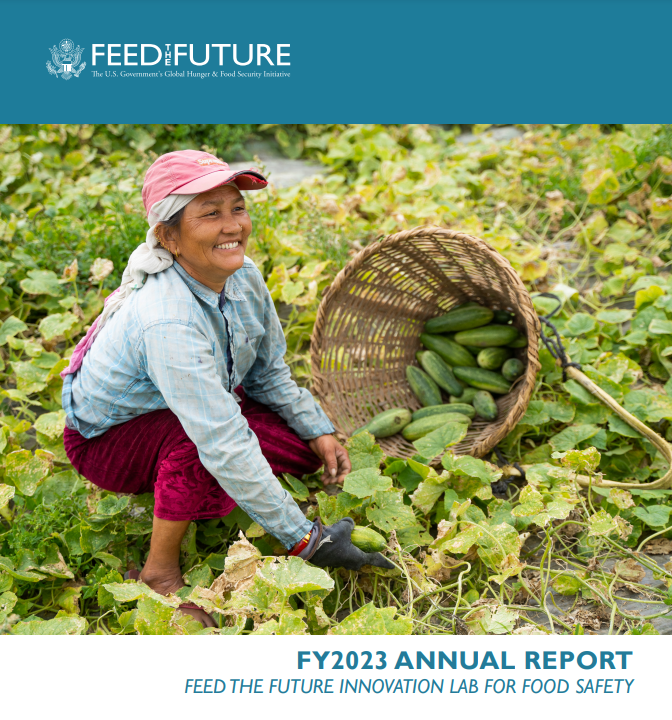
FY2023 Annual Report Feed the Future Innovation Lab for Food Safety
In FY2023, the Feed the Future Innovation Lab for Food Safety (FSIL) subaward projects in Bangladesh, Cambodia, Kenya, Nepal, Nigeria, and Senegal made significant progress in data collection to better understand microbial food safety challenges in each focus country, analyze the roles and opportunities for women in food safety and in different food value chains, and identify appropriate food safety interventions. All projects entered their final year of activities (year three for long-term subawards in Bangladesh, Cambodia, Kenya, and Senegal and year two for short-term subawards in Nepal and Nigeria) and many have started to analyze data and disseminate results. In FY2023, FSIL subaward projects published nine peer-reviewed journal articles, gave seven conference presentations, and hosted workshops and training sessions for producers, extension agents, government stakeholders, and the private sector.
Gender Integrated Response to Emerging COVID-19 Priorities in India
This work addressed the critical need for strengthening gender-based violence (GBV) response and prevention mechanisms at district, community, and facility levels.
President’s Malaria Initiative: Country Malaria Operational Plans FY 2024
The President’s Malaria Initiative (PMI) is credited with helping to save 11.7 million lives and prevent 2.1 billion malaria cases since 2000. Indeed, since 2006, in countries where PMI works, global efforts have supported a 29% decrease in malaria case rates and a 48% decline in deaths. The introduction of two malaria vaccines in 2021 and 2023 has increased optimism in the potential to further strengthen global malaria control.
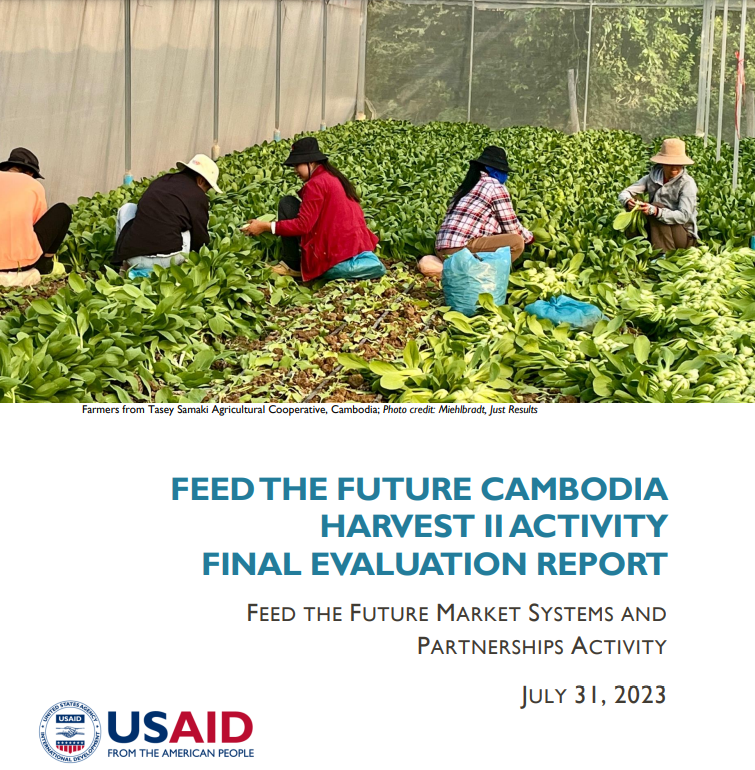
Feed the Future Cambodia Harvest II Activity Final Evaluation Report
This report presents the findings from the final evaluation of the Feed the Future Cambodia Harvest II activity (Harvest II) funded by the United States Agency for International Development (USAID) and operating from 2017-2022. The approach taken by Harvest II represented a shift in emphasis from previous USAID-funded activities that offered support to agricultural production, moving intentionally towards a demand-driven, market systems development approach. The evaluation team was asked to assess the extent and nature of system change that resulted from the activity, and how farms and firms benefited. The team also assessed whether and how the project contributed to resilience, climate change mitigation, and environmental stewardship.
Family Planning Health: India Market Description
FP Market Description is diagnosis of constraints for effective private sector market participation.
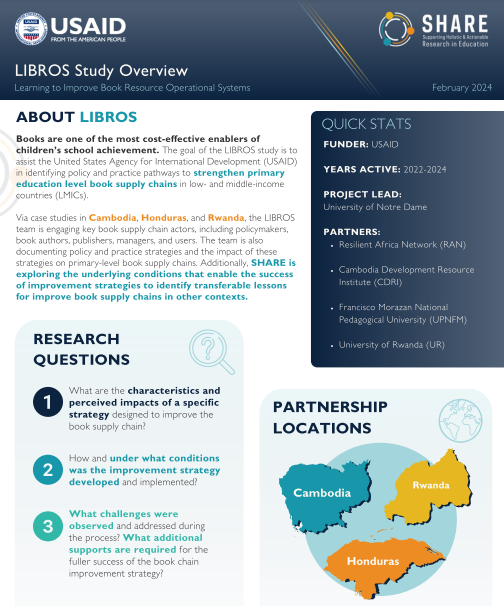
LIBROS Study Overview Learning to Improve Book Resource Operational Systems
Via case studies in Cambodia, Honduras, and Rwanda, the LIBROS team is engaging key book supply chain actors, including policymakers, book authors, publishers, managers, and users. The team is also documenting policy and practice strategies and the impact of these strategies on primary-level book supply chains.
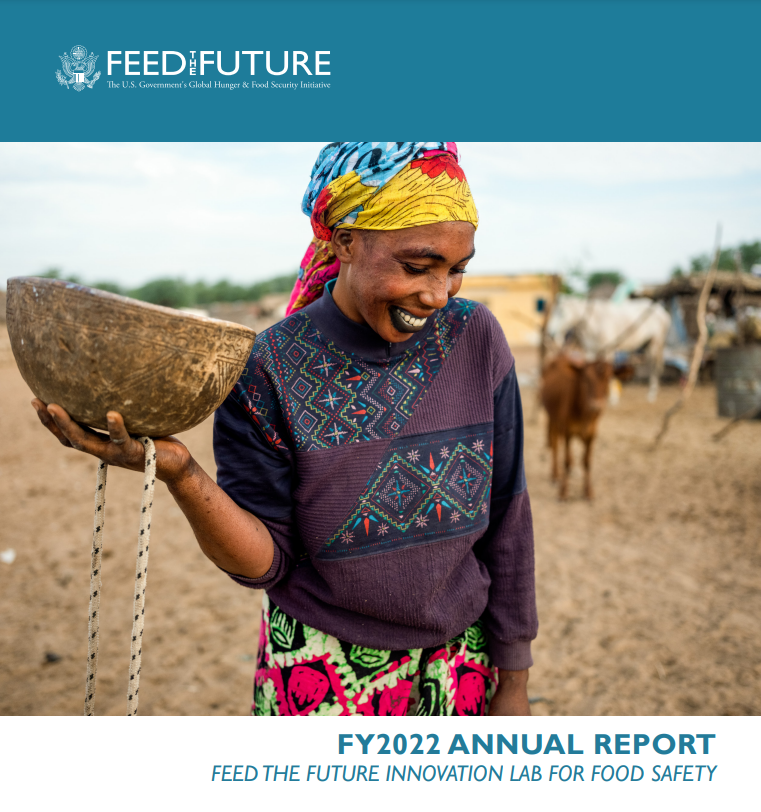
FY2022 Annual Report Feed the Future Innovation Lab for Food Safety
As travel and institutional pandemic restrictions eased globally, the Feed the Future Innovation Lab for Food Safety (FSIL) accelerated research activities in all focus countries. FSIL's four long-term research subawards in Bangladesh, Cambodia, Kenya, and Senegal entered their second year of implementation. These projects were in the data collection stage of their project cycles for most of FY2022.
Review of Disability Inclusive Education in USAID Asia Education Programming
This report presents findings from both a desk review (consisting of a review of activity documentation and surveys of USAID Missions and ongoing activities) of 26 basic education activities across 11 countries in Asia and three case studies conducted in Tajikistan, the Philippines, and Bangladesh. The primary objective of the case studies was to gain a better understanding of the collaboration on disability-inclusive education between USAID Missions, host governments, implementing partners, and other educational stakeholders within each country. Furthermore, the case studies provided an opportunity to explore how past basic education activities and education systems within each country have influenced the development and implementation of new basic education activities as they relate to disability inclusion.
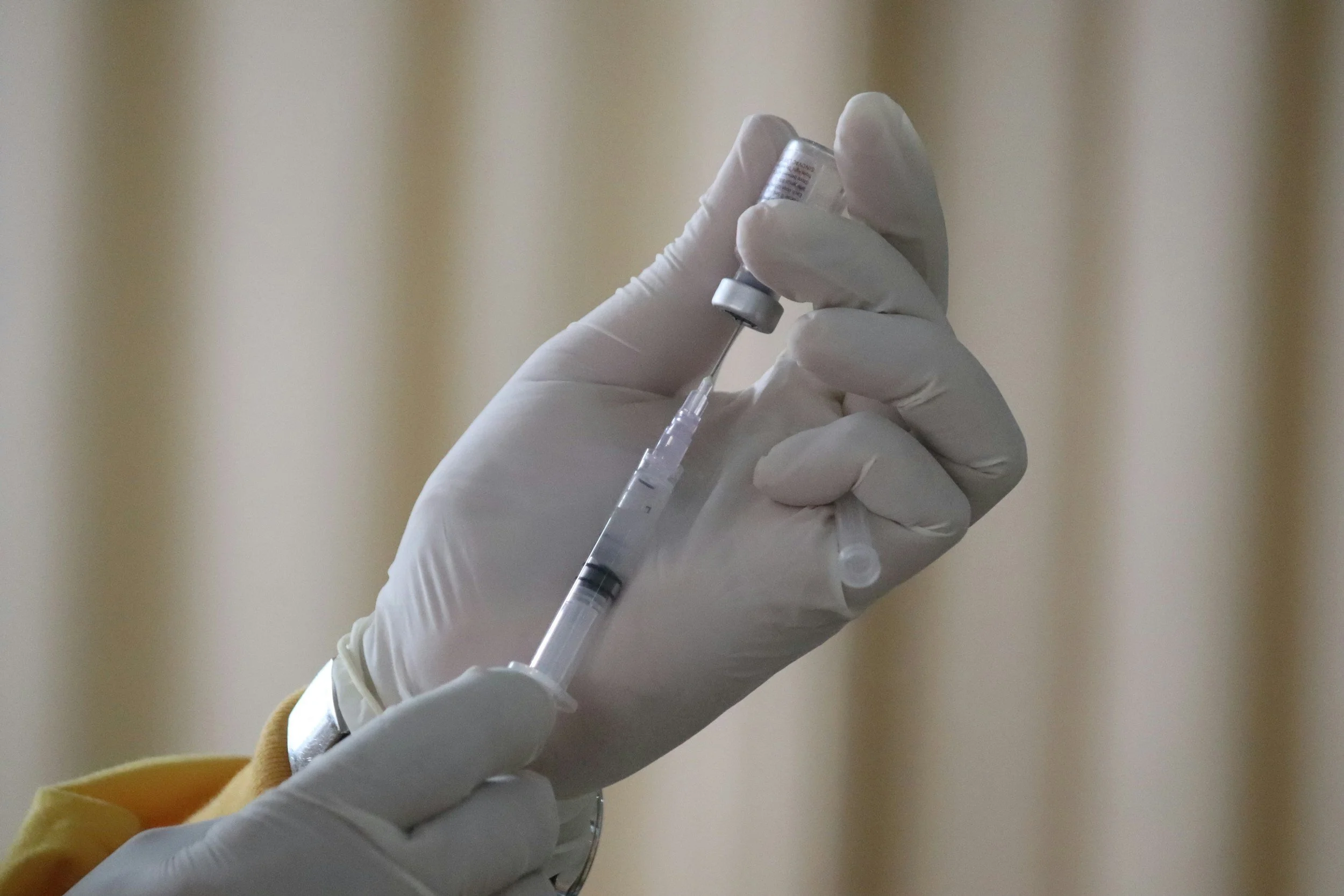
President’s Malaria Initiative: Country Malaria Operational Plans FY 2023
The President’s Malaria Initiative (PMI) is credited with helping to save 11.7 million lives and prevent 2.1 billion malaria cases since 2000. Indeed, since 2006, in countries where PMI works, global efforts have supported a 29% decrease in malaria case rates and a 48% decline in deaths. The introduction of a new malaria vaccine in 2021 has increased optimism in the potential to further strengthen global malaria control.
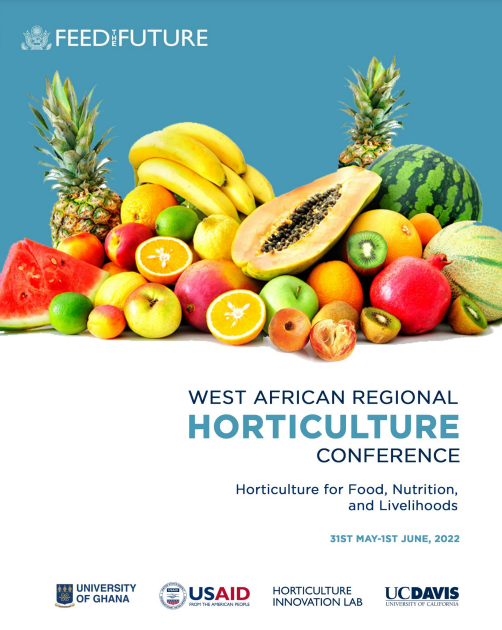
West African Regional Horticulture Conference: Horticulture for Food, Nutrition, and Livelihoods
The West Africa horticulture conference was organized together with local horticulture experts and other stakeholders to identify on-the-ground challenges and opportunities in the sector. This is to inform specific capacity development activities for stakeholders, including industry experts and leaders. This is also to encourage local engagement and ownership, influencing the sustainability of this work to continue beyond the Horticulture Innovation Lab’s involvement. Thus, contributing to inclusive economic growth and a more resilient system led by the regional experts.
Skills for Youth Project
The project installed Cisco networking training equipment at all the partner institutions and trained 132 IT teachers (113 men, 19 women) as Cisco academy instructors to cascade the ICT skills training to students. The Cisco academies established through SYP enrolled 4533 students, of which 3592 completed their training during the life of the project.
USAID/Climate Change Adaptation Project Preparation Facility for Asia and the Pacific
Improving national government access to climate change adaptation financing and accelerating investment proposals
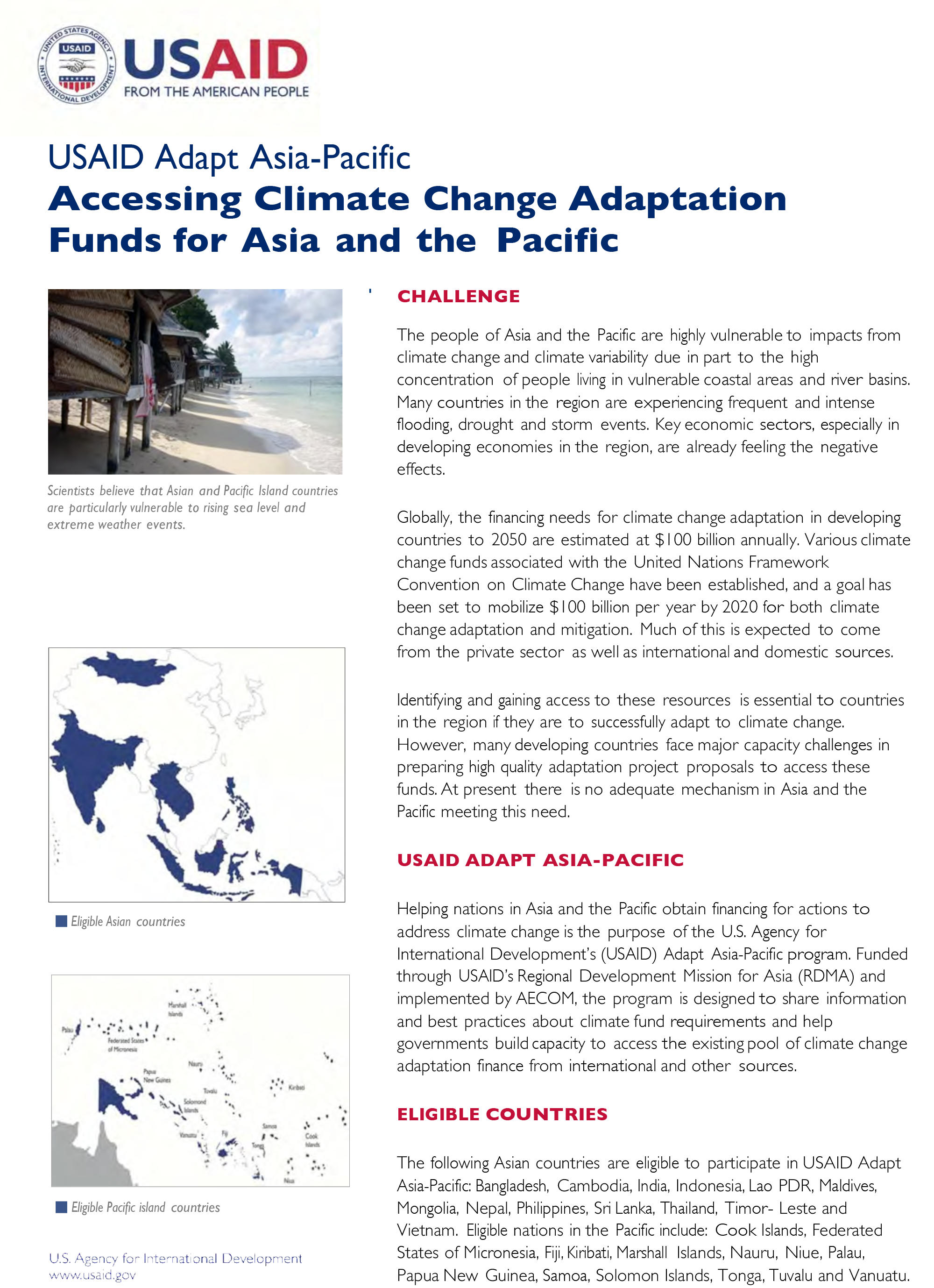
Accessing Climate Change Adaptation Funds for Asia and the Pacific
The people of Asia and the Pacific are highly vulnerable to impacts from climate change and climate variability due in part to the high concentration of people living in vulnerable coastal areas and river basins.
Regional trends in private and public provision of long- and short-acting contraceptive methods
What have been the trends in the use of modern contraceptives (LA/PM and short-acting methods) sourced from the private sector (for-profit or commercial) over the past 20 years?