
-
Article
Brief
Meeting Notes
Presentation
Poster
Report
Toolkit
Video
Webinar
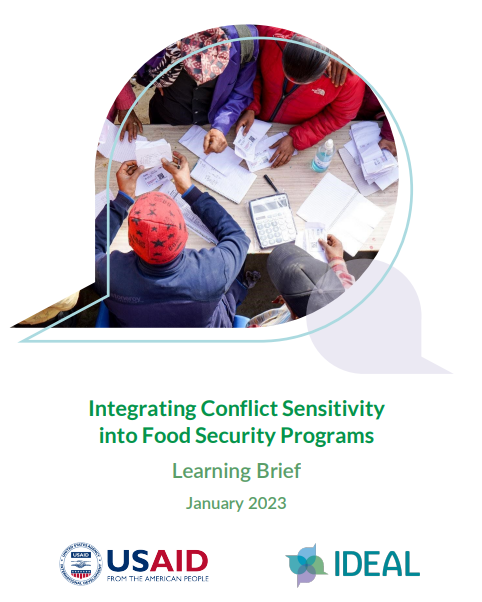
Integrating Conflict Sensitivity into Food Security Programs
This brief assesses prevailing practices, successes, challenges, lessons learned, and recommendations around integrating conflict sensitivity into food security programs. Ultimately, conflict sensitivity is not only about managing and mitigating risk, but also about seeking opportunities to promote peace. In this respect, this learning brief can contribute to USAID’s calls for greater coherence in humanitarian, development, and peace programming by supporting aid actors to “champion conflict integration and opportunities for enabling or building peace where possible.”
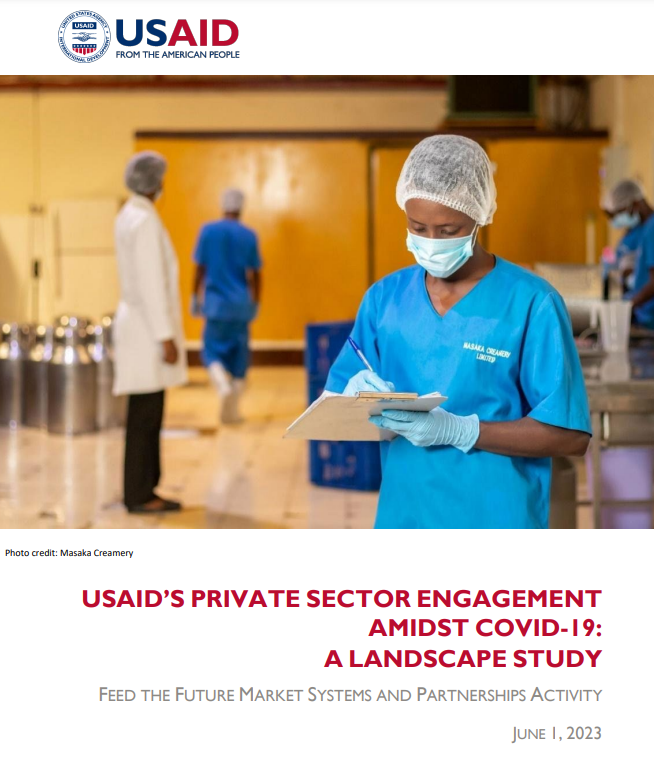
USAID’s Private Sector Engagement Amidst Covid-19: A Landscape Study
In order to better understand how USAID engaged with the private sector to improve firm resilience during the COVID-19 pandemic — and to what extent the agency was successful in doing so — USAID commissioned research through the Private Sector Engagement (PSE) Hub in collaboration with the Bureau of Policy, Planning and Learning’s Office of Learning, Evaluation and Research (PPL/LER), as part of a series of learning activities related to USAID’s COVID-19 Learning Agenda.
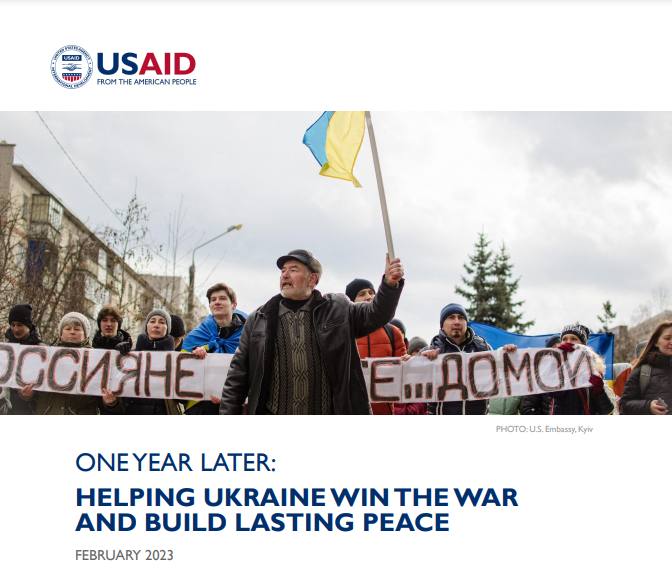
One Year Later: Helping Ukraine Win the War and Build Lasting Peace
To help meet Ukraine’s wartime needs and lay the foundation for a successful recovery, USAID has provided $13 billion in direct budget support, helping the Government of Ukraine (GoU) fund basic public services like healthcare, education, and emergency response; $1.4 billion in humanitarian assistance to save lives and meet the urgent needs of the Ukrainian people; and over $800 million in development assistance to bolster Ukraine’s energy grid, governance institutions, agriculture, small businesses, and civil society in wartime, while also remaining focused on what will be needed for recovery and reconstruction.
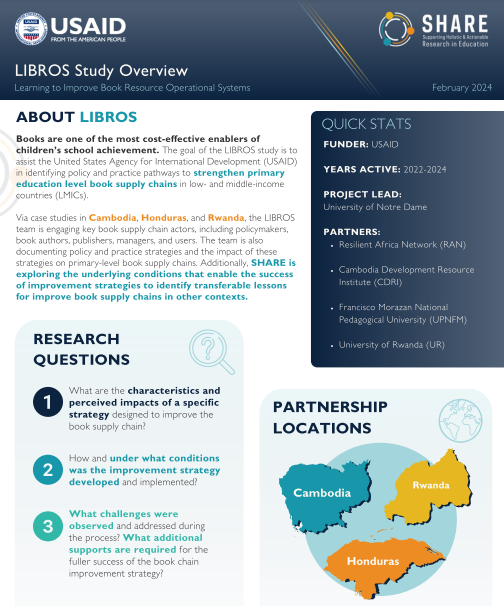
LIBROS Study Overview Learning to Improve Book Resource Operational Systems
Via case studies in Cambodia, Honduras, and Rwanda, the LIBROS team is engaging key book supply chain actors, including policymakers, book authors, publishers, managers, and users. The team is also documenting policy and practice strategies and the impact of these strategies on primary-level book supply chains.
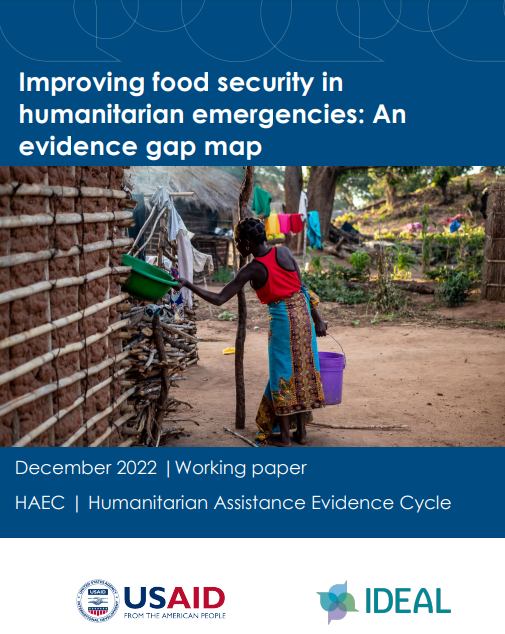
Improving Food Security in Humanitarian Emergencies: An evidence gap map
This report presents the findings of a systematic search to identify and map the evidence base of impact evaluations and systematic reviews of interventions that aim to improve food security during humanitarian crises.
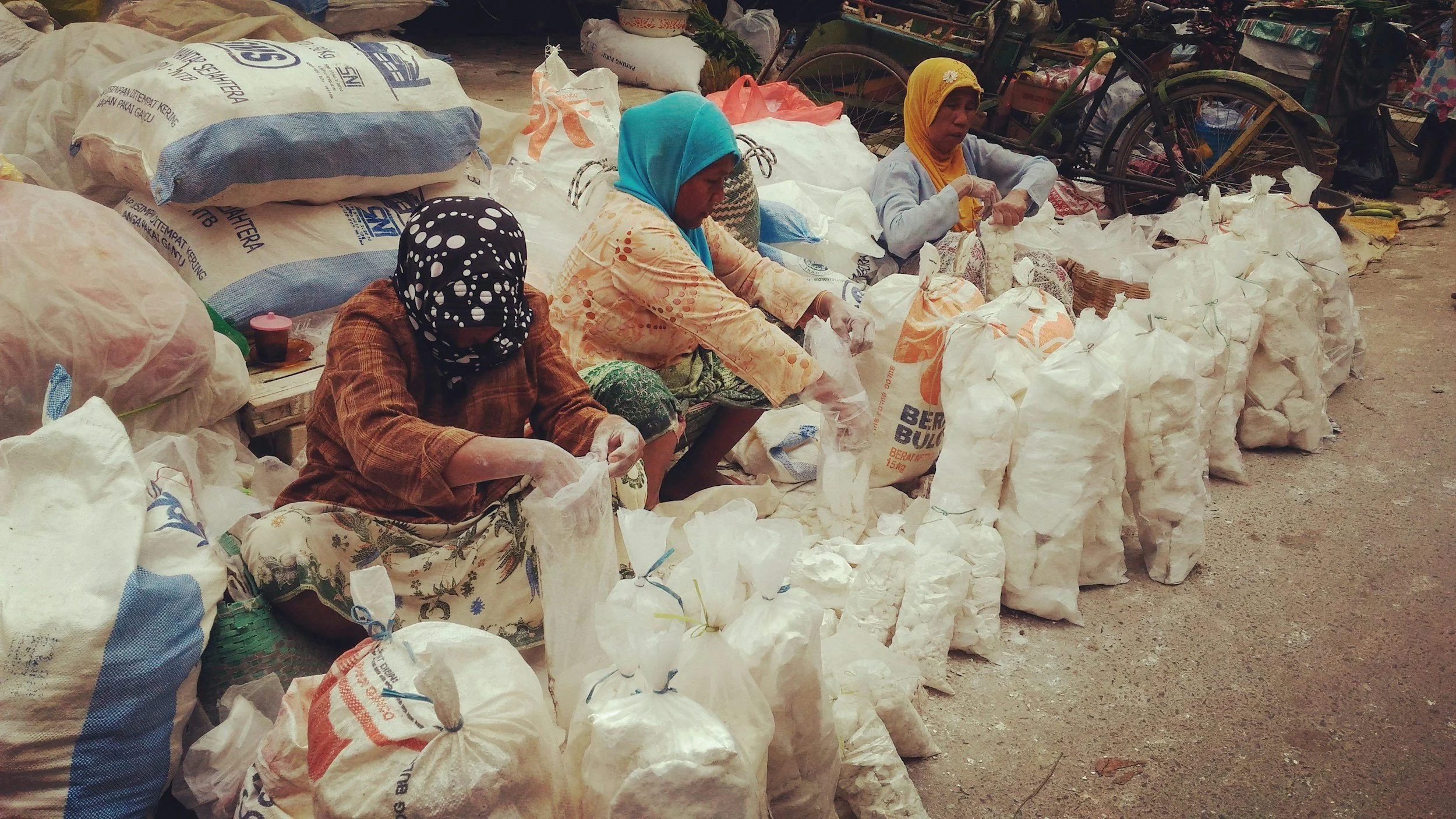
Feed the Future Inova Business Cases
The USAID Mozambique Feed the Future Agricultural Innovations Activity (FTF Inova) is a five-year (2017- 2022) project that takes a market systems development approach to agriculture-led economic growth in Mozambique. FTF Inova, implemented by DAI in partnership with MSA, developed the six business cases below to offer tangible proof that enterprises can profit from investing in addressing challenges experienced by smallholder farmers.
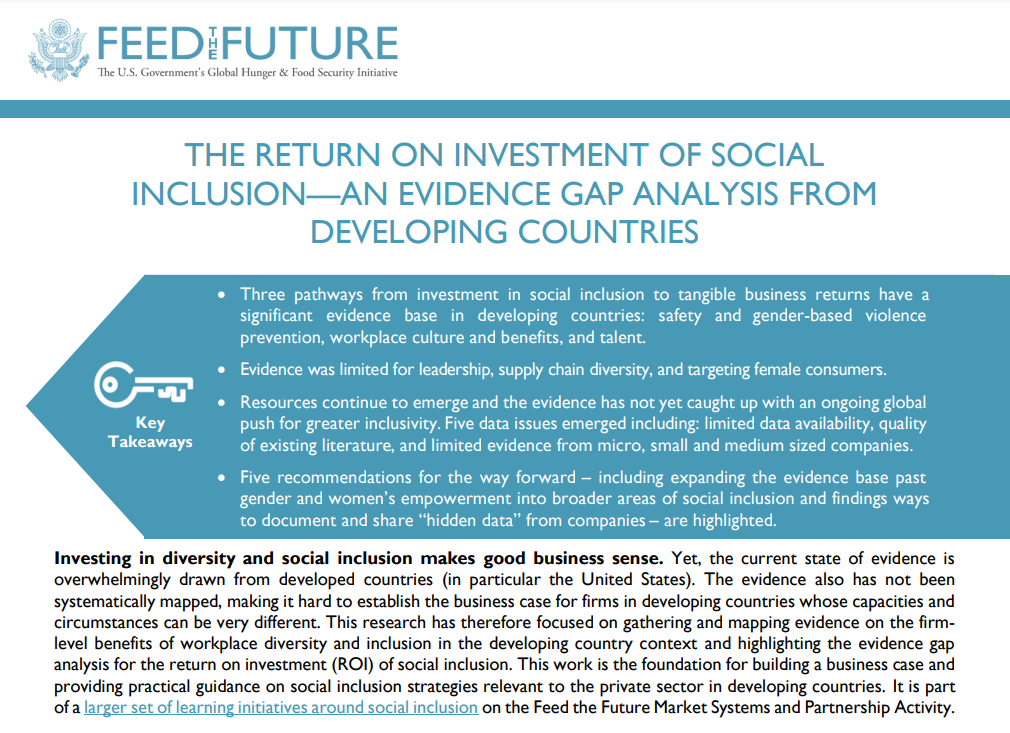
The Return on Investment of Social Inclusion: An Evidence Gap Analysis from Developing Countries
This research focuses on gathering and mapping evidence on the firm level benefits of workplace diversity and inclusion in the developing country context and highlighting the evidence gap analysis for the return on investment (ROI) of social inclusion. This work is the foundation for building a business case and providing practical guidance on social inclusion strategies relevant to the private sector in developing countries.
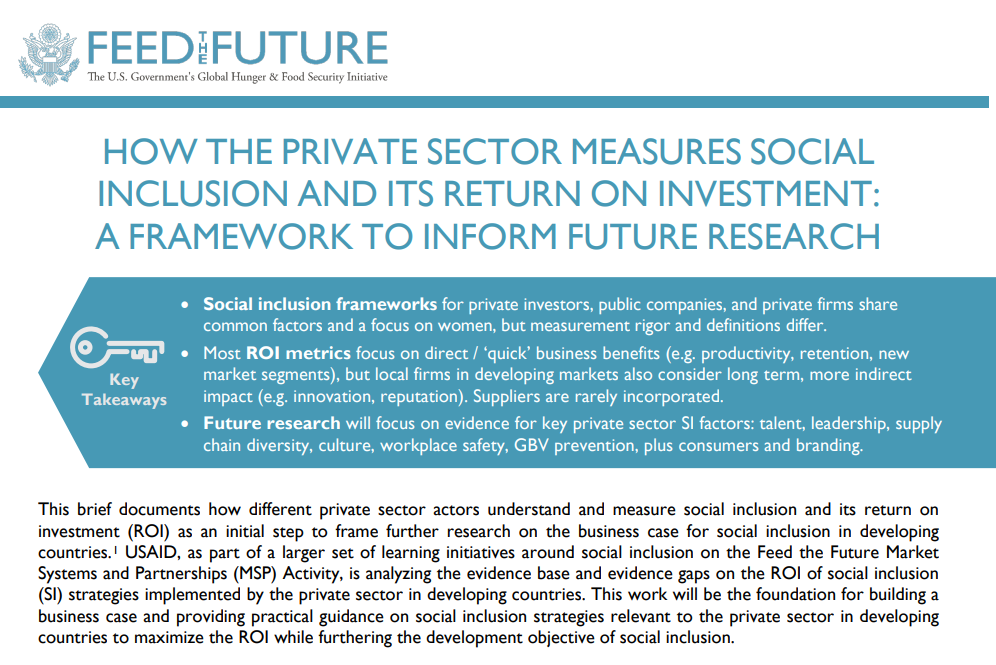
How the Private Sector Measures Social Inclusion and its Return on Investment: A Framework to Inform Future Research
This brief documents how different private sector actors understand and measure social inclusion and its return on investment (ROI) as an initial step to frame further research on the business case for social inclusion in developing countries. This work will be the foundation for building a business case and providing practical guidance on social inclusion strategies relevant to the private sector in developing countries to maximize the ROI while furthering the development objective of social inclusion.

Use of Containers for Temporary Emergency Storage (English, French, Portuguese & Spanish)
During emergencies, backloading multiple months of medicines and other public health commodities as close to patients as possible can minimize supply chain disruption and maintain patient access.
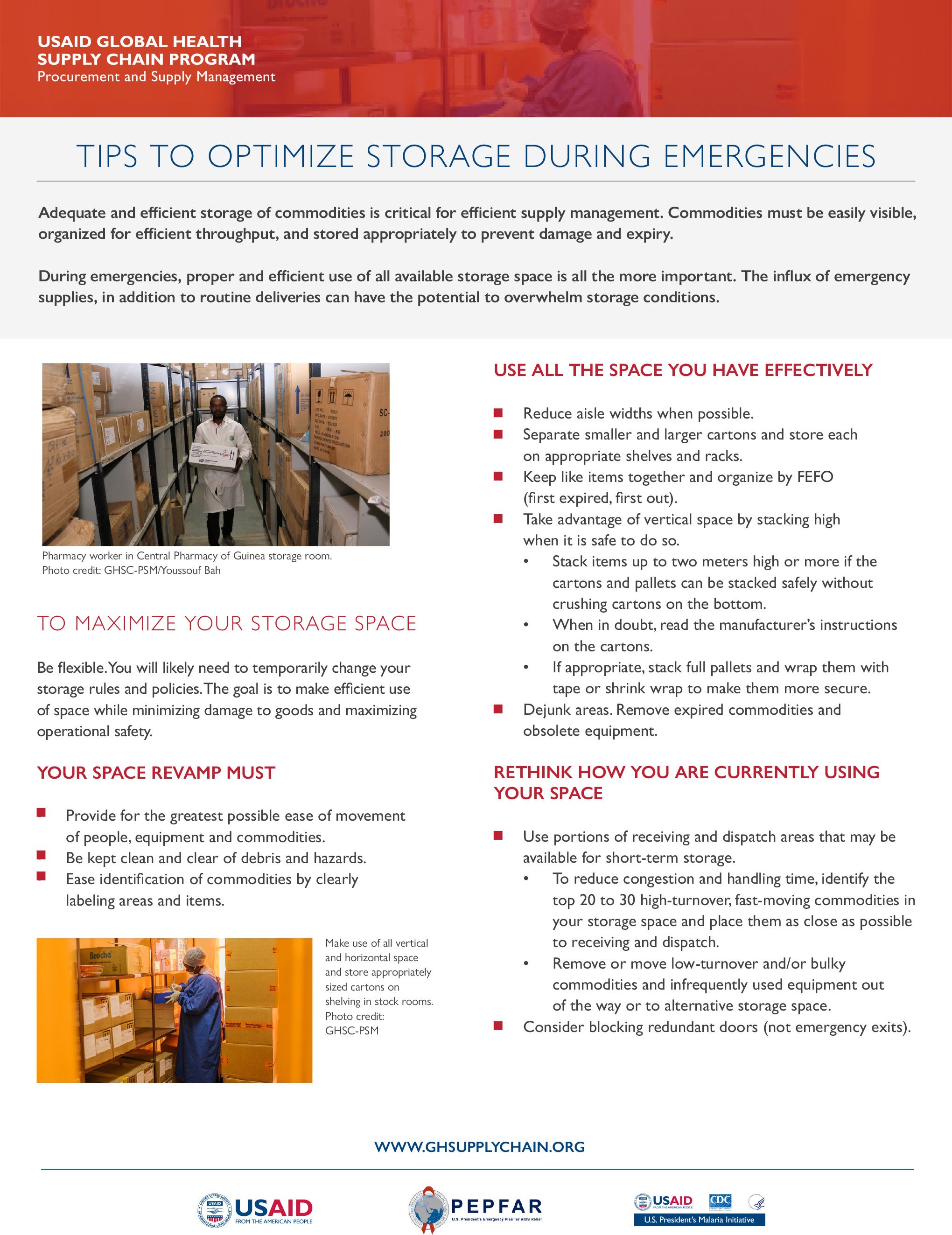
Tips to Optimize Storage During Emergencies (English, French, Portuguese & Spanish)
Adequate and efficient storage of commodities is critical for efficient supply management. Commodities must be easily visible, organized for efficient throughput, and stored appropriately to prevent damage and expiry.
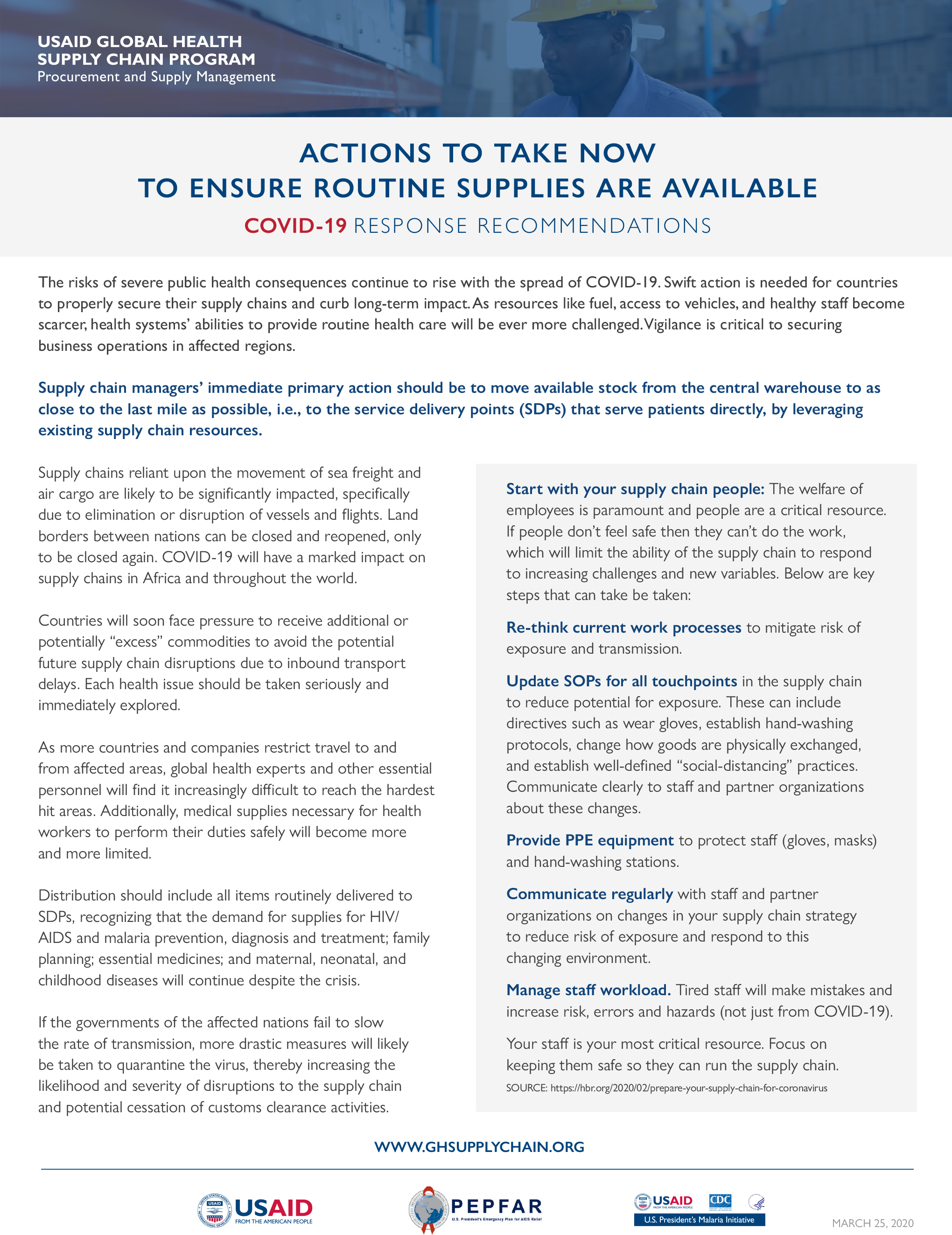
Actions to Take Now to Ensure Routine Supplies Are Available
As resources like fuel, access to vehicles, and healthy staff become scarcer, health systems’ abilities to provide routine health care will be ever more challenged. Vigilance is critical to securing business operations in affected regions.
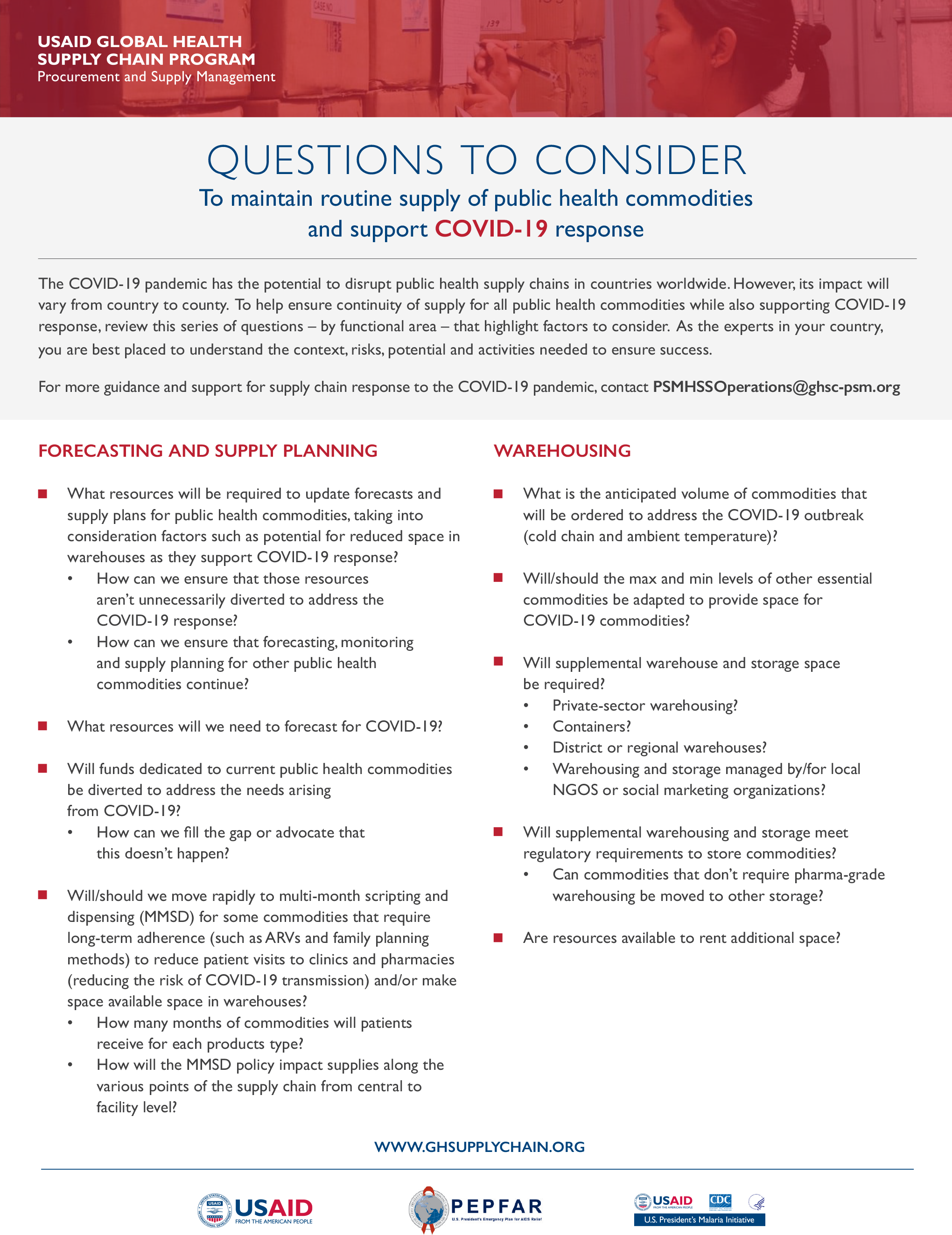
Questions to Consider to Maintain Routine Supply of Public Health Commodities and Support COVID-19 Response
To help ensure continuity of supply for all public health commodities while also supporting COVID-19 response, review this series of questions – by functional area – that highlight factors to consider.
Key Lessons From Private Sector Engagement in the USAID Learning Community for Supply Chain Resilience
Any partnership between a company, NGO or research institution can be fraught with misalignment of stated objectives, appetite for risk, and short- versus long-term thinking.
An Introduction to Assessing Climate Resilience in Smallholder Supply Chains
For companies sourcing from smallholders, evaluating resilience to climate change poses particular challenges. Smallholder sourcing entails working with many, diverse farmer communities around the globe, each with its own agricultural practices, cultural context, and risk exposure.