
-
Article
Brief
Meeting Notes
Presentation
Poster
Report
Toolkit
Video
Webinar
USAID Digital Strategy & Factsheet 2024-2034
As USAID looks to the next ten years and beyond, this Digital Policy+ will guide our efforts to innovate thoughtfully, enhance responsibility and accountability, generate reliable and usable evidence, and launch dynamic partnerships that support security, human rights, and economic prosperity for people everywhere.
Climate Strategy Year 1 Review
Over the past year, USAID has launched a wide variety of initiatives, partnerships, and internal and interagency processes to implement the Strategy and set the foundation for achieving the goals over the eight years of the Strategy timeline.
Climate Strategy 2022-2030 (English, Arabic, French & Spanish)
USAID has developed a new Climate Strategy that will guide our work through 2030 in a way that is truly different.
U.S. Dept. of State and USAID Joint Strategy FY 2022 - 2026
“These steps will help us build a more inclusive Agency, one that is more diverse and willing to engage with new partners, more equitable in its impact, and more responsive to local voices. USAID’s legacy as the world’s leading bilateral development institution has always been an asset to the American people and a means for securing stability, security, and prosperity, both at home and abroad. This Joint Strategic Plan acknowledges and draws strength from this heritage to take on the challenges of today and prepare for those that will come tomorrow.”
President’s Emergency Plan for Adaptation and Resilience (PREPARE)
In response to a severe and urgent crisis, the President of the United States of America is announcing the President’s Emergency Plan for Adaptation and Resilience (PREPARE) to support developing countries and communities in vulnerable situations around the world in their efforts to adapt to and manage the impacts of climate change. T
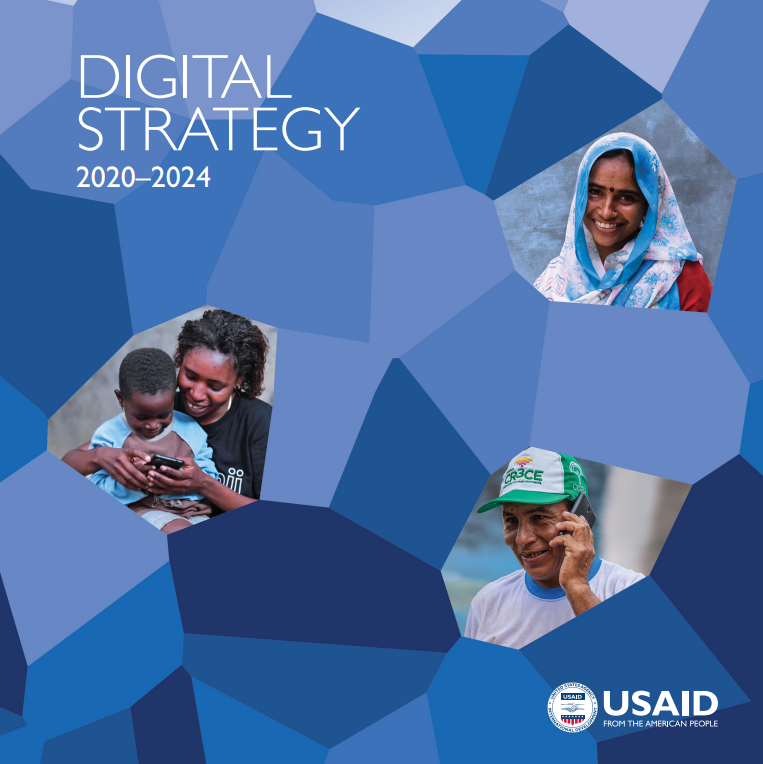
USAID Digital Strategy 2020-2024
The U.S. Agency for International Development (USAID) Digital Strategy (2020-2024) will position the Agency to advance our mission—to end the need for foreign assistance—through digitally supported programming that fosters the Journey to Self-Reliance in our partner countries and maximizes the benefits, while managing the risks that digital technology introduces into the lives of the communities we serve.
The Intersection of Global Fragility and Climate Risks
When states face fragility and climate risks simultaneously, the risks and challenges are compounded. This study seeks to identify the locations where fragility and climate risks co-occur around the world. Since these places with compound fragility-climate risks may be more vulnerable to humanitarian emergencies or instability, understanding the distinct fragility and climate challenges they face could present opportunities and focal points for intervention.
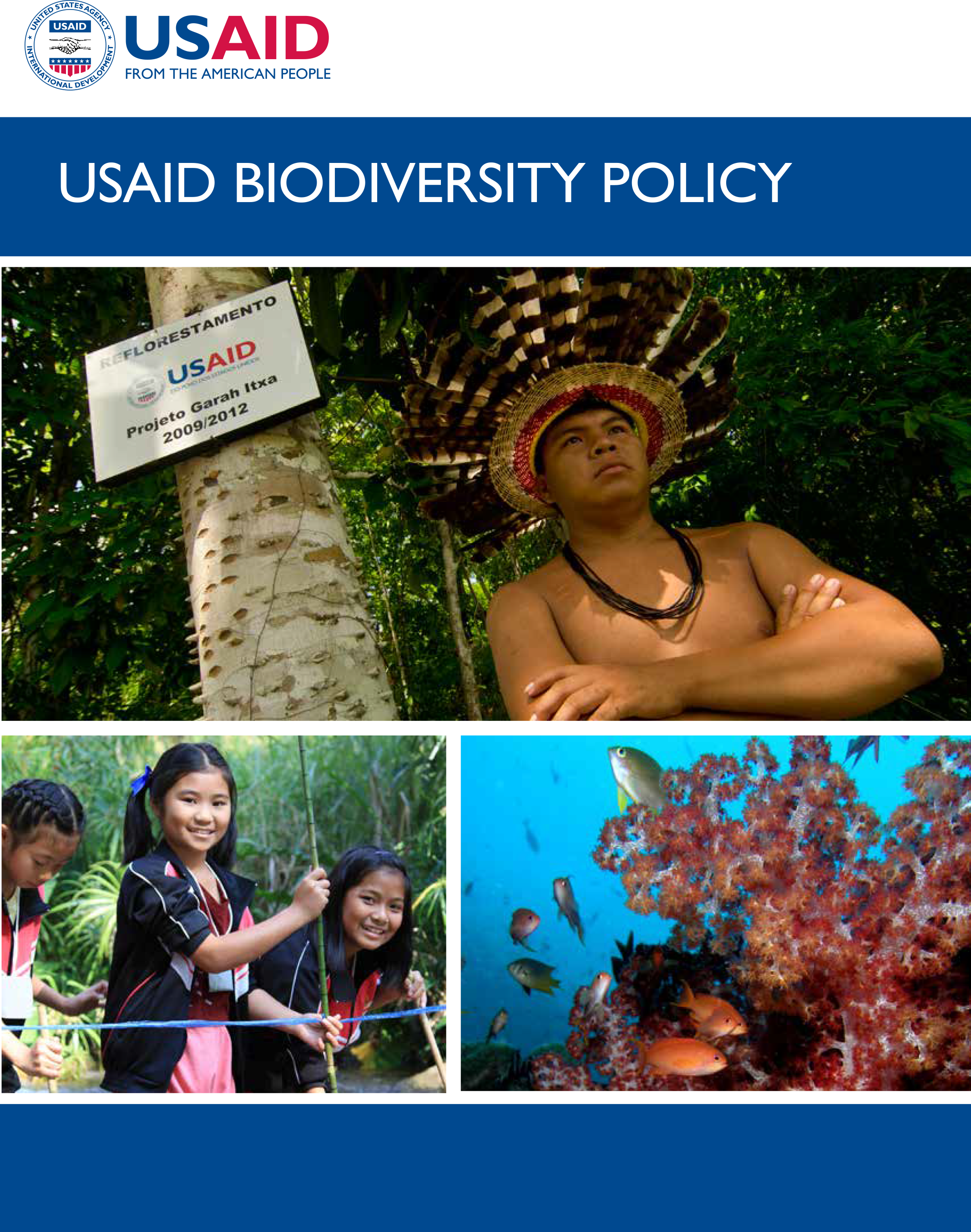
USAID Biodiversity Policy
This Policy represents a recommitment of USAID to conserve biodiversity through strategic actions to reduce threats and drivers, as well as a new focus on integrating biodiversity conservation with other development sectors. A roadmap for implementation highlights the most critical steps necessary for implementing this Policy. (See Annex II.)
Climate Change and Conflict in the Sahel: A Policy Brief on Findings From Niger and Burkina Faso
This document is part of a series of studies produced by the African and Latin American Resilience to Climate Change (ARCC) project that address adaptation to climate change in West Africa. Within the ARCC West Africa studies, this document falls in the subseries Climate Change and Conflict in West Africa. ARCC has also produced subseries on Climate Change and Water Resources in West Africa, Agricultural Adaptation to Climate Change in the Sahel, and Climate Change in Mali.
Climate Change and Conflict in West African Cities: A Policy Brief on Findings From Lagos, Nigeria and Accra, Ghana
To address the relative lack of research on climate-conflict linkages in large urban areas, USAID asked the Foundation for Environmental Security and Sustainability (FESS) to conduct a case study on two major West African cities – Lagos, Nigeria and Accra, Ghana. Field research was carried out for the case study in June and August 2013, and this policy brief presents the findings on the central questions addressed by that investigation: Are the effects of climate change likely to lead to chaotic and conflictive scenarios in West African cities? If so, under what circumstances and over what time frame; and are there preventive actions that governments and donors should take?
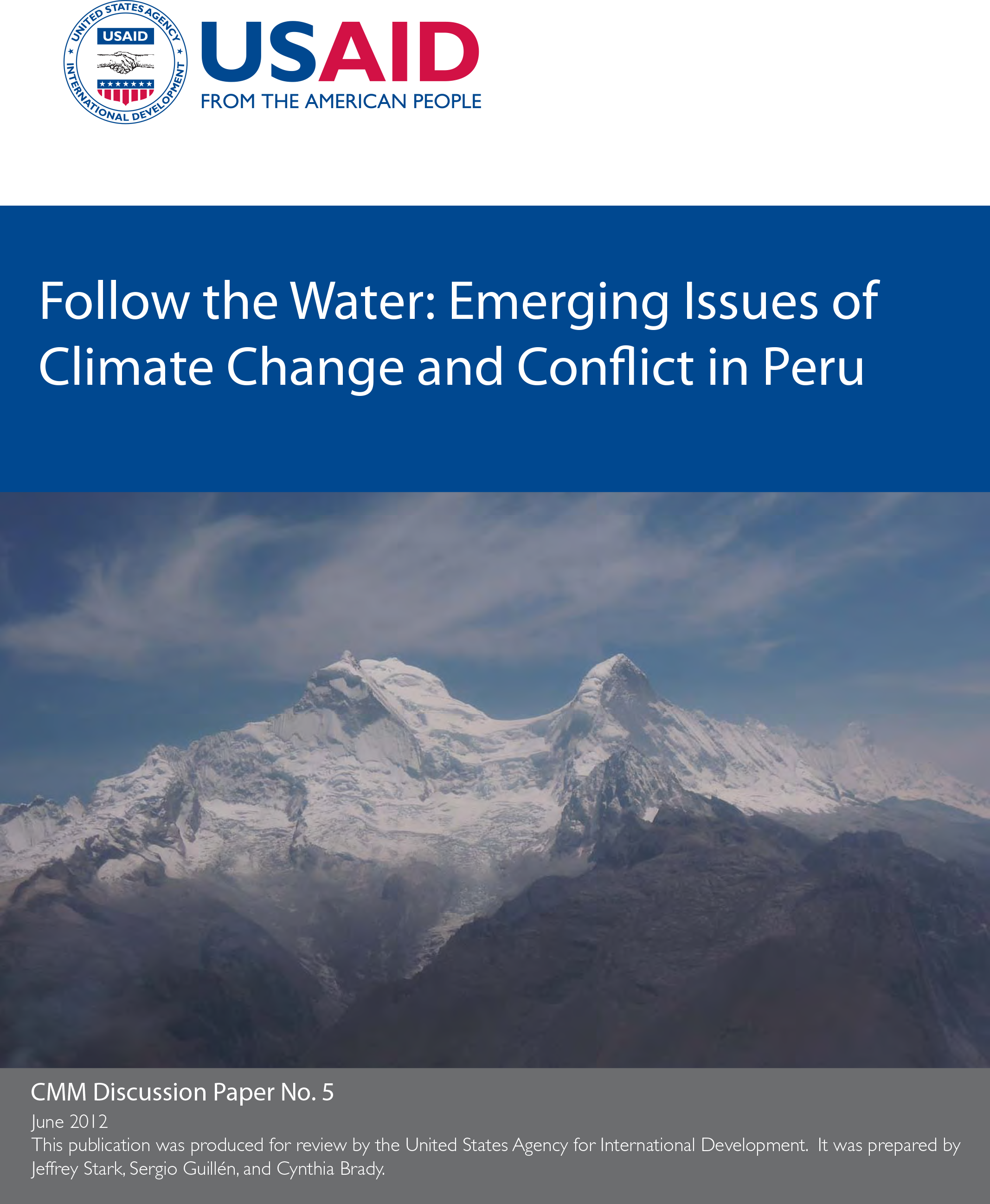
Follow the Water: Emerging Issues of Climate Change and Conflict in Peru
This study explores how the effects of climate change on water quantity, quality, and access may be factoring into aspects of localized instability, fragility, and conflict in Peru. To help guide the methodological approach, FESS developed a seven-phase framework—the Climate Change and Conflict Assessment Framework (CCCAF). The framework emphasizes one of the main conclusions of recent conflict analysis: conflict is always the result of the interactions of multiple political, economic, social, historical, and cultural factors, and these must be taken into account in any analysis. Moreover, the quality of governance and the resilience of political, economic, and social institutions all mediate the relationship between environmental change and conflict in important ways. The influence of climate change and climate-related policy and program responses on instability and conflict can only be understood within this web of relationships.
USAID Climate Change and Development Strategy 2012-2016
USAID’s work on climate change fits into a larger domestic and international policy context and is guided by Administration policy as developed in the President’s Global Development Policy, the Quadrennial Diplomacy and Development Review, USAID Forward, and the GCCI. Additionally, USAID’s Policy Framework 20112015 defines the following as one of seven Core Development Objectives for the Agency: Reduce Climate Change Impacts and Promote Low Emissions Growth. USAID has a long history of programming in sectors relevant to climate change and will draw lessons learned from this history to shape efforts under this strategy. The goal of USAID’s 2012-2015 Climate Change and Development Strategy is to enable countries to accelerate their transition to climate resilient low emission sustainable economic development.
Climate Threats, Fragility, and Conflict Risks
How do the set of countries that are most threatened for heightened climate risks relate to the set of fragile or conflict‐ affected states?
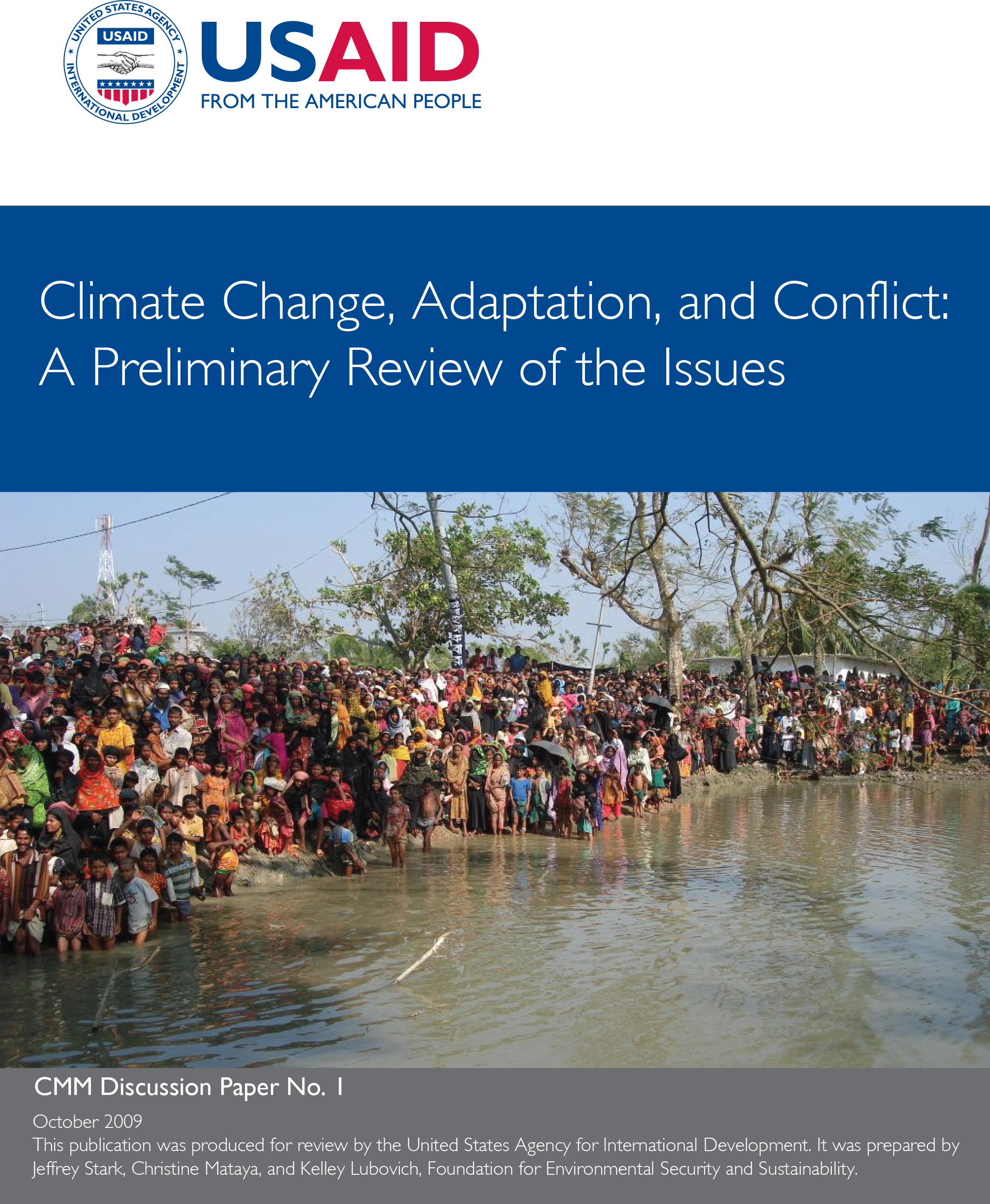
Climate Change, Adaptation, and Conflict: A Preliminary Review of the Issues
The consensus of climate scientists on the probable harmful effects of climate change and the need for climate adaptation has grown stronger in recent years. However, knowledge about the potential links between climate change and conflict, as well as the appropriate climate adaptation measures to prevent or mitigate conflict, remains limited and underdeveloped. This discussion paper provides an initial examination of climate change and climate adaptation, how and where climate change may be linked to conflict, and some of the implications of these linkages for development agencies.