USAID Digital Strategy & Factsheet 2024-2034
USAID, in coordination with interagency partners, is at the forefront of advancing democratic, secure, interoperable, and open alternatives to the digital authoritarian models that feature state control, censorship, and violations of individual privacy. As a development and humanitarian agency represented in more than 100 countries, USAID contributes important and unique perspectives that help advance U.S. national security, partnering with governments to undertake critical aspects of their digital transformations. USAID’s programmatic and policy leadership and convening power are an indispensable part of the U.S. government’s efforts to reinforce open, inclusive, secure, and rights-respecting digital ecosystems around the world.
The coming decade promises changes of significant magnitude, as access to the internet continues to broaden and countries undergo “twin transitions,” where digital transformation supports sustainability efforts by both leveraging digital technology and data and making digital technology more environmentally sustainable. Digital public infrastructure (public investments in modular, foundational digital services such as digital identification or digital payment systems, on which additional digital services can be layered) has been identified as a proven and powerful approach to sustainable and resilient digital ecosystem design. Advances will be made in AI, extended reality (XR), and quantum computing, and as-yet-unimagined technology areas will reshape digital ecosystems. The children and youth of today — who make up the largest portion of internet users — include the first “digital native” generation, and their experiences with digital technologies will have huge impacts on future economies and societies, as well as the environment.
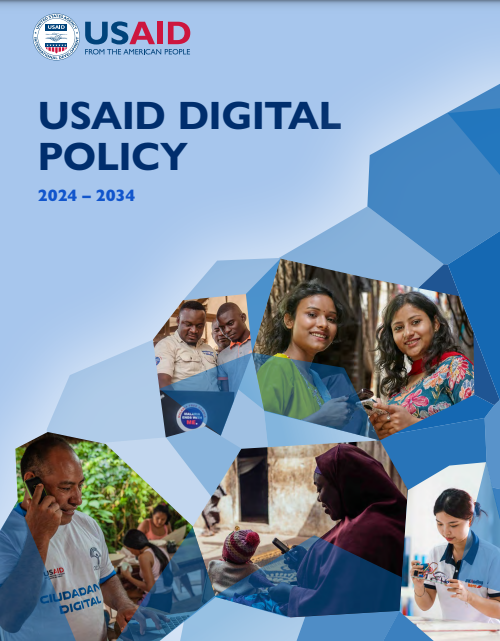
Given these realities, the Agency must continue to embrace and harness the opportunities that digital technologies present to our partner communities while mitigating the risks that are inherent in digital technology use. We must work to allow everyone access to the benefits of this new digital world. As USAID looks to the next ten years and beyond, this Digital Policy+ will guide our efforts to innovate thoughtfully, enhance responsibility and accountability, generate reliable and usable evidence, and launch dynamic partnerships that support security, human rights, and economic prosperity for people everywhere.
Source: USAID
Year: 2024