
-
Article
Brief
Meeting Notes
Presentation
Poster
Report
Toolkit
Video
Webinar
Water, Sanitation, and Hygiene Social Media Links They Forgot to Delete
While the Global Waters website was removed, no one deleted the related social media accounts. Check them out before they go away!

Climate Change Social Media Links They Forgot to Delete
While the Climatelinks website was removed, no one deleted the related social media accounts. Check them out before they go away!

Agriculture Social Media Links They Forgot to Delete
While the Agrilinks website was removed, no one deleted the related social media accounts. Check them out before they go away!
Adherence to Standards for MNH Service Delivery at Public and Private Facilities
This analysis, conducted under the Data for Impact (D4I) award, leverages Service Provision Assessment (SPA) data from 2012–2022 to evaluate the adherence of MNH service providers to WHO process standards. The study examines differences between public and private facilities, including for-profit and not-for-profit (NFP) facilities, and tracks changes over time in selected countries.
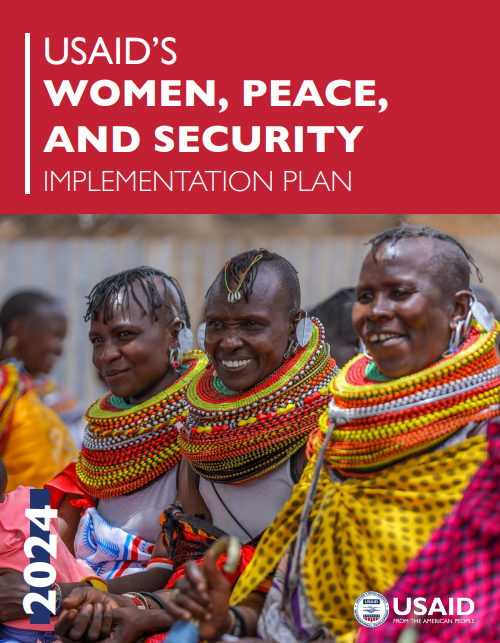
USAID's Women, Peace, and Security Implementation Plan 2024
As outlined in the Women, Peace, and Security Act of 2017, women and girls are disproportionately impacted by conflict. The status of women and the stability of nations are inextricably linked - higher levels of gender equality make countries more prosperous, secure, and democratic;3 and peace agreements are 35% more likely to last 15 years or more when women meaningfully participate4 in peace processes. Thus, the WPS Agenda is critical to USAID’s development efforts.
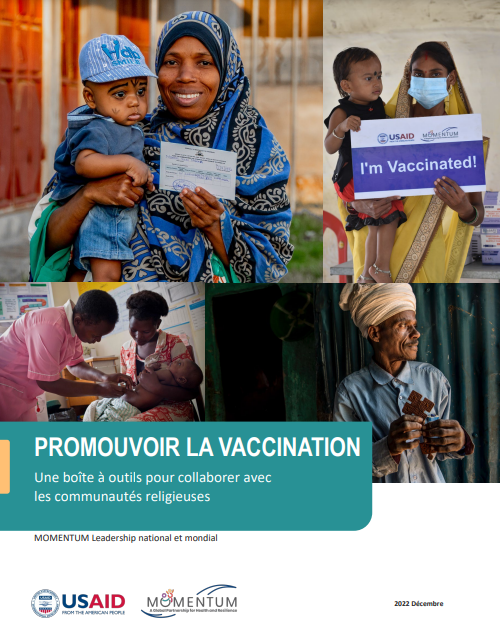
Promoting Vaccination: A Toolkit for Collaborating with Faith Communities (English, French, & Hindi)
This toolkit is designed to equip faith actors and related stakeholders—such as Ministries of Health, medical and scientific bodies, and non-profit organizations that partner with or work alongside faith actors—with the information and tools needed to raise awareness, reduce misinformation, and address barriers that prevent faith communities, in particular, from engaging in vaccination.
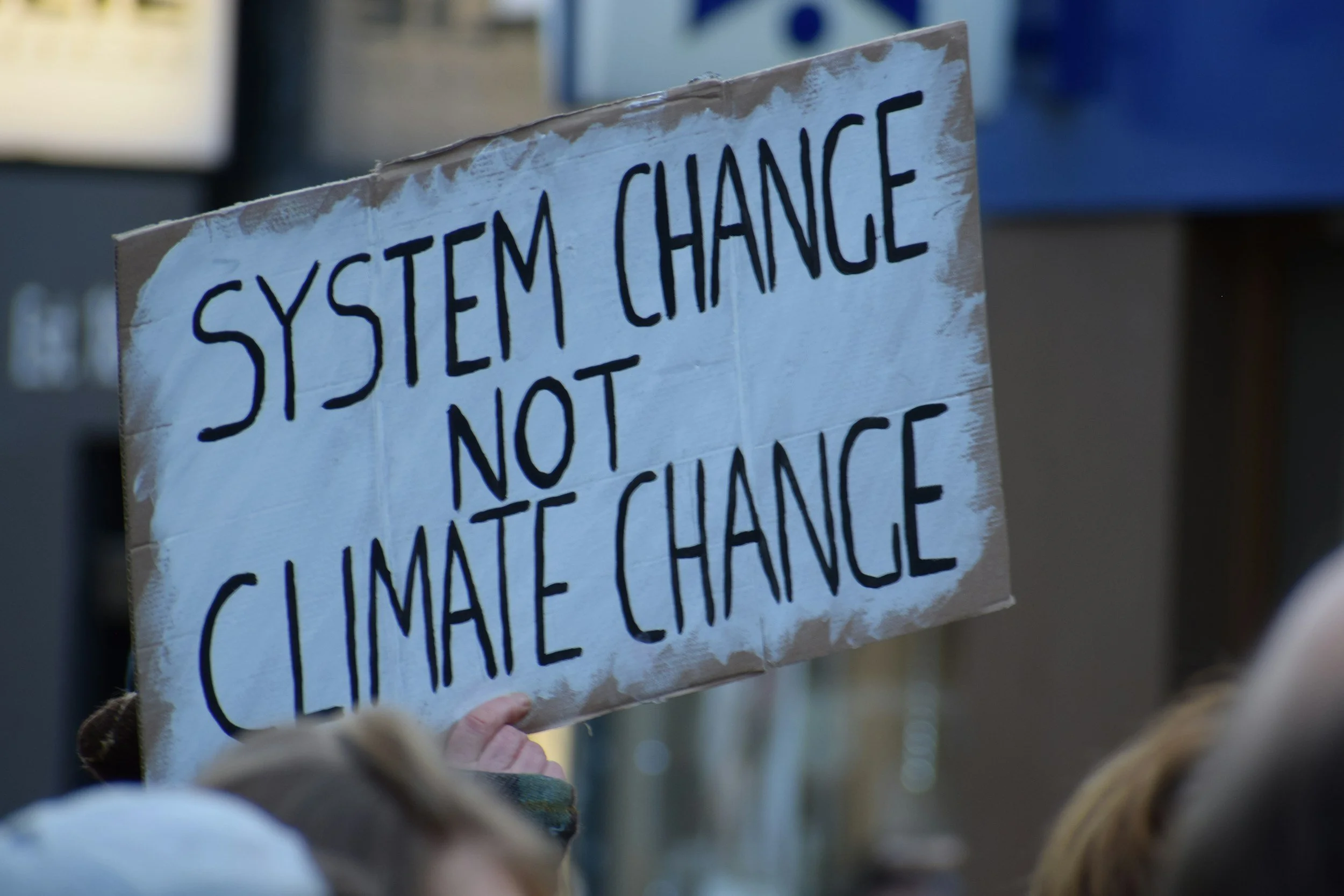
Climate Change Country Profiles 2023-2024
Snapshots of USAID goals, projects and outcomes around the globe

Safe Childbirth Checklist Landscape Analysis
Globally, almost 135 million births occurred in 2023 (United Nations Population Division, 2024), and around 285,000 women* die each year due to pregnancy or childbirth-related causes (World Health Organization [WHO], 2024b). According to the WHO, the most frequent causes of maternal mortality are postpartum hemorrhage, infection after childbirth, and high blood pressure during pregnancy.
Climate Fragility Programming Resource Guide
The purpose of this resource guide is to support those working on conflict prevention and stabilization to 1) have a better understanding of the risks climate change poses to their work; 2) be equipped with the tools and approaches to best integrate climate change into existing or future programming; and 3) ultimately ensure that their conflict prevention and stabilization work has positive and sustainable outcomes.
Agency Priority Goal | Action Plan | FY 24 – Q3: Resilience and Food Security
Facilitate inclusive, resilient growth in the agriculture and food system to sustainably reduce poverty, food insecurity, and malnutrition. By September 30, 2025, annual sales by assisted farms and firms in the agriculture and food system will exceed the previous three year average by 10 percent.
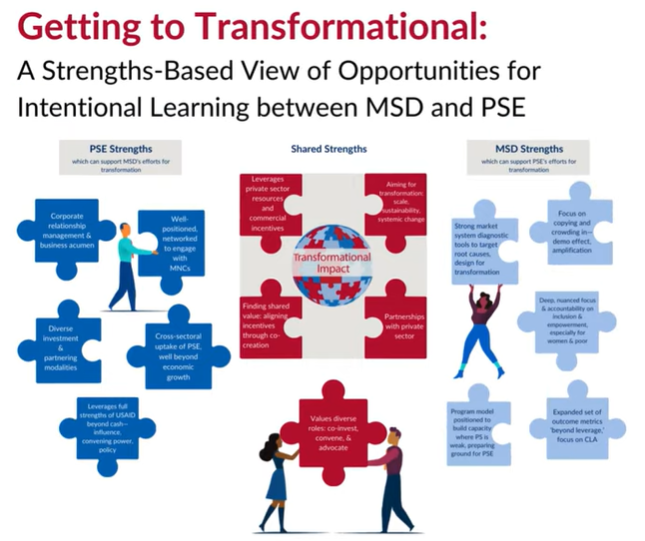
Do the Impacts of MSD Activities Sustain and Scale After Close?
As part of a series of ex-post studies conducted 3+ years after implementation ended, USAID is building the evidence base for sustainability, scale, and impact on target populations from use of the market systems development (MSD) approach.
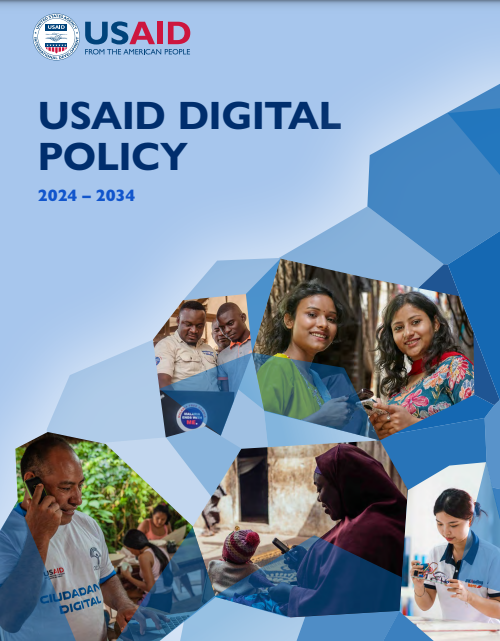
USAID Digital Strategy & Factsheet 2024-2034
As USAID looks to the next ten years and beyond, this Digital Policy+ will guide our efforts to innovate thoughtfully, enhance responsibility and accountability, generate reliable and usable evidence, and launch dynamic partnerships that support security, human rights, and economic prosperity for people everywhere.
New Measures of Success for Climate Adaptation and Resilience
Today there is no alignment among investors, governments, donors, and other stakeholders on how to quantify the benefits of A&R investments. This is holding back much-needed private-sector investment and limiting progress on the implementation of national climate plans. Today there is no alignment among investors, governments, donors, and other stakeholders on how to quantify the benefits of A&R investments. This is holding back much-needed private-sector investment and limiting progress on the implementation of national climate plans.
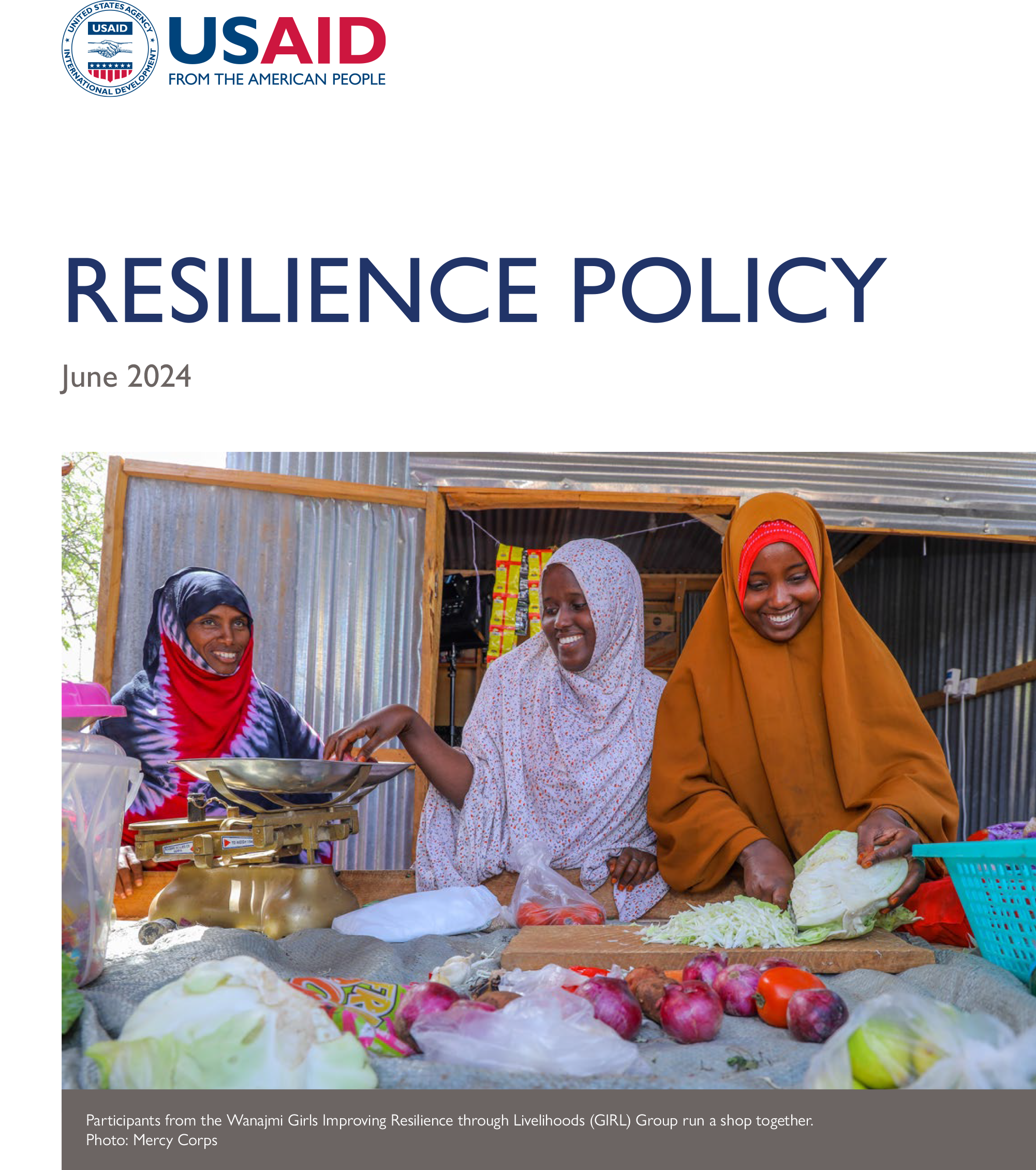
USAID Resilience Policy 2024
As an update to USAID’s inaugural resilience policy (2012), this policy reiterates the goal of reducing humanitarian need in areas of recurrent crisis while also reinforcing resilience as an Agency priority across all USAID programming.
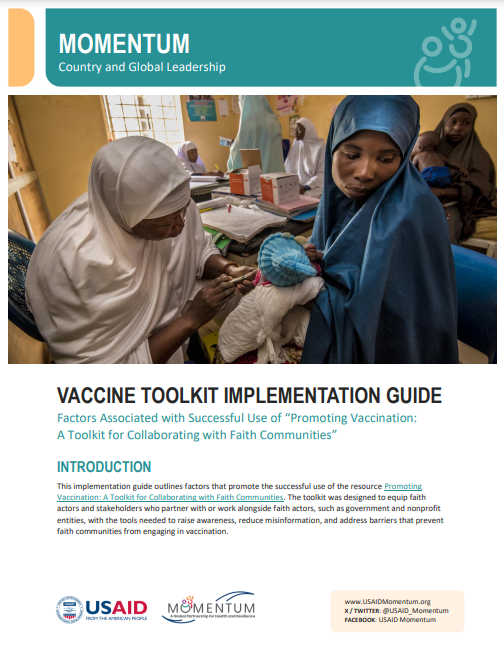
Vaccine Toolkit Implementation Guide (available in Hindi)
The vaccine promotion toolkit was developed as a part of the U.S. Agency for International Development’s MOMENTUM Country and Global Leadership project, which includes an initiative to identify and address concerns among religious leaders and faith-based communities around vaccination.
Maternal Mental Health: A Toolkit for Engaging Faith Actors as Change Agent
Given the high prevalence of mental health conditions in the perinatal period—pregnancy up to two years after birth—global attention to mental health is essential. Communities must work together to support prevention, early detection, and treatment of mental health conditions during pregnancy and postpartum, when the risk of mental disorders is highest.
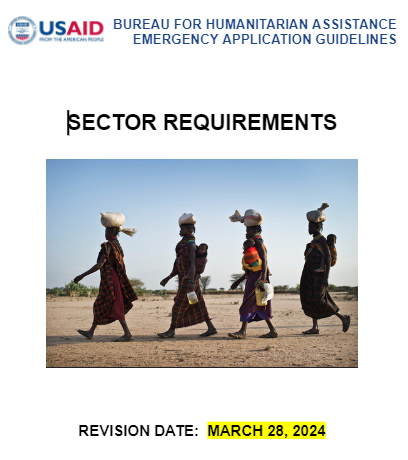
USAID/BHA Emergency Application Guidelines Sector Requirements
BHA’s Emergency Application Guidelines (EAG) are three core documents, with supplemental guidance and resources provided on the EAG webpage (BHA EAG Page), which is linked at the bottom of every page of this document.
Learning Note: Navigating Firm Selection for Women-Inclusive ROI
This learning note provides key insights gained from the process of vetting and selecting companies. It is targeted toward implementing partners that are managing portfolios of firms and want to select SMEs for WI-ROI calculations or social impact.