Girls' Leadership and Empowerment Through Education (GLEE)
In line with USAID’s Education Policy, USAID Girls’ Leadership and Empowerment through Education (GLEE) decreases barriers to quality education in a safe and supportive learning environment for adolescent girls (10-18 years) while increasing the adoption of positive, healthy behaviors. USAID GLEE trains teachers to improve children’s learning, school management committees to improve transparency and accountability, and parents and community members to support girls’ access to learning.
Key Achievements
Established 726 Accelerated Schooling Centers and enrolled 21,745 girls and 4,407 boys.
Ensured retention and transition of 133,117 adolescent girls (aged 10-18) in primary and secondary schools in the regions of Kayes, Bandiagara, and Douentza.
Assisted 7,331 girls to obtain birth certificates to legally establish their age and re-enter the formal educational system.
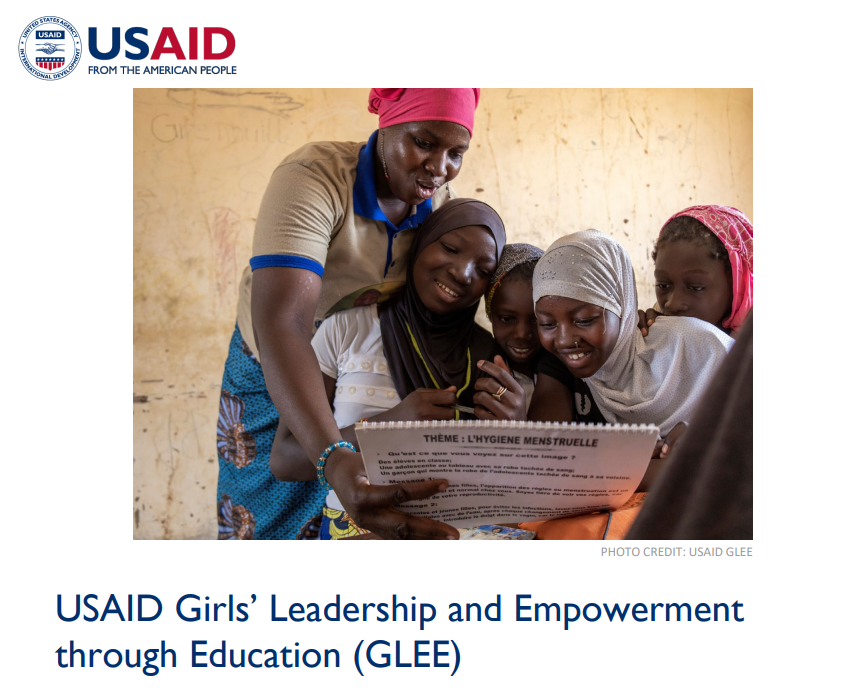
Trained 255 women on how to train adolescent girls (aged 10-18) in the production of reusable sanitary pads, allowing girls to miss fewer days of school during menstruation.
289 partner schools established codes of conduct and adopted practices that are safer and more conducive for girls education.
Trained 797 women from 216 women's groups on income generation, allowing them to earn enough money to keep their communities’ girls in school.
Provided 970 hand washing stations to schools, supporting messaging on healthy behaviors.
Supported 289 community-based mentors to conduct sessions on girls’ education, early marriage prevention, leadership, communication, and reproductive health and family planning.
Source: USAID
Year: 2023