
-
Article
Brief
Meeting Notes
Presentation
Poster
Report
Toolkit
Video
Webinar
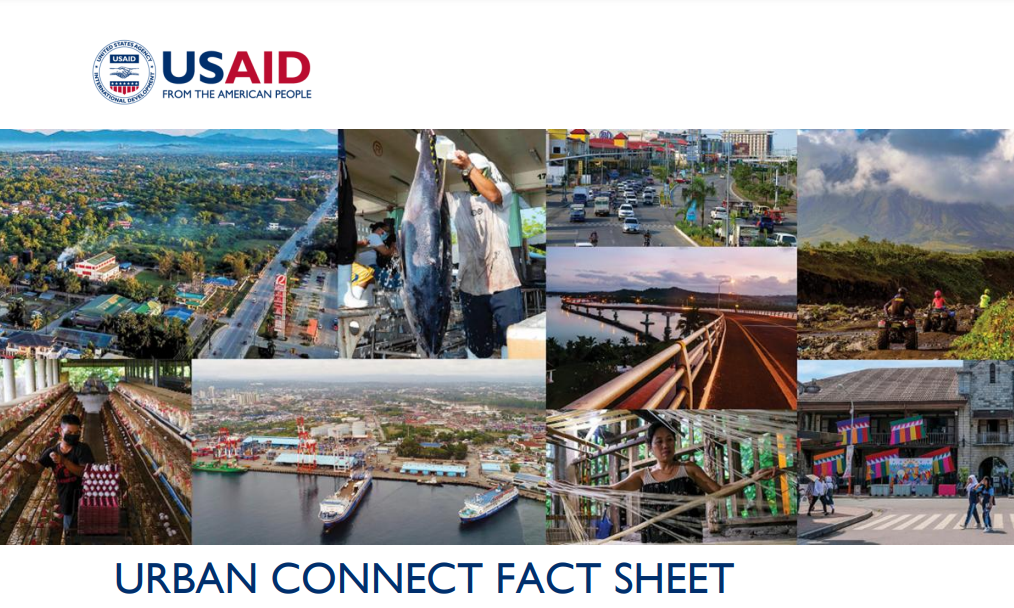
Urban Connect Factsheet — Philippines
USAID’s five-year (2023-2028), $11 million Urban Connect activity promotes resilient economic growth across nine USAID Cities Development Initiative (CDI) partner cities and surrounding localities1 by promoting economic development and supporting improved public service delivery. CDI’s purpose is to advance the development of cities outside Metro Manila as resilient engines of growth that are environmentally sustainable. USAID provides a range of technical assistance, drawing from resources in economic growth, health, energy, environment, governance, and education.
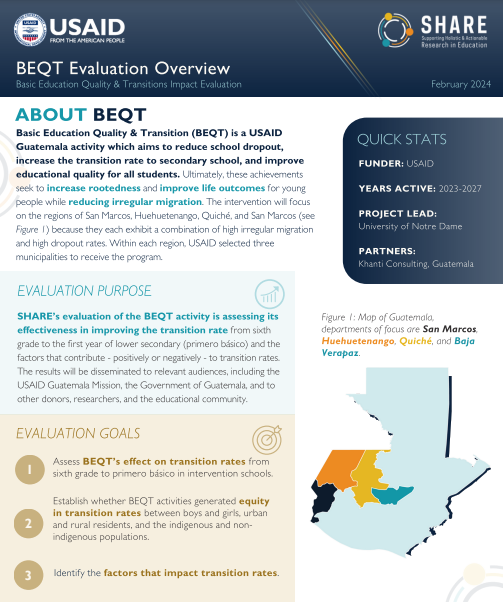
BEQT Evaluation Overview: Basic Education Quality & Transitions Impact Evaluation
Basic Education Quality & Transition (BEQT) is a USAID Guatemala activity which aims to reduce school dropout, increase the transition rate to secondary school, and improve educational quality for all students. Ultimately, these achievements seek to increase rootedness and improve life outcomes for young people while reducing irregular migration. The intervention will focus on the regions of San Marcos, Huehuetenango, Quiché, and San Marcos because they each exhibit a combination of high irregular migration and high dropout rates. Within each region, USAID selected three municipalities to receive the program.
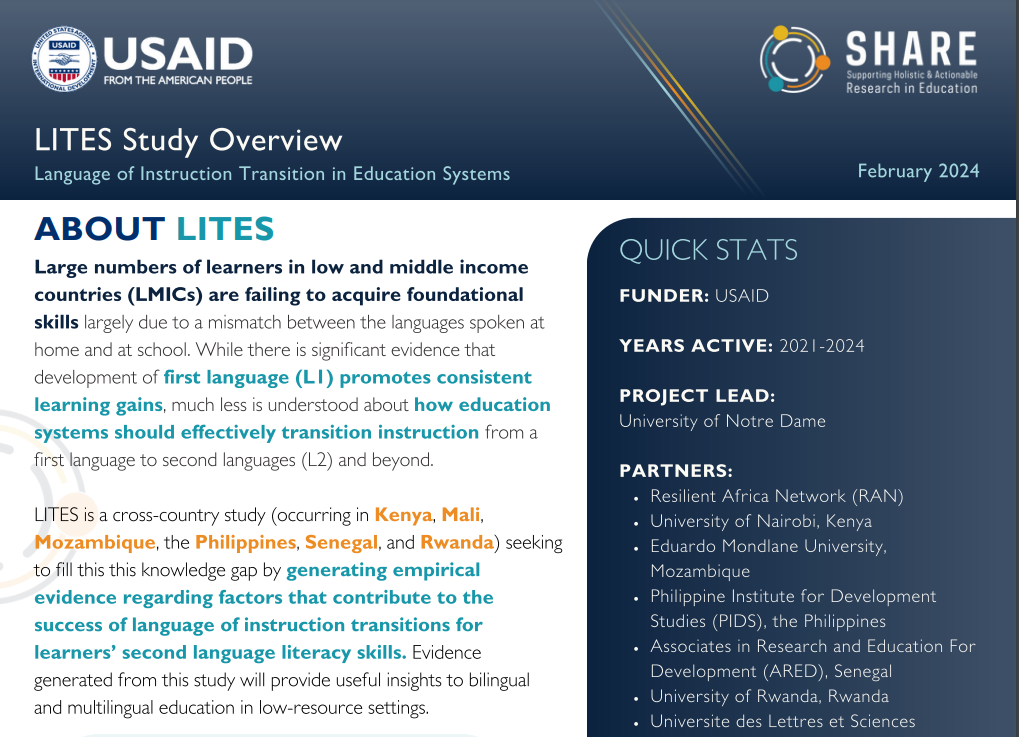
LITES Study Overview: Language of Instruction Transition in Education Systems
LITES is a cross-country study (occurring in Kenya, Mali, Mozambique, the Philippines, Senegal, and Rwanda) seeking to fill this this knowledge gap by generating empirical evidence regarding factors that contribute to the success of language of instruction transitions for learners’ second language literacy skills. Evidence generated from this study will provide useful insights to bilingual and multilingual education in low-resource settings.
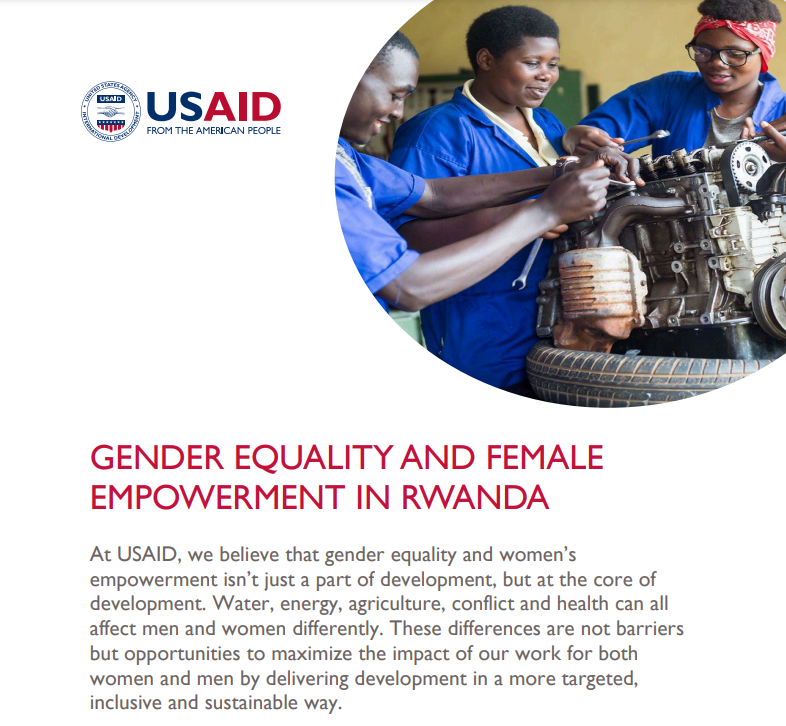
Gender Equality and Women's Empowerment in Rwanda
Rwanda is recognized as a leader in gender equality and women’s empowerment. Women hold positions making up 61 percent of the Rwandan Parliament, and 50 percent of the President’s cabinet. While these efforts are so important, challenges still remain, specifically when it comes to achieving socio-economic equality and cultural change at the community level.
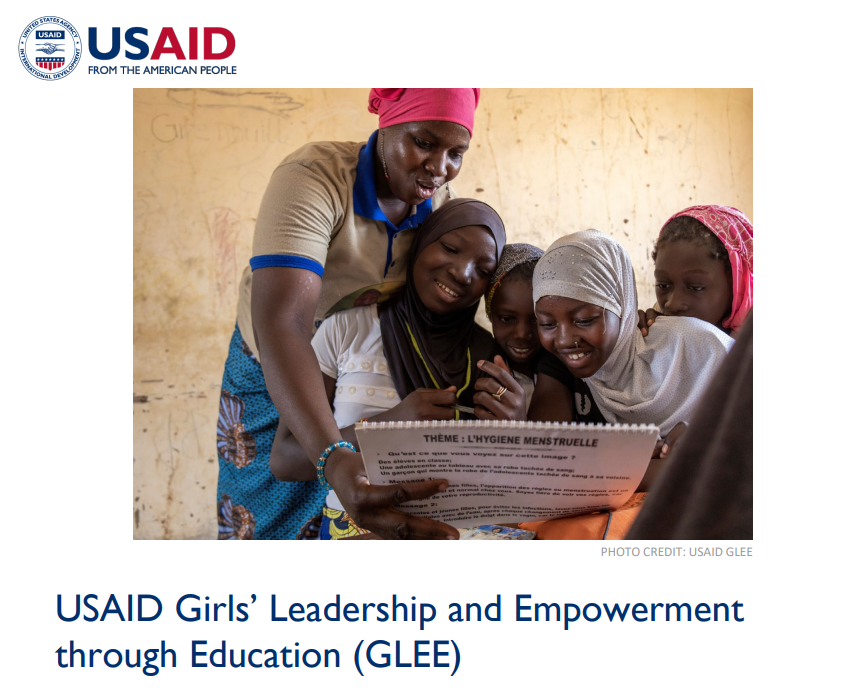
Girls' Leadership and Empowerment Through Education (GLEE)
In line with USAID’s Education Policy, USAID Girls’ Leadership and Empowerment through Education (GLEE) decreases barriers to quality education in a safe and supportive learning environment for adolescent girls (10-18 years) while increasing the adoption of positive, healthy behaviors. USAID GLEE trains teachers to improve children’s learning, school management committees to improve transparency and accountability, and parents and community members to support girls’ access to learning.
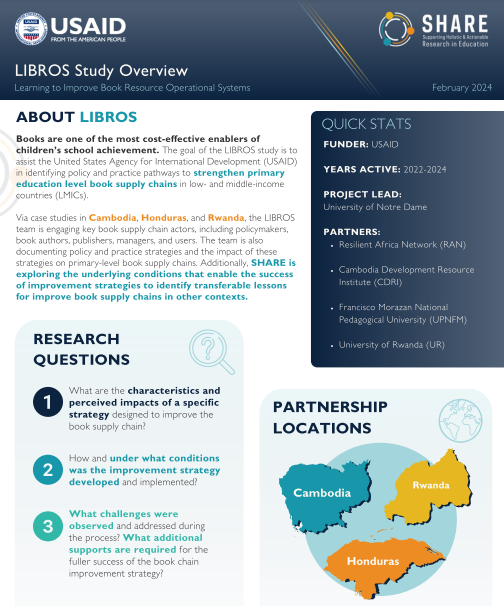
LIBROS Study Overview Learning to Improve Book Resource Operational Systems
Via case studies in Cambodia, Honduras, and Rwanda, the LIBROS team is engaging key book supply chain actors, including policymakers, book authors, publishers, managers, and users. The team is also documenting policy and practice strategies and the impact of these strategies on primary-level book supply chains.
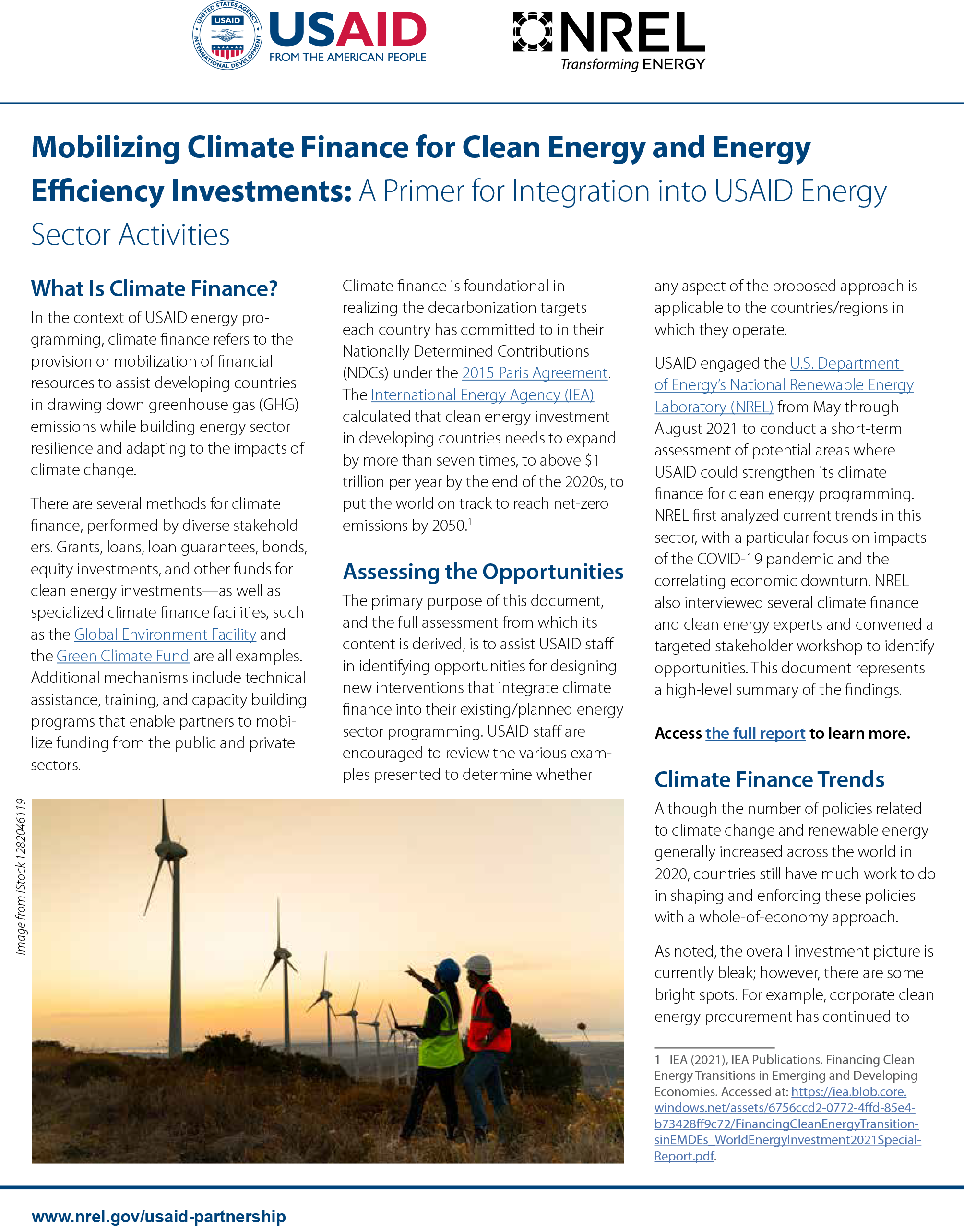
Mobilizing Climate Finance for Clean Energy and Energy Efficiency Investments
A Primer for Integration into USAID Energy Sector Activities

Use of Containers for Temporary Emergency Storage (English, French, Portuguese & Spanish)
During emergencies, backloading multiple months of medicines and other public health commodities as close to patients as possible can minimize supply chain disruption and maintain patient access.
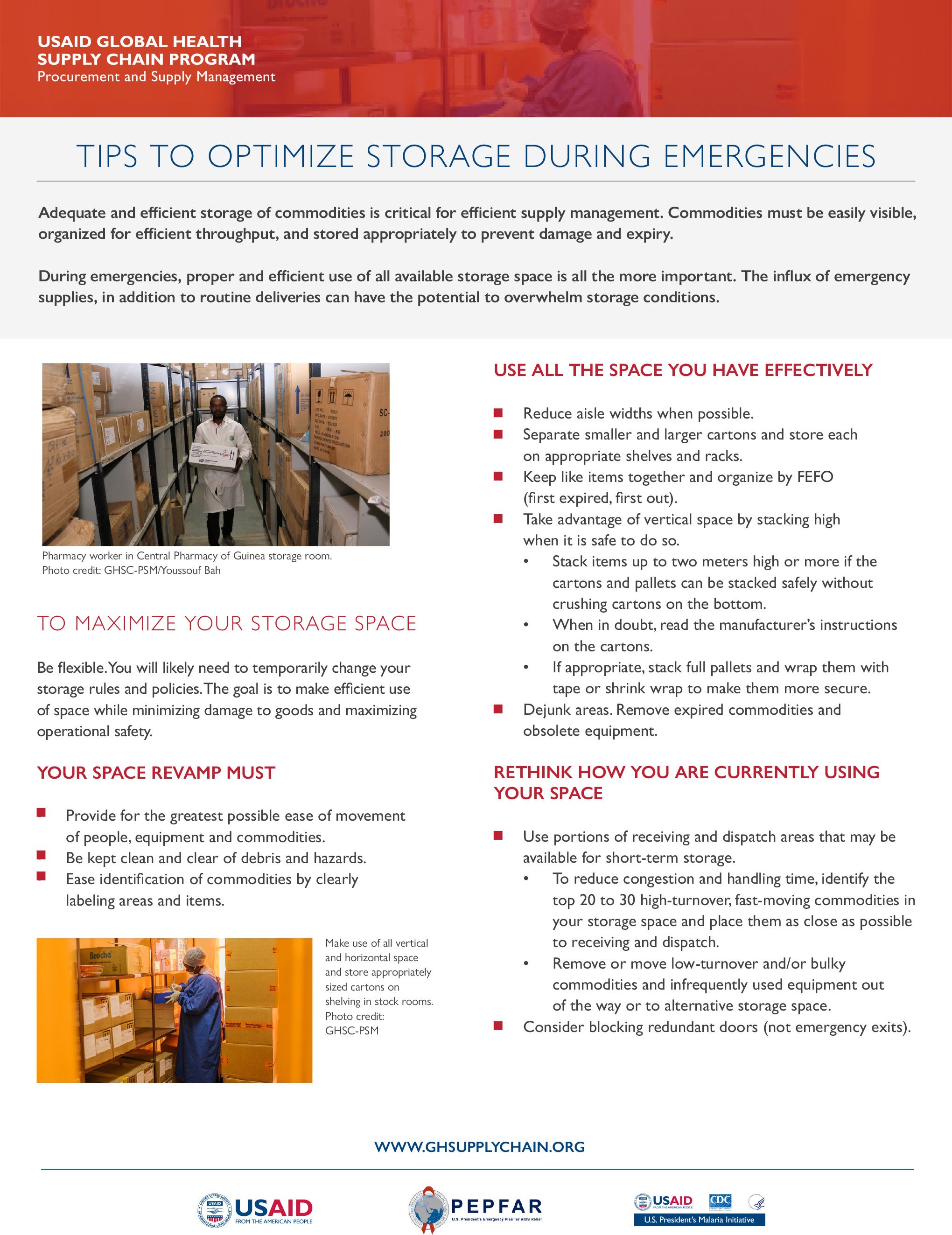
Tips to Optimize Storage During Emergencies (English, French, Portuguese & Spanish)
Adequate and efficient storage of commodities is critical for efficient supply management. Commodities must be easily visible, organized for efficient throughput, and stored appropriately to prevent damage and expiry.
Actions to Take Now to Ensure Routine Supplies Are Available
As resources like fuel, access to vehicles, and healthy staff become scarcer, health systems’ abilities to provide routine health care will be ever more challenged. Vigilance is critical to securing business operations in affected regions.
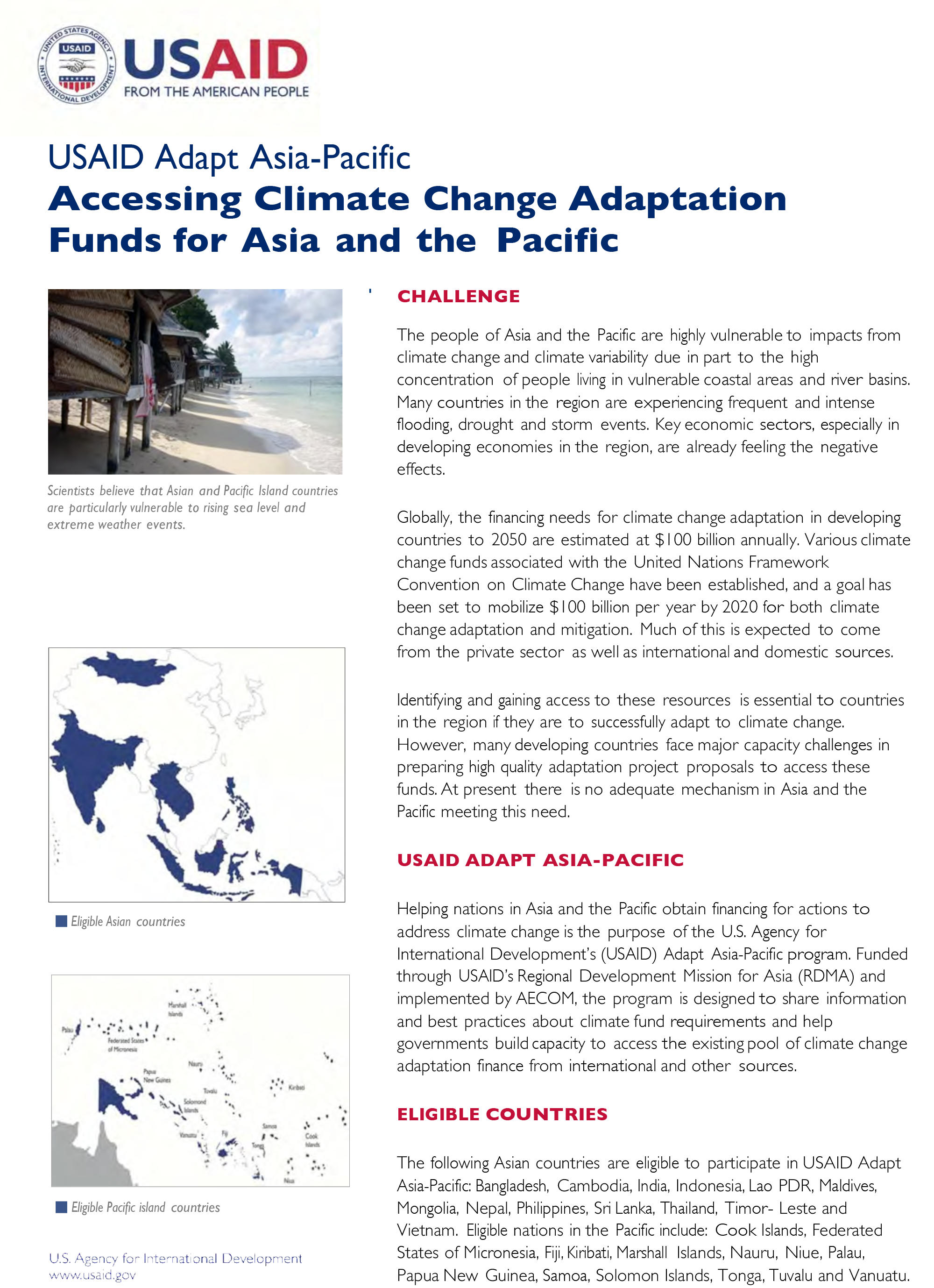
Accessing Climate Change Adaptation Funds for Asia and the Pacific
The people of Asia and the Pacific are highly vulnerable to impacts from climate change and climate variability due in part to the high concentration of people living in vulnerable coastal areas and river basins.