
-
Article
Brief
Meeting Notes
Presentation
Poster
Report
Toolkit
Video
Webinar
Disinformation Primer
This primer presents an overview of disinformation culture to give readers a sense of key concepts, terminology, select case studies, and programmatic design options.
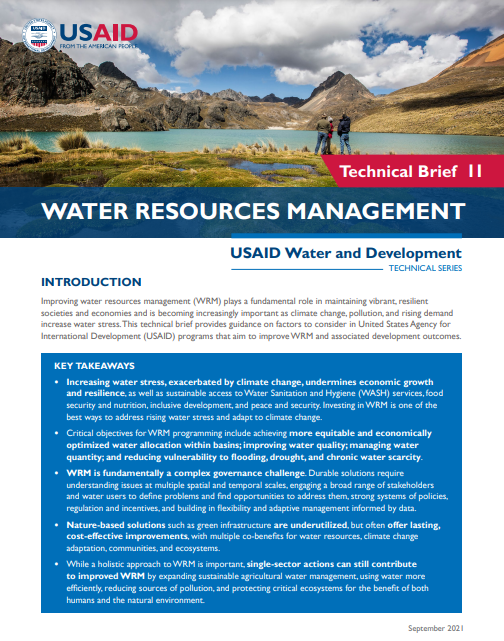
Water Resources Management: Technical Brief II
Improving water resources management (WRM) plays a fundamental role in maintaining vibrant, resilient societies and economies and is becoming increasingly important as climate change, pollution, and rising demand increase water stress.
The Return on Investment of Social Inclusion: An Evidence Gap Analysis from Developing Countries
This research focuses on gathering and mapping evidence on the firm level benefits of workplace diversity and inclusion in the developing country context and highlighting the evidence gap analysis for the return on investment (ROI) of social inclusion. This work is the foundation for building a business case and providing practical guidance on social inclusion strategies relevant to the private sector in developing countries.

2021 Climate Readiness Plan
With this new Climate Readiness Plan (CRP), USAID is revitalizing its approach to climate change adaptation, resilience, and risk mitigation across the Agency’s programs and operations and is also committing to ambitious mitigation targets and new adaptation actions in alignment with Biden-Harris Administration priorities, multilateral climate objectives, and the newest climate science.
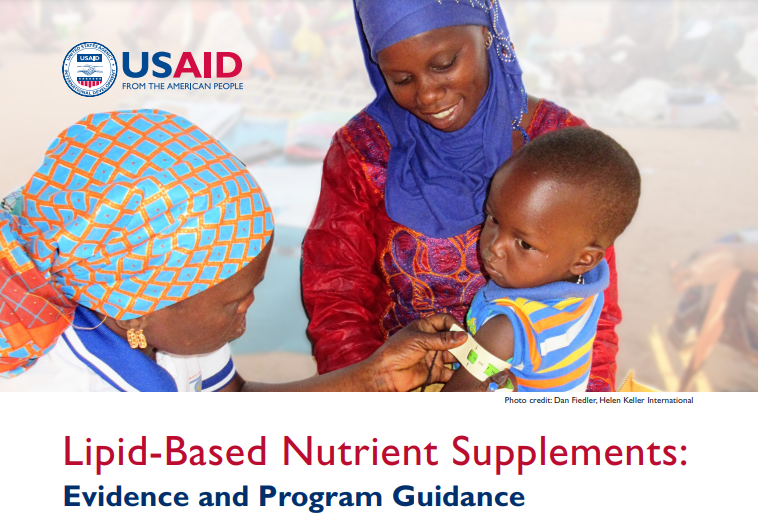
Lipid-Based Nutrient Supplements: Evidence and Program Guidance
This technical brief provides information for designing small- and medium-quantity lipid-based nutrient supplement (LNS-SQ and LNS-MQ) programs that promote improved nutritional status of women and young children in resource-limited settings. The following sections feature an overview of recent evidence, considerations for program design, and details of ways that LNS can complement or enhance a wide range of community health and development programs.
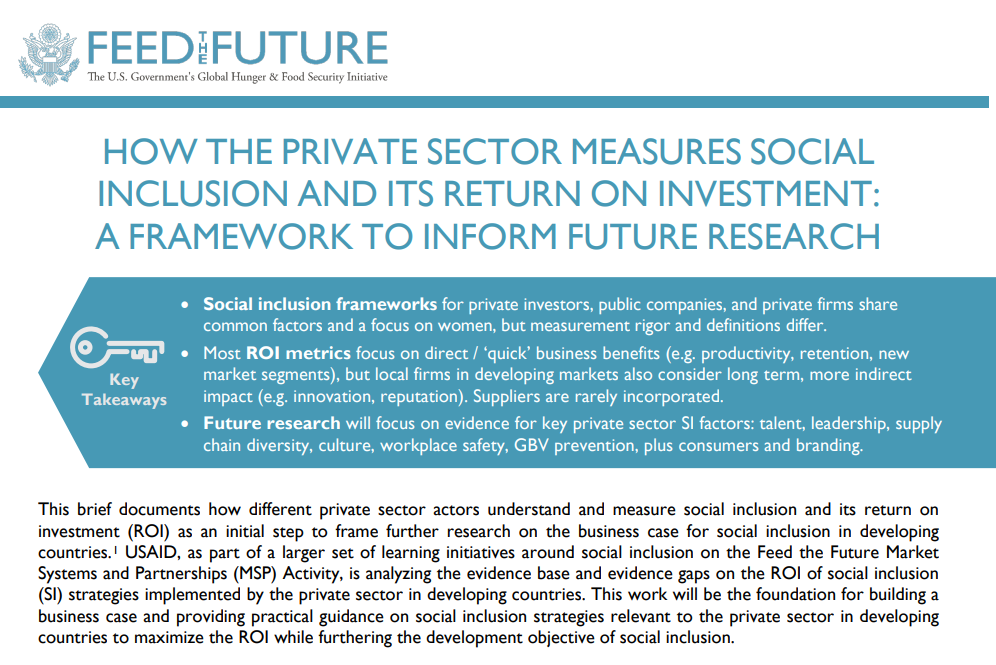
How the Private Sector Measures Social Inclusion and its Return on Investment: A Framework to Inform Future Research
This brief documents how different private sector actors understand and measure social inclusion and its return on investment (ROI) as an initial step to frame further research on the business case for social inclusion in developing countries. This work will be the foundation for building a business case and providing practical guidance on social inclusion strategies relevant to the private sector in developing countries to maximize the ROI while furthering the development objective of social inclusion.
Feed the Future Innovation Lab for Markets, Risk & Resilience 2020 Annual Report
The Feed the Future Innovation Lab for Markets, Risk & Resilience at UC Davis has the increasing importance of resilience at all levels, from systems to individual families, at the very center of its research program. Launched in July in 2019 by USAID, the lab builds upon a foundation of field studies and theoretical work to help families and communities build resilience to perennial threats like drought but also against unforeseen shocks like the COVID-19 pandemic. We are also testing how resilience itself can generate additional returns through a well-established phenomenon we call Resilience+.
USAID Climate Ready Knowledge Products: Multi-Criteria Analysis Tool
The resultant tool has since been used to assist reviewers to score and prioritize against GCF Investment criteria based on GCF Investment Criteria.
USAID Climate Ready Knowledge Products: Business Continuity Planning Resources
This collection of resources will build your awareness on: The concepts of disaster readiness and business continuity for business; and The key steps for a business to become disaster ready.
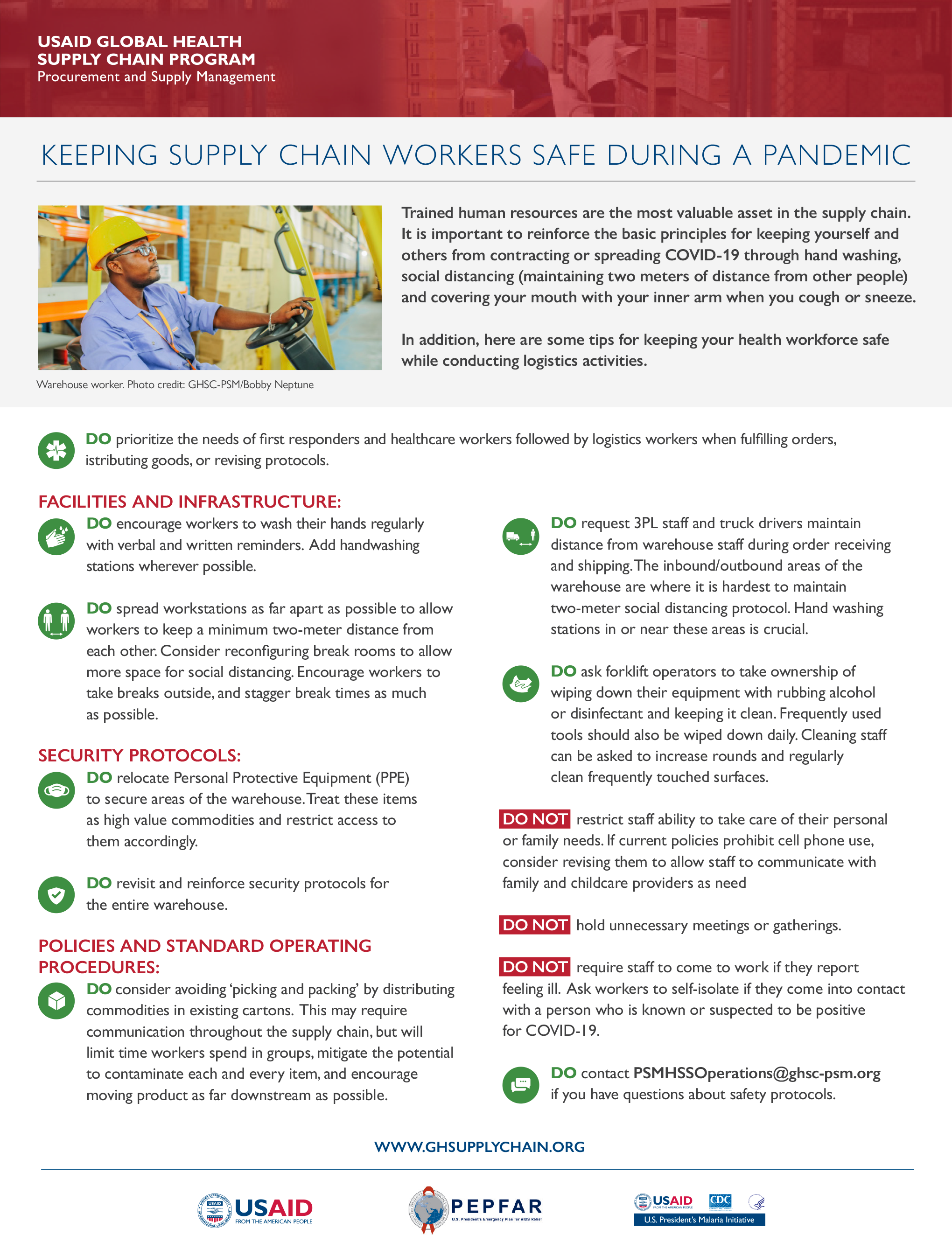
Keeping Supply Chain Workers Safe During a Pandemic
Trained human resources are the most valuable asset in the supply chain.

Use of Containers for Temporary Emergency Storage (English, French, Portuguese & Spanish)
During emergencies, backloading multiple months of medicines and other public health commodities as close to patients as possible can minimize supply chain disruption and maintain patient access.
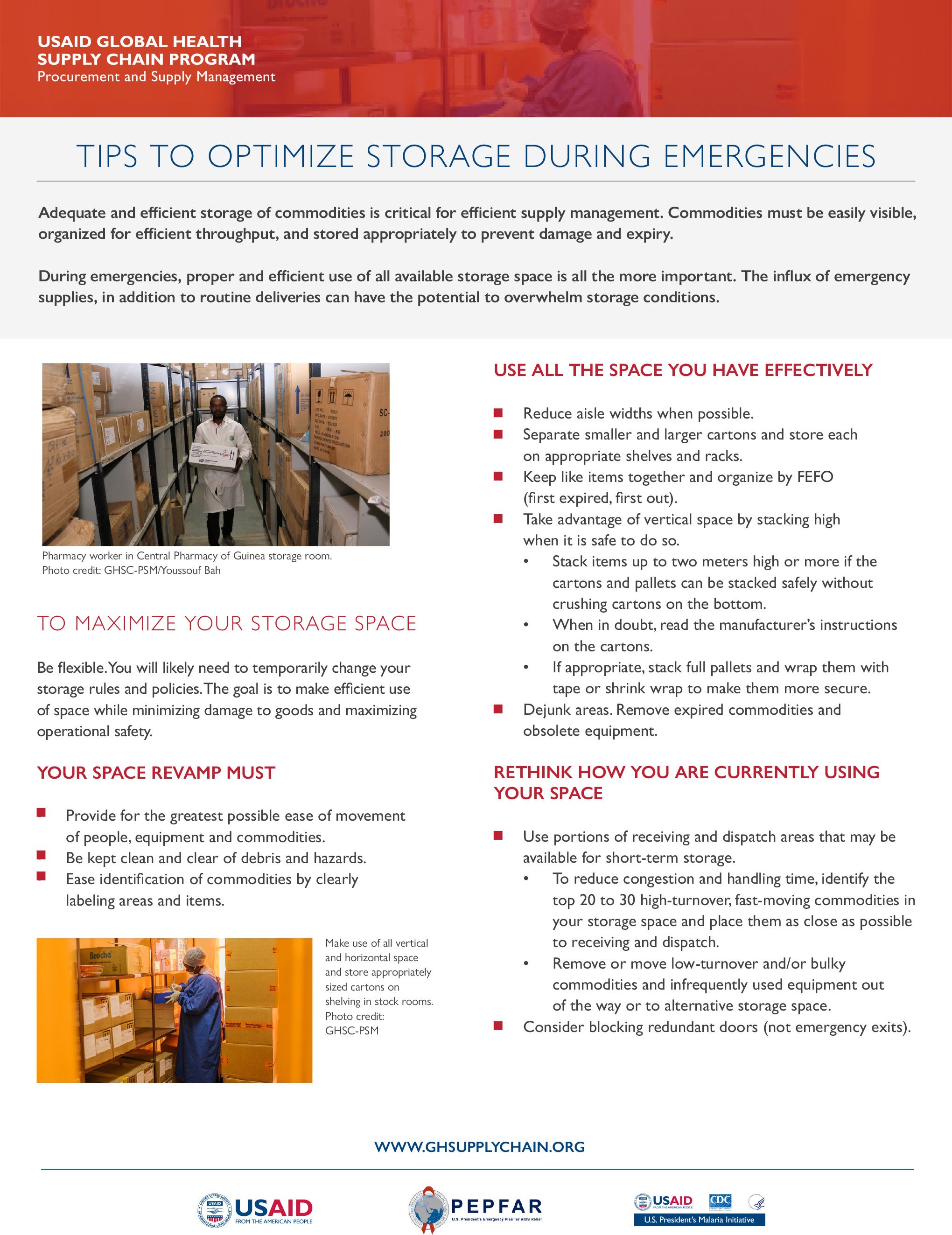
Tips to Optimize Storage During Emergencies (English, French, Portuguese & Spanish)
Adequate and efficient storage of commodities is critical for efficient supply management. Commodities must be easily visible, organized for efficient throughput, and stored appropriately to prevent damage and expiry.
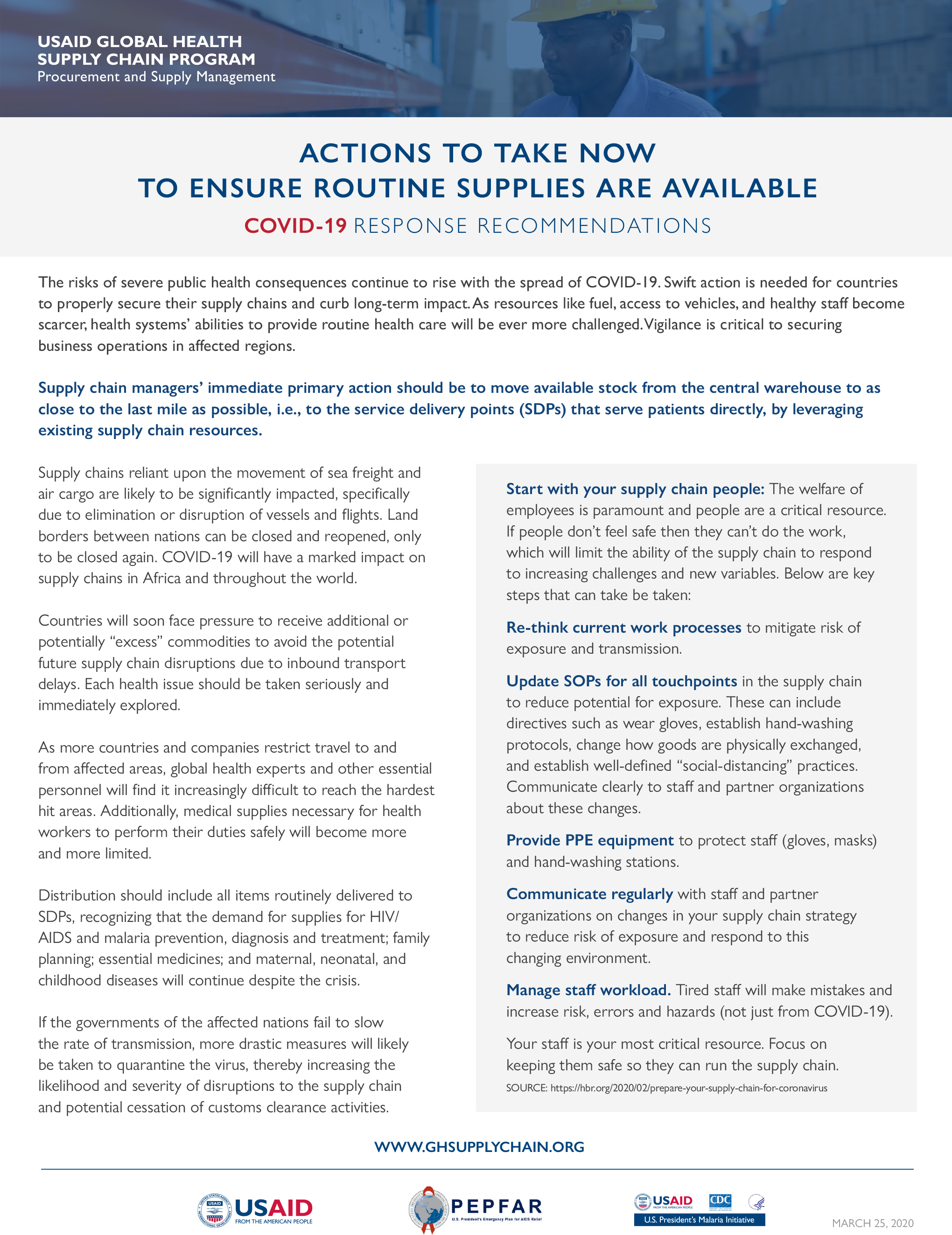
Actions to Take Now to Ensure Routine Supplies Are Available
As resources like fuel, access to vehicles, and healthy staff become scarcer, health systems’ abilities to provide routine health care will be ever more challenged. Vigilance is critical to securing business operations in affected regions.
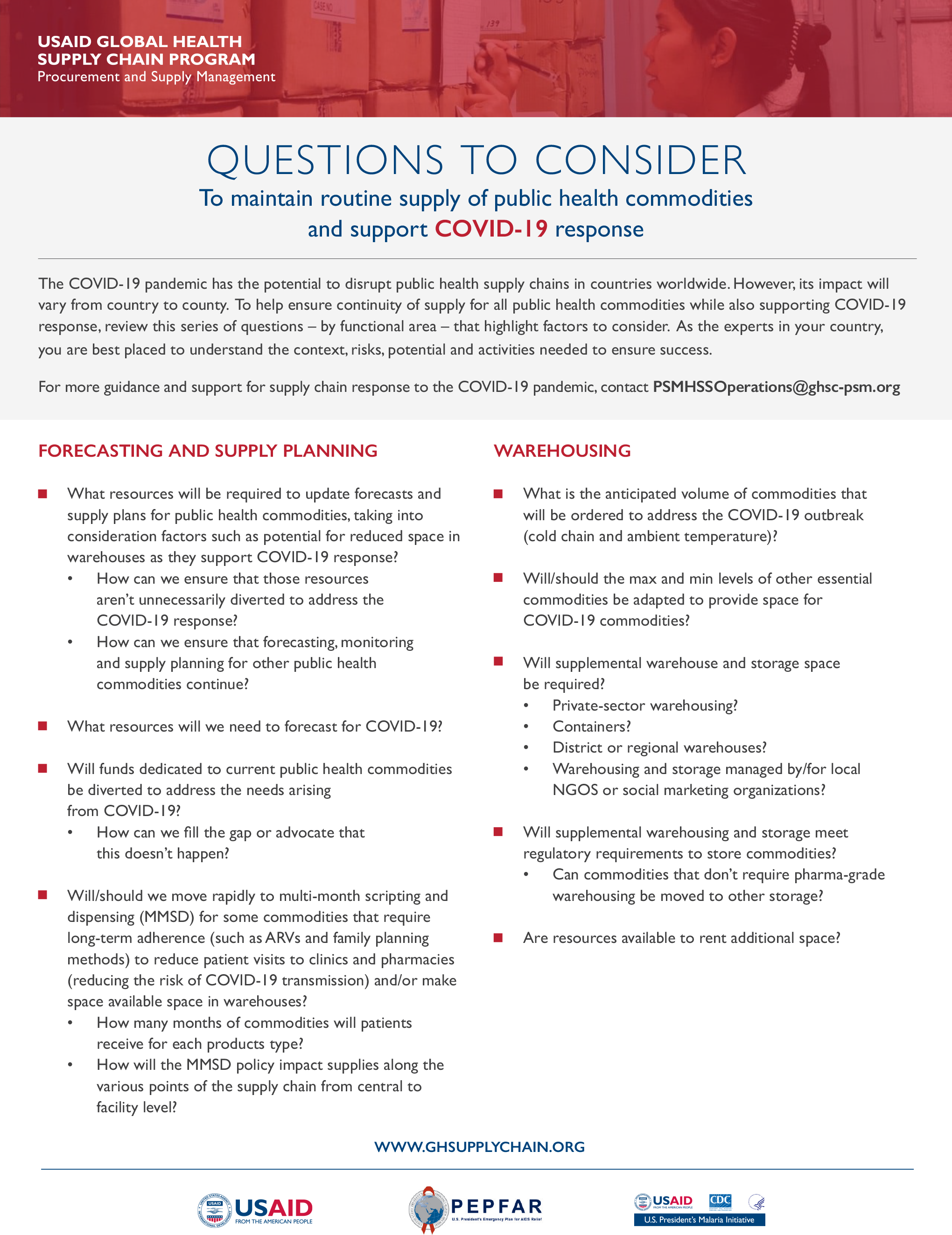
Questions to Consider to Maintain Routine Supply of Public Health Commodities and Support COVID-19 Response
To help ensure continuity of supply for all public health commodities while also supporting COVID-19 response, review this series of questions – by functional area – that highlight factors to consider.
USAID Digital Strategy 2020-2024
The U.S. Agency for International Development (USAID) Digital Strategy (2020-2024) will position the Agency to advance our mission—to end the need for foreign assistance—through digitally supported programming that fosters the Journey to Self-Reliance in our partner countries and maximizes the benefits, while managing the risks that digital technology introduces into the lives of the communities we serve.
Key Lessons From Private Sector Engagement in the USAID Learning Community for Supply Chain Resilience
Any partnership between a company, NGO or research institution can be fraught with misalignment of stated objectives, appetite for risk, and short- versus long-term thinking.
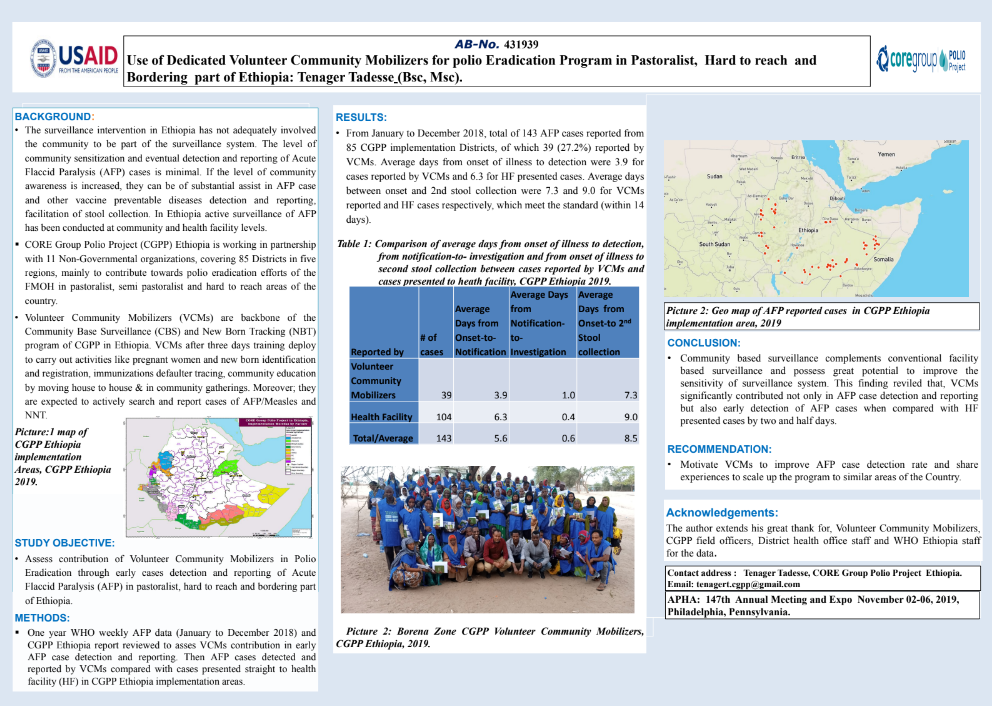
Use of Dedicated Volunteer Community Mobilizers for Polio Eradication Program in Pastoralist, Hard to reach and Bordering part of Ethiopia
The surveillance intervention in Ethiopia has not adequately involved the community to be part of the surveillance system. The level of community sensitization and eventual detection and reporting of Acute Flaccid Paralysis (AFP) cases is minimal.
How the United States Benefits from Agricultural and Food Security Investments in Developing Countries
U.S. foreign agricultural assistance investments bring substantial economic, health, and security benefits to the United States.
How To: Create Digital ID for Inclusive Development
This guide aims to: 1) illustrate how investments in ID systems can both positively and negatively impact individuals and their households, through the illustrative stories of Mary, Joy, and Samuel; and 2) provide specific how to guidance to help donors, program managers, and M&E specialists get started in thinking about ID ecosystems. This guide is specifically targeted towards USAID staff and implementing partners who are providing direct support on ID systems, providing advisory services to government ministries, or are trying to find ways to identify beneficiaries in a project or activity (regardless of the sector).
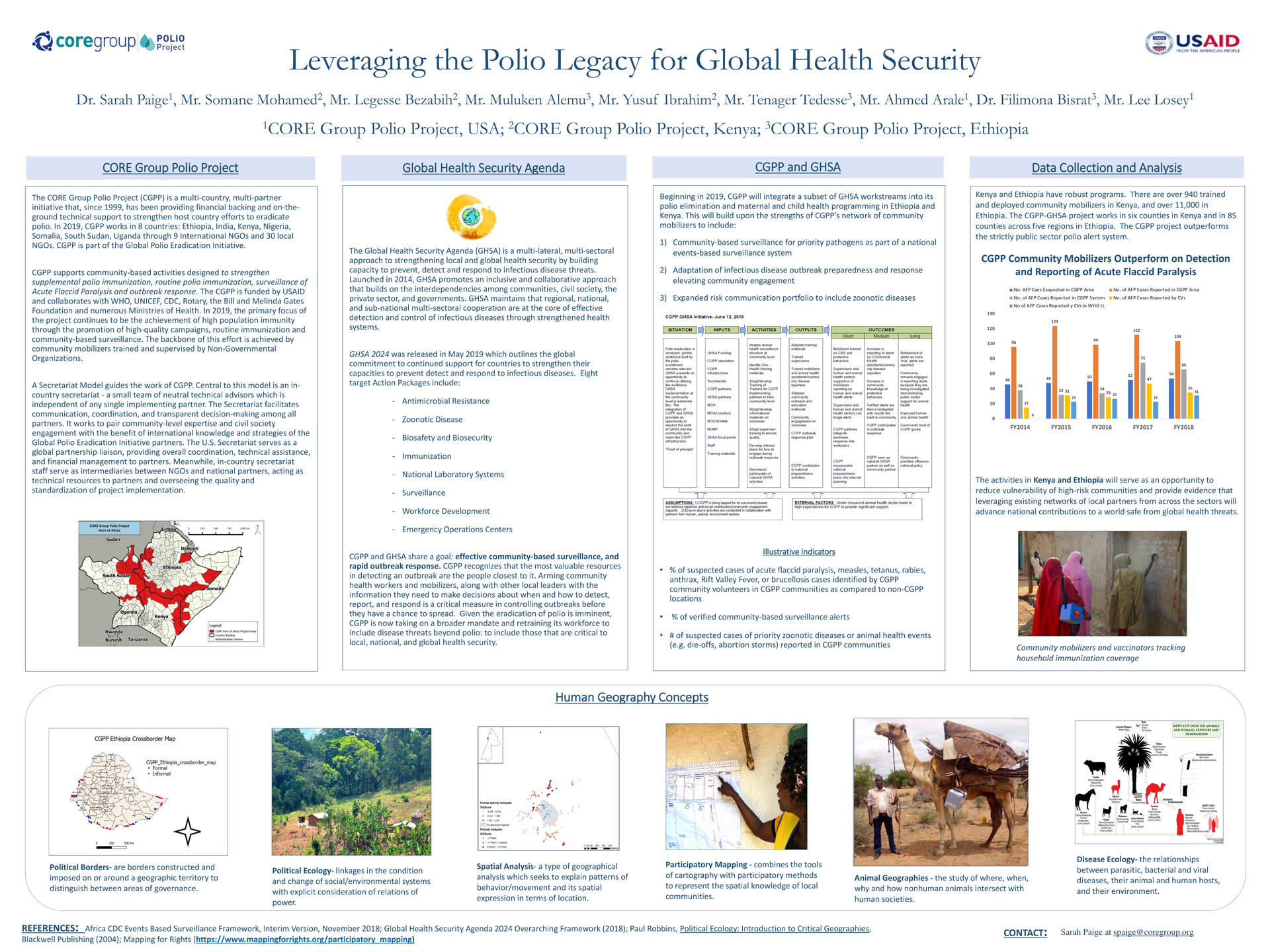
Leveraging the Polio Legacy for Global Health Security
Kenya and Ethiopia have robust programs. The CGPP-GHSA project works in six counties in Kenya and in 85 counties across five regions in Ethiopia. The CGPP project outperforms the strictly public sector polio alert system.