
-
Article
Brief
Meeting Notes
Presentation
Poster
Report
Toolkit
Video
Webinar
Adherence to Standards for MNH Service Delivery at Public and Private Facilities
This analysis, conducted under the Data for Impact (D4I) award, leverages Service Provision Assessment (SPA) data from 2012–2022 to evaluate the adherence of MNH service providers to WHO process standards. The study examines differences between public and private facilities, including for-profit and not-for-profit (NFP) facilities, and tracks changes over time in selected countries.
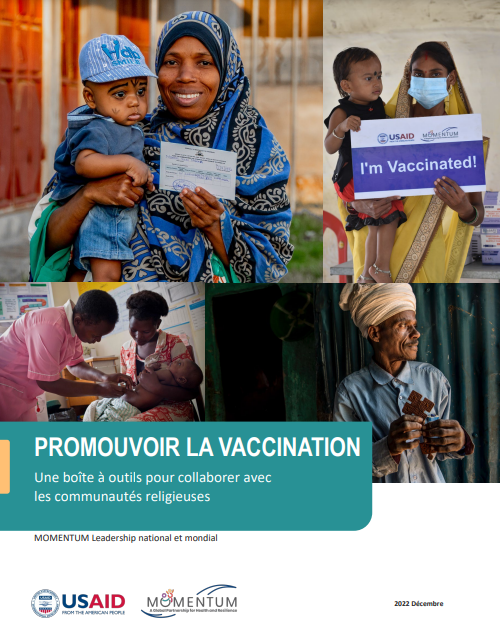
Promoting Vaccination: A Toolkit for Collaborating with Faith Communities (English, French, & Hindi)
This toolkit is designed to equip faith actors and related stakeholders—such as Ministries of Health, medical and scientific bodies, and non-profit organizations that partner with or work alongside faith actors—with the information and tools needed to raise awareness, reduce misinformation, and address barriers that prevent faith communities, in particular, from engaging in vaccination.
President’s Malaria Initiative: 2024 Country Fact Sheets
The President’s Malaria Initiative (PMI) is credited with helping to save 11.7 million lives and prevent 2.1 billion malaria cases since 2000. Indeed, since 2006, in countries where PMI works, global efforts have supported a 29% decrease in malaria case rates and a 48% decline in deaths. The introduction of two malaria vaccines in 2021 and 2023 has increased optimism in the potential to further strengthen global malaria control.
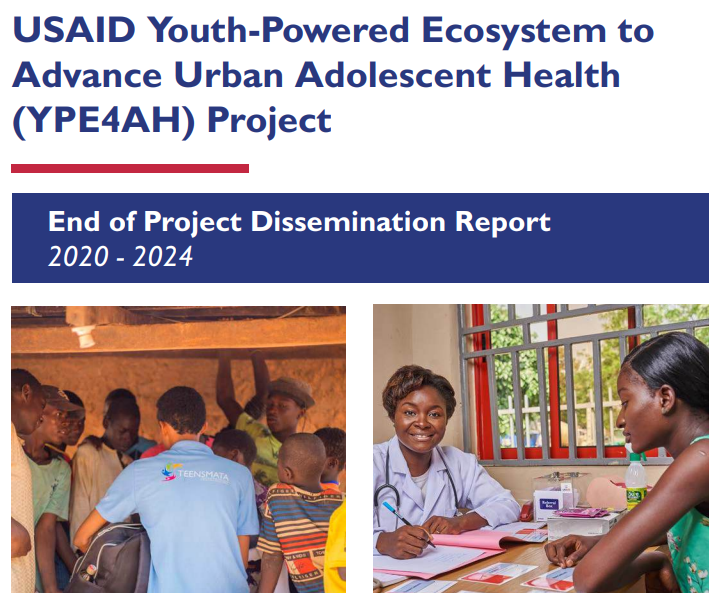
USAID Youth-Powered Ecosystem to Advance Urban Adolescent Health (YPE4AH) Project — End of Project Dissemination Report 2020 - 2024
In May 2020, the United States Agency for International Development (USAID)/Nigeria awarded the Youth-Powered Ecosystem to Advance Urban Adolescent Health (YPE4AH) Project to DAI Global LLC and its partners—Yellow Brick Road (YBR), Youth Empowerment and Development Initiative (YEDI), Women Friendly Initiative (WFI), and Grassroot Soccer (GRS). This five-year cooperative agreement, designed through a co-creation process, empowers young Nigerians with the skills, social capital, and resources necessary to realize their potential. The primary goal of the project is to improve the health and well-being of urban, underprivileged, out-of-school, and unmarried/ married adolescents aged 15–19 living in urban slums in Lagos and Kano States by increasing the uptake and sustained use of voluntary family planning (FP) services, using a holistic, human capital approach.
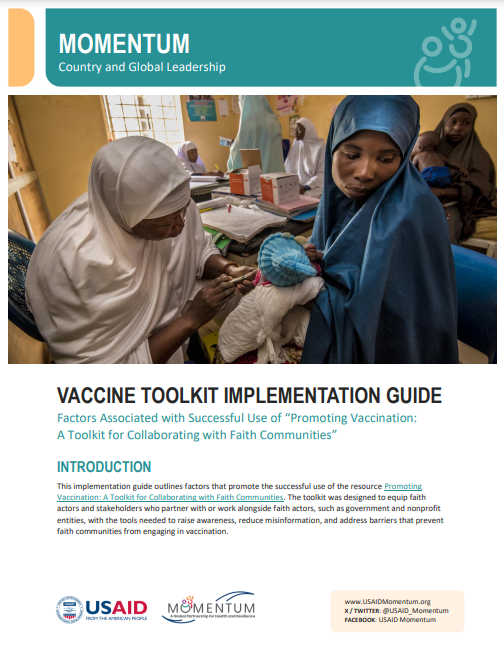
Vaccine Toolkit Implementation Guide (available in Hindi)
The vaccine promotion toolkit was developed as a part of the U.S. Agency for International Development’s MOMENTUM Country and Global Leadership project, which includes an initiative to identify and address concerns among religious leaders and faith-based communities around vaccination.
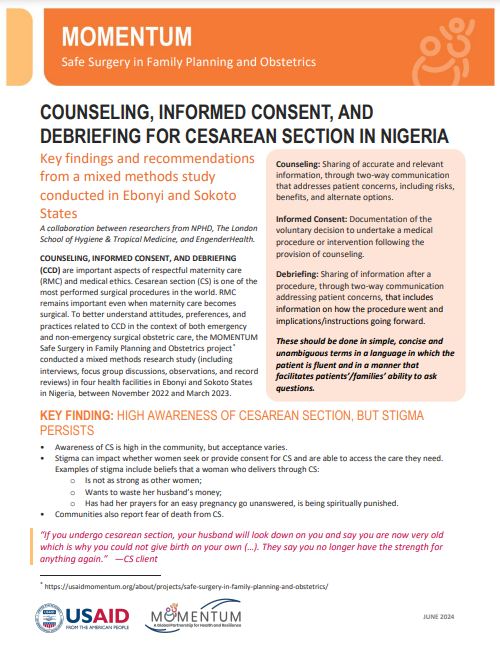
Counseling, Informed Consent, and Debriefing for Cesarean Section in Nigeria
COUNSELING, INFORMED CONSENT, AND DEBRIEFING (CCD) are important aspects of respectful maternity care (RMC) and medical ethics. Cesarean section (CS) is one of the most performed surgical procedures in the world. RMC remains important even when maternity care becomes surgical.
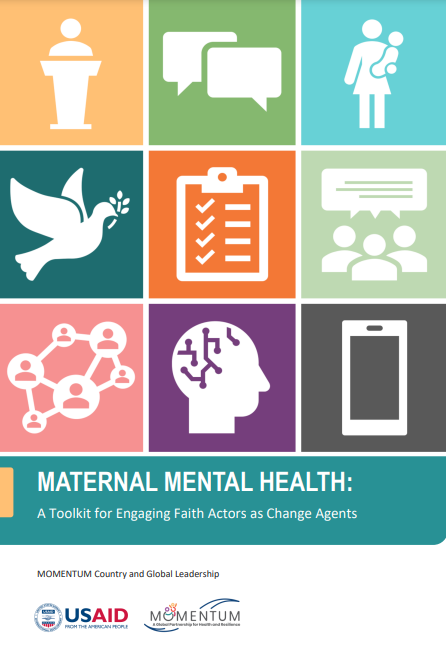
Maternal Mental Health: A Toolkit for Engaging Faith Actors as Change Agent
Given the high prevalence of mental health conditions in the perinatal period—pregnancy up to two years after birth—global attention to mental health is essential. Communities must work together to support prevention, early detection, and treatment of mental health conditions during pregnancy and postpartum, when the risk of mental disorders is highest.
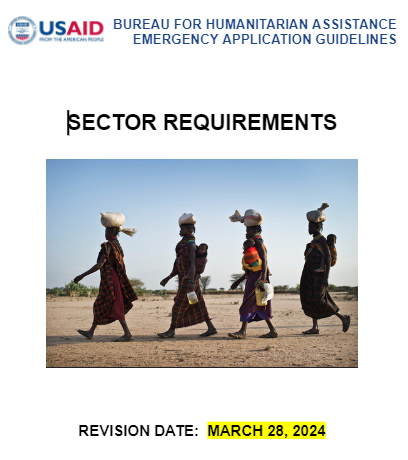
USAID/BHA Emergency Application Guidelines Sector Requirements
BHA’s Emergency Application Guidelines (EAG) are three core documents, with supplemental guidance and resources provided on the EAG webpage (BHA EAG Page), which is linked at the bottom of every page of this document.
Gender Integrated Response to Emerging COVID-19 Priorities in India
This work addressed the critical need for strengthening gender-based violence (GBV) response and prevention mechanisms at district, community, and facility levels.
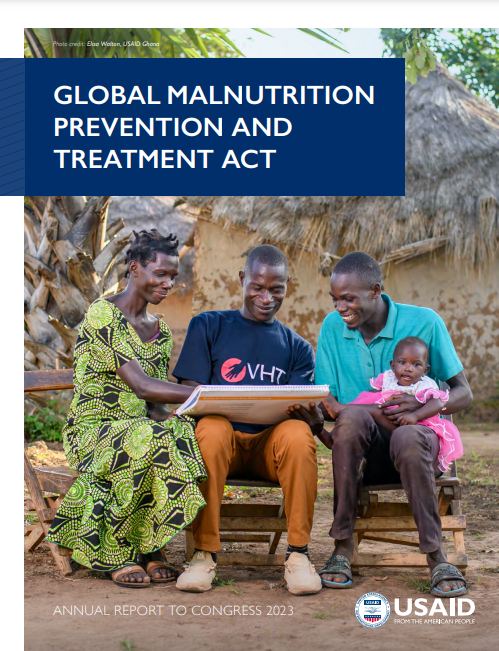
Global Malnutrition Prevention and Treatment Act - Annual Report to Congress 2023
The Global Malnutrition Prevention and Treatment Act (GMPTA) is a pivotal legislative initiative signed into law by President Biden in October 2022. This act charges the United States Agency for International Development (USAID) with combating malnutrition globally. The GMPTA solidifies USAID’s leadership role in nutrition and underscores its commitment to evidence-based interventions within both developmental and humanitarian contexts. By addressing the critical issue of malnutrition through targeted strategies, the GMPTA aims to improve health outcomes, promote economic advancement, and enhance overall human development across nations.
President’s Malaria Initiative: Country Malaria Operational Plans FY 2024
The President’s Malaria Initiative (PMI) is credited with helping to save 11.7 million lives and prevent 2.1 billion malaria cases since 2000. Indeed, since 2006, in countries where PMI works, global efforts have supported a 29% decrease in malaria case rates and a 48% decline in deaths. The introduction of two malaria vaccines in 2021 and 2023 has increased optimism in the potential to further strengthen global malaria control.
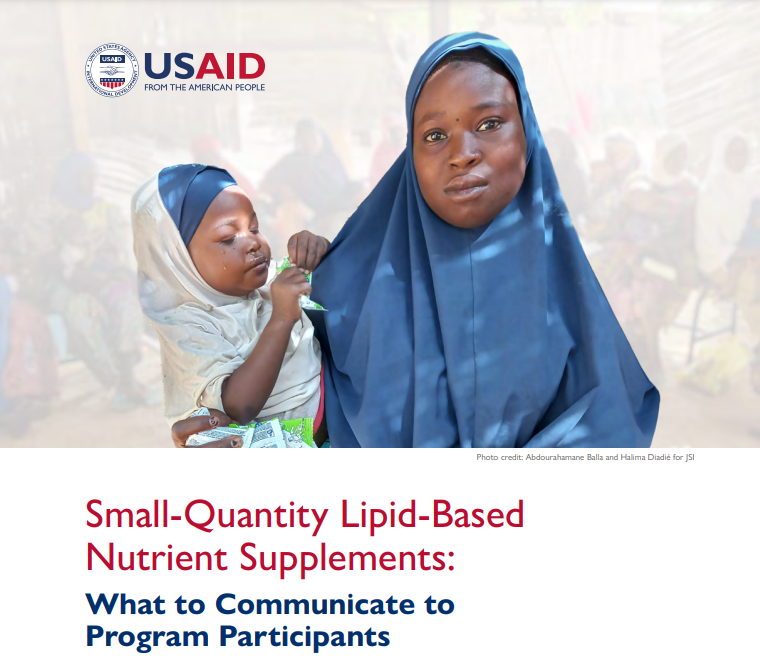
Small-Quantity Lipid-Based Nutrient Supplements: What to Communicate to Program Participants (English & French)
This brief was developed for the U.S. Agency for International Development (USAID) Bureau for Humanitarian Assistance-managed International Food Relief Partnership. The small-quantity lipid-based nutrient supplements (SQ-LNS) described in this document are intended for children 6–24 months, pregnant women, and breastfeeding women whose diets are nutritionally suboptimal and/or insufficient.
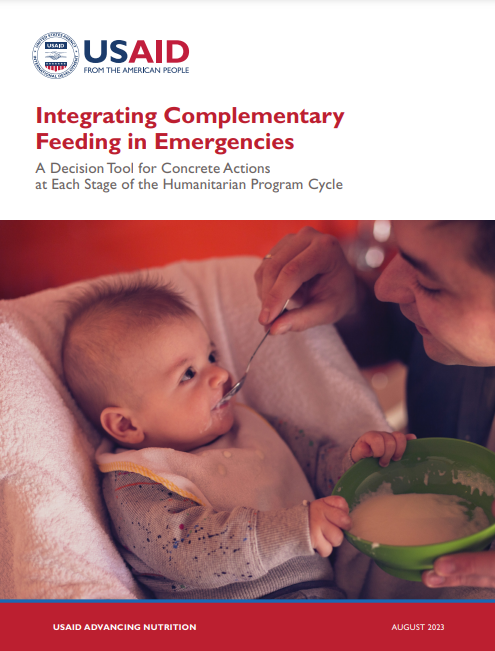
Integrating Complementary Feeding in Emergencies
This decision tool is intended for those involved in the design, planning, implementation, and monitoring of a nutrition humanitarian response before and during an emergency. It aims to guide technical advisors and managers working on a humanitarian response to design and incorporate complementary feeding actions, whether they are implemented by individual organizations and/or by joint multi-agency humanitarian responses, for children 6–23 months of age, regardless of their breastfeeding status, at each stage of the humanitarian program cycle.
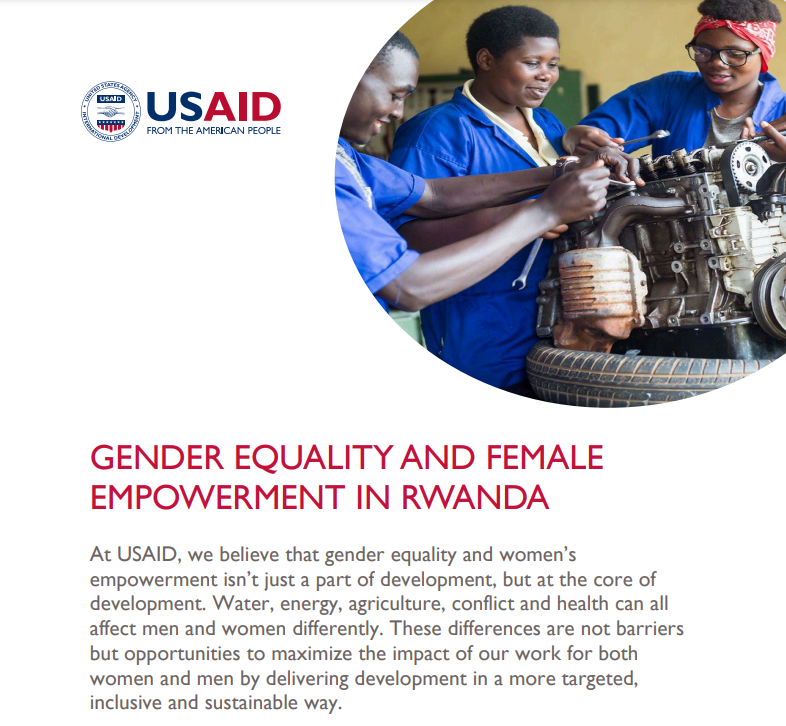
Gender Equality and Women's Empowerment in Rwanda
Rwanda is recognized as a leader in gender equality and women’s empowerment. Women hold positions making up 61 percent of the Rwandan Parliament, and 50 percent of the President’s cabinet. While these efforts are so important, challenges still remain, specifically when it comes to achieving socio-economic equality and cultural change at the community level.
Family Planning Health: India Market Description
FP Market Description is diagnosis of constraints for effective private sector market participation.
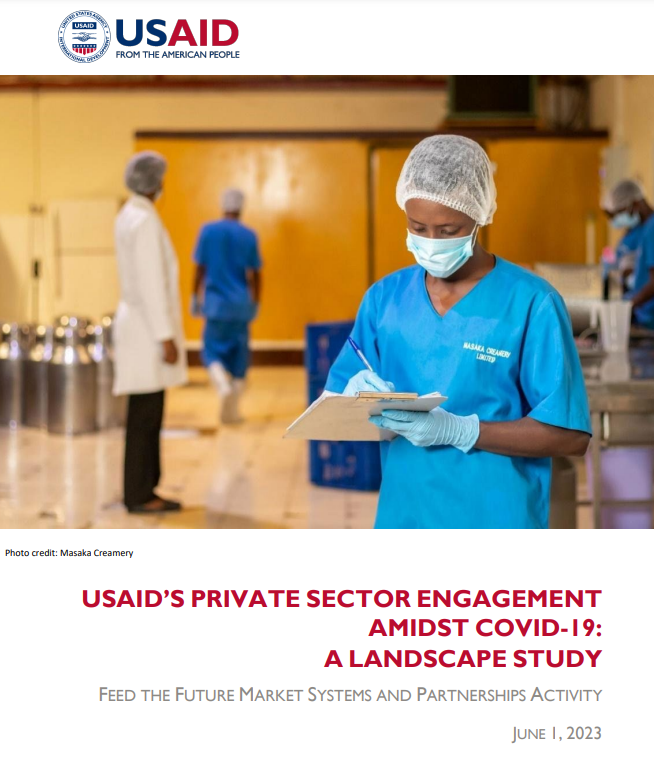
USAID’s Private Sector Engagement Amidst Covid-19: A Landscape Study
In order to better understand how USAID engaged with the private sector to improve firm resilience during the COVID-19 pandemic — and to what extent the agency was successful in doing so — USAID commissioned research through the Private Sector Engagement (PSE) Hub in collaboration with the Bureau of Policy, Planning and Learning’s Office of Learning, Evaluation and Research (PPL/LER), as part of a series of learning activities related to USAID’s COVID-19 Learning Agenda.
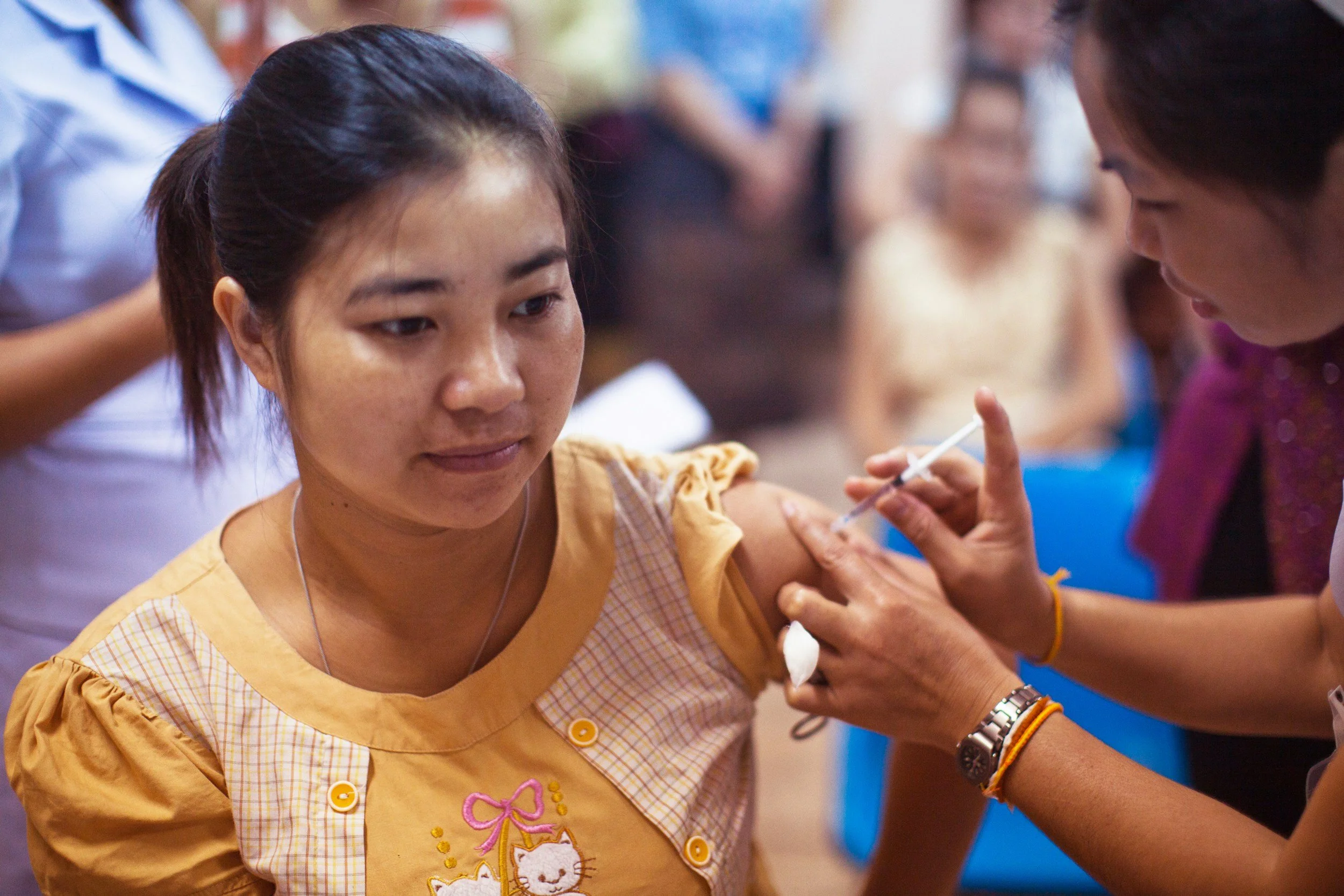
USAID Global Health Research and Development Strategy 2023-2028
This strategy describes USAID’s renewed commitment to research and development (R&D) and use of new, innovative health products and technologies; the implementation and scale-up of real world, evidence-based research and learning to improve health outcomes globally; and the strengthening of both local health research and development capacity and global research and development partnerships.
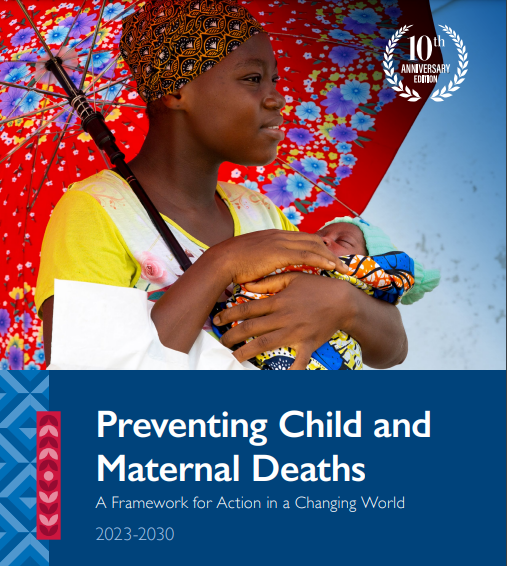
Preventing Child and Maternal Deaths: A Framework for Action in a Changing World 2023-2030
Over the next seven years, USAID will focus on shaping and supporting policies, practices, and country-led programs that improve the quality of care, promote equity, and improve coverage of lifesaving care to reach optimal levels across local communities and regions. USAID’s new strategic framework for preventing child and maternal deaths harnesses the learning and progress of the last decade in six strategic approaches that will yield programmatic improvements and, in turn, save lives.
USAID/BHA Emergency Application Guidelines Indicator Handbook
The Indicator Handbook provides the performance indicator reference sheets (PIRS) for BHA emergency indicators. The Handbook provides guidance on applicability criteria for each BHA emergency indicator, and guidance on what you must include in custom indicator PIRSs.
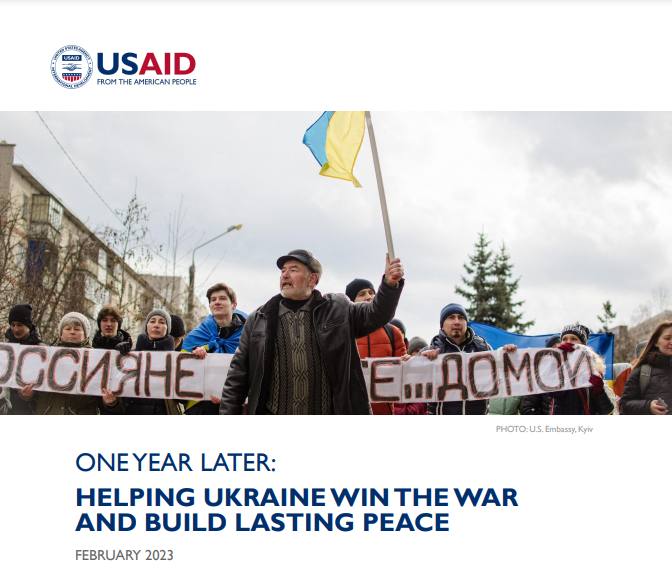
One Year Later: Helping Ukraine Win the War and Build Lasting Peace
To help meet Ukraine’s wartime needs and lay the foundation for a successful recovery, USAID has provided $13 billion in direct budget support, helping the Government of Ukraine (GoU) fund basic public services like healthcare, education, and emergency response; $1.4 billion in humanitarian assistance to save lives and meet the urgent needs of the Ukrainian people; and over $800 million in development assistance to bolster Ukraine’s energy grid, governance institutions, agriculture, small businesses, and civil society in wartime, while also remaining focused on what will be needed for recovery and reconstruction.