
-
Article
Brief
Meeting Notes
Presentation
Poster
Report
Toolkit
Video
Webinar
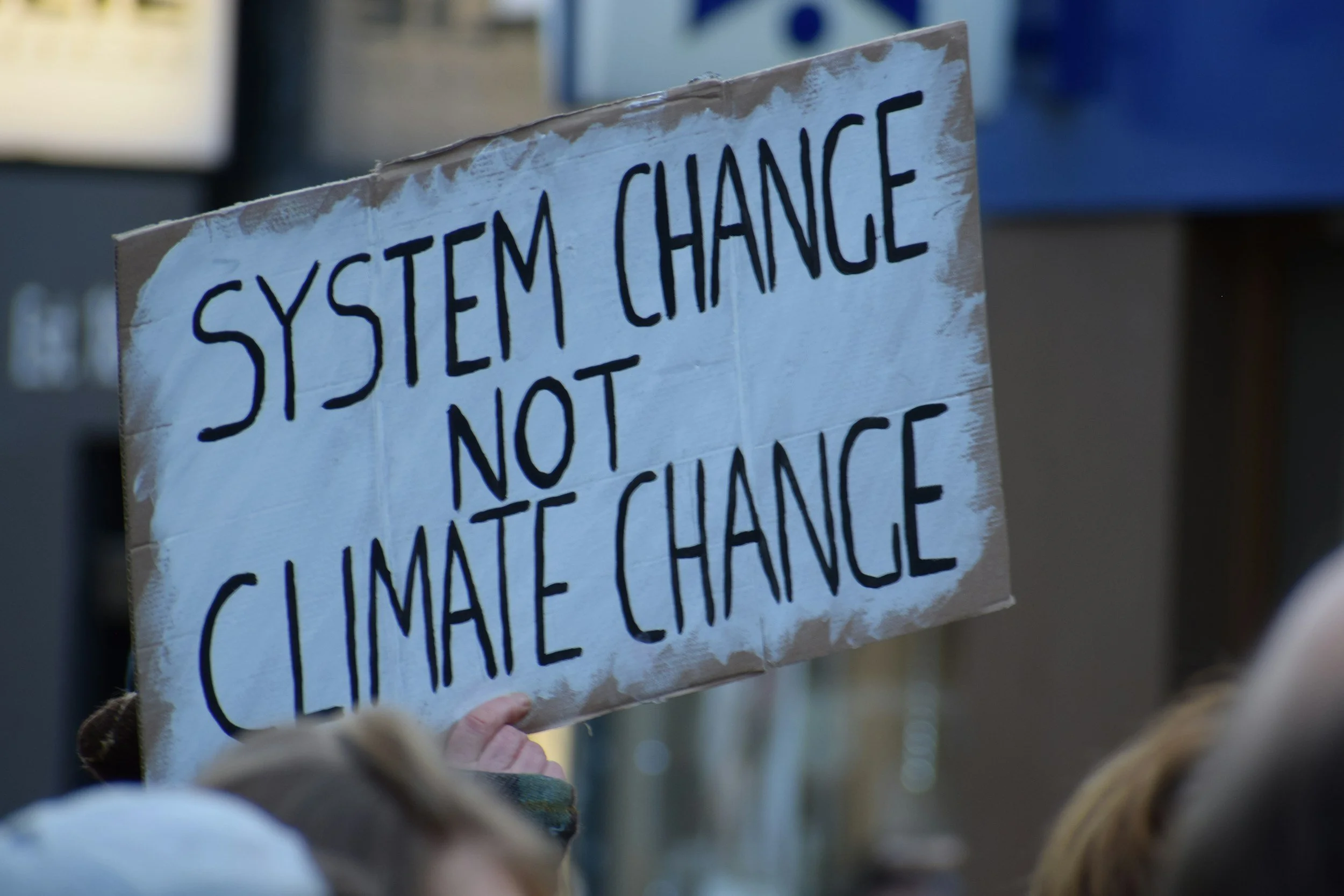
Climate Change Country Profiles 2023-2024
Snapshots of USAID goals, projects and outcomes around the globe
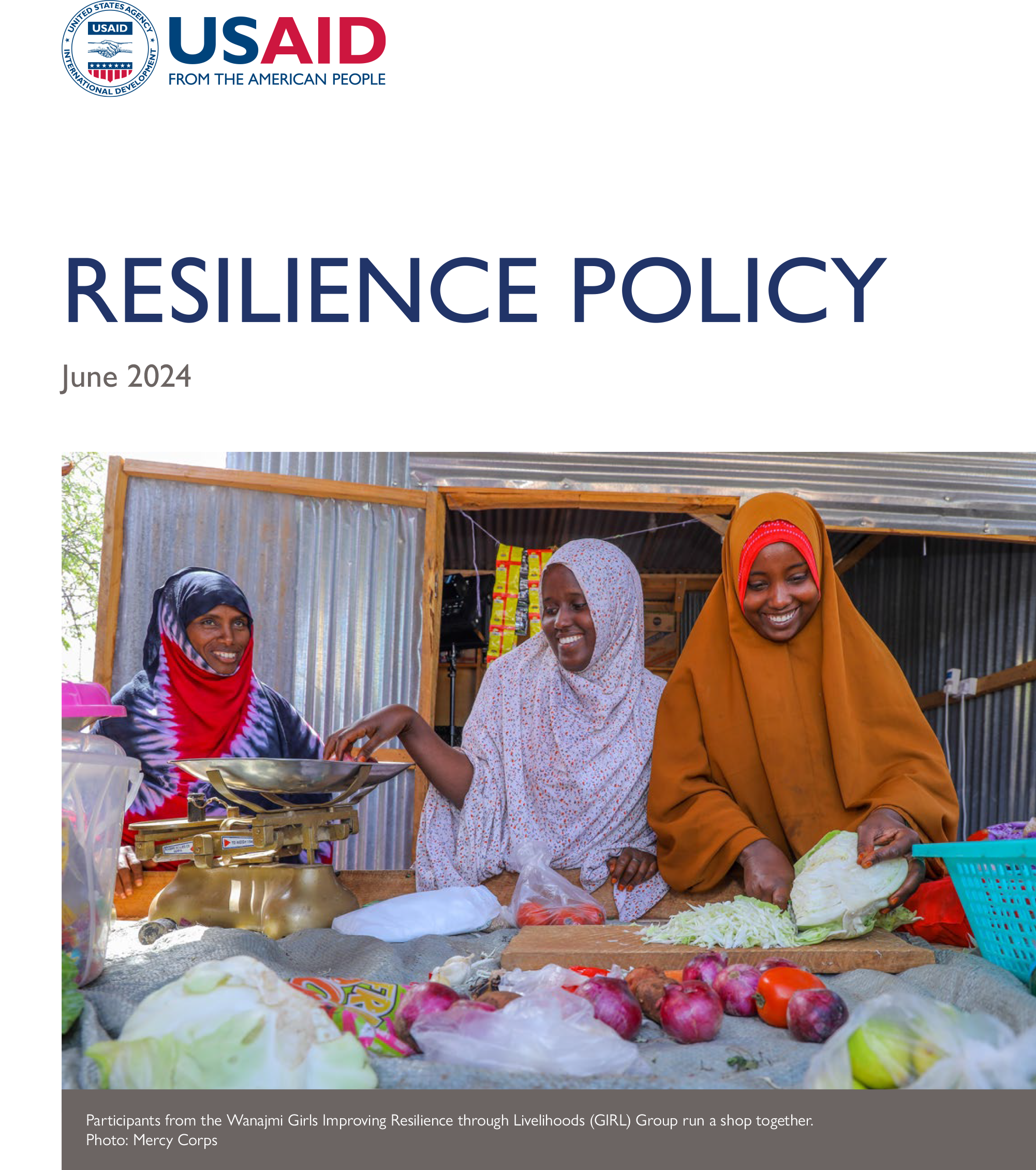
USAID Resilience Policy 2024
As an update to USAID’s inaugural resilience policy (2012), this policy reiterates the goal of reducing humanitarian need in areas of recurrent crisis while also reinforcing resilience as an Agency priority across all USAID programming.
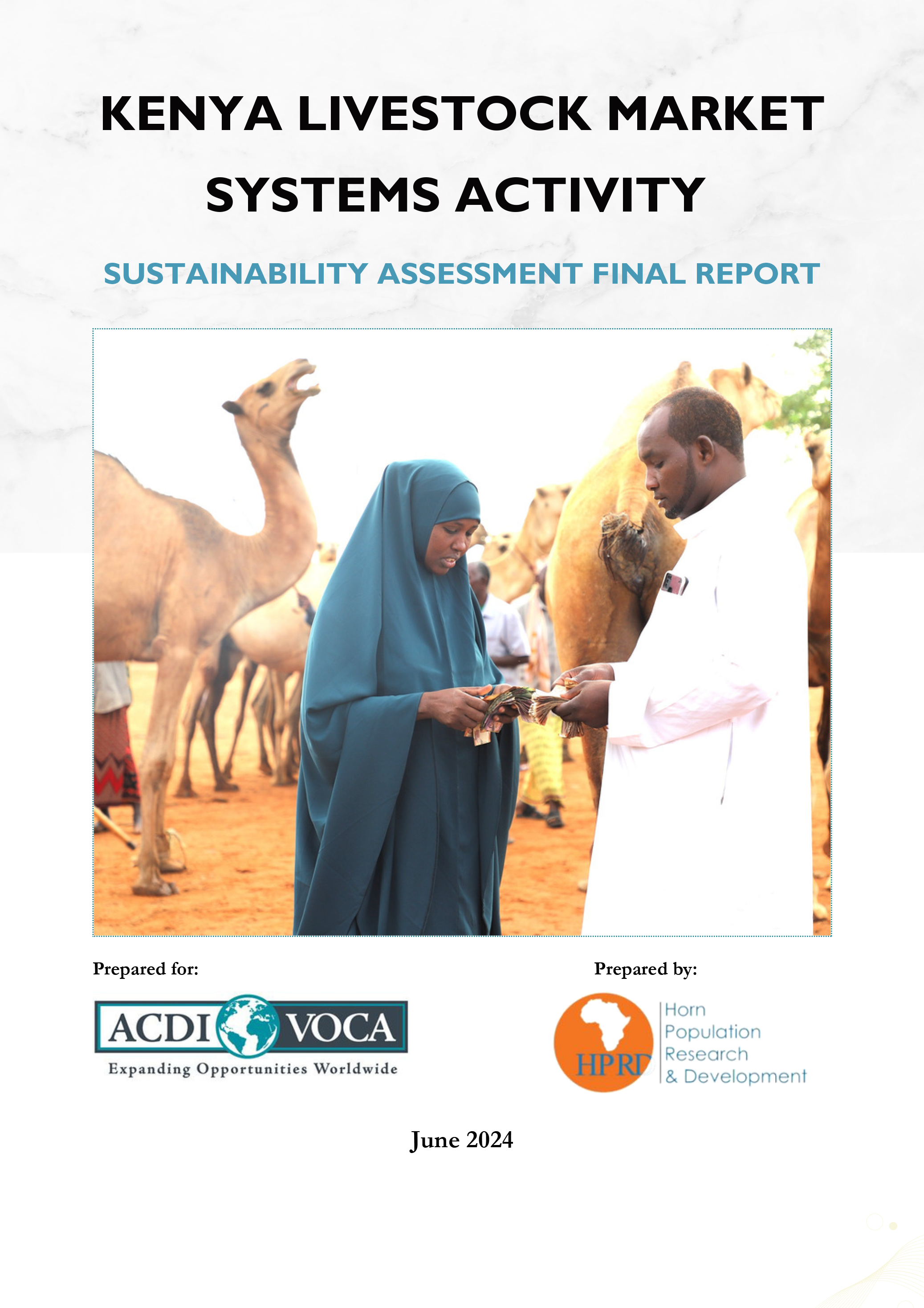
Kenya Livestock Market Systems Activity: Final Sustainability Assessment Report
The Feed the Future Kenya Livestock Market Systems Activity (USAID's LMS) is a USAID-funded initiative aimed at enhancing resilience against shocks and stresses in Northern Kenya.
Feed the Future Climate Resilient Cereals Innovation Lab (CRCIL)
The MEL Plan is designed based on the CRCIL’s goals, and expected outputs, outcomes, and impacts, taking into consideration the corresponding MEL activities required to assess progress in its achievements. It establishes a sustainable system for ensuring the quality and validity of data by employing rigorous procedures towards the adaptive management necessary to quantify the progress and impact of proposed activities and measure program contributions to the overall program goal. The MEL Plan Collaborating, Learning, and Adapting (CLA) approach, based on the United States Agency for International Development’s (USAID) CLA approach, and CRCIL’s Theory of Change (TOC) will guide the refinement of activity design as needed, based on new evidence, continual learning, and complexity-aware monitoring and innovative evaluation activities.
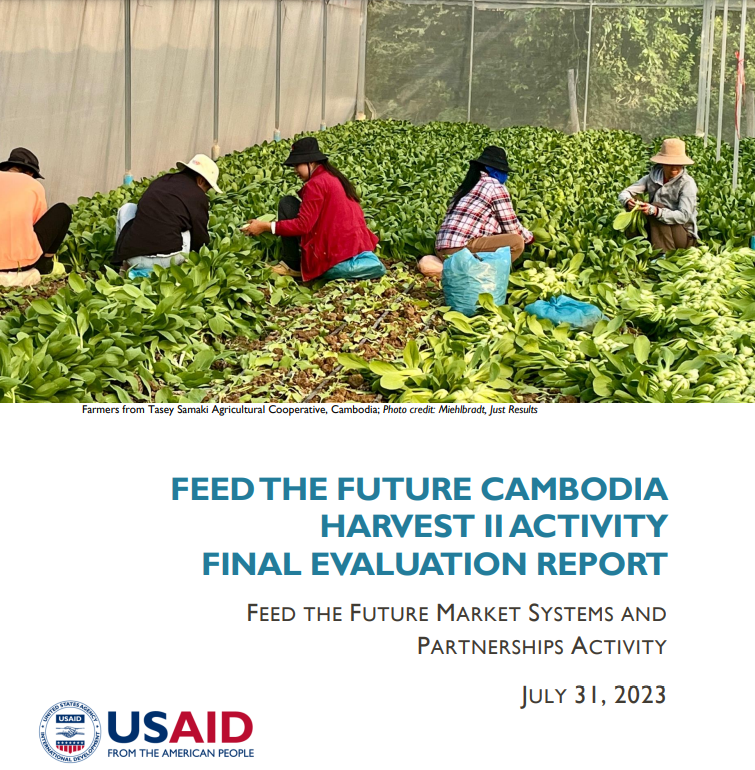
Feed the Future Cambodia Harvest II Activity Final Evaluation Report
This report presents the findings from the final evaluation of the Feed the Future Cambodia Harvest II activity (Harvest II) funded by the United States Agency for International Development (USAID) and operating from 2017-2022. The approach taken by Harvest II represented a shift in emphasis from previous USAID-funded activities that offered support to agricultural production, moving intentionally towards a demand-driven, market systems development approach. The evaluation team was asked to assess the extent and nature of system change that resulted from the activity, and how farms and firms benefited. The team also assessed whether and how the project contributed to resilience, climate change mitigation, and environmental stewardship.
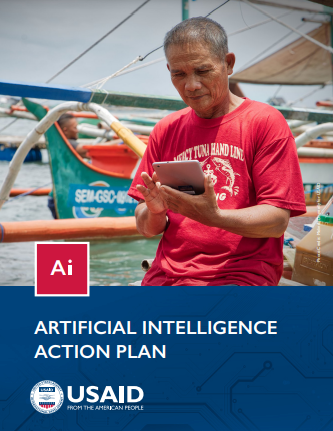
Artificial Intelligence Action Plan
As AI technologies are embedded and intertwined in digital ecosystems, a responsible approach to AI should include strengthening key aspects of the enabling ecosystem. This includes data systems, connectivity, and local workforce capacity. In addition, there must be a focus on strengthening the civil society structures holding AI systems and actors accountable, and shaping policy environments that in turn encourage open, inclusive, and secure digital ecosystems. Together, these investments will support governments, businesses, and individuals to sustainably and equitably benefit from the use of AI technologies.
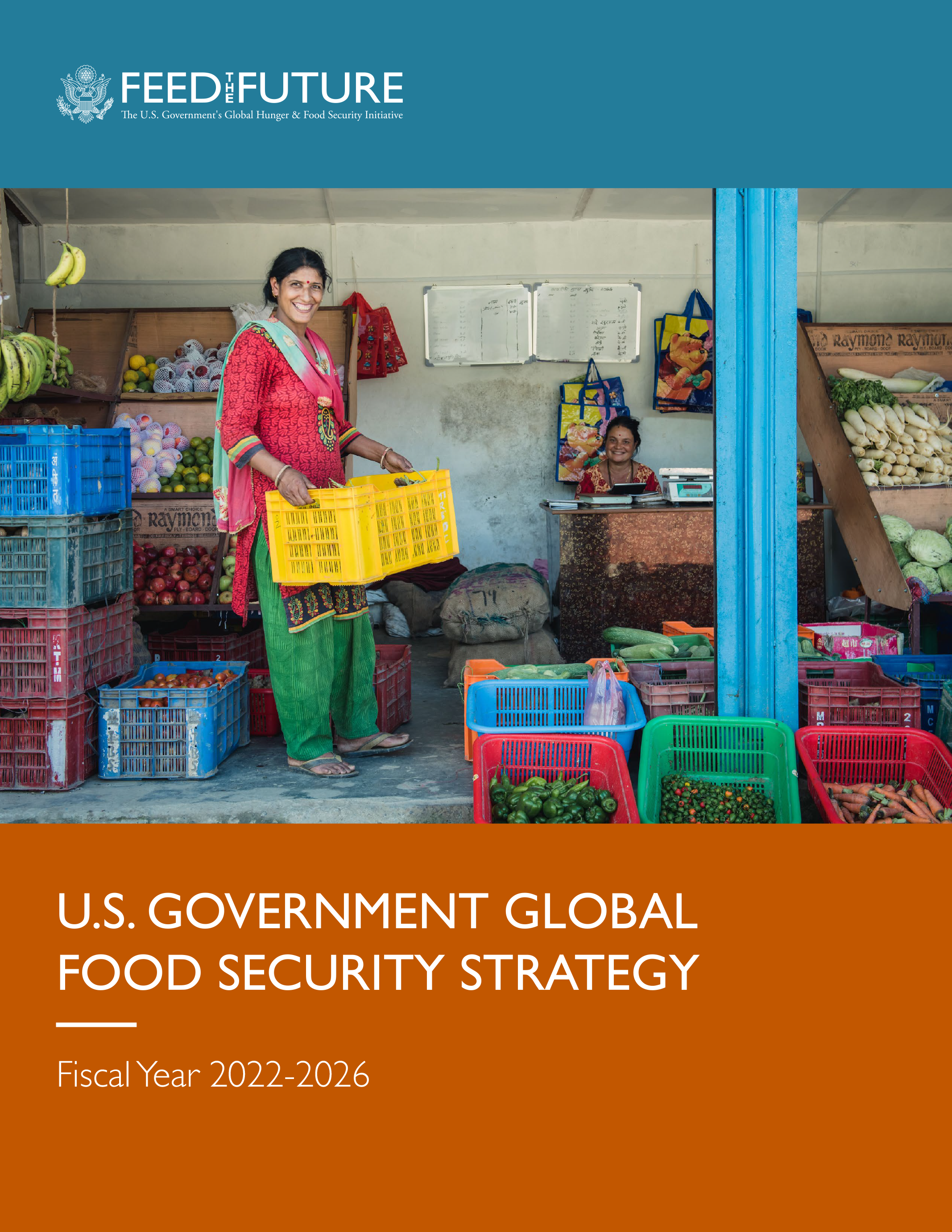
U.S. Government Global Food Security Strategy
The updated Global Food Security Strategy is our roadmap to that better future. It charts an ambitious course to reduce global poverty, hunger, and malnutrition in the face of COVID-19, climate change, growing conflict, and rising inequality through Feed the Future, the U.S. government’s (USG) global hunger and food-security initiative. It brings America’s full strength to bear on these challenges by drawing on the expertise of agencies across the U.S. government. Through this strategy, we aim to contribute toward a 20% reduction in poverty and stunting in the areas where we work between 2022-2026 by partnering with foreign governments, the private sector, and our colleagues across the interagency.
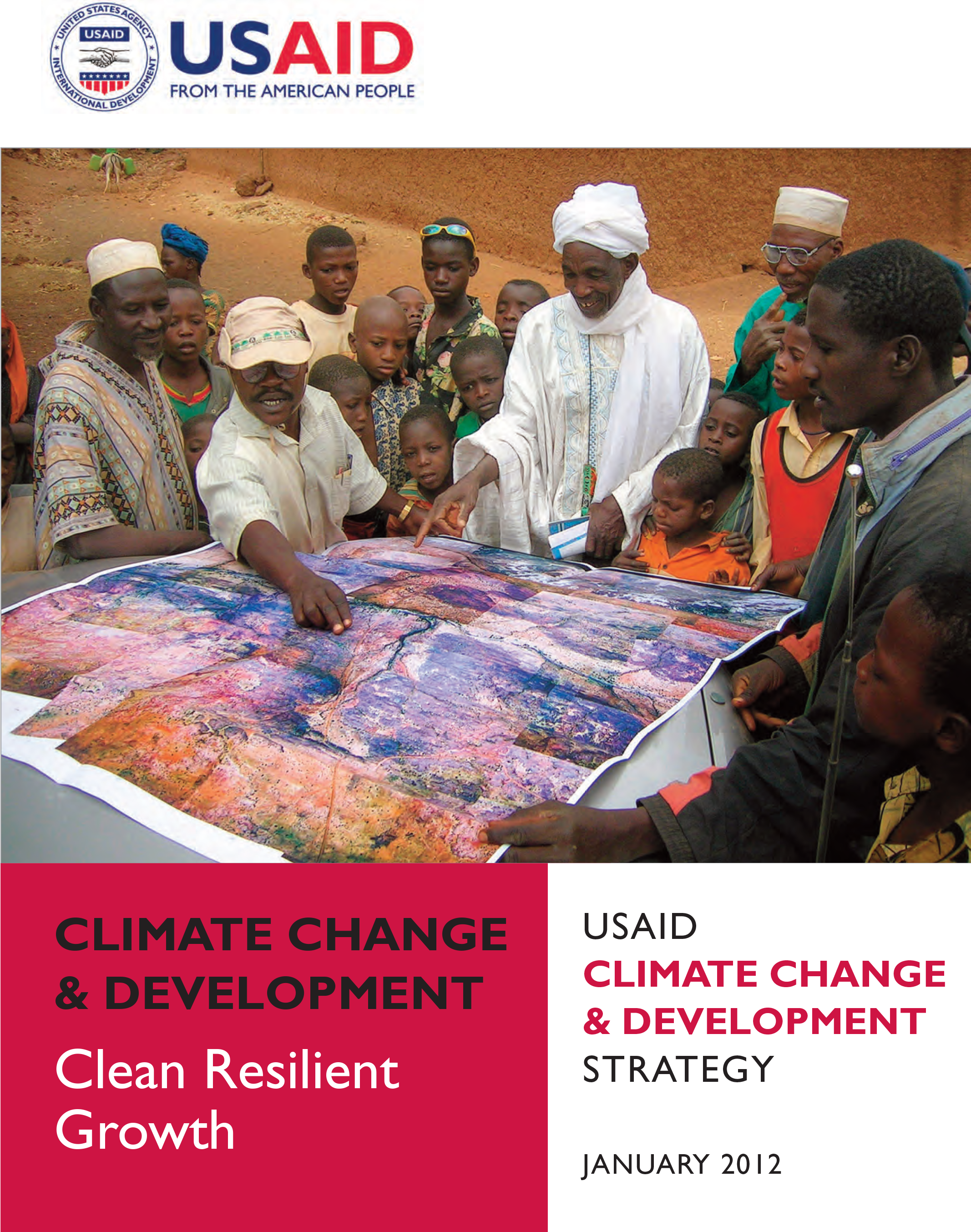
USAID Climate Change and Development Strategy 2012-2016
USAID’s work on climate change fits into a larger domestic and international policy context and is guided by Administration policy as developed in the President’s Global Development Policy, the Quadrennial Diplomacy and Development Review, USAID Forward, and the GCCI. Additionally, USAID’s Policy Framework 20112015 defines the following as one of seven Core Development Objectives for the Agency: Reduce Climate Change Impacts and Promote Low Emissions Growth. USAID has a long history of programming in sectors relevant to climate change and will draw lessons learned from this history to shape efforts under this strategy. The goal of USAID’s 2012-2015 Climate Change and Development Strategy is to enable countries to accelerate their transition to climate resilient low emission sustainable economic development.
Climate Change Adaptation at USAID: Learning from Experience
USAID’s Global Climate Change Initiative assists countries as they develop in ways that reduce emissions while building resilience to climate change impacts.