
-
Article
Brief
Meeting Notes
Presentation
Poster
Report
Toolkit
Video
Webinar
Climate Change Country Profiles 2023-2024
Snapshots of USAID goals, projects and outcomes around the globe
Climate Fragility Programming Resource Guide
The purpose of this resource guide is to support those working on conflict prevention and stabilization to 1) have a better understanding of the risks climate change poses to their work; 2) be equipped with the tools and approaches to best integrate climate change into existing or future programming; and 3) ultimately ensure that their conflict prevention and stabilization work has positive and sustainable outcomes.
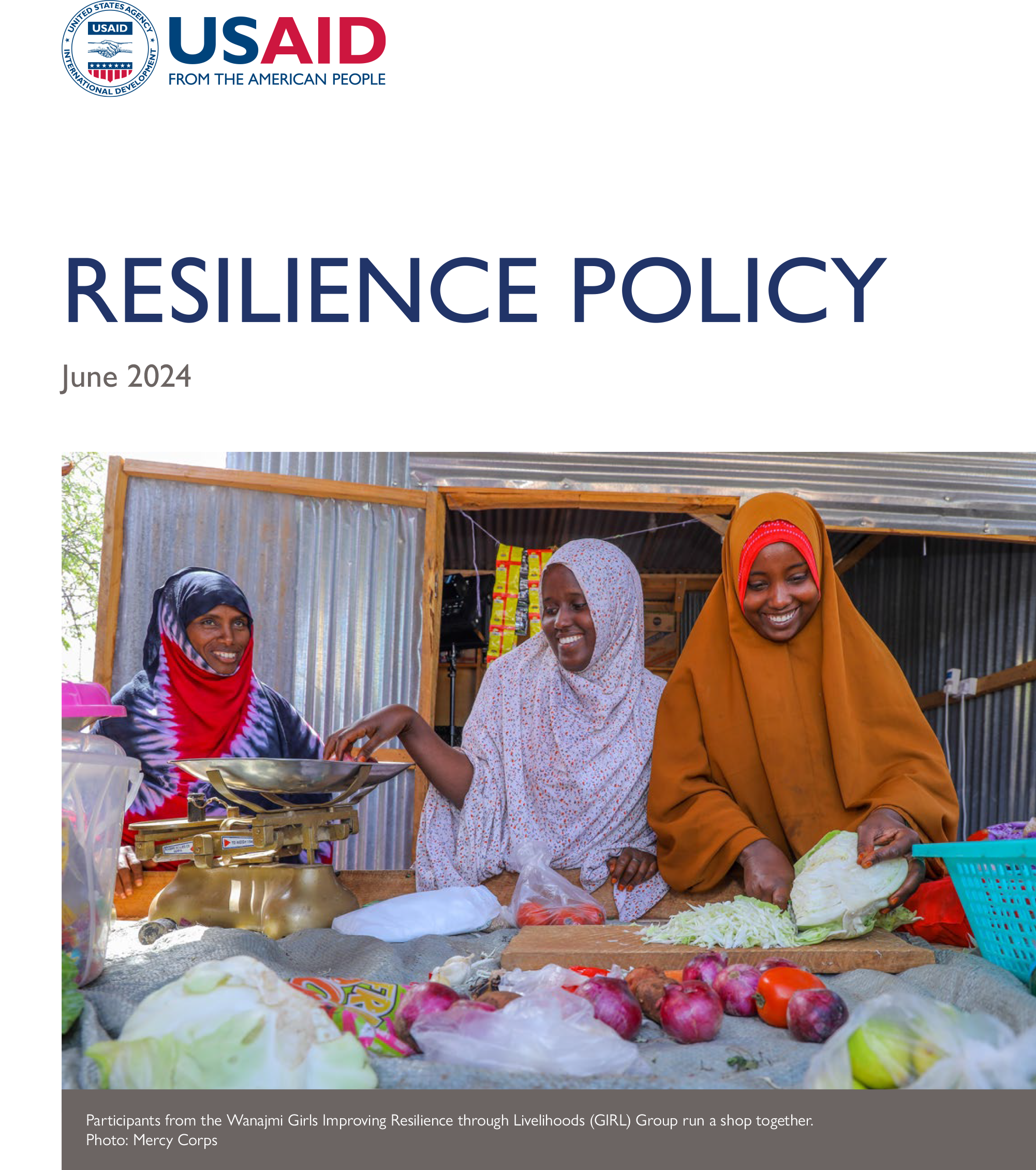
USAID Resilience Policy 2024
As an update to USAID’s inaugural resilience policy (2012), this policy reiterates the goal of reducing humanitarian need in areas of recurrent crisis while also reinforcing resilience as an Agency priority across all USAID programming.
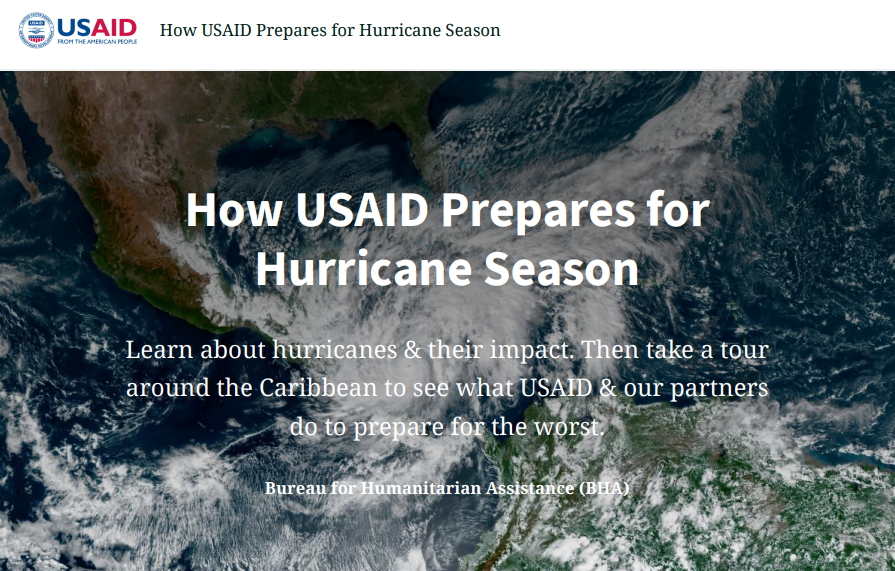
How USAID Prepares for Hurricane Season
Just one major hurricane can be devastating. That’s why USAID – through its Bureau for Humanitarian Assistance – prepares year-round to help communities in Latin America and the Caribbean prepare for the Atlantic hurricane season.
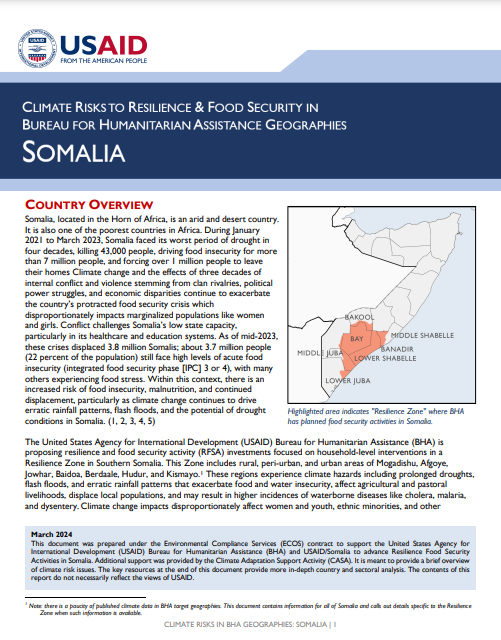
Climate risks to resilience and food security in Bureau for Humanitarian Assistance Geographies: Somalia
The United States Agency for International Development (USAID) Bureau for Humanitarian Assistance (BHA) is proposing resilience and food security activity (RFSA) investments focused on household-level interventions in a Resilience Zone in Southern Somalia.
USAID/BHA Emergency Application Guidelines Sector Requirements
BHA’s Emergency Application Guidelines (EAG) are three core documents, with supplemental guidance and resources provided on the EAG webpage (BHA EAG Page), which is linked at the bottom of every page of this document.
Integrating Conflict Sensitivity into Food Security Programs
This brief assesses prevailing practices, successes, challenges, lessons learned, and recommendations around integrating conflict sensitivity into food security programs. Ultimately, conflict sensitivity is not only about managing and mitigating risk, but also about seeking opportunities to promote peace. In this respect, this learning brief can contribute to USAID’s calls for greater coherence in humanitarian, development, and peace programming by supporting aid actors to “champion conflict integration and opportunities for enabling or building peace where possible.”
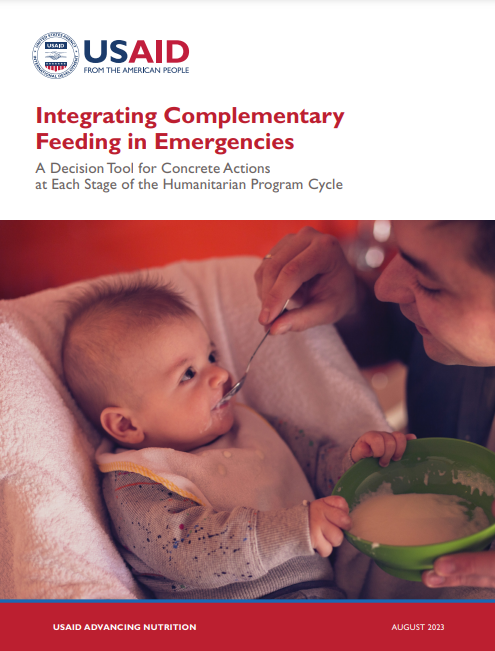
Integrating Complementary Feeding in Emergencies
This decision tool is intended for those involved in the design, planning, implementation, and monitoring of a nutrition humanitarian response before and during an emergency. It aims to guide technical advisors and managers working on a humanitarian response to design and incorporate complementary feeding actions, whether they are implemented by individual organizations and/or by joint multi-agency humanitarian responses, for children 6–23 months of age, regardless of their breastfeeding status, at each stage of the humanitarian program cycle.
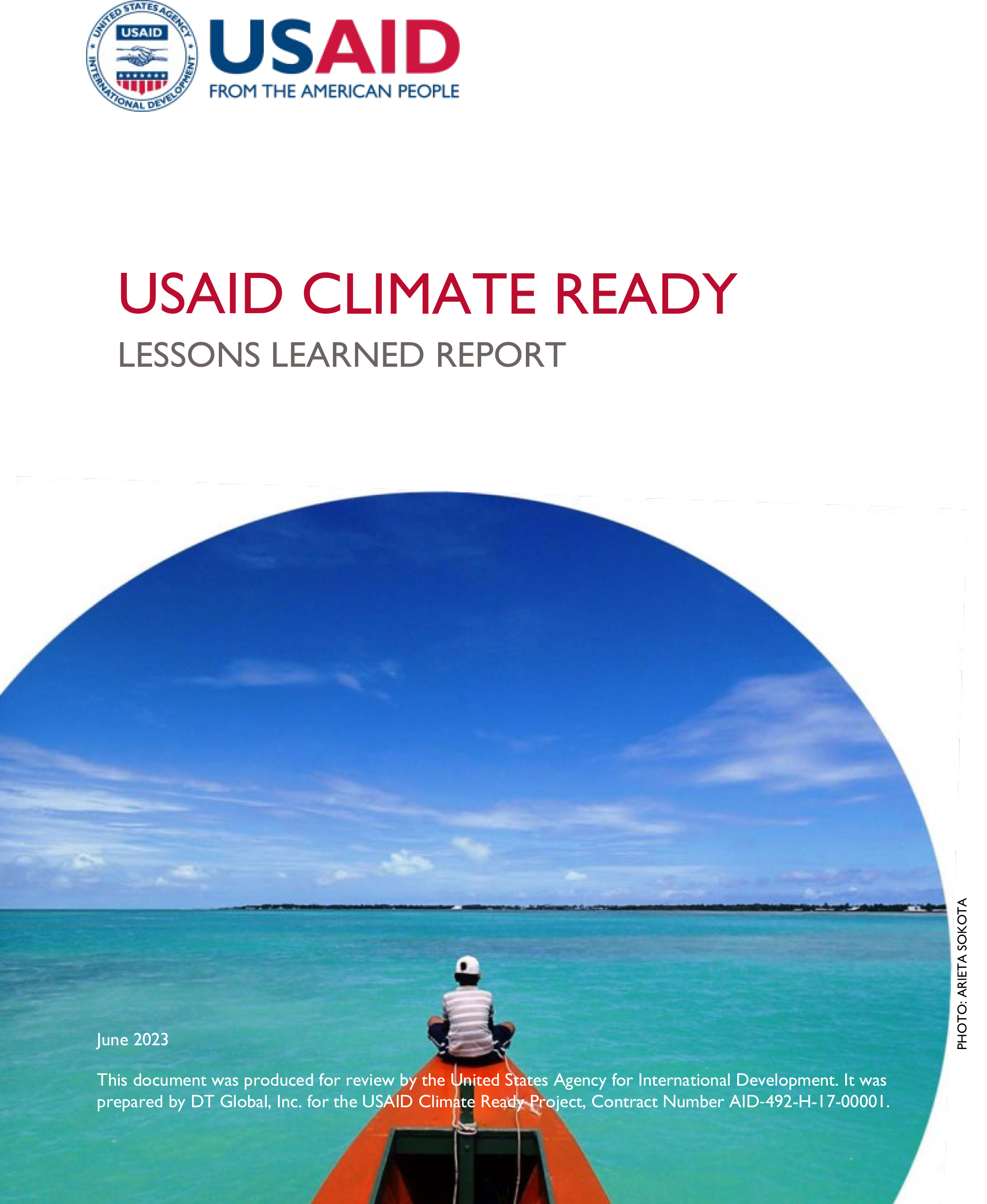
USAID Climate Ready Lessons Learned Report
USAID Climate Ready is focused on achieving its Strategic Objective of capacity of PICs increased to adapt to negative impacts of climate change.
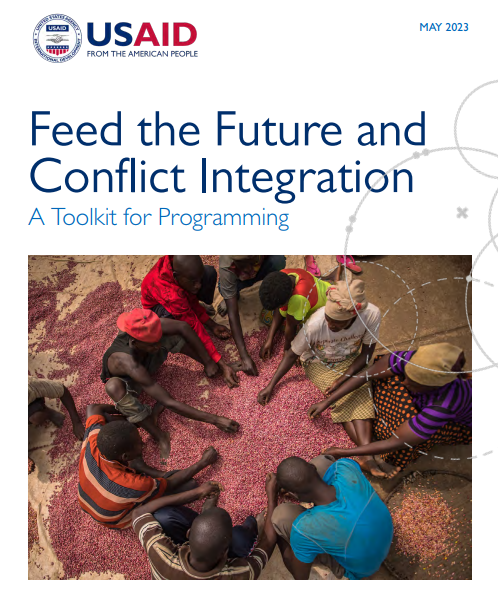
Feed the Future and Conflict Integration
This toolkit is a groundbreaking effort to ensure all investments under the United States Government’s Global Food Security Strategy integrate conflict. The better we understand the connections between conflict and food systems, the better we can meet the goals of the Feed the Future Initiative while also contributing to a more peaceful world. Fragility, conflict, and violence (FCV) can easily undermine progress under Feed the Future, but there are steps we can take to mitigate these dynamics and capitalize on opportunities for peace throughout our programming.
Urban Resilience Technical Guidance
USAID can improve development outcomes by strengthening urban resilience. Through this approach USAID can guard against risks and help capture and safeguard the benefits of urbanization, especially for the most vulnerable. Concepts from this technical guidance can be applied to focused sector programming as well as integrated programming across sectors.
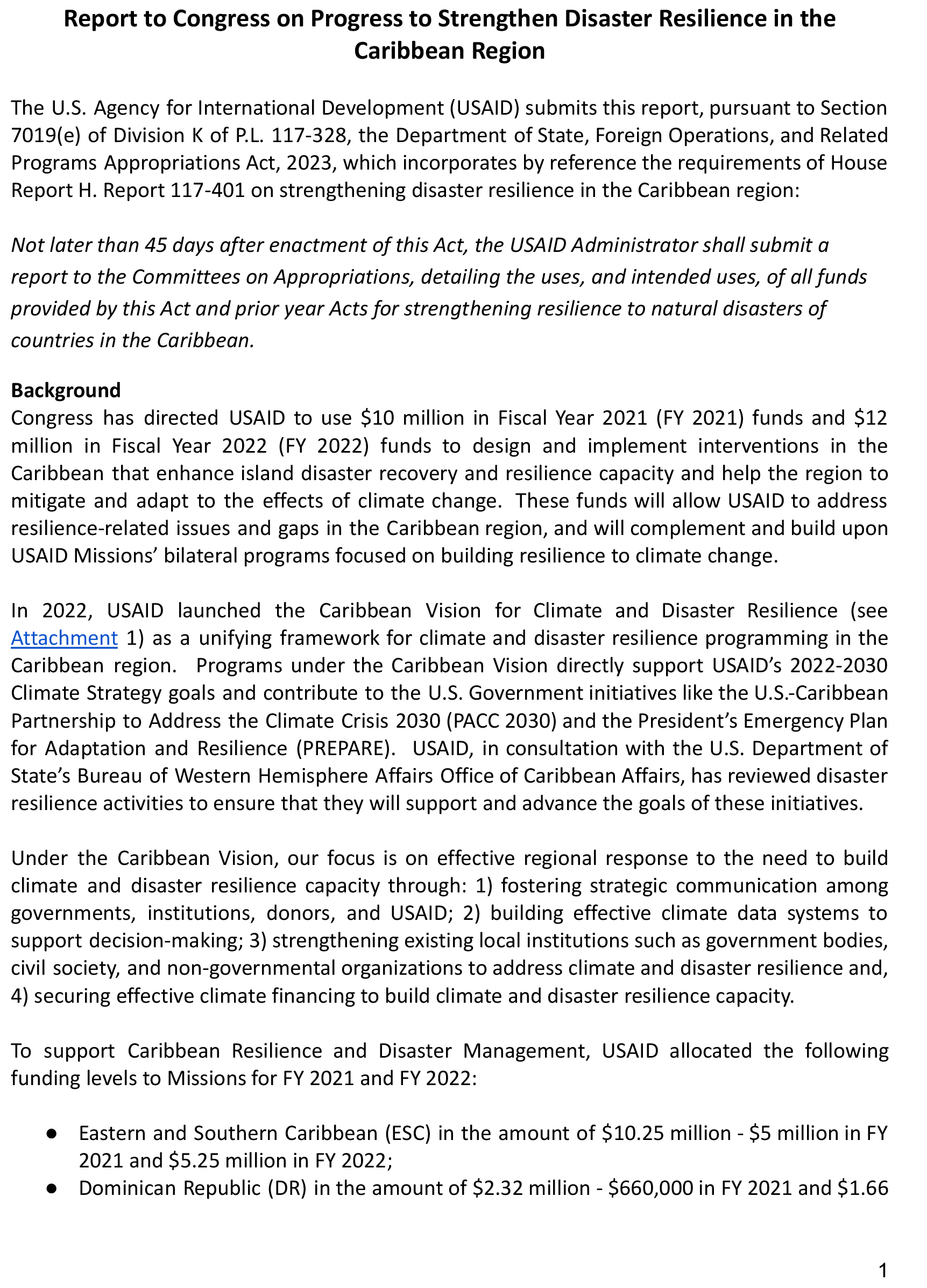
Report to Congress on Progress to Strengthen Disaster Resilience in the Caribbean Region
The U.S. Agency for International Development (USAID) submits this report, pursuant to Section 7019(e) of Division K of P.L. 117-328, the Department of State, Foreign Operations, and Related Programs Appropriations Act, 2023, which incorporates by reference the requirements of House Report H. Report 117-401 on strengthening disaster resilience in the Caribbean region:
USAID/BHA Emergency Application Guidelines Indicator Handbook
The Indicator Handbook provides the performance indicator reference sheets (PIRS) for BHA emergency indicators. The Handbook provides guidance on applicability criteria for each BHA emergency indicator, and guidance on what you must include in custom indicator PIRSs.
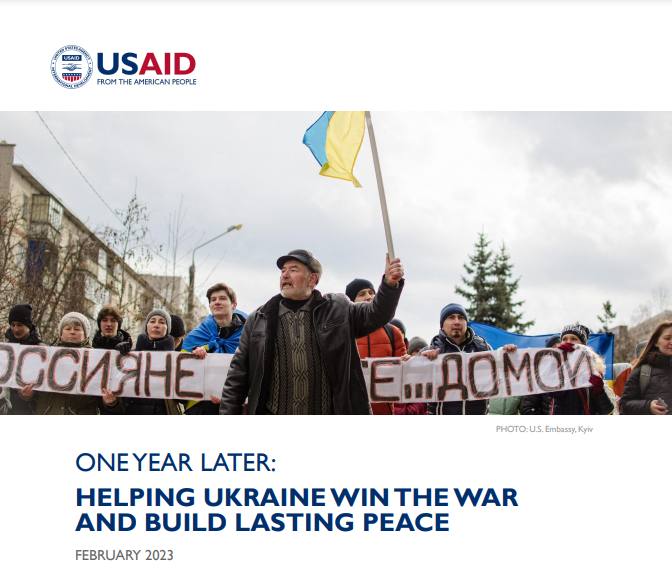
One Year Later: Helping Ukraine Win the War and Build Lasting Peace
To help meet Ukraine’s wartime needs and lay the foundation for a successful recovery, USAID has provided $13 billion in direct budget support, helping the Government of Ukraine (GoU) fund basic public services like healthcare, education, and emergency response; $1.4 billion in humanitarian assistance to save lives and meet the urgent needs of the Ukrainian people; and over $800 million in development assistance to bolster Ukraine’s energy grid, governance institutions, agriculture, small businesses, and civil society in wartime, while also remaining focused on what will be needed for recovery and reconstruction.
Improving Food Security in Humanitarian Emergencies: An evidence gap map
This report presents the findings of a systematic search to identify and map the evidence base of impact evaluations and systematic reviews of interventions that aim to improve food security during humanitarian crises.
U.S. Dept. of State and USAID Joint Strategy FY 2022 - 2026
“These steps will help us build a more inclusive Agency, one that is more diverse and willing to engage with new partners, more equitable in its impact, and more responsive to local voices. USAID’s legacy as the world’s leading bilateral development institution has always been an asset to the American people and a means for securing stability, security, and prosperity, both at home and abroad. This Joint Strategic Plan acknowledges and draws strength from this heritage to take on the challenges of today and prepare for those that will come tomorrow.”
President’s Emergency Plan for Adaptation and Resilience (PREPARE)
In response to a severe and urgent crisis, the President of the United States of America is announcing the President’s Emergency Plan for Adaptation and Resilience (PREPARE) to support developing countries and communities in vulnerable situations around the world in their efforts to adapt to and manage the impacts of climate change. T
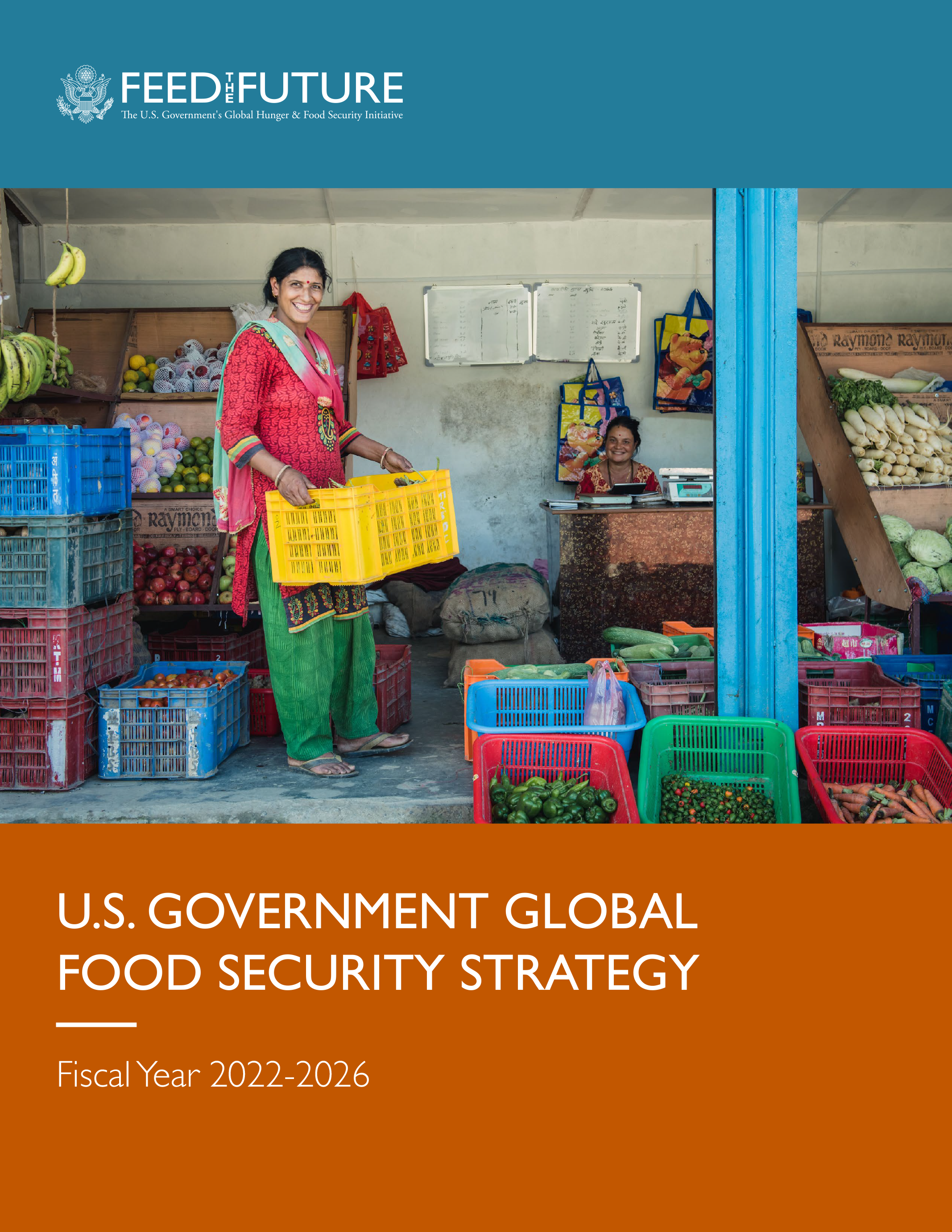
U.S. Government Global Food Security Strategy
The updated Global Food Security Strategy is our roadmap to that better future. It charts an ambitious course to reduce global poverty, hunger, and malnutrition in the face of COVID-19, climate change, growing conflict, and rising inequality through Feed the Future, the U.S. government’s (USG) global hunger and food-security initiative. It brings America’s full strength to bear on these challenges by drawing on the expertise of agencies across the U.S. government. Through this strategy, we aim to contribute toward a 20% reduction in poverty and stunting in the areas where we work between 2022-2026 by partnering with foreign governments, the private sector, and our colleagues across the interagency.
USAID Climate Ready Knowledge Products: Business Continuity Planning Resources
This collection of resources will build your awareness on: The concepts of disaster readiness and business continuity for business; and The key steps for a business to become disaster ready.
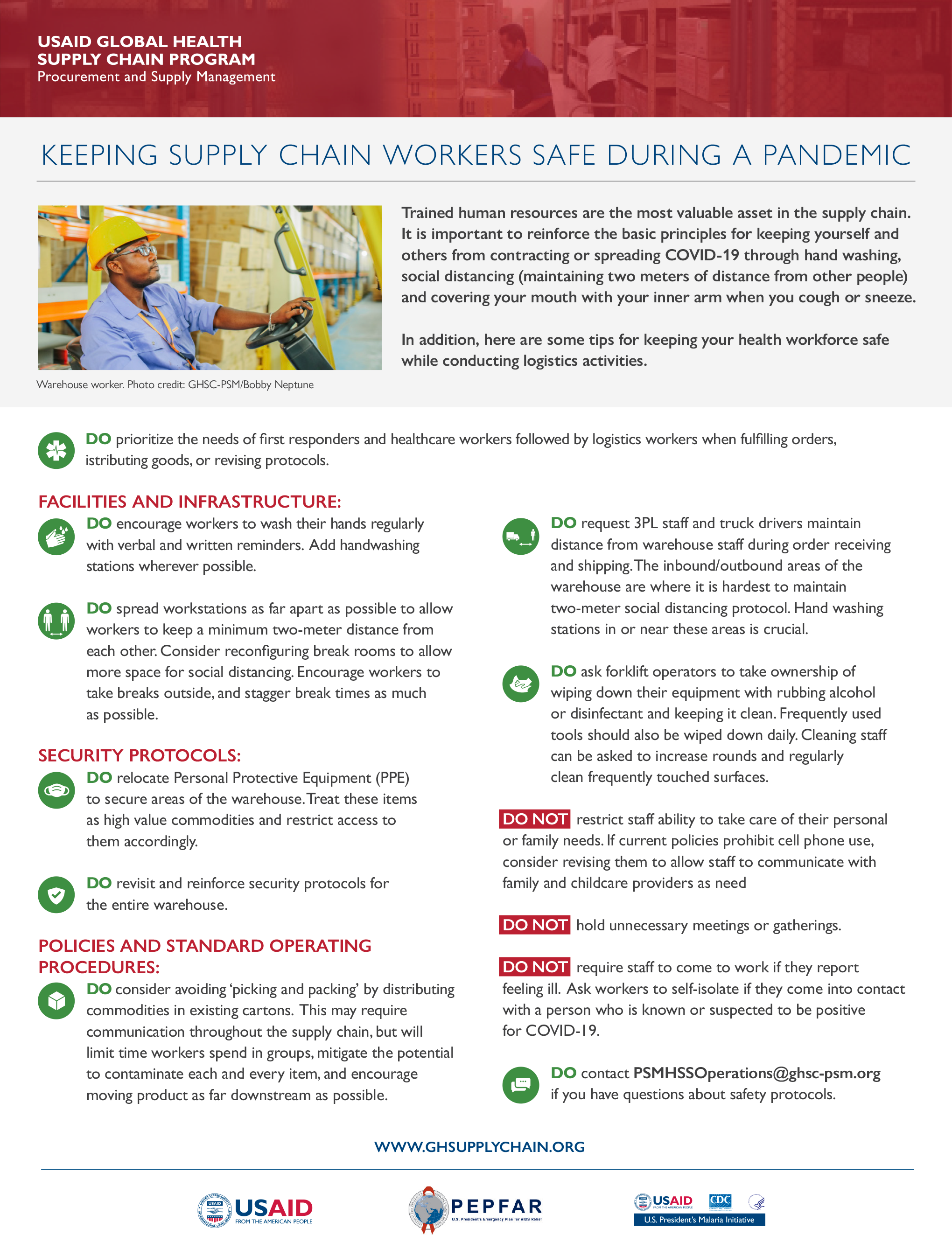
Keeping Supply Chain Workers Safe During a Pandemic
Trained human resources are the most valuable asset in the supply chain.