-
Article
Brief
Meeting Notes
Presentation
Poster
Report
Toolkit
Video
Webinar

Safe Childbirth Checklist Landscape Analysis
Globally, almost 135 million births occurred in 2023 (United Nations Population Division, 2024), and around 285,000 women* die each year due to pregnancy or childbirth-related causes (World Health Organization [WHO], 2024b). According to the WHO, the most frequent causes of maternal mortality are postpartum hemorrhage, infection after childbirth, and high blood pressure during pregnancy.
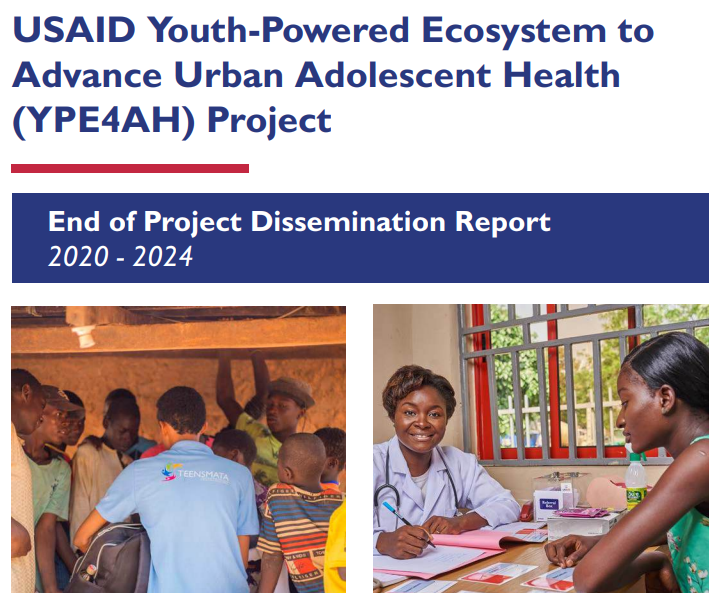
USAID Youth-Powered Ecosystem to Advance Urban Adolescent Health (YPE4AH) Project — End of Project Dissemination Report 2020 - 2024
In May 2020, the United States Agency for International Development (USAID)/Nigeria awarded the Youth-Powered Ecosystem to Advance Urban Adolescent Health (YPE4AH) Project to DAI Global LLC and its partners—Yellow Brick Road (YBR), Youth Empowerment and Development Initiative (YEDI), Women Friendly Initiative (WFI), and Grassroot Soccer (GRS). This five-year cooperative agreement, designed through a co-creation process, empowers young Nigerians with the skills, social capital, and resources necessary to realize their potential. The primary goal of the project is to improve the health and well-being of urban, underprivileged, out-of-school, and unmarried/ married adolescents aged 15–19 living in urban slums in Lagos and Kano States by increasing the uptake and sustained use of voluntary family planning (FP) services, using a holistic, human capital approach.
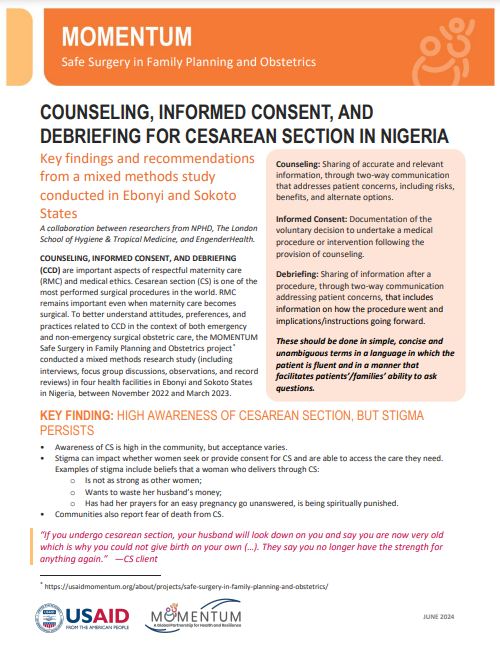
Counseling, Informed Consent, and Debriefing for Cesarean Section in Nigeria
COUNSELING, INFORMED CONSENT, AND DEBRIEFING (CCD) are important aspects of respectful maternity care (RMC) and medical ethics. Cesarean section (CS) is one of the most performed surgical procedures in the world. RMC remains important even when maternity care becomes surgical.
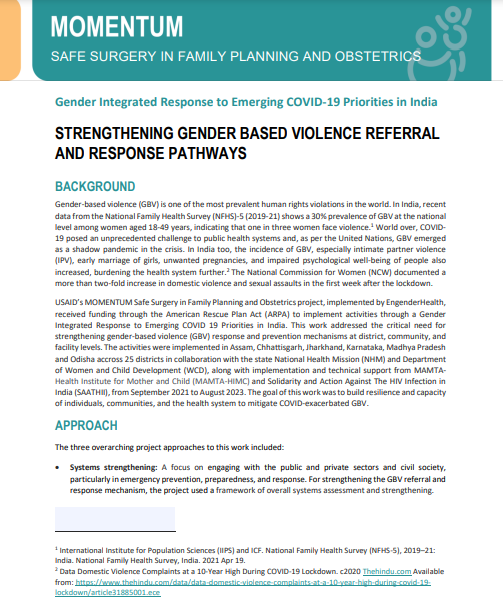
Gender Integrated Response to Emerging COVID-19 Priorities in India
This work addressed the critical need for strengthening gender-based violence (GBV) response and prevention mechanisms at district, community, and facility levels.
Family Planning Health: India Market Description
FP Market Description is diagnosis of constraints for effective private sector market participation.
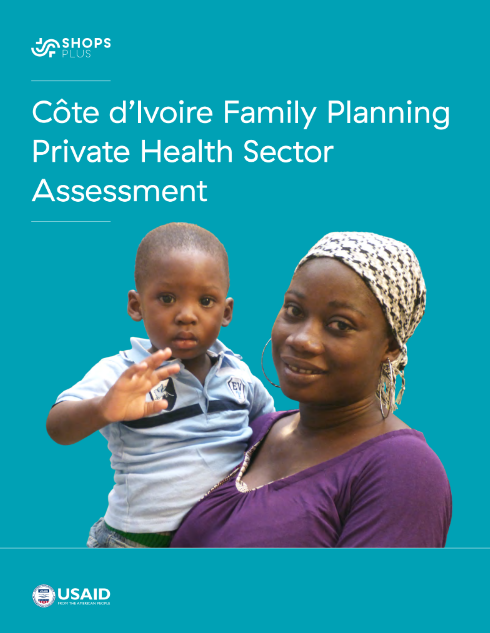
Côte d’Ivoire Family Planning Private Health Sector Assessment (English & French)
The SHOPS Plus project, in collaboration with USAID/Côte d’Ivoire, conducted an assessment of the family planning market and provided targeted recommendations to empower stakeholders to sustainably engage the private sector and help Côte d’Ivoire achieve its Family Planning 2020 targets. This brief highlights key findings and recommendations from the full assessment report.
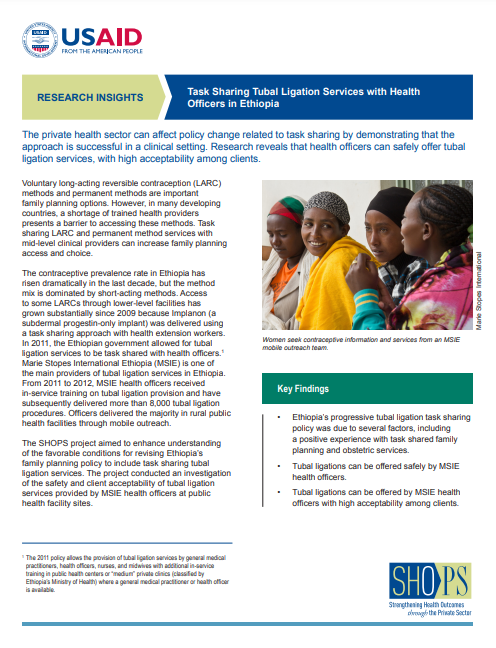
Task Sharing Tubal Ligation Services with Health Officers in Ethiopia
Voluntary long-acting reversible contraception (LARC) methods and permanent methods are important family planning options. However, in many developing countries, a shortage of trained health providers presents a barrier to accessing these methods. Task sharing LARC and permanent method services with mid-level clinical providers can increase family planning access and choice.
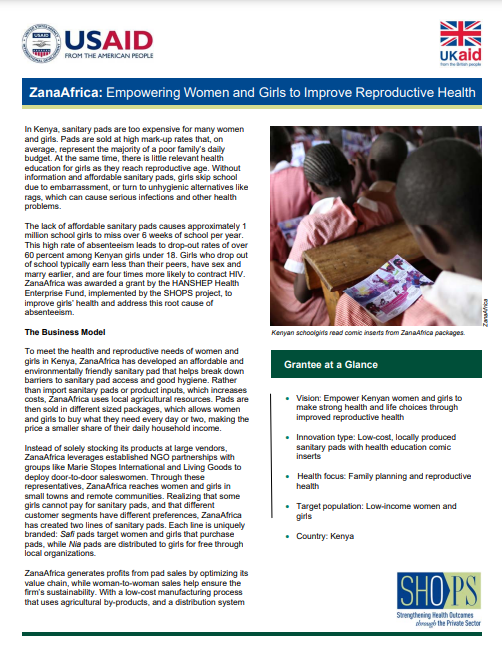
ZanaAfrica: Empowering Women and Girls to Improve Reproductive Health
To meet the health and reproductive needs of women and girls in Kenya, ZanaAfrica has developed an affordable and environmentally friendly sanitary pad that helps break down barriers to sanitary pad access and good hygiene.
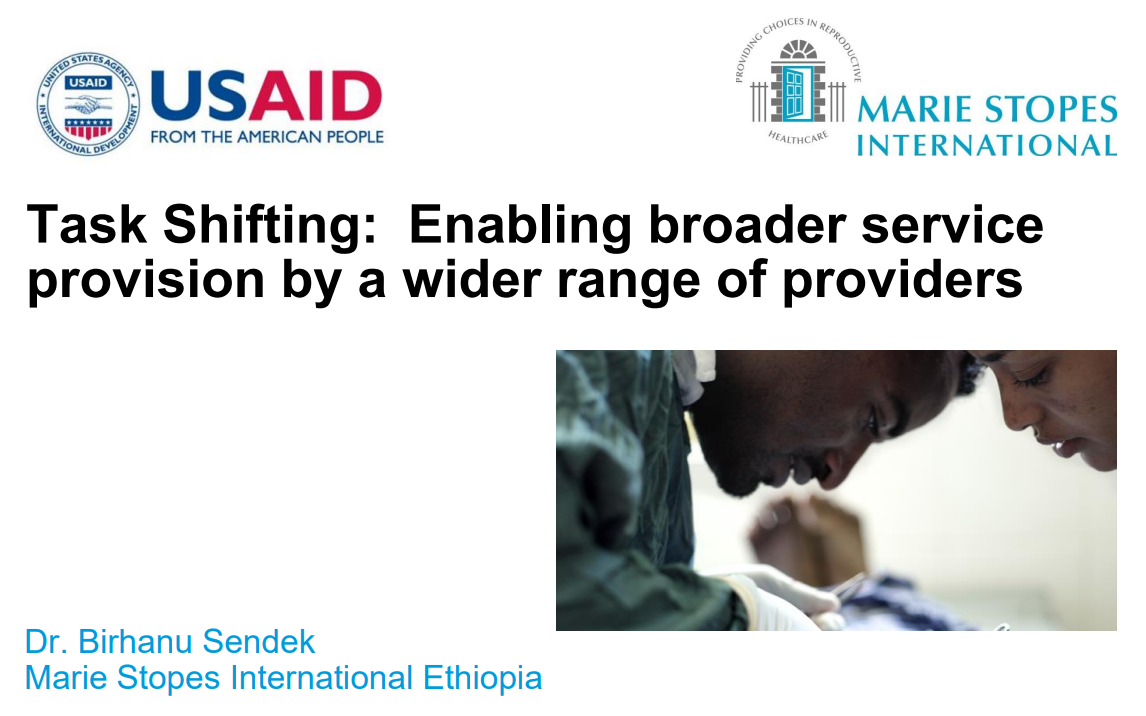
Task Shifting: Enabling broader service provision by a wider range of providers
Clear movement towards task sharing and data that shows it is safe and acceptable – how to translate this into replication the private sector?
Improving the Quality of Family Planning Services Provision in Private Health Facilities in Lagos State, Nigeria
Private providers are willing to adopt new health behaviors that can improve facility quality assurance and improve quality of service provision.
Regional trends in private and public provision of long- and short-acting contraceptive methods
What have been the trends in the use of modern contraceptives (LA/PM and short-acting methods) sourced from the private sector (for-profit or commercial) over the past 20 years?
Evaluation of Dimpa Injectable Contraceptive Network in India
DMPA is at the threshold of being a widely accepted method
Evaluating the Impact of Mobiles for Reproductive Health (m4RH)
PROGRESS project/FHI360 conducted extensive formative and operations research to develop m4RH
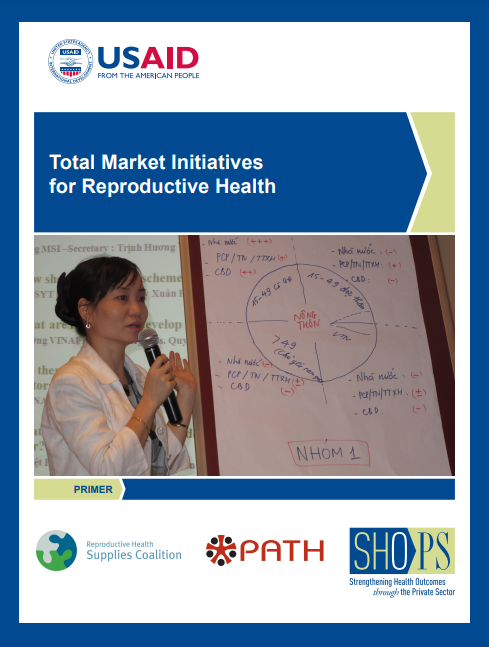
Total Market Initiatives for Reproductive Health
This primer documents the work of members of the Market Development Approaches Working Group of the Reproductive Health Supplies Coalition in defining and implementing total market initiatives (TMI).
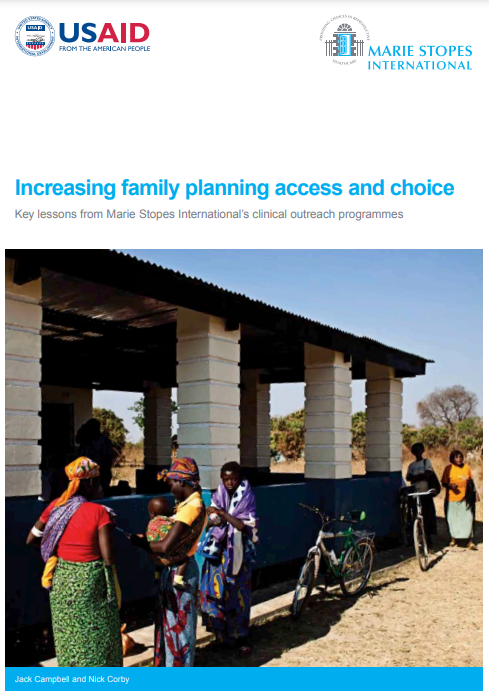
Increasing Family Planning Access and Choice
The key lessons in this paper will help service providers, programme managers and donors implement and/ or strengthen clinical outreach programmes for reproductive health and family planning services.
Improving Quality of Women’s Health and Family Planning Services in Jordan’s Private Health Sector
Presentation reviews the goals of the project, 2005-2012
Building Public-Private Linkages to Advance Reproductive Health and HIV/AIDS Services in Africa
For this presentation, the following objectives were addressed: strengthen existing MOH capacity to engage private sector in RH/FP and HIV/AIDs related services; to create a network for experiential learning across countries on challenges in strengthening PPPs; to strengthen existing relationships and linkages across priority programs in MOHs to work effectively with the private sector; and to produce key actions for participant countries to design, develop and manage private sector partnerships
Integrating Breast Cancer Screening into FP/RH Women’s Outreach
Presentation Covers Project Objectives: Increase demand for and use of modern contraception and related women’s health services; Increase demand for and use of modern contraception and related women’s health services…