
-
Article
Brief
Meeting Notes
Presentation
Poster
Report
Toolkit
Video
Webinar
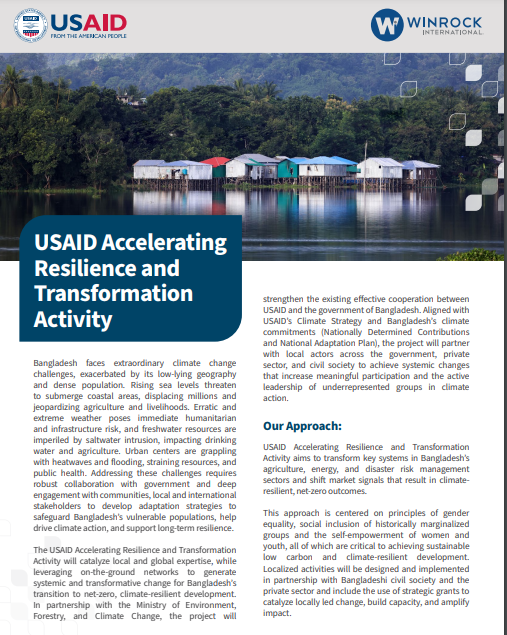
USAID Accelerating Resilience and Transformation Activity — Bangladesh
USAID Accelerating Resilience and Transformation Activity aims to transform key systems in Bangladesh’s agriculture, energy, and disaster risk management sectors and shift market signals that result in climate resilient, net-zero outcomes. This approach is centered on principles of gender equality, social inclusion of historically marginalized groups and the self-empowerment of women and youth, all of which are critical to achieving sustainable low carbon and climate-resilient development. Localized activities will be designed and implemented in partnership with Bangladeshi civil society and the private sector and include the use of strategic grants to catalyze locally led change, build capacity, and amplify impact.
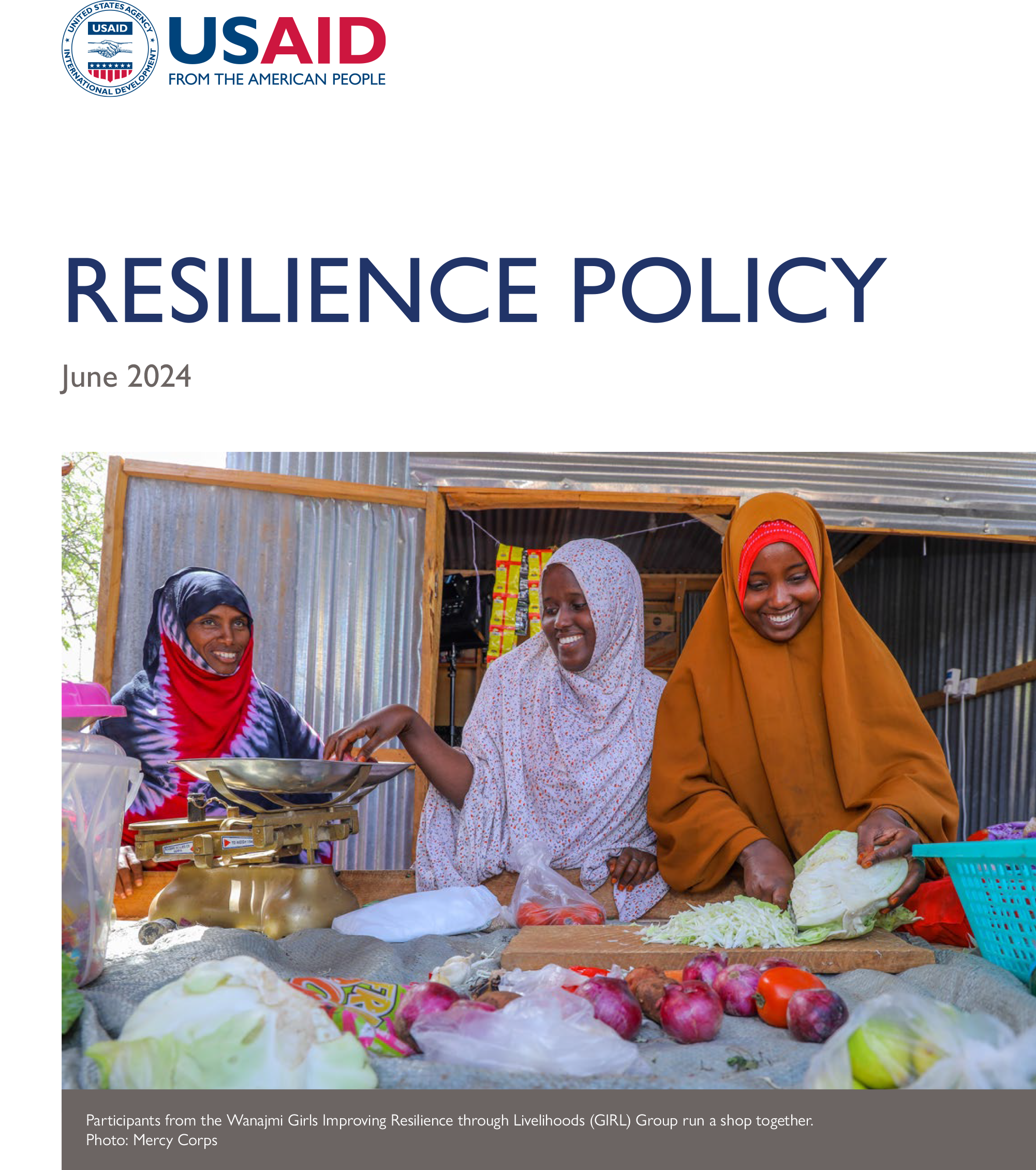
USAID Resilience Policy 2024
As an update to USAID’s inaugural resilience policy (2012), this policy reiterates the goal of reducing humanitarian need in areas of recurrent crisis while also reinforcing resilience as an Agency priority across all USAID programming.
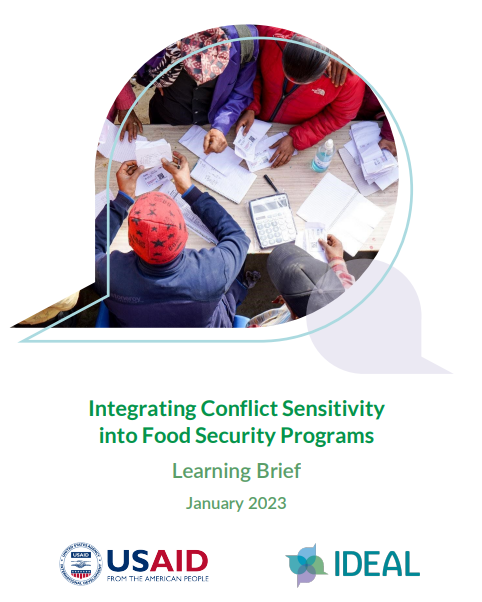
Integrating Conflict Sensitivity into Food Security Programs
This brief assesses prevailing practices, successes, challenges, lessons learned, and recommendations around integrating conflict sensitivity into food security programs. Ultimately, conflict sensitivity is not only about managing and mitigating risk, but also about seeking opportunities to promote peace. In this respect, this learning brief can contribute to USAID’s calls for greater coherence in humanitarian, development, and peace programming by supporting aid actors to “champion conflict integration and opportunities for enabling or building peace where possible.”
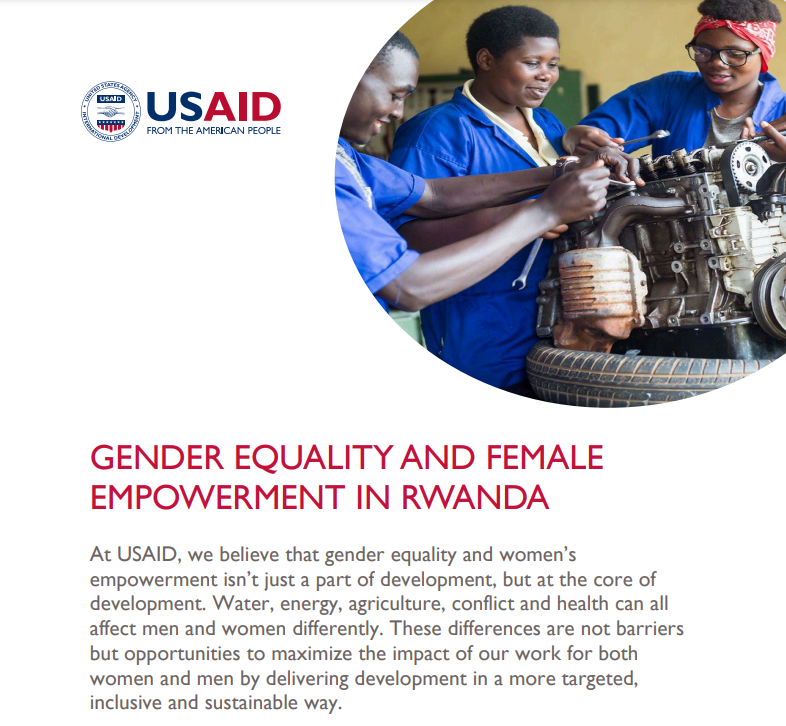
Gender Equality and Women's Empowerment in Rwanda
Rwanda is recognized as a leader in gender equality and women’s empowerment. Women hold positions making up 61 percent of the Rwandan Parliament, and 50 percent of the President’s cabinet. While these efforts are so important, challenges still remain, specifically when it comes to achieving socio-economic equality and cultural change at the community level.
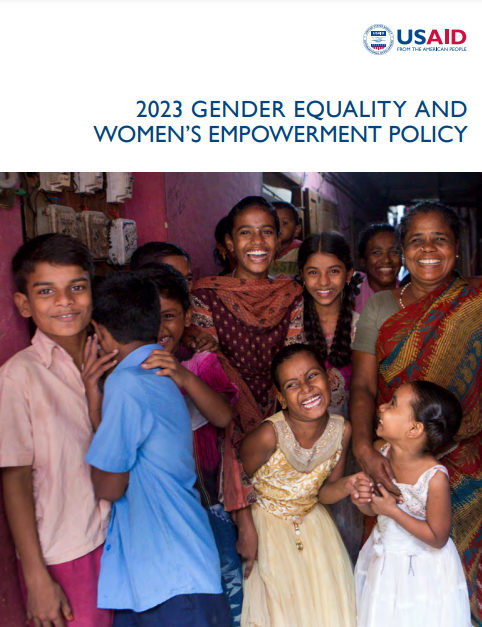
2023 Gender Equality and Women’s Empowerment Policy
This policy provides the vision for USAID’s work to advance gender equality and women’s empowerment around the world—establishing our strategic objectives and driving investments across our operations and programs in order to achieve these aims.
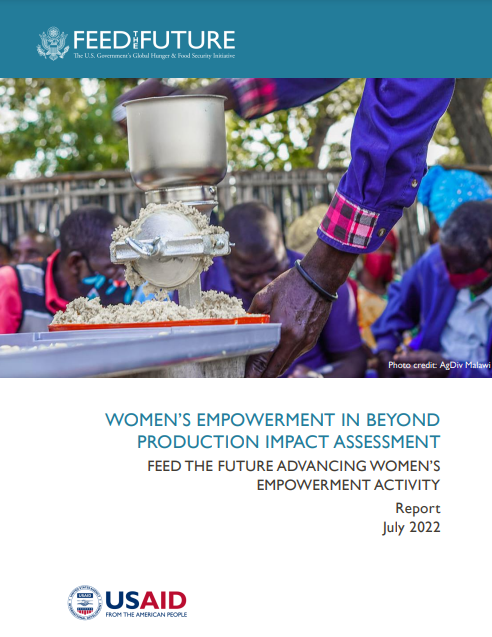
Women’s Empowerment in Beyond Production Impact Assessment
To understand the degree to which AgDiv contributed to those changes and how meaningful the changes were, the AWE team used Feed the Future’s Gender Integration Framework and select measurement guidance from the Project-Level Women’s Empowerment in Agriculture Index for Market Inclusion (PRO-WEAI+MI) survey tool. AWE grouped findings by the WEAI’s five domains: decisionmaking, access to control over resources, control over income, time use, and leadership and social capital.