
-
Article
Brief
Meeting Notes
Presentation
Poster
Report
Toolkit
Video
Webinar
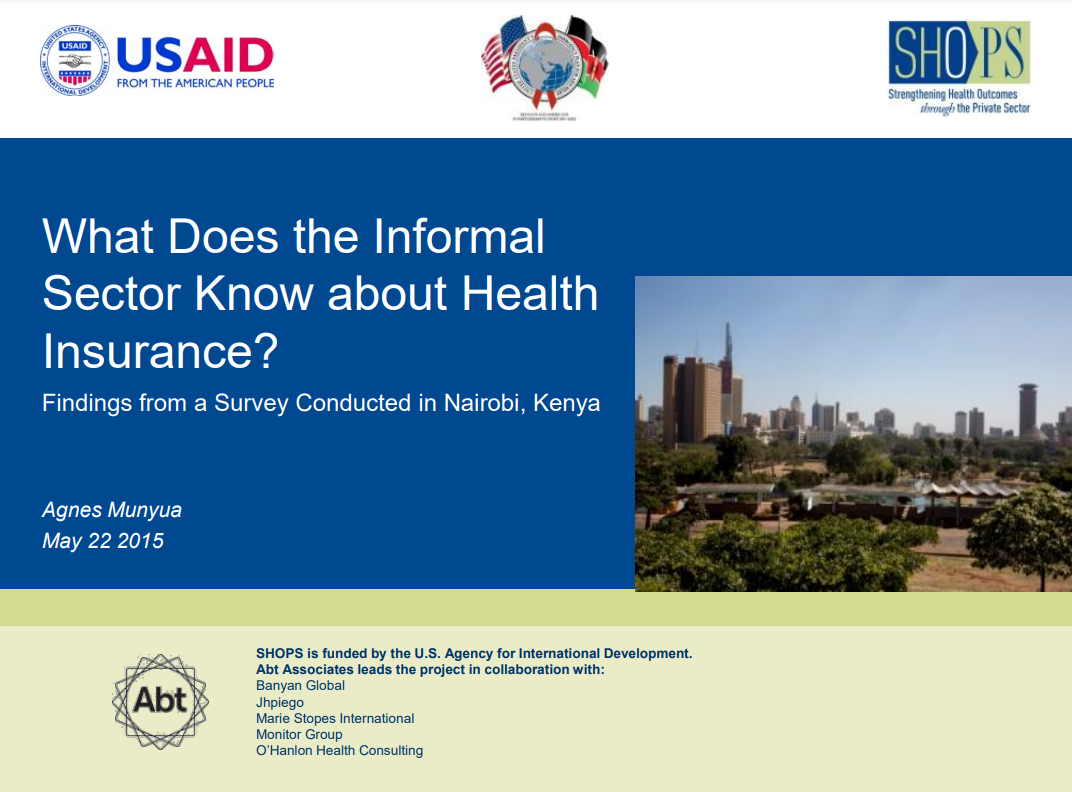
What Does the Informal Sector Know about Health Insurance?
Findings from a Survey Conducted in Nairobi, Kenya
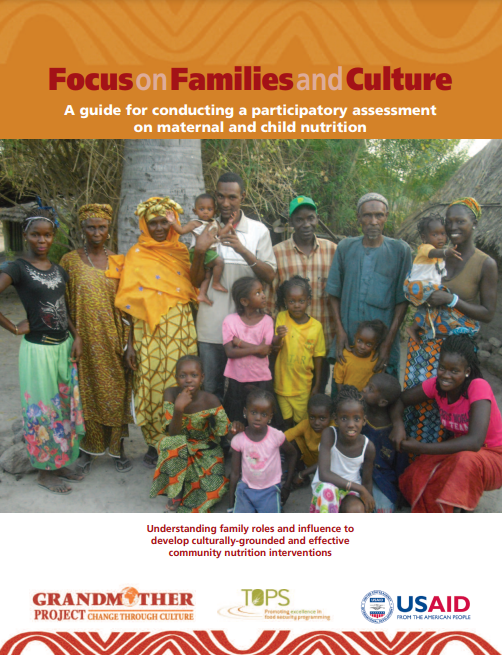
Focus on Families and Culture: A guide for conducting a participatory assessment on maternal and child nutrition (English & French)
The purpose of this document is to provide guidance on how to plan and carry out a rapid community assessment on family roles and influence related to the first critical 1,000 days of life i.e. during pregnancy, with newborns and young children up to two years of age.

Tebita Ambulance and Pre-Hospital Emergency Medical Services
The country’s highly fragmented emergency medical transport system means a complicated pregnancy can easily become a life-threatening situation for a woman trying to reach a hospital.
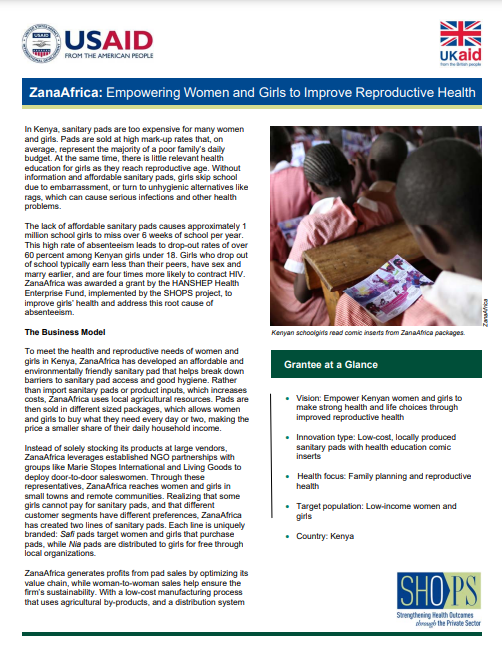
ZanaAfrica: Empowering Women and Girls to Improve Reproductive Health
To meet the health and reproductive needs of women and girls in Kenya, ZanaAfrica has developed an affordable and environmentally friendly sanitary pad that helps break down barriers to sanitary pad access and good hygiene.
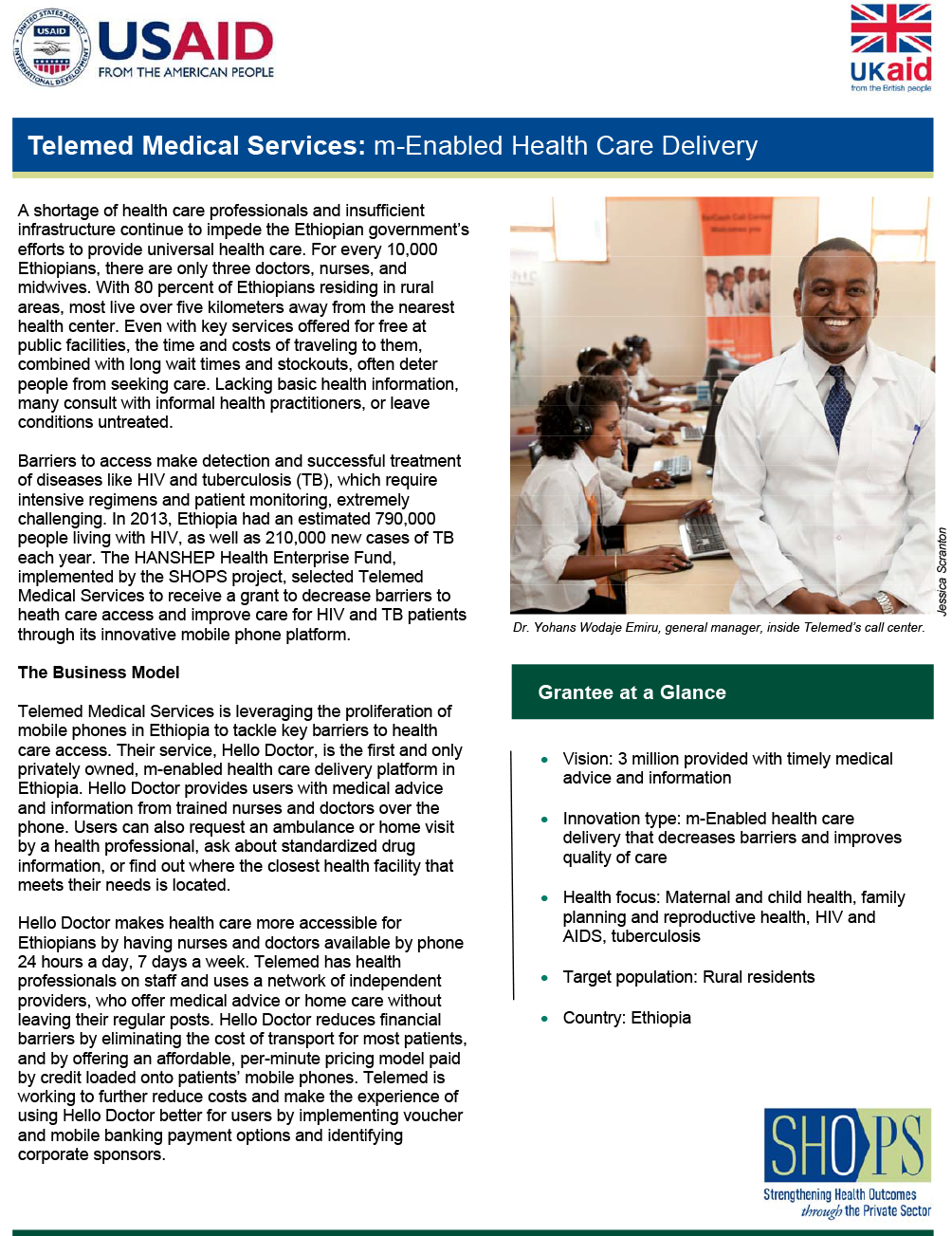
Telemed Medical Services: m-Enabled Health Care Delivery
A shortage of health care professionals and insufficient infrastructure continue to impede the Ethiopian government’s efforts to provide universal health care. For every 10,000 Ethiopians, there are only three doctors, nurses, and midwives.
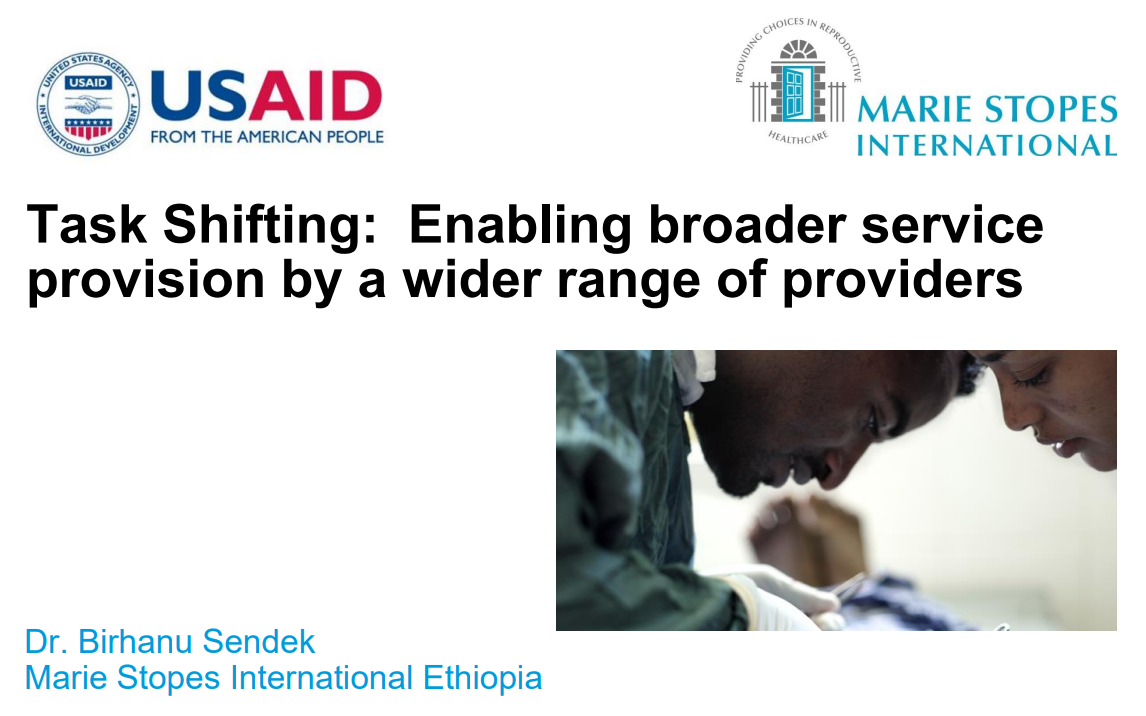
Task Shifting: Enabling broader service provision by a wider range of providers
Clear movement towards task sharing and data that shows it is safe and acceptable – how to translate this into replication the private sector?
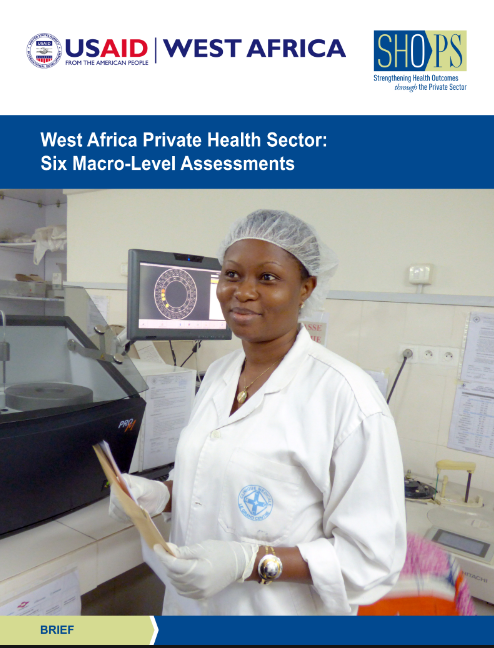
West Africa Private Health Sector: Six Macro-Level Assessments
This brief is a summary of the West Africa private health sector assessment conducted by the SHOPS project. The assessment looked at six countries: Burkina Faso, Cameroon, Côte d’Ivoire, Mauritania, Niger, and Togo. Chloé Revuz prepared the brief, which presents the assessment methods, findings, and both regional and country-specific recommendations. The recommendations aim to strengthen family planning and HIV service delivery by leveraging the unique capabilities of the West Africa Health Organization as well as each country’s private health sector.
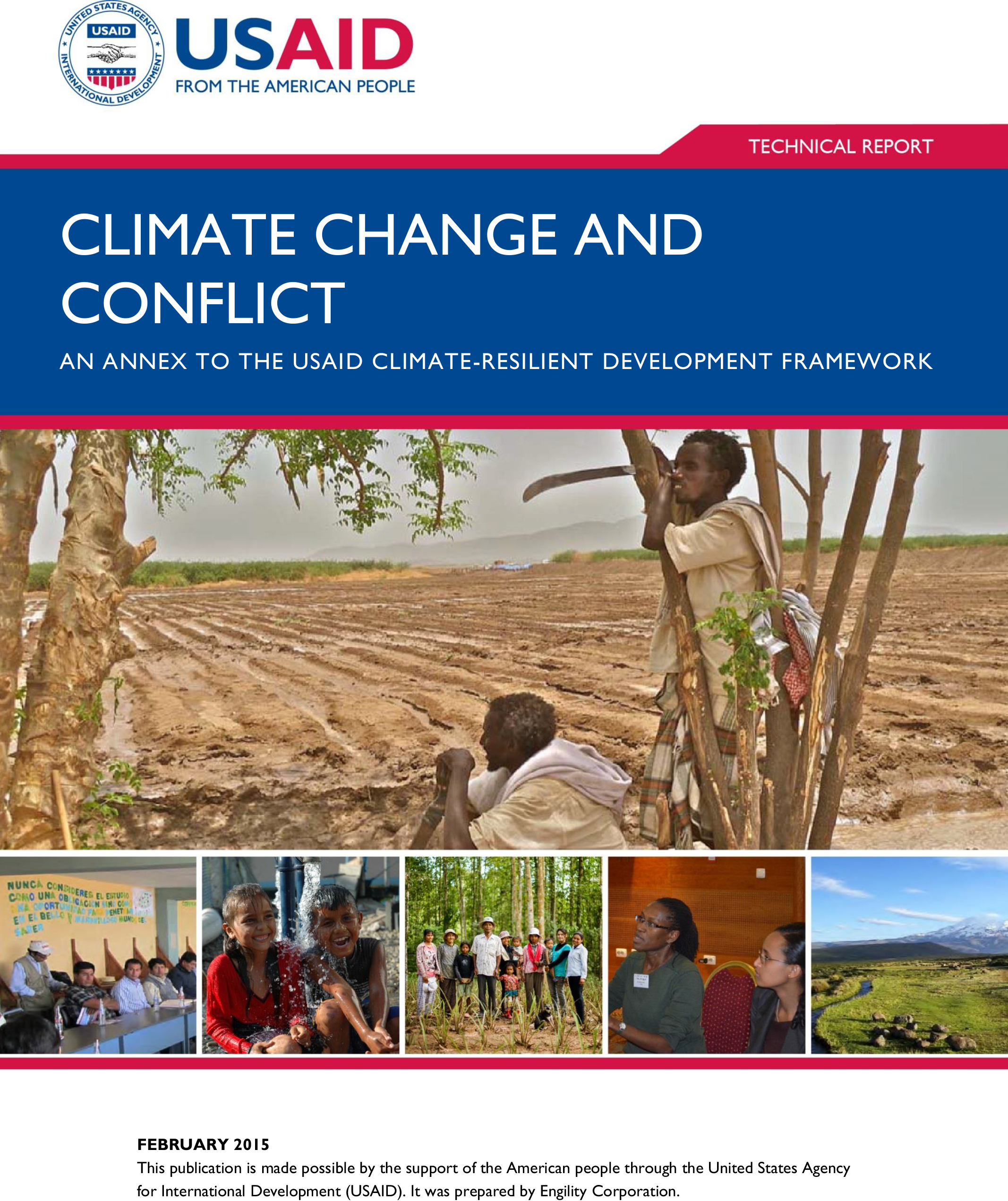
Climate Change and Conflict: An Annex to the USAID Climate-resilient Development Framework
This paper provides a set of guidelines for USAID and its partners to employ in planning, designing, implementing, and learning from programs where climate change and conflict have the potential to interact.
What Does the Informal Sector Know about Health Insurance?
Findings from a Survey Conducted in Nairobi, Kenya
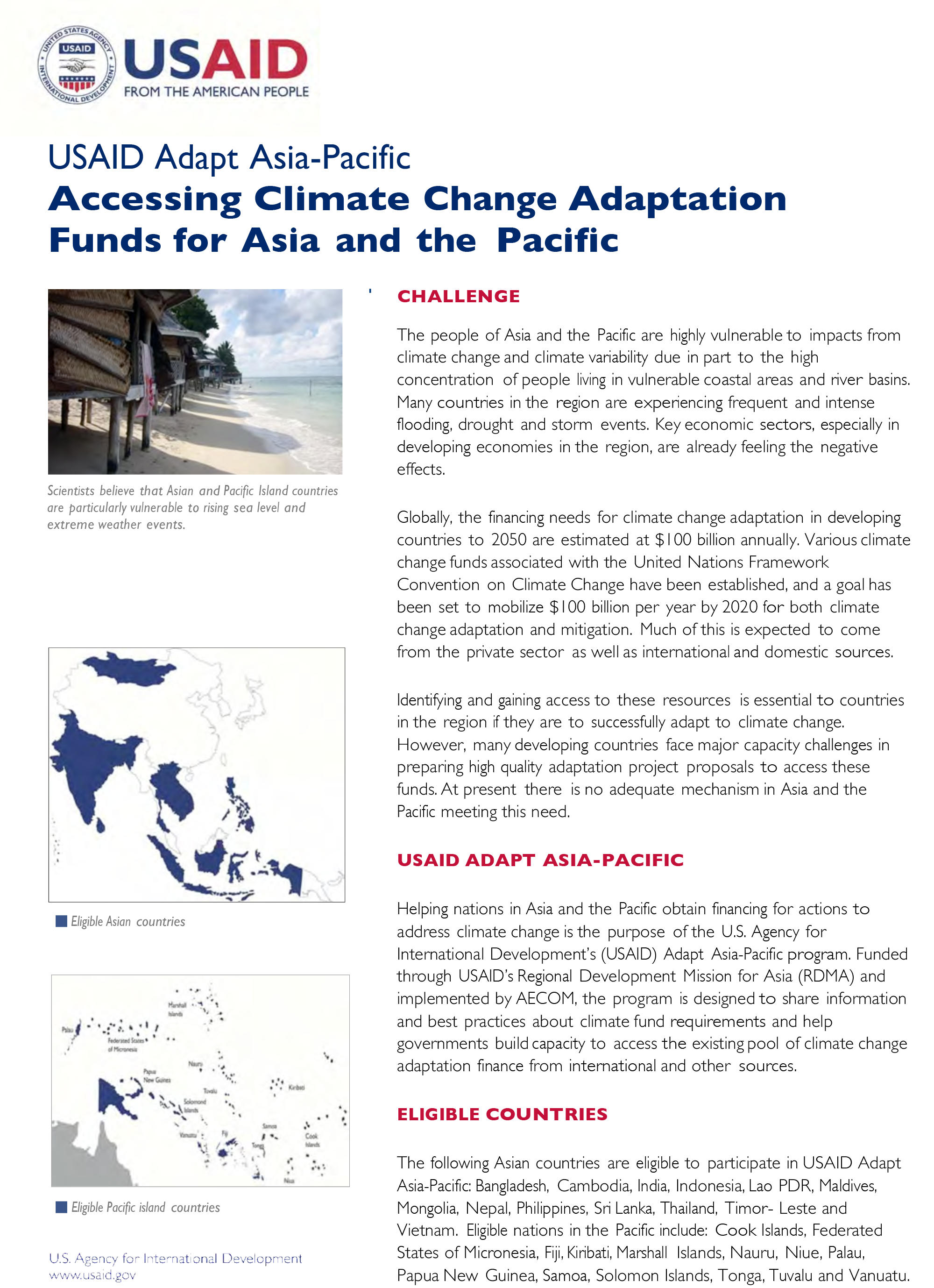
Accessing Climate Change Adaptation Funds for Asia and the Pacific
The people of Asia and the Pacific are highly vulnerable to impacts from climate change and climate variability due in part to the high concentration of people living in vulnerable coastal areas and river basins.
Improving the Quality of Family Planning Services Provision in Private Health Facilities in Lagos State, Nigeria
Private providers are willing to adopt new health behaviors that can improve facility quality assurance and improve quality of service provision.
The Private Health Sector in West Africa: Six Macro-Level Assessments
Recognizing that the private health sector represents a key opportunity through which African countries can work to strengthen health indicators, the United States Agency for International Development West Africa Regional Health Office (USAID WA/RHO), asked the Strengthening Health Outcomes through the Private Sector (SHOPS) project to carry out macro-level assessments of the private health sector in six focus countries.
mHealth in West Africa: A landscape report
This report provides an overview of mhealth activity in the West Africa region, including the 15 Economic Community of West African States (ECOWAS) countries and two additional focus countries for USAID’s West Africa Mission: Benin, Burkina Faso, Cameroon, Cape Verde, Côte d’Ivoire, Gambia, Ghana, Guinea, Guinea Bissau, Liberia, Mali, Mauritania, Niger, Nigeria, Senegal, Sierra Leone, and Togo.
Extending the Reach: Contracting Out HIV Services to the Private Health Sector in Gauteng, South Africa
This study focuses on the experience of Right to Care Health Services (RTCHS), a South African private company that manages HIV and AIDS services on behalf of several clients, including PEPFAR, through the United States Agency for International Development (USAID), the South African government, employers, and medical aid schemes.
The Role of Alumni Associations in Strengthening Private Medical Training Institutions in Sub-Saharan Africa
This paper explores the benefits to private medical training institutions in sub-Saharan Africa of creating alumni associations. It also provides practical learning from SHOPS’s work in assisting Hubert Kairuki Memorial University (HKMU) in Tanzania to establish an alumni association.

USAID Support to National Adaptation Planning (NAP) Processes
Opportunities presented by the NAP process
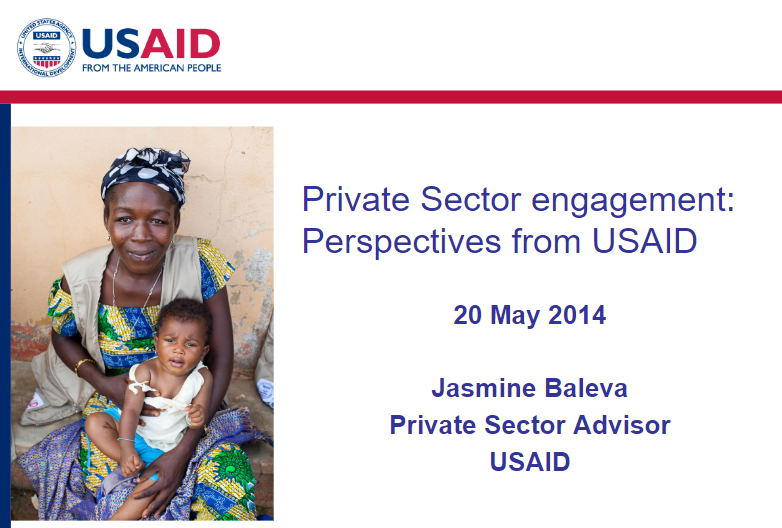
Private Sector engagement: Perspectives from USAID
Overview: Why engage with the Private Sector?