
-
Article
Brief
Meeting Notes
Presentation
Poster
Report
Toolkit
Video
Webinar
USAID Climate Ready Knowledge Products: Multi-Criteria Analysis Tool
The resultant tool has since been used to assist reviewers to score and prioritize against GCF Investment criteria based on GCF Investment Criteria.
USAID Climate Ready Knowledge Products: Business Continuity Planning Resources
This collection of resources will build your awareness on: The concepts of disaster readiness and business continuity for business; and The key steps for a business to become disaster ready.
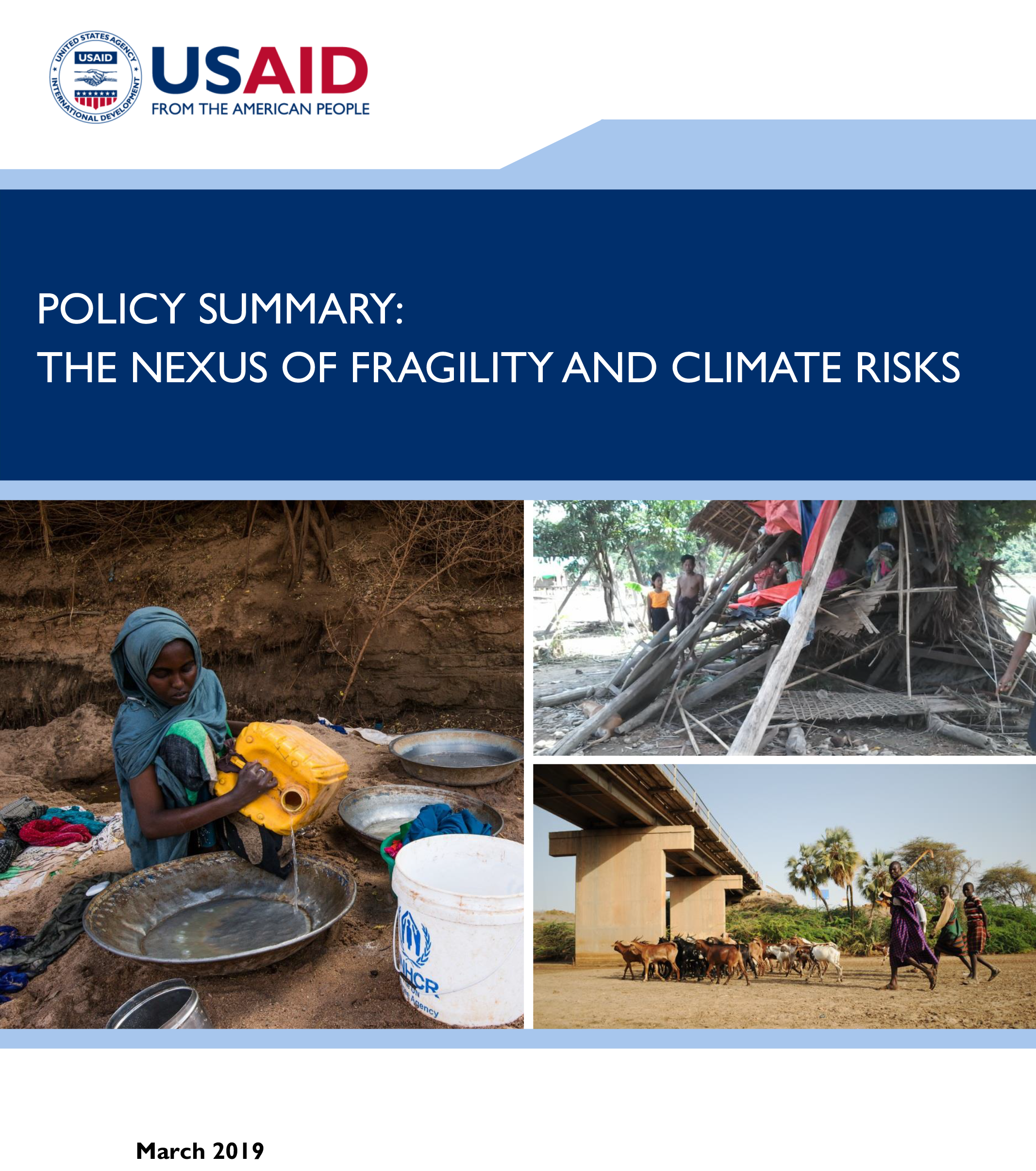
Policy Summary: The Nexus of Fragility and Climate Risks
The research, summarized here, does not seek to establish a causal relationship between climate exposure and instability. Instead, it identifies the locations where fragility and climate risks cooccur around the world. It assesses key global fragility and climate patterns and country-specific risks to assess how these dynamics may coalesce to foster instability, strain state capacity, and undermine human security. Since places with compound fragility-climate risks may be more vulnerable to governance failures and other crises that foster humanitarian emergencies or instability, understanding their distinct fragility and climate challenges could present opportunities and focal points for intervention and risk management.
The Intersection of Global Fragility and Climate Risks
When states face fragility and climate risks simultaneously, the risks and challenges are compounded. This study seeks to identify the locations where fragility and climate risks co-occur around the world. Since these places with compound fragility-climate risks may be more vulnerable to humanitarian emergencies or instability, understanding the distinct fragility and climate challenges they face could present opportunities and focal points for intervention.

Program Brief: Climate Change Adaptation Program
The United States Agency for International Development (USAID) has partnered with the Caribbean Community Climate Change Centre (CCCCC) to address some of the challenges through the provision of up to US$25.6 million investment over the next four years. The goal of the Program is to reduce risks to human and natural assets resulting from climate change vulnerability. The activity aims to strengthen an integrated system for the implementation and financing of sustainable adaptation approaches in the Eastern and Southern Caribbean region.
USAID/Climate Change Adaptation Project Preparation Facility for Asia and the Pacific
Improving national government access to climate change adaptation financing and accelerating investment proposals
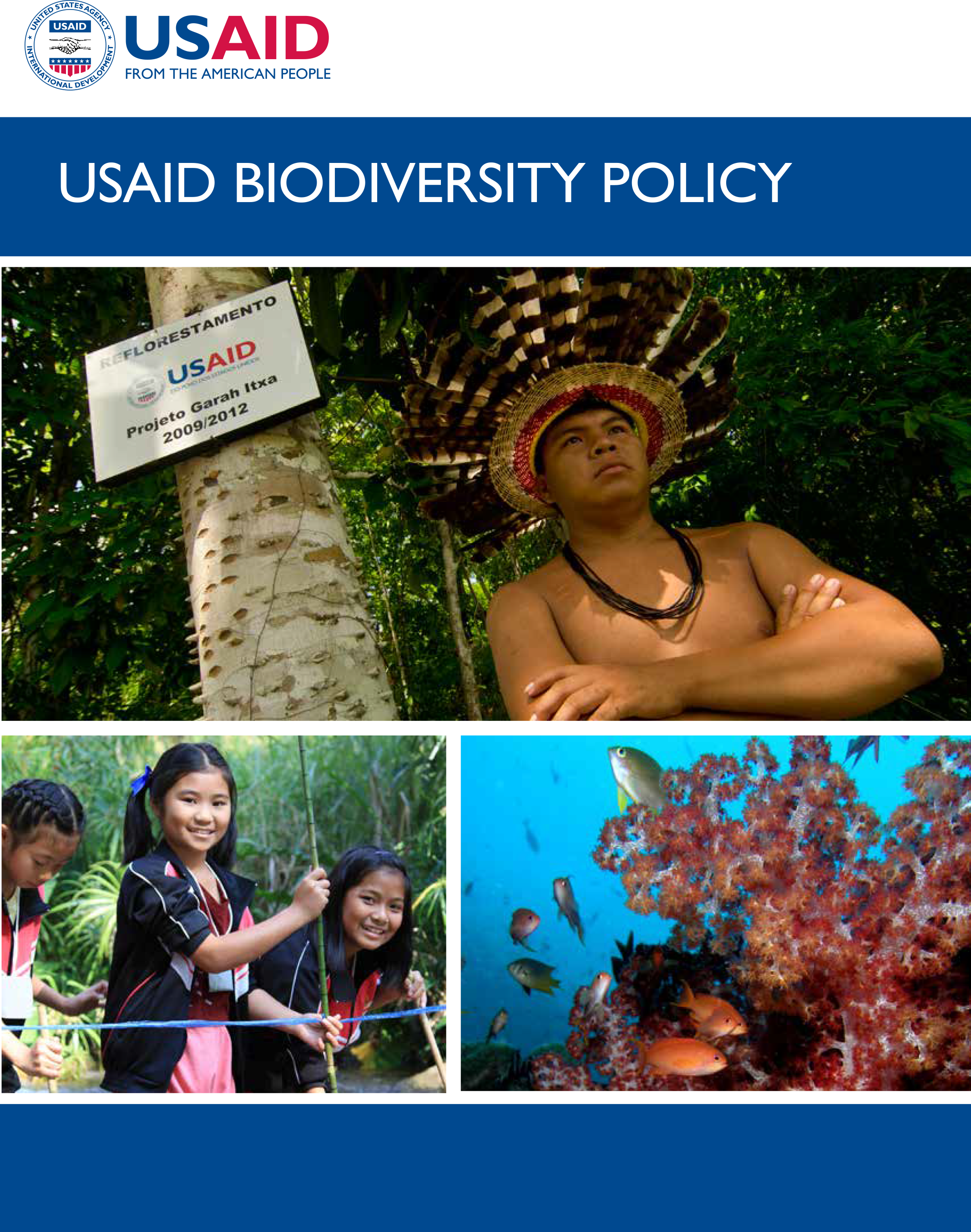
USAID Biodiversity Policy
This Policy represents a recommitment of USAID to conserve biodiversity through strategic actions to reduce threats and drivers, as well as a new focus on integrating biodiversity conservation with other development sectors. A roadmap for implementation highlights the most critical steps necessary for implementing this Policy. (See Annex II.)
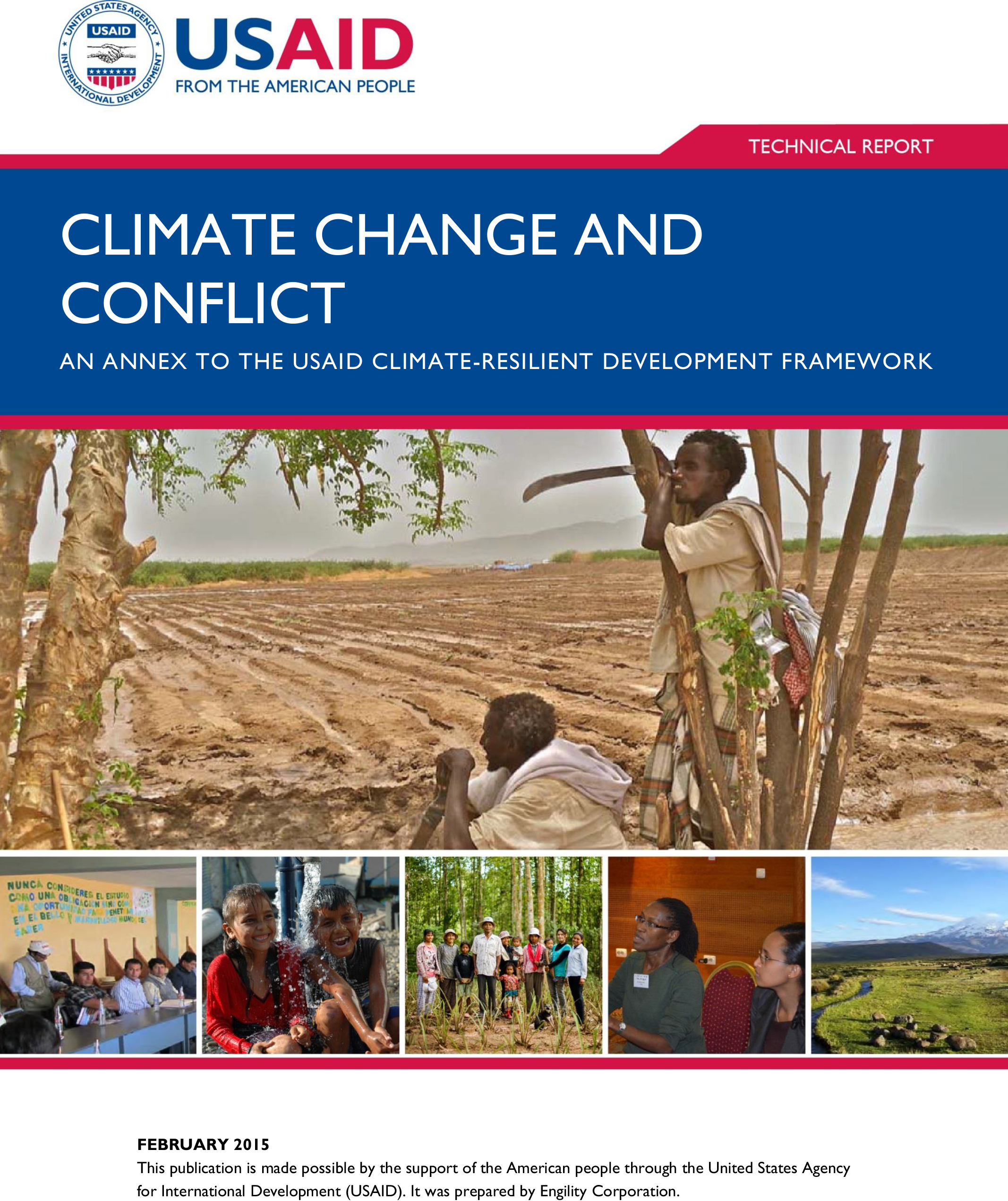
Climate Change and Conflict: An Annex to the USAID Climate-resilient Development Framework
This paper provides a set of guidelines for USAID and its partners to employ in planning, designing, implementing, and learning from programs where climate change and conflict have the potential to interact.

USAID Support to National Adaptation Planning (NAP) Processes
Opportunities presented by the NAP process
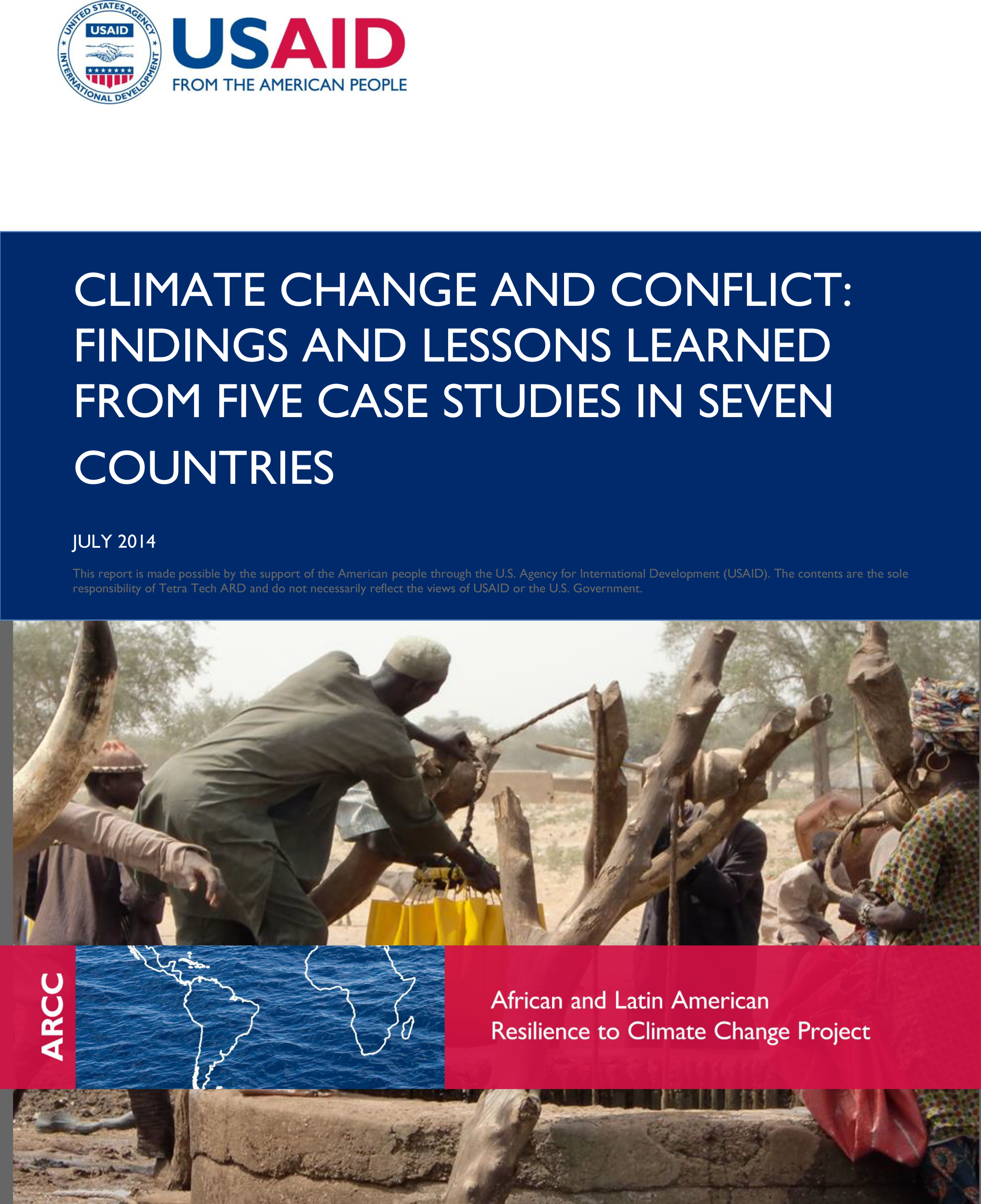
Climate Change and Conflict in West African Cities: A Policy Brief on Findings From Lagos, Nigeria and Accra, Ghana
To address the relative lack of research on climate-conflict linkages in large urban areas, USAID asked the Foundation for Environmental Security and Sustainability (FESS) to conduct a case study on two major West African cities – Lagos, Nigeria and Accra, Ghana. Field research was carried out for the case study in June and August 2013, and this policy brief presents the findings on the central questions addressed by that investigation: Are the effects of climate change likely to lead to chaotic and conflictive scenarios in West African cities? If so, under what circumstances and over what time frame; and are there preventive actions that governments and donors should take?

USAID Climate Change and Development Strategy: Adaptation Pillar Results Framework
Adaptation Pillar Results Framework
Climate Change Adaptation at USAID
To strengthen development outcomes through direct climate change program investments and by integrating climate change throughout USAID programming, learning, policy dialogues, and internal operations.
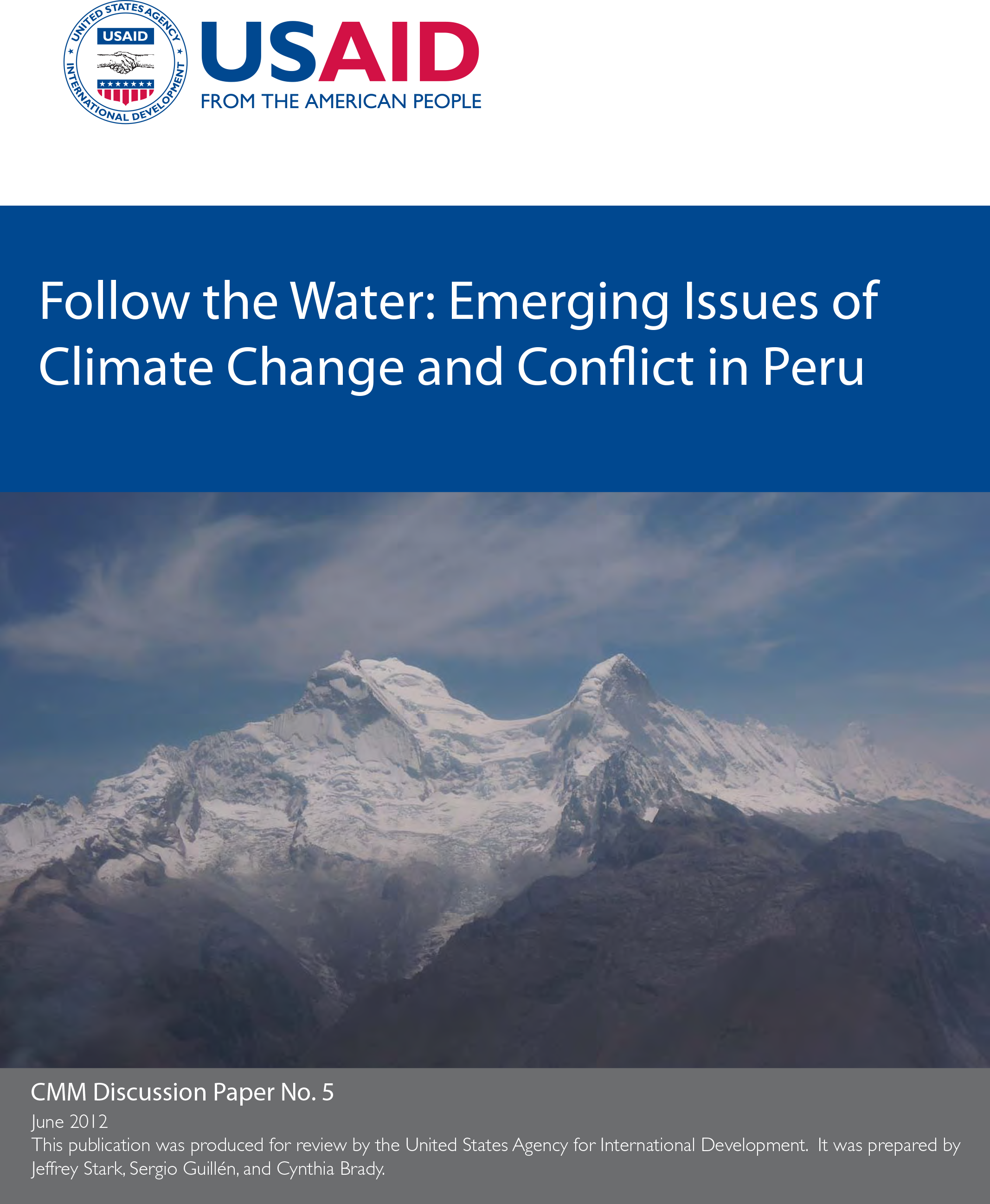
Follow the Water: Emerging Issues of Climate Change and Conflict in Peru
This study explores how the effects of climate change on water quantity, quality, and access may be factoring into aspects of localized instability, fragility, and conflict in Peru. To help guide the methodological approach, FESS developed a seven-phase framework—the Climate Change and Conflict Assessment Framework (CCCAF). The framework emphasizes one of the main conclusions of recent conflict analysis: conflict is always the result of the interactions of multiple political, economic, social, historical, and cultural factors, and these must be taken into account in any analysis. Moreover, the quality of governance and the resilience of political, economic, and social institutions all mediate the relationship between environmental change and conflict in important ways. The influence of climate change and climate-related policy and program responses on instability and conflict can only be understood within this web of relationships.
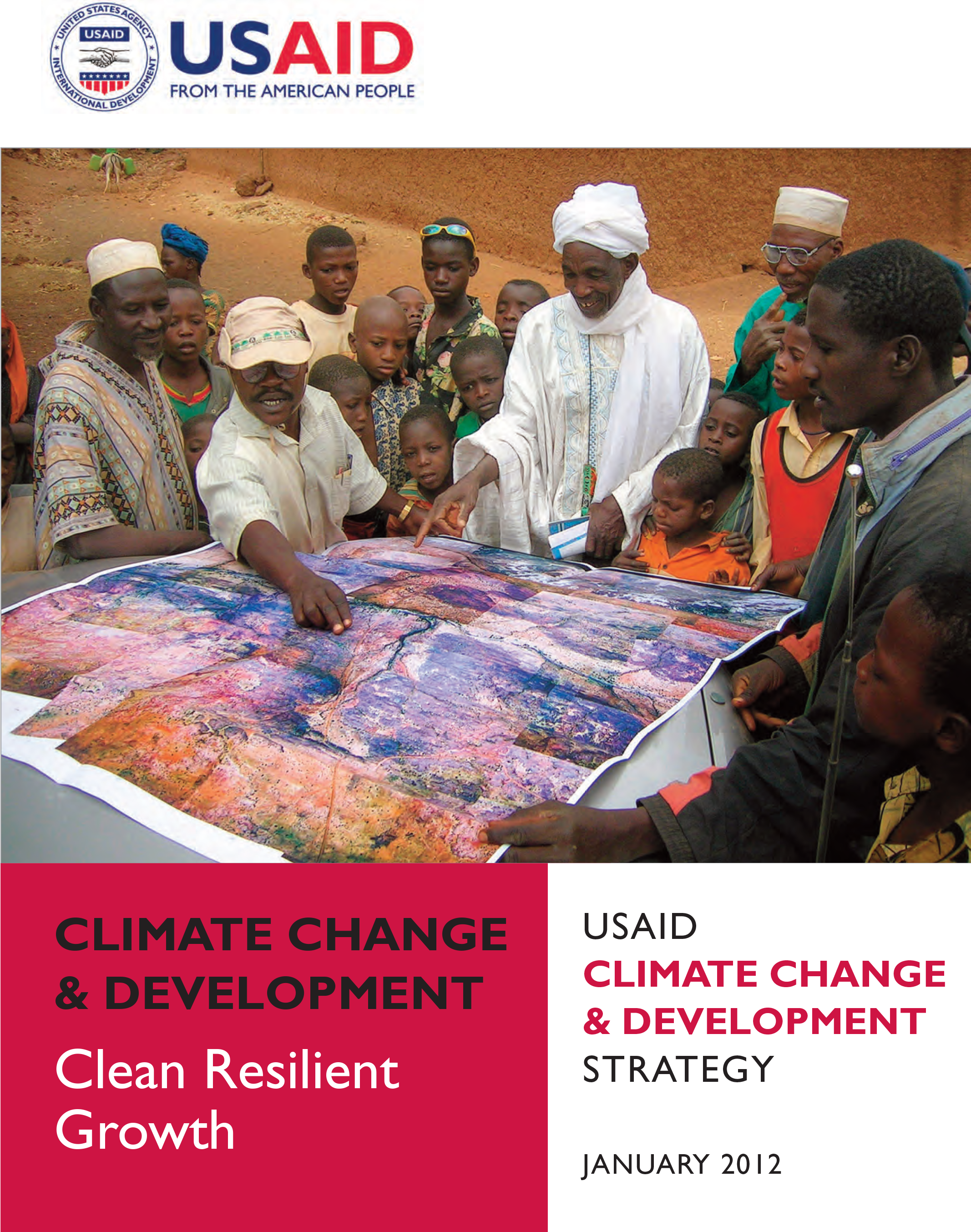
USAID Climate Change and Development Strategy 2012-2016
USAID’s work on climate change fits into a larger domestic and international policy context and is guided by Administration policy as developed in the President’s Global Development Policy, the Quadrennial Diplomacy and Development Review, USAID Forward, and the GCCI. Additionally, USAID’s Policy Framework 20112015 defines the following as one of seven Core Development Objectives for the Agency: Reduce Climate Change Impacts and Promote Low Emissions Growth. USAID has a long history of programming in sectors relevant to climate change and will draw lessons learned from this history to shape efforts under this strategy. The goal of USAID’s 2012-2015 Climate Change and Development Strategy is to enable countries to accelerate their transition to climate resilient low emission sustainable economic development.
Climate Threats, Fragility, and Conflict Risks
How do the set of countries that are most threatened for heightened climate risks relate to the set of fragile or conflict‐ affected states?
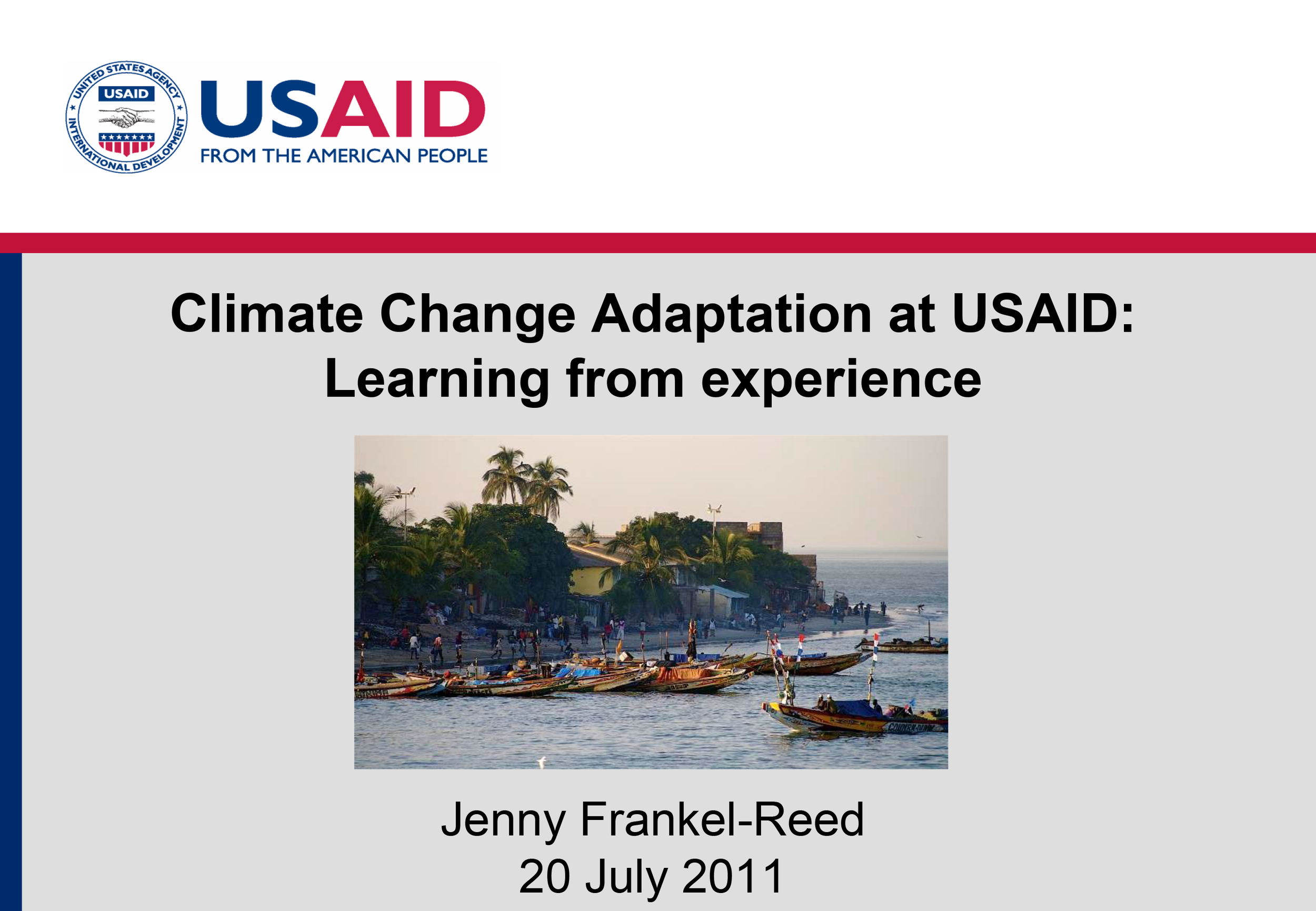
Climate Change Adaptation at USAID: Learning from Experience
USAID’s Global Climate Change Initiative assists countries as they develop in ways that reduce emissions while building resilience to climate change impacts.
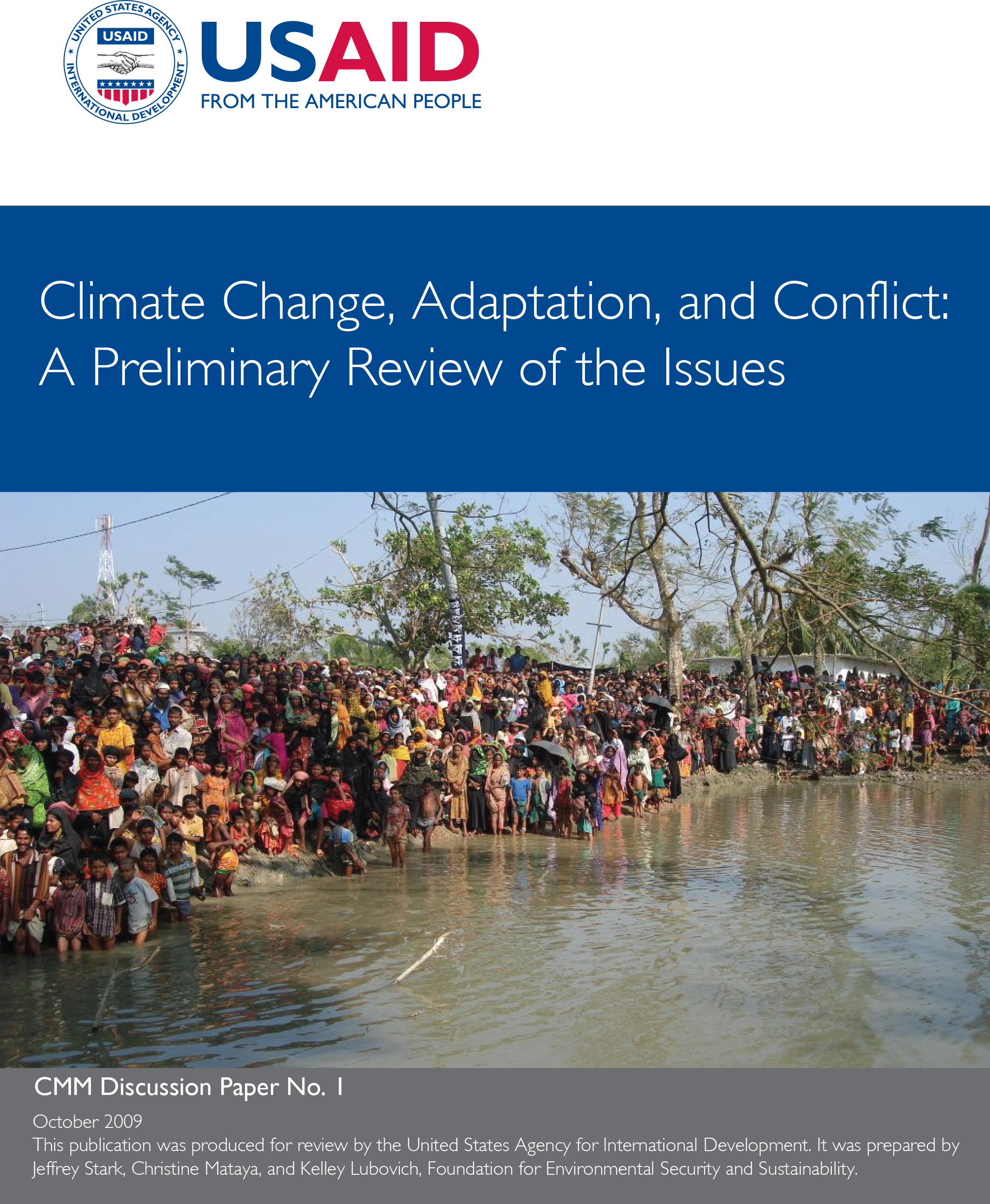
Climate Change, Adaptation, and Conflict: A Preliminary Review of the Issues
The consensus of climate scientists on the probable harmful effects of climate change and the need for climate adaptation has grown stronger in recent years. However, knowledge about the potential links between climate change and conflict, as well as the appropriate climate adaptation measures to prevent or mitigate conflict, remains limited and underdeveloped. This discussion paper provides an initial examination of climate change and climate adaptation, how and where climate change may be linked to conflict, and some of the implications of these linkages for development agencies.
USAID Climate Change Adaptation Guidance Manual
USAID Adaptation Goals: Educate project planners, Increase resilience of projects, Approach.