
-
Article
Brief
Meeting Notes
Presentation
Poster
Report
Toolkit
Video
Webinar
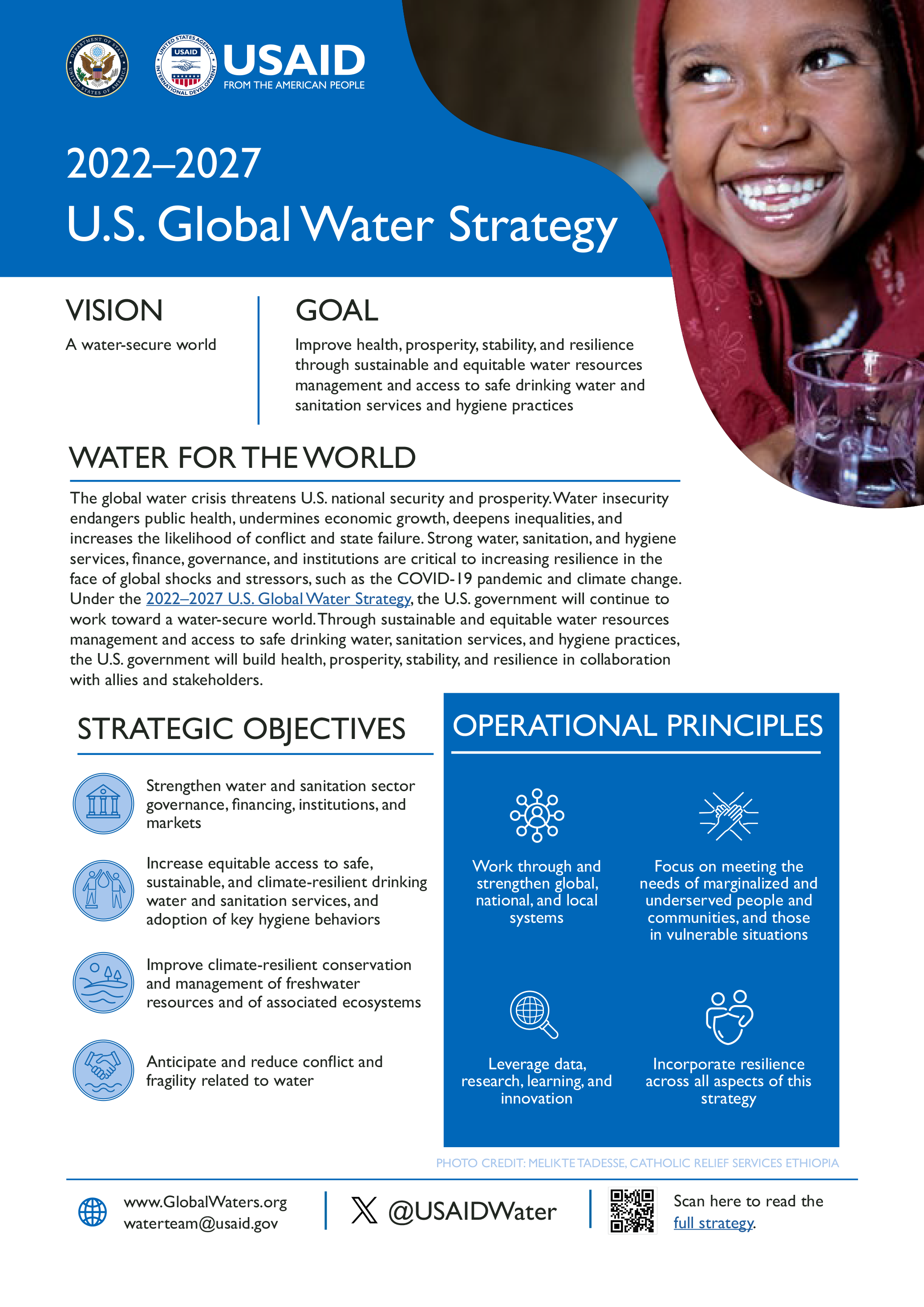
U.S. Government Global Water Strategy — Summary
The global water crisis continues to threaten United States (U.S.) national security and prosperity. Water insecurity endangers public health and food security and undermines economic growth.
U.S. Government Global Water Strategy
The global water crisis continues to threaten United States (U.S.) national security and prosperity. Water insecurity endangers public health and food security and undermines economic growth.
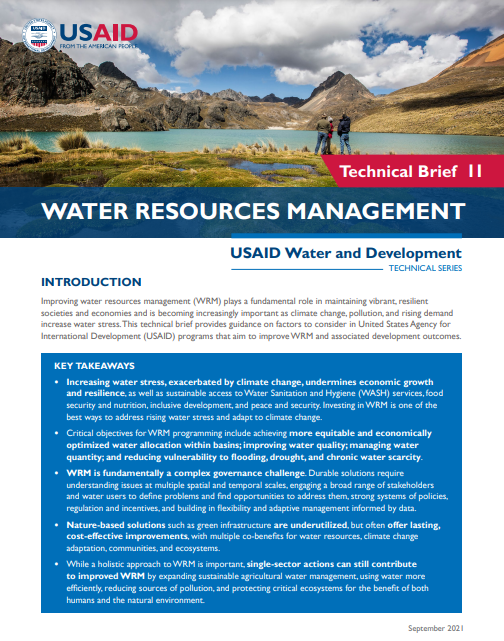
Water Resources Management: Technical Brief II
Improving water resources management (WRM) plays a fundamental role in maintaining vibrant, resilient societies and economies and is becoming increasingly important as climate change, pollution, and rising demand increase water stress.
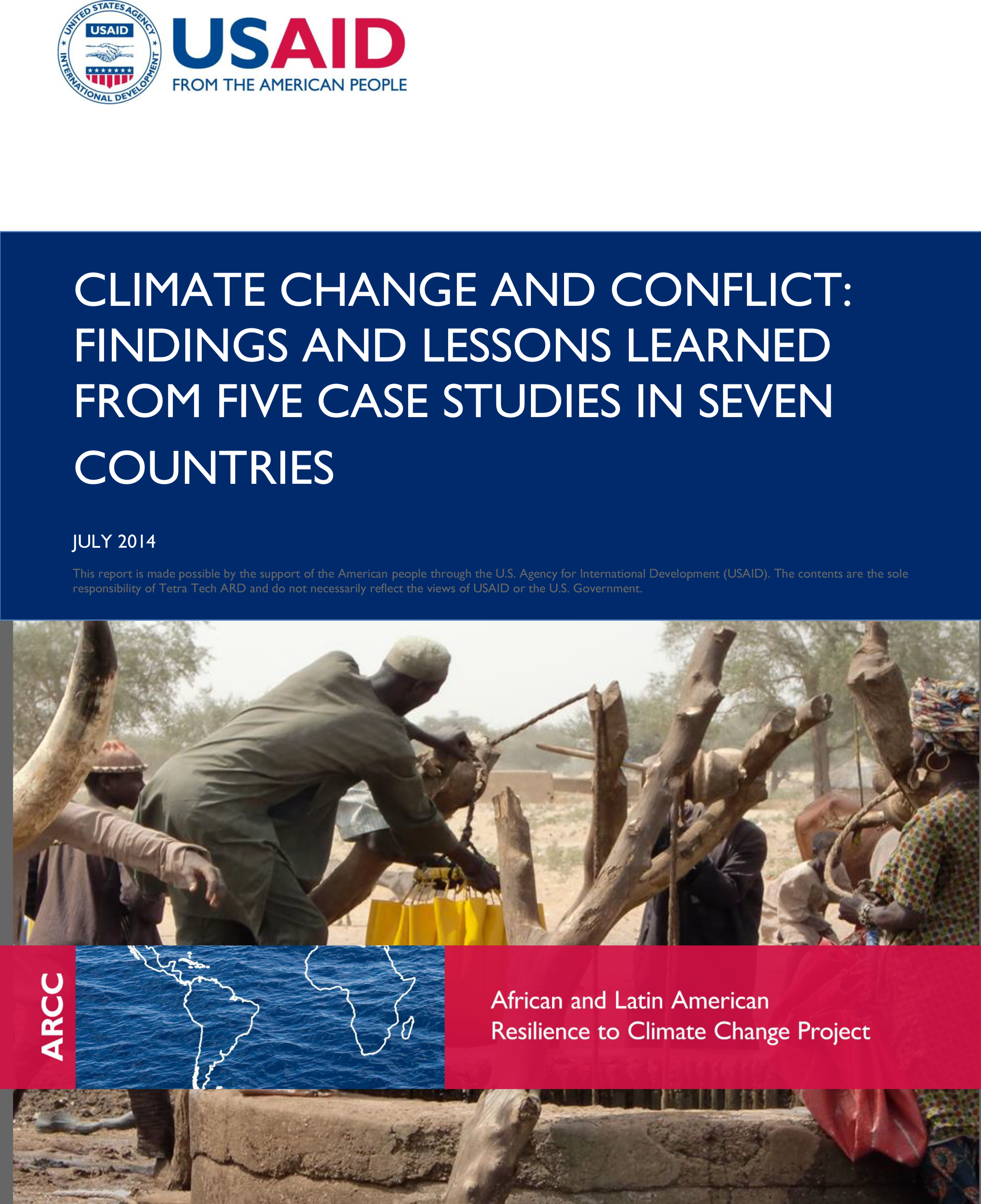
Follow the Water: Emerging Issues of Climate Change and Conflict in Peru
This study explores how the effects of climate change on water quantity, quality, and access may be factoring into aspects of localized instability, fragility, and conflict in Peru. To help guide the methodological approach, FESS developed a seven-phase framework—the Climate Change and Conflict Assessment Framework (CCCAF). The framework emphasizes one of the main conclusions of recent conflict analysis: conflict is always the result of the interactions of multiple political, economic, social, historical, and cultural factors, and these must be taken into account in any analysis. Moreover, the quality of governance and the resilience of political, economic, and social institutions all mediate the relationship between environmental change and conflict in important ways. The influence of climate change and climate-related policy and program responses on instability and conflict can only be understood within this web of relationships.