
-
Article
Brief
Meeting Notes
Presentation
Poster
Report
Toolkit
Video
Webinar

USAID Climate Risk Analysis for Pacific Island Countries Assessment Report
Recognizing the risks associated with climate change, several PIC have developed ambitious plans to mitigate greenhouse gas (GHG) emissions and to address adaptation needs.
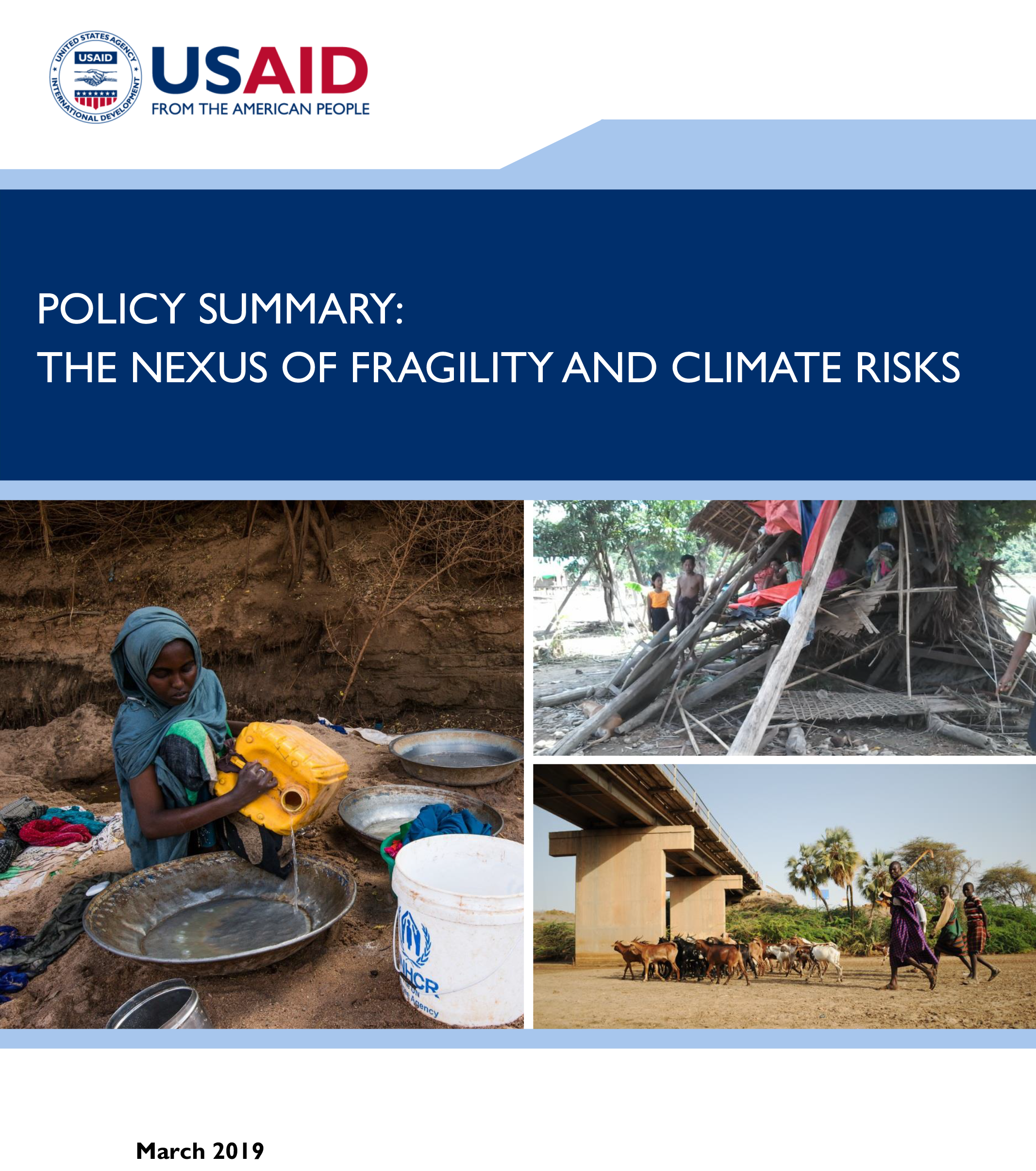
Policy Summary: The Nexus of Fragility and Climate Risks
The research, summarized here, does not seek to establish a causal relationship between climate exposure and instability. Instead, it identifies the locations where fragility and climate risks cooccur around the world. It assesses key global fragility and climate patterns and country-specific risks to assess how these dynamics may coalesce to foster instability, strain state capacity, and undermine human security. Since places with compound fragility-climate risks may be more vulnerable to governance failures and other crises that foster humanitarian emergencies or instability, understanding their distinct fragility and climate challenges could present opportunities and focal points for intervention and risk management.
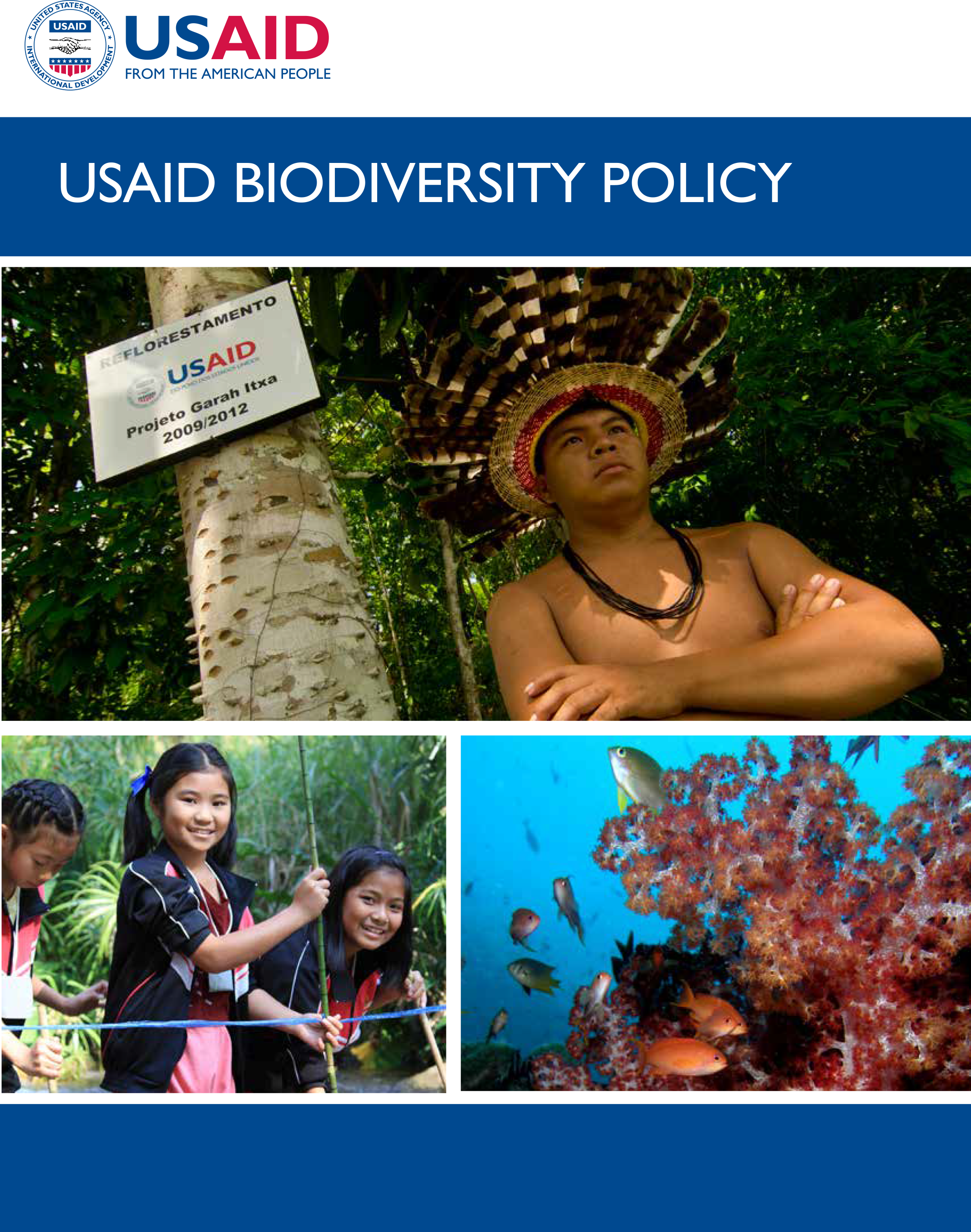
USAID Biodiversity Policy
This Policy represents a recommitment of USAID to conserve biodiversity through strategic actions to reduce threats and drivers, as well as a new focus on integrating biodiversity conservation with other development sectors. A roadmap for implementation highlights the most critical steps necessary for implementing this Policy. (See Annex II.)
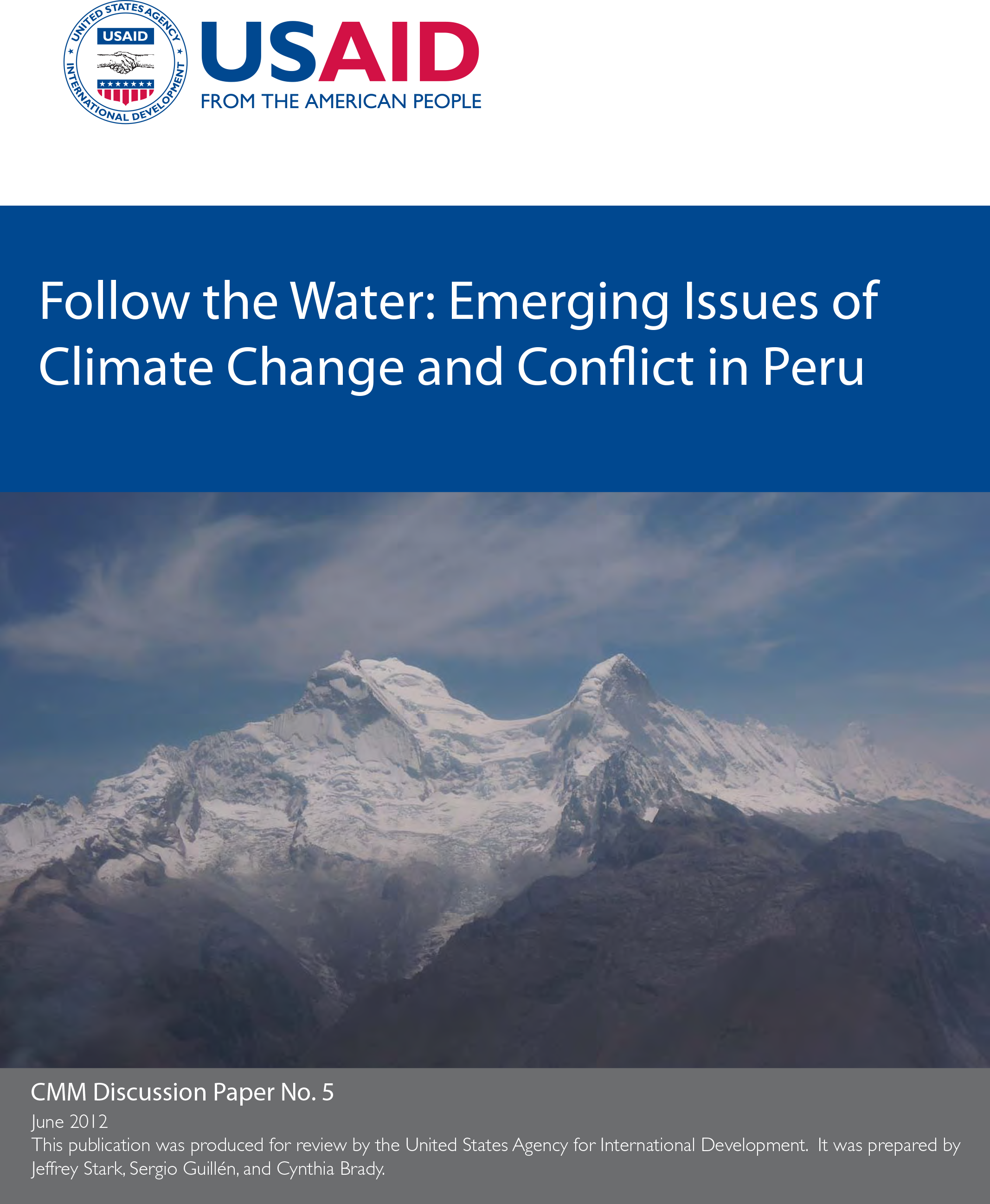
Follow the Water: Emerging Issues of Climate Change and Conflict in Peru
This study explores how the effects of climate change on water quantity, quality, and access may be factoring into aspects of localized instability, fragility, and conflict in Peru. To help guide the methodological approach, FESS developed a seven-phase framework—the Climate Change and Conflict Assessment Framework (CCCAF). The framework emphasizes one of the main conclusions of recent conflict analysis: conflict is always the result of the interactions of multiple political, economic, social, historical, and cultural factors, and these must be taken into account in any analysis. Moreover, the quality of governance and the resilience of political, economic, and social institutions all mediate the relationship between environmental change and conflict in important ways. The influence of climate change and climate-related policy and program responses on instability and conflict can only be understood within this web of relationships.
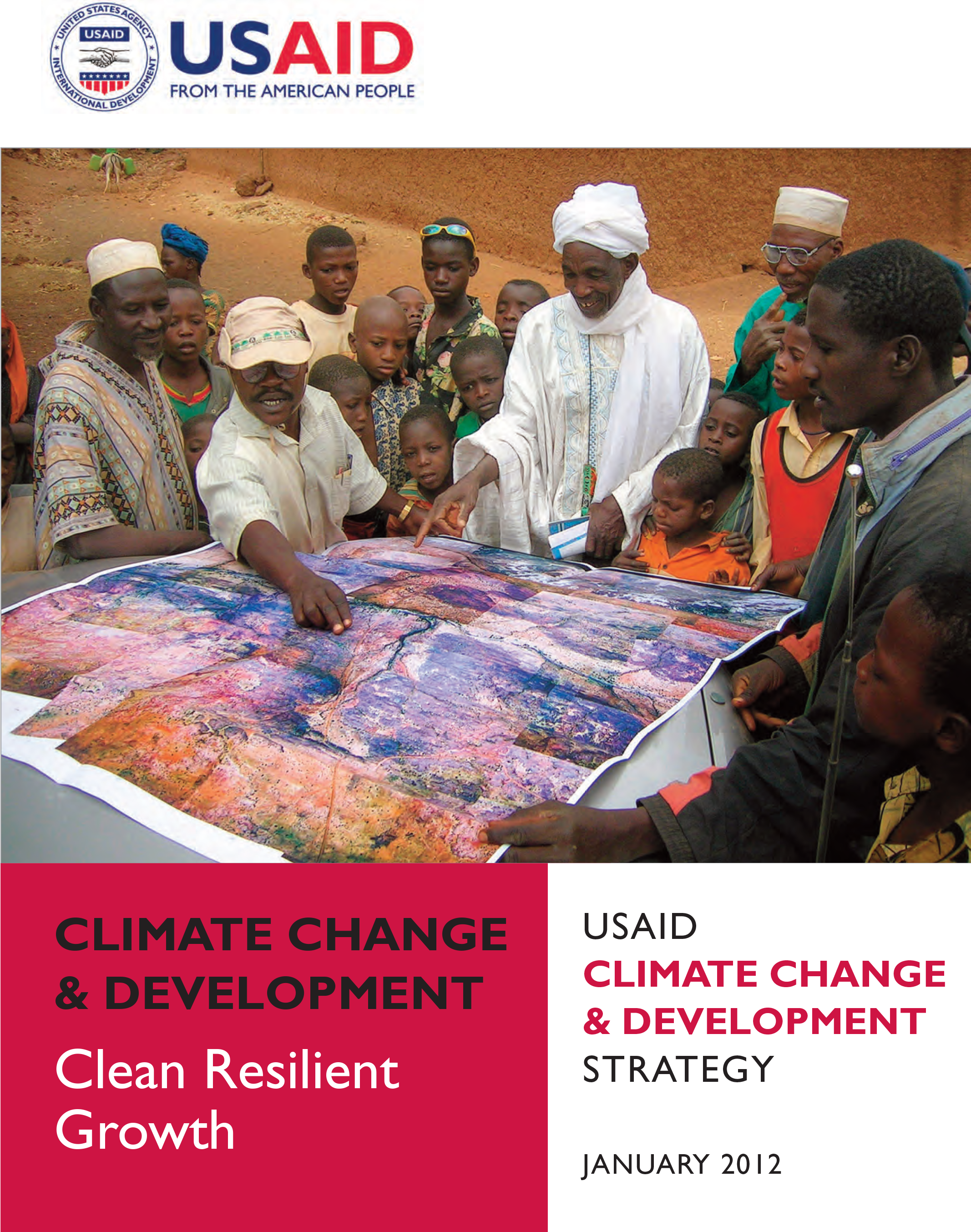
USAID Climate Change and Development Strategy 2012-2016
USAID’s work on climate change fits into a larger domestic and international policy context and is guided by Administration policy as developed in the President’s Global Development Policy, the Quadrennial Diplomacy and Development Review, USAID Forward, and the GCCI. Additionally, USAID’s Policy Framework 20112015 defines the following as one of seven Core Development Objectives for the Agency: Reduce Climate Change Impacts and Promote Low Emissions Growth. USAID has a long history of programming in sectors relevant to climate change and will draw lessons learned from this history to shape efforts under this strategy. The goal of USAID’s 2012-2015 Climate Change and Development Strategy is to enable countries to accelerate their transition to climate resilient low emission sustainable economic development.