-
Article
Brief
Meeting Notes
Presentation
Poster
Report
Toolkit
Video
Webinar
Adherence to Standards for MNH Service Delivery at Public and Private Facilities
This analysis, conducted under the Data for Impact (D4I) award, leverages Service Provision Assessment (SPA) data from 2012–2022 to evaluate the adherence of MNH service providers to WHO process standards. The study examines differences between public and private facilities, including for-profit and not-for-profit (NFP) facilities, and tracks changes over time in selected countries.

Safe Childbirth Checklist Landscape Analysis
Globally, almost 135 million births occurred in 2023 (United Nations Population Division, 2024), and around 285,000 women* die each year due to pregnancy or childbirth-related causes (World Health Organization [WHO], 2024b). According to the WHO, the most frequent causes of maternal mortality are postpartum hemorrhage, infection after childbirth, and high blood pressure during pregnancy.
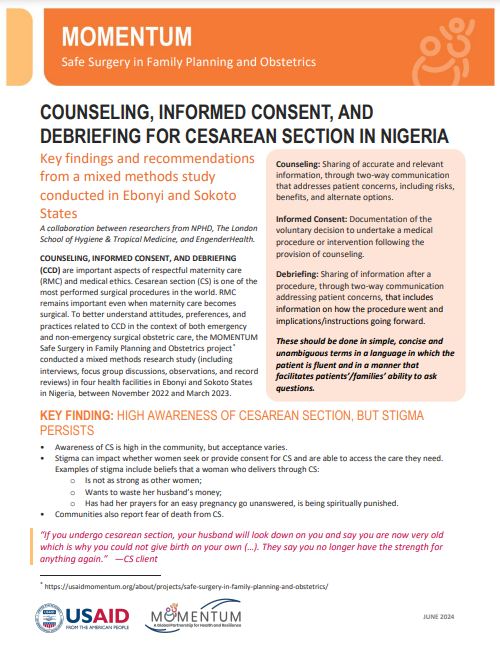
Counseling, Informed Consent, and Debriefing for Cesarean Section in Nigeria
COUNSELING, INFORMED CONSENT, AND DEBRIEFING (CCD) are important aspects of respectful maternity care (RMC) and medical ethics. Cesarean section (CS) is one of the most performed surgical procedures in the world. RMC remains important even when maternity care becomes surgical.
Maternal Mental Health: A Toolkit for Engaging Faith Actors as Change Agent
Given the high prevalence of mental health conditions in the perinatal period—pregnancy up to two years after birth—global attention to mental health is essential. Communities must work together to support prevention, early detection, and treatment of mental health conditions during pregnancy and postpartum, when the risk of mental disorders is highest.
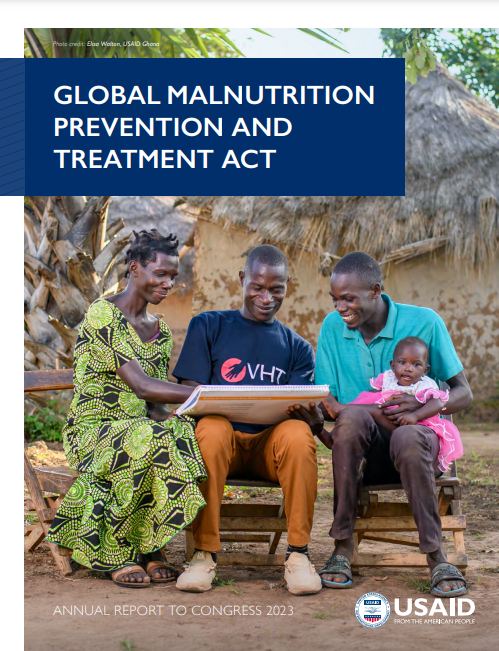
Global Malnutrition Prevention and Treatment Act - Annual Report to Congress 2023
The Global Malnutrition Prevention and Treatment Act (GMPTA) is a pivotal legislative initiative signed into law by President Biden in October 2022. This act charges the United States Agency for International Development (USAID) with combating malnutrition globally. The GMPTA solidifies USAID’s leadership role in nutrition and underscores its commitment to evidence-based interventions within both developmental and humanitarian contexts. By addressing the critical issue of malnutrition through targeted strategies, the GMPTA aims to improve health outcomes, promote economic advancement, and enhance overall human development across nations.
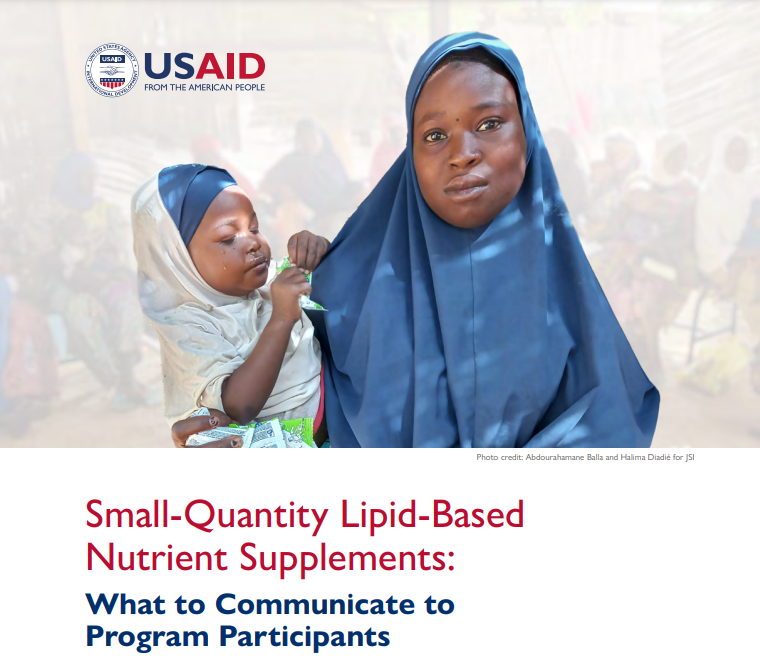
Small-Quantity Lipid-Based Nutrient Supplements: What to Communicate to Program Participants (English & French)
This brief was developed for the U.S. Agency for International Development (USAID) Bureau for Humanitarian Assistance-managed International Food Relief Partnership. The small-quantity lipid-based nutrient supplements (SQ-LNS) described in this document are intended for children 6–24 months, pregnant women, and breastfeeding women whose diets are nutritionally suboptimal and/or insufficient.
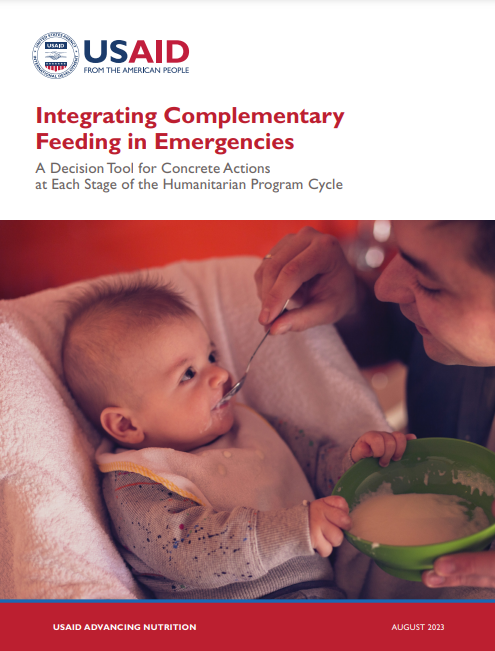
Integrating Complementary Feeding in Emergencies
This decision tool is intended for those involved in the design, planning, implementation, and monitoring of a nutrition humanitarian response before and during an emergency. It aims to guide technical advisors and managers working on a humanitarian response to design and incorporate complementary feeding actions, whether they are implemented by individual organizations and/or by joint multi-agency humanitarian responses, for children 6–23 months of age, regardless of their breastfeeding status, at each stage of the humanitarian program cycle.
USAID Global Health Research and Development Strategy 2023-2028
This strategy describes USAID’s renewed commitment to research and development (R&D) and use of new, innovative health products and technologies; the implementation and scale-up of real world, evidence-based research and learning to improve health outcomes globally; and the strengthening of both local health research and development capacity and global research and development partnerships.
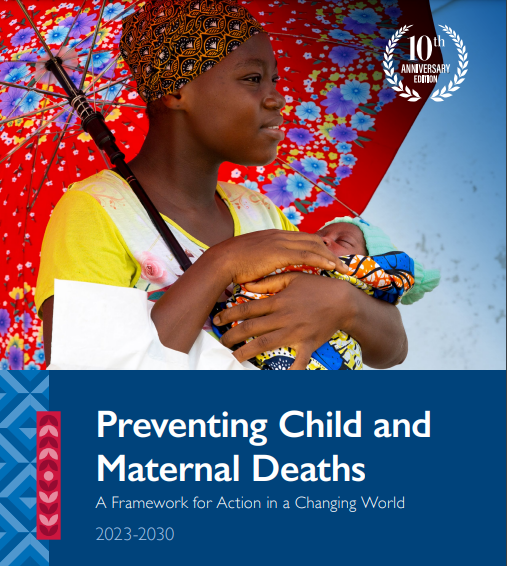
Preventing Child and Maternal Deaths: A Framework for Action in a Changing World 2023-2030
Over the next seven years, USAID will focus on shaping and supporting policies, practices, and country-led programs that improve the quality of care, promote equity, and improve coverage of lifesaving care to reach optimal levels across local communities and regions. USAID’s new strategic framework for preventing child and maternal deaths harnesses the learning and progress of the last decade in six strategic approaches that will yield programmatic improvements and, in turn, save lives.
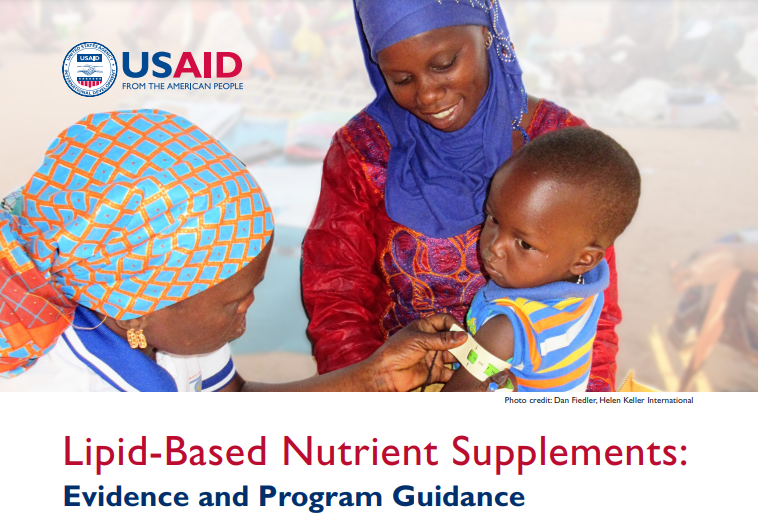
Lipid-Based Nutrient Supplements: Evidence and Program Guidance
This technical brief provides information for designing small- and medium-quantity lipid-based nutrient supplement (LNS-SQ and LNS-MQ) programs that promote improved nutritional status of women and young children in resource-limited settings. The following sections feature an overview of recent evidence, considerations for program design, and details of ways that LNS can complement or enhance a wide range of community health and development programs.
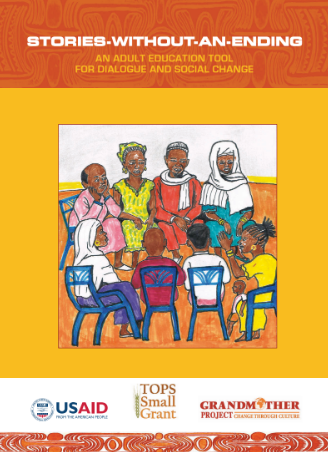
Stories Without an Ending: An Adult Education Tool for Dialogue and Social Change (English & French)
The purpose of this guide is to help organizations involved in community programs to develop and use SWE. This innovative adult education tool can be used to actively engage community groups in discussion of issues of priority concern to them and/or to development programs and to catalyze discussion of those issues in the wider community.

Increasing the Use of ORS and Zinc through the Private Sector
In April 2011, USAID Kenya invited SHOPS to conduct a Total Market Assessment of diarrhea management practices. The assessment focused on identifying opportunities available through the private health sector, to increase access to and use of the recommended diarrhea treatment (ORS and zinc) by caregivers of children under 5.
Increasing Access to Maternal Health Services through Vouchers: The Uganda Healthy Baby Experience
Why a maternal health voucher in Uganda?
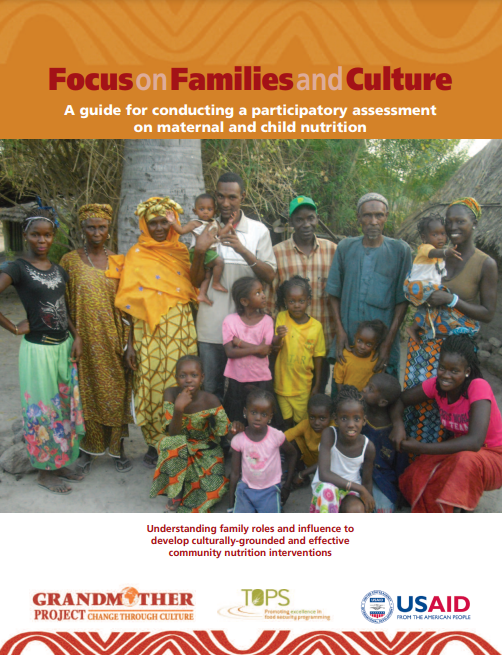
Focus on Families and Culture: A guide for conducting a participatory assessment on maternal and child nutrition (English & French)
The purpose of this document is to provide guidance on how to plan and carry out a rapid community assessment on family roles and influence related to the first critical 1,000 days of life i.e. during pregnancy, with newborns and young children up to two years of age.

Tebita Ambulance and Pre-Hospital Emergency Medical Services
The country’s highly fragmented emergency medical transport system means a complicated pregnancy can easily become a life-threatening situation for a woman trying to reach a hospital.
Diarrhea Management Knowledge,Attitudes and Practices amongCaregivers and Providers in Uganda
Caregivers’ level of awareness about causes of diarrhea is adequate but awareness of appropriate diarrhea treatments is poor. According to providers, caregivers demand specific treatments (primarily antibiotics) for their children. This in turn influences which treatments providers recommend.
Improving Quality of Women’s Health and Family Planning Services in Jordan’s Private Health Sector
Presentation reviews the goals of the project, 2005-2012