
-
Article
Brief
Meeting Notes
Presentation
Poster
Report
Toolkit
Video
Webinar
Telemed Medical Services
Telemed was founded in 2012. Mission: design and implement systems that allow clients who seek health care in Ethiopia to receive affordable, reliable and immediate healt

Increasing the Use of ORS and Zinc through the Private Sector
In April 2011, USAID Kenya invited SHOPS to conduct a Total Market Assessment of diarrhea management practices. The assessment focused on identifying opportunities available through the private health sector, to increase access to and use of the recommended diarrhea treatment (ORS and zinc) by caregivers of children under 5.
Increasing Access to Maternal Health Services through Vouchers: The Uganda Healthy Baby Experience
Why a maternal health voucher in Uganda?
What Does the Informal Sector Know about Health Insurance?
Findings from a Survey Conducted in Nairobi, Kenya
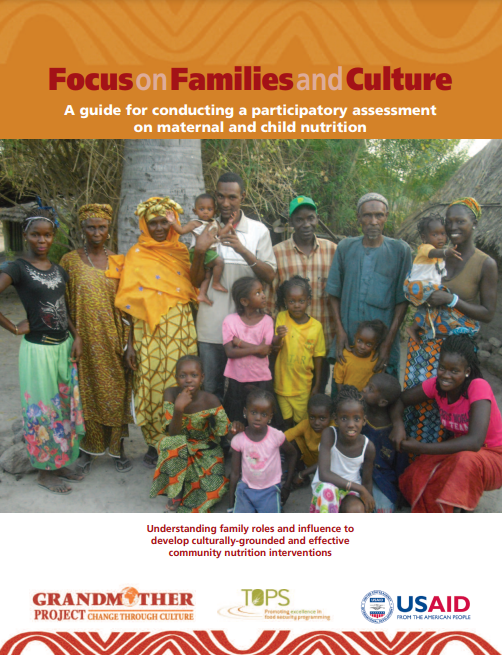
Focus on Families and Culture: A guide for conducting a participatory assessment on maternal and child nutrition (English & French)
The purpose of this document is to provide guidance on how to plan and carry out a rapid community assessment on family roles and influence related to the first critical 1,000 days of life i.e. during pregnancy, with newborns and young children up to two years of age.

Tebita Ambulance and Pre-Hospital Emergency Medical Services
The country’s highly fragmented emergency medical transport system means a complicated pregnancy can easily become a life-threatening situation for a woman trying to reach a hospital.
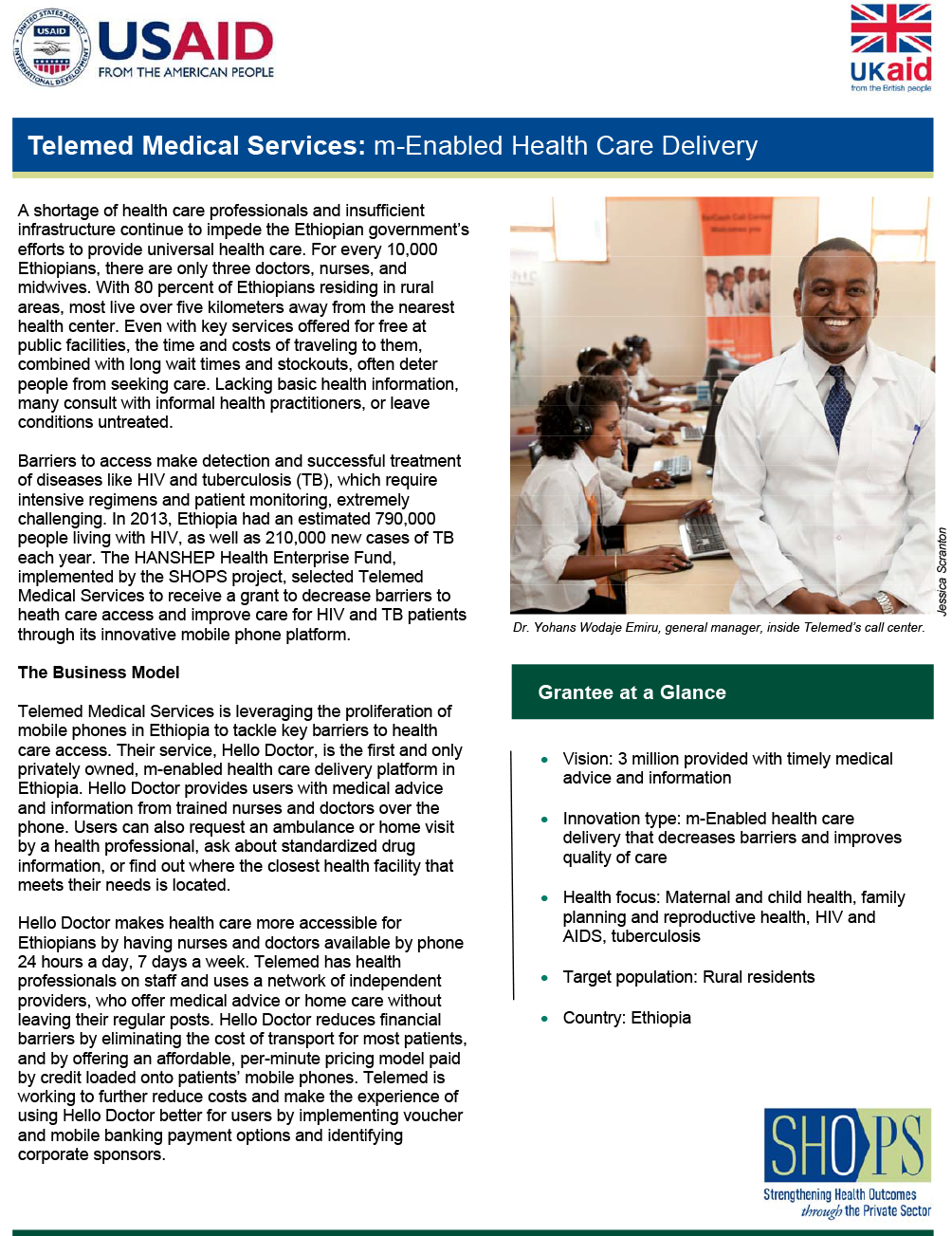
Telemed Medical Services: m-Enabled Health Care Delivery
A shortage of health care professionals and insufficient infrastructure continue to impede the Ethiopian government’s efforts to provide universal health care. For every 10,000 Ethiopians, there are only three doctors, nurses, and midwives.
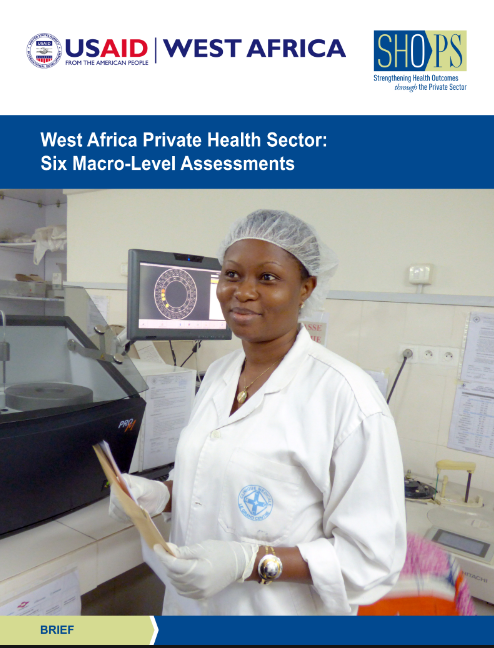
West Africa Private Health Sector: Six Macro-Level Assessments
This brief is a summary of the West Africa private health sector assessment conducted by the SHOPS project. The assessment looked at six countries: Burkina Faso, Cameroon, Côte d’Ivoire, Mauritania, Niger, and Togo. Chloé Revuz prepared the brief, which presents the assessment methods, findings, and both regional and country-specific recommendations. The recommendations aim to strengthen family planning and HIV service delivery by leveraging the unique capabilities of the West Africa Health Organization as well as each country’s private health sector.
What Does the Informal Sector Know about Health Insurance?
Findings from a Survey Conducted in Nairobi, Kenya
Improving the Quality of Family Planning Services Provision in Private Health Facilities in Lagos State, Nigeria
Private providers are willing to adopt new health behaviors that can improve facility quality assurance and improve quality of service provision.
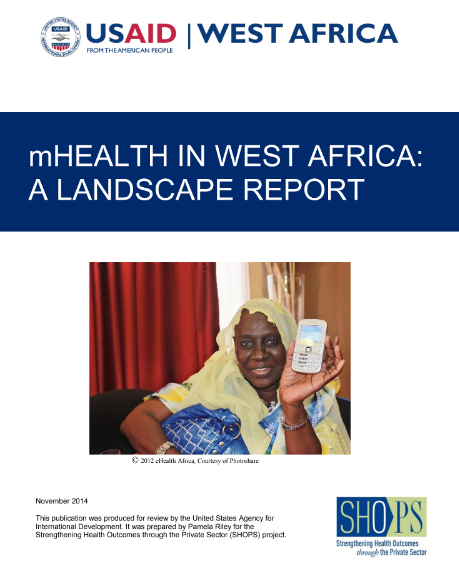
mHealth in West Africa: A landscape report
This report provides an overview of mhealth activity in the West Africa region, including the 15 Economic Community of West African States (ECOWAS) countries and two additional focus countries for USAID’s West Africa Mission: Benin, Burkina Faso, Cameroon, Cape Verde, Côte d’Ivoire, Gambia, Ghana, Guinea, Guinea Bissau, Liberia, Mali, Mauritania, Niger, Nigeria, Senegal, Sierra Leone, and Togo.
Extending the Reach: Contracting Out HIV Services to the Private Health Sector in Gauteng, South Africa
This study focuses on the experience of Right to Care Health Services (RTCHS), a South African private company that manages HIV and AIDS services on behalf of several clients, including PEPFAR, through the United States Agency for International Development (USAID), the South African government, employers, and medical aid schemes.
The Role of Alumni Associations in Strengthening Private Medical Training Institutions in Sub-Saharan Africa
This paper explores the benefits to private medical training institutions in sub-Saharan Africa of creating alumni associations. It also provides practical learning from SHOPS’s work in assisting Hubert Kairuki Memorial University (HKMU) in Tanzania to establish an alumni association.
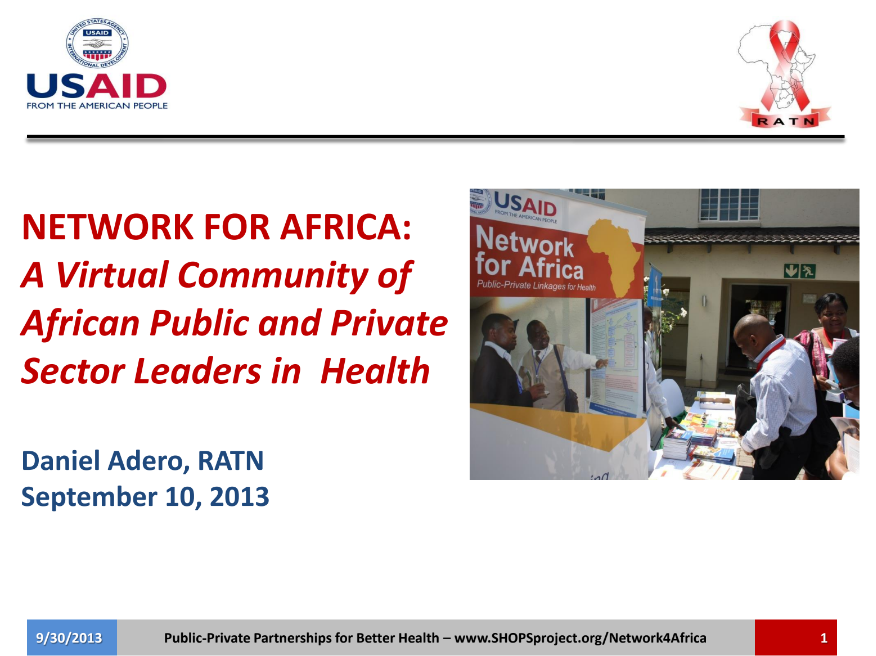
Network for Africa: A Virtual Community of African Public and Private Sector Leaders in Health
Vision for Network for Africa: Started in 2008 under the USAID funded PSP-One project - predecessor to the SHOPS project; Designed as a “virtual” Community of Practice targeting public and private leaders in health; Focuses on a wide range of topics on Public Private Partnerships in Sub-Saharan Africa health sectors
Understanding the Emerging Role of the Private Sector in Medical Education
Setting the context about the role of the private sector in health service delivery
Evaluating the Impact of Mobiles for Reproductive Health (m4RH)
PROGRESS project/FHI360 conducted extensive formative and operations research to develop m4RH
Total Market Initiatives for Reproductive Health
This primer documents the work of members of the Market Development Approaches Working Group of the Reproductive Health Supplies Coalition in defining and implementing total market initiatives (TMI).